
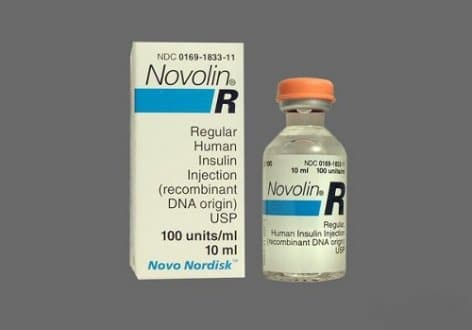
If you are looking up Novolin R Insulin Onset Peak and Duration, the key point is simple: this is short-acting human regular insulin that usually starts lowering glucose in about 30 minutes, reaches its strongest effect roughly 2.5 to 5 hours later, and may keep working for up to 8 hours after a usual under-the-skin injection. That timing matters because meal planning, blood sugar checks, and low blood sugar risk often line up with the action curve.
Unlike rapid-acting analog insulins, regular insulin has a slower start and a longer tail. That can make it useful in some regimens, but it also means timing around food tends to matter more.
Why it matters: Onset, peak, and duration are not just chart terms; they affect when insulin may help most and when lows may be more likely.
Key Takeaways
- Novolin R is regular human insulin used for mealtime coverage in many regimens.
- It usually begins working in about 30 minutes after a subcutaneous injection.
- Its strongest effect often falls around 2.5 to 5 hours, with activity lasting up to 8 hours.
- Meal timing matters more than it does with many rapid-acting insulins.
- Charts are estimates, so your real pattern may shift with food, activity, and technique.
What This Insulin Is and Why Timing Matters
Novolin R is a brand of regular human insulin. In plain language, it is a short-acting insulin that is often used around meals or for correction coverage, depending on the plan. The word regular does not mean background insulin. It belongs on the mealtime side of the basal-bolus split, not the flatter long-acting side. If you want more context, our explainers on Regular Insulin Basics, What Insulin Does To Your Body, and Basal Vs Bolus Insulin show where it fits.
Most timing charts refer to subcutaneous (under-the-skin) use. That detail matters. The same insulin can behave differently when it is used in hospital settings by other routes, so consumer timing references usually focus on everyday injections.
The reason timing matters is straightforward. Glucose from food rises on one schedule, and insulin works on another. When those curves line up reasonably well, after-meal readings may be easier to manage. When they do not, you may see an earlier spike, a later drop, or both. That is why onset, peak, and duration are useful even when the exact minute changes from one day to the next.
Where needed, prescription details may be confirmed with the prescriber.
Novolin R Insulin Onset Peak and Duration at a Glance
Onset is the delay between injection and the point where insulin starts lowering glucose. Peak is the period when the effect is strongest. Duration is the overall window when the insulin is still doing meaningful work. These are technical words, but they simply describe timing.
For Novolin R, commonly cited ranges for under-the-skin use are an onset of about 30 minutes, a peak around 2.5 to 5 hours, and a duration that may last up to 8 hours. Product labeling and diabetes reference charts use approximate numbers because no chart can predict an exact clock time for every person. The pattern is best read as a range, not a promise.
Those numbers also do not tell you how strongly a given dose will affect your glucose. They describe when the effect may start, build, and taper. Dose size, baseline glucose, meal size, and other insulin on board can all change what you feel or see on a meter.
Several everyday factors can shift the curve. Dose size matters. Injection site matters, which is one reason good technique and rotation are important; our overview on Where To Inject Insulin covers that in more detail. Physical activity, local heat, stress, and how quickly you digest a meal can also change what you notice. For a broader class view, Human Insulin Vs Analog Insulin explains why older human insulin products often behave differently from newer analogs.
If you are using Novolin R Insulin Onset Peak and Duration as a practical reference, think in ranges, not single minute marks. The peak is usually a zone, not one sharp instant.
Timing With Meals and Daily Routines
Many people look up regular insulin because they want to know when food should follow the dose. The general labeling-based takeaway is that regular insulin is often taken about 30 minutes before a meal. That earlier lead time is one of the biggest differences between regular insulin and rapid-acting options.
Still, meal timing is not just one rule on a chart. A larger or higher-fat meal may change the pattern you see. Delayed eating, shift work, nausea, or unplanned exercise can make the same premeal timing feel different from one day to the next. That is one reason clinicians often review glucose logs rather than relying on a reference table alone.
If you compare regular insulin with newer mealtime options, the gap becomes clearer. Rapid analogs usually start sooner and are often used closer to meals. Our pages on Rapid-Acting Insulin Timing and Lispro Vs Regular Insulin explain that difference in plain language.
Quick tip: Track injection time, meal time, and later glucose readings for several days before discussing patterns.
A short log often tells a better story than memory alone. If glucose rises soon after eating, the issue may be meal timing, carbohydrate amount, or a mismatch between meal speed and insulin speed. If levels fall later, the longer tail of regular insulin may be part of the picture. The goal is not to self-adjust based on a chart, but to arrive at your next clinical discussion with clear details.
How It Compares With Other Common Insulins
It helps to place Novolin R Insulin Onset Peak and Duration beside other insulin patterns. The goal is not to rank products. It is to show why a slower start or longer tail can change meal timing, correction timing, and overlap with other insulin.
| Insulin type | Usual onset | Typical peak | Usual duration | What that often means |
|---|---|---|---|---|
| Regular insulin such as Novolin R or Humulin R | About 30 minutes | About 2.5 to 5 hours | Up to 8 hours | Earlier premeal timing and more late overlap after food |
| Rapid-acting analogs | About 10 to 20 minutes | About 1 to 3 hours | About 3 to 5 hours | Closer-to-meal use with a shorter tail |
| NPH insulin | About 1 to 2 hours | About 4 to 12 hours | About 12 to 18 hours | A stronger peak that is often used for background coverage |
| Long-acting basal analogs | Several hours | Minimal or no pronounced peak | About 24 hours or longer | Steadier background coverage rather than meal coverage |
These are broad reference ranges. Individual products, dose size, injection site, and your own absorption can shift what happens on a given day.
Regular insulin vs rapid-acting insulin
Regular insulin starts later and lingers longer than rapid-acting analogs. That can make early after-meal glucose harder to catch if food is eaten right away, but it can also mean the dose is still active hours later. For some people, that later activity shows up as a drop well after the meal. This is one reason clinicians pay attention to meal schedule, work routine, and low blood sugar history when comparing insulin classes.
Novolin R and Humulin R are both regular human insulin brands, so the overall action pattern is generally similar. In practice, questions often center on product instructions, device format, and individual response rather than a switch to a completely different insulin class.
Regular insulin vs NPH and basal insulin
NPH is an intermediate-acting insulin with a more obvious peak and a longer action window than regular insulin, while long-acting basal insulins are designed to be flatter. Premixed products such as 70/30 combine more than one action profile, so their timing cannot be read the same way as a single dose of regular insulin. If these categories blur together, our overview of Intermediate-Acting Insulin can help sort them out.
Dispensing is handled by licensed third-party pharmacies where allowed.
Common Problems With Timing Charts
One common mistake is treating peak like an alarm clock. Insulin does not flip on and off at exact times. The strongest effect is usually a range. A low reading during that range may fit the chart, but food intake, other insulin, alcohol, exercise, illness, and stress can all change the result.
Another mistake is using onset, peak, and duration as dose instructions. These numbers describe expected behavior. They do not tell you how much insulin to take or how to change a regimen. If your readings stay high or you keep having lows, that is a reason to review the pattern with a clinician, not to improvise from a chart.
Monitoring matters here. Fingerstick checks and continuous glucose monitoring can show whether your own pattern matches the reference pattern. If you need a refresher on tools and technique, the guides on Insulin Pen Needles and Diabetes Tech Overview are useful starting points.
A mismatch between the chart and your readings does not always mean the insulin is wrong. It may point to delayed meals, site issues, inconsistent rotation, or changes in background insulin needs. That is why clinicians look for patterns across several days instead of focusing on one unexpected number.
Seek medical guidance for recurrent hypoglycemia (low blood sugar), severe lows that need help from another person, persistent marked hyperglycemia, ketones, vomiting, or symptoms that feel out of proportion to your usual pattern. Timing charts are helpful, but real-world symptoms come first.
Practical Questions Before You Rely on a Chart
Novolin R Insulin Onset Peak and Duration charts work best when they start a conversation, not end one. If you are comparing insulin types or trying to understand a pattern, bring specifics instead of a vague memory of one difficult day.
- Exact insulin name and format
- When you inject relative to meals
- When glucose rises or drops
- What happens on active days
- Whether technique or site rotation changed
- What other insulin or medicines you use
These details help clinicians separate timing issues from technique, meal composition, or background coverage problems. For broader context, browse the Diabetes Articles section. It can help you connect mealtime insulin timing with larger topics such as devices, insulin classes, and day-to-day management.
Access questions sometimes come up during these discussions. Some people compare human insulin and analog insulin because of device preferences, availability, or cash-pay considerations. That comparison should still be handled carefully, since a slower onset or longer tail can change daily timing expectations even when two products both count as mealtime insulin.
Cash-pay or cross-border options depend on eligibility and local rules.
Authoritative Sources
- For product-specific timing details, see the FDA-approved Novolin R prescribing information.
- For broad insulin timing definitions, review the American Diabetes Association insulin basics.
- For a general comparison chart, read the Cleveland Clinic insulin timing overview.
In short, Novolin R Insulin Onset Peak and Duration is defined by a slower start and longer tail than rapid-acting mealtime insulin. Knowing that broad curve can help you interpret glucose patterns, compare insulin classes more clearly, and ask better questions at your next diabetes visit.
This content is for informational purposes only and is not a substitute for professional medical advice.


