
Shipping with this method takes 3-5 days
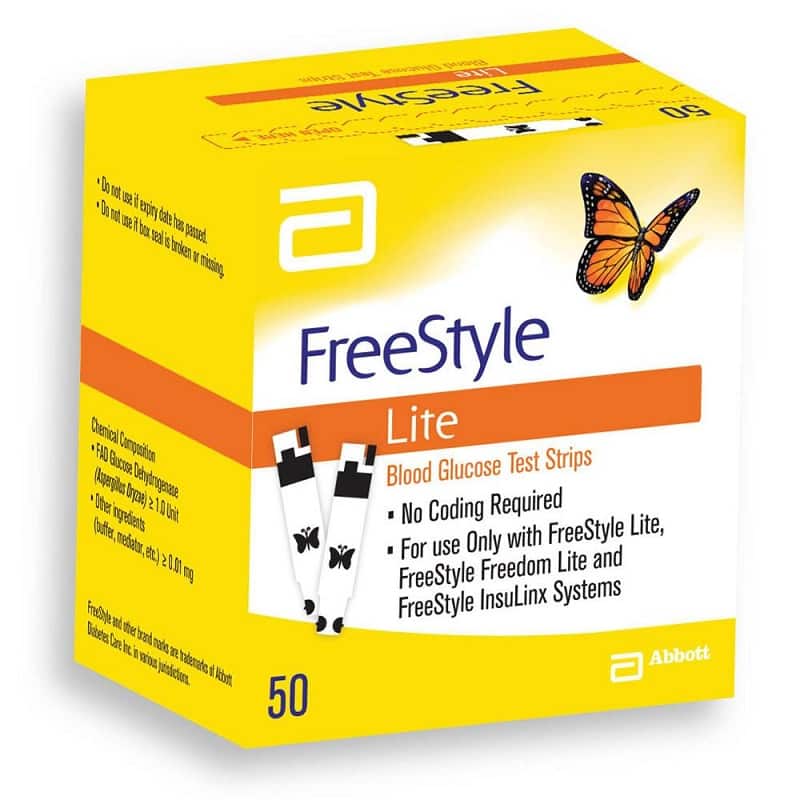
Freestyle Lite Zipwik Test Strips
Buy FreeStyle Lite ZipWik Test Strips Online


FreeStyle Lite ZipWik Test Strips are no-coding blood glucose test strips for use with compatible FreeStyle Lite family meters. You can buy FreeStyle Lite test strips online, view the current price, and choose the quantity shown during ordering that matches your testing routine. For qualifying orders, US delivery from Canada may be available as part of the checkout path.
These strips are used for fingerstick blood glucose monitoring, not for continuous glucose monitoring or treatment. Match the strip name to your meter manual, supply instructions, and diabetes care plan before choosing a box. A strip that looks similar can use different chemistry, so meter compatibility is a safety decision as well as a practical purchase step.
FreeStyle Lite Test Strips Price and Box Quantity
The FreeStyle Lite test strips price depends on the quantity and presentation shown during ordering. Review the strip count, whether the package includes strips only, and whether meter or lancet supplies need to be purchased separately. Cost per strip can change when different box sizes appear, so compare the current cash total against the number of tests you expect to use.
Many people search for FreeStyle Lite test strips 50 count or FreeStyle Lite test strips 100 count because testing frequency affects supply planning. A smaller box may fit occasional or short-term needs, while a larger box may be easier for ongoing monitoring if that quantity is available during ordering. Do not buy more strips than you can use within the labeled expiry window.
| Decision | What to verify |
|---|---|
| Meter match | Use only with a compatible FreeStyle Lite family meter. |
| Quantity | Choose the strip count shown during ordering that fits your expected testing schedule. |
| Package contents | Confirm whether the box contains strips only or includes other supplies. |
| Expiry window | Make sure the quantity can be used before the expiry date. |
| Cash-pay planning | Compare the current total if you are paying without insurance. |
If you are comparing FreeStyle Lite test strips without insurance, use the live price and box quantity rather than general online averages. Cash-pay totals can vary with package size, checkout choices, and whether you also need lancets, control solution, or a meter.
Why it matters: Matching quantity, expiry, and meter fit helps avoid paying for strips that cannot be used safely.
How to Order FreeStyle Lite Test Strips Online
Order FreeStyle Lite test strips online by choosing the quantity that matches your meter and testing schedule. Keep the meter nearby while ordering so the strip name can be checked against the device label or manual. If your diabetes care plan specifies a testing frequency, use that plan to estimate how quickly a box will be used.
- Identify the exact meter model before choosing strips.
- Select the strip quantity shown during ordering that fits your supply needs.
- Review the package contents so you know whether lancets or meter items are separate.
- Check the storage instructions when the order arrives.
- Record the expiry date and keep the vial closed between tests.
Do not change how often you test because a larger or smaller package is easier to buy. Testing frequency should come from your diabetes care plan, meter instructions, or clinician direction. If you are changing meters, update the strips and other supplies together so the system remains compatible.
Meter Compatibility and Product Fit
FreeStyle Lite blood glucose test strips are designed for compatible FreeStyle Lite family meters. They should not be treated as universal diabetes test strips. If you use another meter brand or a different FreeStyle system, use the strip type named for that device rather than relying on package shape or a similar product name.
The practical compatibility question is simple: the strip type should match the meter manual, the meter packaging, or your written supply instructions. FreeStyle Lite meter test strips may be appropriate for people using a compatible FreeStyle Lite system, while other meters require their own strips. If a meter displays an error message after insertion, follow the meter instructions and do not keep testing with damaged or mismatched strips.
Abbott FreeStyle Lite test strips are different from sensors worn on the arm. A fingerstick strip provides one blood glucose reading at one point in time. A continuous glucose monitor uses a sensor to estimate glucose trends between fingerstick checks. Some people use both systems, but strips and sensors are not interchangeable.
ZipWik Tabs and No-Coding Testing
ZipWik tabs are designed to help draw a small blood sample into the strip edge. This feature can make sample application more straightforward, but accurate testing still depends on clean hands, proper strip orientation, enough blood, and a functioning meter. Follow the meter display and package insert whenever a result or error message seems unusual.
No-coding test strips mean the user does not manually enter a code into the meter for each box or vial. Removing that step can reduce one source of user error, but it does not remove the need to inspect strips. Expired strips, moisture exposure, an open vial, contamination, or a damaged meter can still affect readings.
Use the strips only for blood glucose testing as directed by the compatible meter system. They do not diagnose diabetes by themselves and do not replace lab testing when a clinician needs a confirmed result. If readings repeatedly do not match symptoms, discuss meter technique, strip storage, and possible device limitations with a healthcare professional.
How These Strips Support Diabetes Monitoring
FreeStyle Lite glucose test strips support self-monitoring of blood glucose, often called SMBG. People with diabetes may use fingerstick readings to understand fasting glucose, pre-meal values, post-meal patterns, illness-related changes, exercise effects, or symptoms of low or high blood sugar. The best timing depends on the treatment plan and the reason for testing.
Testing needs differ between people living with type 1 diabetes, type 2 diabetes, gestational diabetes, or other glucose-monitoring situations. People using insulin or medicines that can cause hypoglycemia often receive more specific monitoring instructions. Others may test less often, especially when glucose levels are stable and treatment does not carry the same low-blood-sugar risk.
Condition pages for type 1 diabetes, type 2 diabetes, and broader diabetes information can help place blood glucose testing in context. These resources are educational and should not replace individualized targets or testing instructions from your care team.
Storage, Handling, and Travel Checks
Store FreeStyle Lite strips according to the package insert and keep the vial tightly closed when not in use. Blood glucose strips are sensitive to moisture, heat, and contamination. Do not move strips into an unmarked container, because the original vial helps protect them and preserves lot and expiry information.
Temperature and moisture changes can matter during travel. Avoid leaving strips in a hot car, damp bathroom cabinet, or luggage exposed to extreme conditions. Unlike insulin, test strips are not generally managed as refrigerated cold-chain products, but they still need protection from environmental damage.
Hand preparation is one of the most common causes of testing problems. Wash and dry hands before lancing when possible, because food residue, lotion, or water can alter the sample. If your meter instructions mention repeating a test, using control solution, or replacing a strip after an error message, follow those device-specific steps.
Browse diabetes supplies if you also need lancing or monitoring items, and use the diabetes test strips category when comparing strip families for different meters. Keep each meter system together so strips, lancets, control solution, and batteries do not become mixed with supplies for another device.
Quick tip: Check the expiry date before opening a new box.
Safety and Accuracy Before Testing
FreeStyle Lite diabetic test strips do not lower blood sugar and do not work like medication. The main safety concern is acting on a reading that is inaccurate or inconsistent with symptoms. Results can be affected by expired strips, too little blood, dirty hands, damaged supplies, meter errors, or storage outside the labeled range.
If a reading is unexpectedly low or high, compare it with how you feel and the meter message. Repeat testing when the instructions recommend it, and use a new strip if the first one looks damaged or was exposed to moisture. Seek urgent medical help for severe symptoms such as confusion, fainting, chest pain, trouble breathing, seizure, or signs of serious hypoglycemia or hyperglycemia.
Some medicines, medical conditions, or unusual blood characteristics may interfere with certain glucose testing systems. The package insert is the best source for device-specific limitations. If readings repeatedly differ from lab results or symptoms, ask a clinician whether meter accuracy, technique, strip storage, or a different monitoring plan should be reviewed.
Educational articles in the diabetes article library can help you prepare better questions for appointments. If your treatment plan changes, confirm whether your testing schedule, target range, and supply quantity should change as well.
Compare Related Diabetes Supplies
FreeStyle Lite strips are one part of a complete blood glucose testing setup. Many people also need a compatible meter, lancets, a lancing device, control solution, batteries, and a logbook or app for readings. If one part changes, verify that the rest of the system still works together.
Do not switch strip brands only because another box count looks convenient. Meter systems are built around specific strips, and a mismatch can cause errors, wasted supplies, or unusable readings. If a clinician recommends a new meter, update the strips and lancing supplies as part of that change.
The broader diabetes products category can help separate medications, meters, strips, and other supplies. People looking for condition-specific education can also browse type 1 diabetes articles or type 2 diabetes articles for monitoring topics to discuss with a healthcare professional.
Authoritative Sources
Use the labeling included with your meter and strips as the controlling source for compatible devices, sample instructions, storage limits, control-solution use, error messages, and device-specific limitations. Manufacturer instructions should guide day-to-day testing decisions.
- American Diabetes Association Consumer Guide lists FreeStyle Lite meter system details.
- Official Abbott package labeling should guide exact strip handling, compatibility, and accuracy checks.
This content is for informational purposes only and is not a substitute for professional medical advice.
Blood Glucose Unit Converter
Convert glucose readings between mg/dL and mmol/L without changing the clinical value.
mg/dL
-
US reporting unit
mmol/L
-
International reporting unit
These calculations are for education only and do not replace clinical advice, diagnosis, or treatment. Always confirm medical decisions with a qualified healthcare professional.
HbA1c & eAG Calculator
Convert between HbA1c percentage and estimated average glucose using the ADAG relationship.
HbA1c
-
percentage
eAG mg/dL
-
estimated average glucose
eAG mmol/L
-
estimated average glucose
These calculations are for education only and do not replace clinical advice, diagnosis, or treatment. Always confirm medical decisions with a qualified healthcare professional.
Carb Serving Calculator
Convert total carbohydrate grams into carb choices for meal planning and diabetes education.
Carb choices
-
total carbs divided by choice size
Rounded choices
-
nearest half choice
Carb calories
-
4 kcal per gram
These calculations are for education only and do not replace clinical advice, diagnosis, or treatment. Always confirm medical decisions with a qualified healthcare professional.
Glycaemic Load Calculator
Calculate glycaemic load from glycaemic index and available carbohydrate in a serving.
Glycaemic load
-
GI x carbs / 100
Range
-
single serving estimate
Total carbs used
-
serving carbs x servings
These calculations are for education only and do not replace clinical advice, diagnosis, or treatment. Always confirm medical decisions with a qualified healthcare professional.
Customer Reviews
5.0
Based on 1 Reviews
Write a Review
Ask a Question
- Reviews
- Questions
Filter Reviews:
JC
09/21/2023
Jane c.  US
USI recommend this product
Got what I order
Very good had little issue with order but called and wonderful lady took care and order was on its way.
10/03/2023
CanadianInsulin.com
Hi Jane,Thank you for sharing your feedback with us. We're pleased to hear that you received the items you ordered. We're delighted to know that our team was able to assist you promptly and effectively.Your satisfaction is our priority and we appreciate your understanding and patience.We look forward to continuing to serve you. Have a great day!
Express Shipping - from $29.99
Prices:
- Dry-Packed Products $29.99
- Cold-Packed Products $39.99
Standard Shipping - $19.99
Shipping with this method takes 5-10 days
Prices:
- Dry-Packed Products $19.99
- Not available for Cold-Packed products
What are FreeStyle Lite ZipWik Test Strips used for?
They are blood glucose test strips used with compatible FreeStyle Lite family meters for fingerstick blood sugar testing. They provide a point-in-time reading and are not a treatment for diabetes.
Do FreeStyle Lite test strips work with every glucose meter?
No. FreeStyle Lite strips should be used only with compatible FreeStyle Lite family meters. Check the meter manual, meter label, or supply instructions before using a new box.
What does no-coding mean for these strips?
No-coding means the user does not manually enter a strip code into the meter for each box or vial. You still need to follow storage, expiry, sample, and meter instructions for accurate testing.
How should FreeStyle Lite blood glucose test strips be stored?
Store the strips as directed on the package insert, keep the vial tightly closed, and protect them from moisture, heat, and contamination. Do not transfer strips into an unmarked container.
What should I do if a reading seems wrong?
Compare the result with symptoms and the meter message. Repeat the test if the instructions recommend it, use a new strip if needed, and contact a clinician if results repeatedly seem inconsistent or symptoms are severe.
Rewards Program
Earn points on birthdays, product orders, reviews, friend referrals, and more! Enjoy your medication at unparalleled discounts while reaping rewards for every step you take with us.
You can read more about rewards here.
POINT VALUE
How to earn points
- 1Create an account and start earning.
- 2Earn points every time you shop or perform certain actions.
- 3Redeem points for exclusive discounts.
You Might Also Like
Select options
This product has multiple variants. The options may be chosen on the product page
Select options
This product has multiple variants. The options may be chosen on the product page
Select options
This product has multiple variants. The options may be chosen on the product page
Select options
This product has multiple variants. The options may be chosen on the product page