
Shipping with this method takes 3-5 days
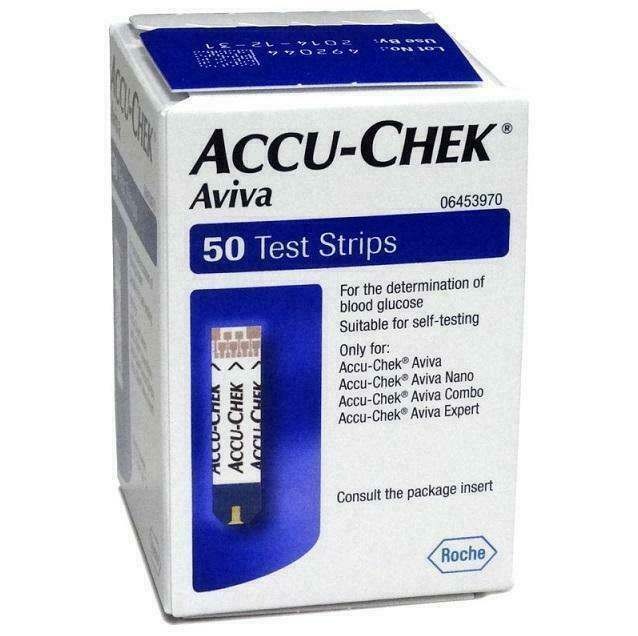
Accu-Chek Aviva Test Strips
Buy Accu-Chek Aviva Test Strips Online


Accu-Chek Aviva Test Strips are blood glucose testing strips used with compatible Accu-Chek Aviva and Aviva Plus meters. They can be bought online for home diabetes monitoring, with quantities chosen during ordering to match your testing routine and clinician directions. Match the strip name on the vial with the meter model before adding supplies to your cart.
These strips help measure glucose from a small fresh blood sample outside the body. The result can support day-to-day diabetes decisions when used as directed with a compatible meter, clean hands, and properly stored strips. For US delivery from Canada, review the quantity, strip family, and address details carefully before submitting an order.
Accu-Chek Aviva Test Strips Price and Quantity
The Accu-Chek Aviva Test Strips price depends on the strip family, box count, and quantity chosen during ordering. A 50-count box, multiple boxes, and a different Accu-Chek strip line can change the final amount at checkout. When paying without insurance, compare the current amount against the total number of strips included rather than looking only at the box price.
Accu-Chek Aviva Plus Test Strips are often searched in a 50-count format, but the count is only one buying detail. The strip name must match the meter family in your instructions. A lower Accu-Chek Aviva Test Strips cost does not help if the strips are not designed for your device.
Quick tip: Calculate the price per strip when comparing single-box and multi-box quantities.
Choose a quantity that fits your usual testing schedule and allows for occasional repeat checks when a result seems unusual. Do not change how often you test because of supply count, cash-pay cost, or convenience. Your clinician should set your testing frequency, target ranges, and action plan for readings outside your usual range.
How to Order Online
To order Accu-Chek Aviva Test Strips online, start with the meter and vial you already use. The meter name printed on the device and the strip name printed on the container should agree with the product being purchased. Keep the current strip vial, meter, and any care instructions nearby while choosing the quantity.
During checkout, review the strip family, number of boxes, and delivery address before submitting the order. US shipping from Canada may be available as part of the service context for this product, but the practical selection step remains the same: the strips must match your meter. We may review order details when needed to help make sure the requested item is clear.
Do not substitute another strip line because the package looks similar or because another Accu-Chek product is easier to find. Accu-Chek Aviva blood glucose test strips, Accu-Chek Guide strips, and other meter-specific strips are not automatically interchangeable. If the meter display, vial label, and product name do not line up, pause and verify the correct supply before completing the purchase.
Compatibility, Pack Size, and Strip Version
Compatibility is the most important decision for Accu-Chek Aviva glucose test strips. Blood glucose meters read signals from a specific strip design, so the wrong strip may fail, trigger an error, or produce a result that should not be used for treatment decisions. Always pair the strip family with the meter model named in the meter manual.
Some people search for whether Accu-Chek Aviva Test Strips are discontinued because Aviva meter and strip availability has changed in some markets over time. Availability can differ by country, store channel, and strip presentation. If you already use an Aviva meter, identify whether your device uses Accu-Chek Aviva Plus Test Strips or another Accu-Chek strip family before replacing supplies.
| Detail to verify | Why it matters |
|---|---|
| Strip family | The strip name should match the compatible meter instructions. |
| Meter model | Aviva, Aviva Plus, and other Accu-Chek meters may use different strips. |
| Box count | A 50-count box and a multi-box quantity are different supplies. |
| Expiry date | Expired strips may give unreliable or unusable results. |
| Storage history | Moisture, heat, freezing, and open vials can affect performance. |
Manufacturer materials describe Accu-Chek Aviva Plus blood glucose test strips as no-coding strips that fill from a small blood sample. Accu-Chek states that Aviva Plus strips use a 0.6 microliter blood drop and can provide results quickly with compatible meters. Those features do not replace the instructions supplied with your meter, especially for control-solution checks, error messages, or alternate-site testing.
Why it matters: A compatible strip supports reliable readings and reduces avoidable meter errors.
What These Diabetes Test Strips Do
Accu-Chek Aviva diabetes test strips are in vitro diagnostic supplies, meaning they test a sample outside the body. When used with a compatible meter, they help measure glucose in a fresh blood sample. The reading can support daily diabetes monitoring, meal planning, activity decisions, and medication safety checks when those steps are part of your care plan.
Home glucose testing is different from an A1C blood test. A meter reading shows a glucose value at one moment, while A1C reflects an average pattern over roughly two to three months. Many people with diabetes use both types of information with their healthcare team.
Testing needs vary for people living with type 1 diabetes, type 2 diabetes, pregnancy-related diabetes, or diabetes managed with lifestyle changes. Some people test several times daily, while others test at specific times set by a clinician. The strips are a monitoring tool; they do not diagnose diabetes by themselves or replace professional interpretation of repeated high or low readings.
Bring your meter log, app history, or written readings to appointments if you are unsure how the numbers are being used. Your clinician can explain when to test, what target range applies to you, and what actions to take for values outside that range. For broader condition information, the diabetes articles section covers practical monitoring and care topics.
Storage, Handling, and Travel
Test strips are sensitive to moisture and temperature. Keep strips in their original vial, close the cap promptly after removing one strip, and avoid moving strips into pill boxes, bags, or unmarked containers. The vial label and package insert should be followed for storage limits, expiry dating, and instructions after opening.
Accu-Chek Aviva Test Strips do not usually require cold-chain handling, but they still need protection from heat, freezing, humidity, and direct sunlight. Prompt, express, cold-chain shipping language may appear with some healthcare products, yet glucose strips should still be stored according to their own label after arrival. If a package arrives crushed, wet, or exposed to extreme conditions, do not rely on affected strips until you receive product-specific guidance.
Travel can expose testing supplies to rough handling and temperature swings. Carry enough strips for planned tests plus extra checks, and keep the meter, lancing device, lancets, and strips together. Avoid leaving strips in a parked vehicle, checked luggage, or direct sunlight for long periods.
Small handling issues can change results. Wash and dry hands before testing, use a fresh lancet as directed, and apply blood only as your meter manual describes. If your meter supports control solution, use it according to the manual when opening a new vial, after a suspected storage problem, or when results do not match how you feel.
Safety Checks Before Testing
Blood glucose readings can guide important treatment decisions, so accuracy matters. Do not use strips that are expired, visibly damaged, stored outside labeled conditions, or kept in a vial that was left open. Avoid mixing strips from different vials because expiry dates and storage histories may differ.
A reading that is very high, very low, or inconsistent with symptoms should be treated carefully. Symptoms of low blood sugar can include shakiness, sweating, confusion, hunger, dizziness, or weakness. Symptoms of high blood sugar can include thirst, frequent urination, blurred vision, fatigue, or nausea. Follow your clinician’s safety plan, and seek urgent help for severe symptoms, loss of consciousness, trouble breathing, or signs of diabetic ketoacidosis.
Hand contamination can affect a blood sample. Food residue, lotions, alcohol that has not dried, and wet fingers may alter readings. Use clean, dry hands unless your meter instructions provide a different process. If you use alternate-site testing, confirm when it is appropriate because fingertip testing may be preferred when glucose is changing quickly.
Lancing supplies also affect comfort and safety. Reusing lancets can dull the tip and may increase discomfort or skin irritation. Dispose of sharps in an approved container according to local rules. If you are reviewing blood sugar testing tools more broadly, the diabetes supplies category can help organize meter-related items by supply type.
How Aviva Strips Compare With Other Test Strips
Accu-Chek Aviva Plus meter strips are not universal accessories. A OneTouch, FreeStyle, Contour, or different Accu-Chek meter generally needs its own matching strip line. The safest comparison is the full strip name, meter model, and manufacturer instructions rather than brand color or package appearance.
If you are replacing a meter system, consider that the change may also affect lancets, control solution, app features, record keeping, and insurance paperwork. A new meter can make sense when an older model is difficult to support, but switching systems should be deliberate. Keep enough of the correct strips available while your clinician or diabetes educator helps you transition.
The test strips category is useful when comparing strip families side by side. The broader diabetes category can also help when you need monitoring supplies alongside other diabetes products. For condition-specific reading, the type 1 diabetes articles and type 2 diabetes articles sections cover practical care questions that may relate to testing frequency and monitoring goals.
Do not choose strips based only on a coupon, package color, or brand familiarity. Red, green, or other packaging accents may identify different product families, markets, or updated designs. Full product name and meter compatibility should drive the purchase decision.
Questions to Ask Before Replacing Supplies
Before buying replacement strips, confirm the meter model, current strip vial name, usual testing frequency, and remaining expiry dates. If your meter has displayed repeated errors, the issue may involve strip compatibility, expired supplies, low battery, technique, storage exposure, or the meter itself. Replacing strips may help only when the strip supply is the problem.
Ask your clinician or diabetes educator how many strips you should keep on hand, when repeat testing is appropriate, and what readings require same-day contact. People who use insulin, have frequent lows, are sick, are pregnant, or are changing therapy may need more specific monitoring instructions. Your care team can also explain whether alternate-site testing is appropriate for your situation.
If you suspect your meter system is being phased out in your market, ask which current meter and strip line should replace it. Accu-Chek compatibility tools can help identify matching strips for existing devices, but individualized care decisions should come from a healthcare professional who knows your treatment plan.
Authoritative Sources
Manufacturer feature details are available from Official Accu-Chek Aviva Plus Test Strips Information. Meter matching guidance is available from Accu-Chek Strip Compatibility Guidance.
Use manufacturer materials, product packaging, the meter manual, and your clinician’s directions to confirm strip compatibility, handling instructions, and testing technique. If those sources differ, follow the instructions specific to your meter and care plan.
This content is for informational purposes only and is not a substitute for professional medical advice.
Blood Glucose Unit Converter
Convert glucose readings between mg/dL and mmol/L without changing the clinical value.
mg/dL
-
US reporting unit
mmol/L
-
International reporting unit
These calculations are for education only and do not replace clinical advice, diagnosis, or treatment. Always confirm medical decisions with a qualified healthcare professional.
HbA1c & eAG Calculator
Convert between HbA1c percentage and estimated average glucose using the ADAG relationship.
HbA1c
-
percentage
eAG mg/dL
-
estimated average glucose
eAG mmol/L
-
estimated average glucose
These calculations are for education only and do not replace clinical advice, diagnosis, or treatment. Always confirm medical decisions with a qualified healthcare professional.
Carb Serving Calculator
Convert total carbohydrate grams into carb choices for meal planning and diabetes education.
Carb choices
-
total carbs divided by choice size
Rounded choices
-
nearest half choice
Carb calories
-
4 kcal per gram
These calculations are for education only and do not replace clinical advice, diagnosis, or treatment. Always confirm medical decisions with a qualified healthcare professional.
Glycaemic Load Calculator
Calculate glycaemic load from glycaemic index and available carbohydrate in a serving.
Glycaemic load
-
GI x carbs / 100
Range
-
single serving estimate
Total carbs used
-
serving carbs x servings
These calculations are for education only and do not replace clinical advice, diagnosis, or treatment. Always confirm medical decisions with a qualified healthcare professional.
CGM Time-in-Range Summary
Summarise CGM percentages across very low, low, in-range, high, and very high glucose bands.
Entered total
-
should equal 100%
Below range
-
very low plus low
Above range
-
high plus very high
Summary
-
common adult CGM targets vary by patient
These calculations are for education only and do not replace clinical advice, diagnosis, or treatment. Always confirm medical decisions with a qualified healthcare professional.
Express Shipping - from $29.99
Prices:
- Dry-Packed Products $29.99
- Cold-Packed Products $39.99
Standard Shipping - $19.99
Shipping with this method takes 5-10 days
Prices:
- Dry-Packed Products $19.99
- Not available for Cold-Packed products
Are Accu-Chek Aviva test strips discontinued?
Accu-Chek Aviva meter and strip availability has changed in some markets over time. If you still use an Aviva or Aviva Plus meter, verify the exact strip family required by your device before buying replacement supplies.
What strips are compatible with an Accu-Chek Aviva meter?
Compatibility depends on the exact meter model. Match the strip name on the vial and product packaging to the meter manual or manufacturer compatibility guidance before testing.
Do Accu-Chek Aviva Plus Test Strips come in 50-count boxes?
Accu-Chek Aviva Plus Test Strips are commonly associated with 50-count boxes, but quantities can vary by purchase selection. Confirm the box count and total number of strips before checkout.
Can I use another Accu-Chek strip if it looks similar?
No. Accu-Chek strip families are not automatically interchangeable. Using the wrong strip may cause meter errors or unreliable readings, so use only the strip family specified for your meter.
How should Accu-Chek Aviva Test Strips be stored?
Keep strips in the original vial, close the cap promptly, and protect them from moisture, heat, freezing, and direct sunlight. Do not use expired or damaged strips.
Rewards Program
Earn points on birthdays, product orders, reviews, friend referrals, and more! Enjoy your medication at unparalleled discounts while reaping rewards for every step you take with us.
You can read more about rewards here.
POINT VALUE
How to earn points
- 1Create an account and start earning.
- 2Earn points every time you shop or perform certain actions.
- 3Redeem points for exclusive discounts.
You Might Also Like
Select options
This product has multiple variants. The options may be chosen on the product page
Select options
This product has multiple variants. The options may be chosen on the product page
Select options
This product has multiple variants. The options may be chosen on the product page
Select options
This product has multiple variants. The options may be chosen on the product page
Related Articles
Diabetes
Insulin Syringe Sizes: Barrel, Needle, and Safety Basics
Insulin syringe sizes describe three things: how much the barrel holds, how long the needle is, and how thin the needle is. These details matter because insulin is measured in…
Diabetes, Type 1
Fiasp Cartridge Safety, Compatibility, and Mealtime Use
A Fiasp cartridge is a replaceable cartridge form of Fiasp, a faster-acting insulin aspart used around meals when prescribed for diabetes. It is meant for compatible reusable insulin pens, not…
Diabetes, Type 1
Fiasp Alternative Options for Mealtime Insulin Decisions
A Fiasp alternative is usually another mealtime insulin that acts quickly around food, not a simple over-the-counter substitute. Options may include other insulin aspart products, insulin lispro products, insulin glulisine,…
Diabetes, Type 1
Humulin KwikPen Use: Safe Injection Steps and Checks
Humulin KwikPen how to use is mainly about safe preparation and consistent technique. Confirm the right pen, attach a new pen needle, prime the pen, dial only the prescribed dose,…