
Please note: a valid prescription is required for all prescription medication.
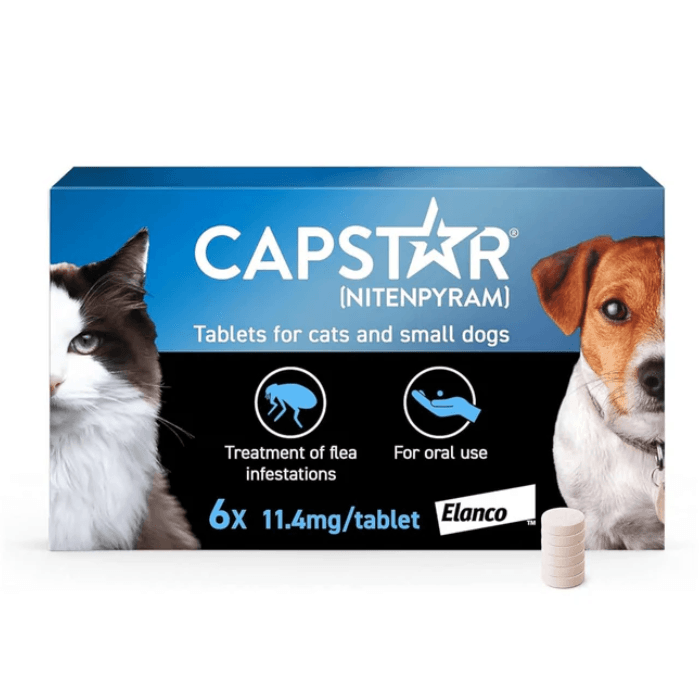
Capstar for Cat/Dog
Buy Capstar for Cat/Dog Online


Capstar for Cat/Dog is an oral nitenpyram flea treatment for cats and dogs with active adult flea infestations. It can be bought online, with current pricing shown during ordering and tablet strengths chosen according to the product label, pet weight, and veterinary direction. Capstar flea tablets for dogs and cats are intended for short-term adult flea knockdown, not as a complete home flea-control plan by themselves.
Capstar nitenpyram tablets are taken by mouth, which makes strength, species, and weight-range matching especially important. The same brand may appear for cats, small dogs, and larger dogs, but those choices should not be treated as interchangeable unless the label and your veterinarian support that exact use.
Capstar for Cats and Dogs Price and Strength Choices
The Capstar for cats and dogs price should be read together with the tablet strength, animal type, pet-weight range, and quantity shown during ordering. A lower headline amount may reflect a different strength or tablet count, while a higher total may simply include more tablets. For a fair Capstar cost comparison, start with the pet’s current weight and the strength your veterinarian recommended or the label supports.
Capstar 11.4 mg for cats is commonly associated with cats and small dogs within the labeled range. Capstar 57 mg for dogs is commonly associated with larger dogs within the labeled range. Those strength names are useful for navigation, but dosing decisions should not be based on the species name alone. A cat, kitten, dog, or puppy must also meet the label’s minimum age and body-weight requirements.
If you are comparing Capstar price without insurance, focus on the complete order: strength, quantity, and intended pet. Cash-pay totals can differ when one household needs tablets for more than one animal or when pets fall into different weight categories. Do not choose a tablet because it appears cheaper if it does not match the animal’s weight range.
| Ordering detail | Why it matters |
|---|---|
| Tablet strength | Different strengths are intended for different pet-weight ranges. |
| Species and weight | Cat and dog use may overlap only when the label supports it. |
| Quantity | Tablet count affects the number of treatment occasions available. |
| Household plan | Untreated pets and flea stages in the home can cause reinfestation. |
Quick tip: Match the tablet strength to the pet’s actual weight before comparing totals.
How to Order Capstar Online
Order Capstar for cats and dogs online by choosing the tablet strength and quantity that fit the pet and the label directions. Keep your pet’s current weight, age, species, and health history available while ordering. If the product was recommended by a veterinarian, follow the clinic’s instructions rather than estimating a dose at checkout.
- Choose the tablet strength that matches the pet’s labeled weight range.
- Confirm the quantity needed for the intended flea-control plan.
- Use the pet’s current weight, not an older estimate.
- Keep the package directions available when the tablets arrive.
Do not use the ordering process to decide whether a cat tablet can be used for a dog, or whether a dog tablet can be divided or combined for another pet. The practical decision is whether the specific tablet strength, animal species, age, and body weight match the label and veterinary direction.
Capstar for cats and dogs US delivery from Canada may be considered by customers planning cross-border ordering. Shipping and handling details should be reviewed at checkout, especially if other pet medications are ordered at the same time.
What Capstar Treats
Capstar oral flea treatment kills adult fleas on dogs, puppies, cats, and kittens that meet the labeled age and weight requirements. Product references describe use in animals at least 4 weeks of age and at least 2 pounds of body weight. Adult fleas are the biting stage you may see moving through the coat or on bedding.
Nitenpyram does not remove flea eggs, larvae, or pupae from carpets, bedding, cracks in flooring, outdoor resting areas, or other animals. That difference explains why fleas may return after a tablet works on the adult fleas present on the pet. A broader flea plan often includes cleaning the environment and treating all household animals as directed.
For condition-focused browsing, the Flea Infestation in Cats and Dogs category groups related information and pet-medication choices. Use that type of browsing to organize veterinarian-recommended options, not to substitute one product for another without checking species, weight range, and safety limits.
How Nitenpyram Works and What to Expect
Nitenpyram is the active ingredient in Capstar. It acts on fleas after the tablet is swallowed by the pet, leading to adult flea death. Official product information describes Capstar as fast acting, with flea killing beginning soon after administration. You may notice temporary scratching, biting, licking, or restlessness as fleas become active before they die.
The effect is short acting compared with monthly flea preventives. Capstar is commonly used when visible adult fleas need quick knockdown, while longer-term control may require a separate preventive or environmental plan. If fleas return quickly, repeated exposure from the home, yard, kennel, grooming area, or untreated animals may be the reason.
Expectations matter when choosing between Capstar for cats, Capstar for dogs, and broader flea-control products. A tablet can help with the adult fleas currently feeding on the pet, but it does not sterilize the environment or prevent every future exposure. Ask a veterinarian how Capstar should fit with topical products, collars, shampoos, or other parasite treatments already in use.
Cat and Dog Tablet Differences
There can be overlap between cat and small-dog Capstar tablets when the label supports the same strength for both. That does not mean every cat and dog product is identical. Strength, weight range, package directions, and intended animal size must all line up before a tablet is used.
Do not assume Capstar tablets for cats are suitable for every dog. A dog that eats a cat-strength tablet may receive too little medication for its weight, or the situation may still require veterinary guidance if the dog is very small, young, unwell, or took more than intended. Likewise, Capstar tablets for dogs should not be given to a cat unless the exact strength and label directions support cat use.
Combining several lower-strength tablets to approximate a larger-dog amount should be avoided unless a veterinarian specifically instructs you to do so. Tablet arithmetic does not replace product labeling. The correct choice depends on the animal, strength, age, weight, and health status.
Why it matters: The right Capstar tablet is based on labeled weight range, not the pet species name alone.
Dosage, Frequency, and Weight Checks
Capstar dosage for cats and dogs should follow the package directions and veterinary guidance. Do not give extra tablets because fleas are still visible in the environment or because scratching continues after treatment. Ongoing scratching can reflect flea bites, skin irritation, allergy, infection, or new fleas hatching in the home.
Label references commonly describe use in dogs, puppies, cats, and kittens at least 4 weeks old and at least 2 pounds. If a pet is near the minimum weight, has an uncertain weight, is losing weight, or is very young, confirm suitability before use. Small errors matter more in tiny animals.
How often Capstar can be given depends on the product directions and the animal’s situation. Some labels allow repeated use when adult fleas are seen, but that does not make repeated tablets the best long-term strategy for every pet. Frequent reinfestation usually means the environment, untreated animals, or an incomplete prevention plan needs attention.
- Weigh the pet close to the treatment date.
- Use the strength that matches the labeled range.
- Follow the directions for minimum age and weight.
- Ask a veterinarian about repeated use or combined flea products.
Storage, Handling, and Household Planning
Store Capstar tablets in the original package and follow the temperature instructions on the label. Keep tablets away from children and animals that may chew through packaging. Because Capstar is an oral tablet, it does not require the same handling as refrigerated injectable medicines, but it should still be protected from heat, moisture, and accidental access.
Household flea control should be planned before relying on repeated tablets. Vacuum carpets and furniture, wash pet bedding, and consider where the pet may be encountering fleas. Shared housing, kennels, parks, grooming facilities, and outdoor shaded areas can all contribute to repeated exposure.
If your veterinarian has recommended other animal-health products, the Pet Medications category can help you browse by product type. Keep every comparison tied to species, route, duration, weight range, and whether the product targets adult fleas only or broader parasites.
Side Effects, Warnings, and Monitoring
Monitor your pet after giving Capstar, especially the first time. Some pets scratch, bite, lick, jump, or groom more as fleas become active and die. Other reported reactions may include vomiting, reduced appetite, diarrhea, lethargy, panting, vocalization, restlessness, tremors, itching, or incoordination.
Contact a veterinarian urgently if your pet has collapse, seizures, trouble breathing, severe weakness, repeated vomiting, marked tremors, or any reaction that seems intense or worsening. Use extra caution in animals that are frail, ill, pregnant, nursing, very young, very small, or known to have neurologic disease or previous reactions to flea products.
Tell the veterinarian about other flea and tick products, collars, heartworm preventives, dewormers, supplements, and recent medications. Combining products may be appropriate in some flea-control plans, but it should be done intentionally. Small pets and animals with chronic disease may need closer monitoring when any parasite medicine is added.
- Age and weight: confirm both before treatment.
- Species match: do not assume cat and dog tablets are the same.
- Other products: mention collars, topicals, sprays, and preventives.
- Reaction signs: watch appetite, behavior, movement, and breathing.
How Capstar Compares With Other Flea Choices
Capstar is best understood as a short-acting adult flea tablet. Monthly oral or topical preventives, flea collars, sprays, shampoos, and environmental products can have different roles. The right comparison is not which product sounds strongest; it is whether the duration, species range, age limit, weight range, and safety profile match your pet.
Topical products may provide longer coverage, but they require skin application and may be affected by bathing or grooming. Collars can be convenient for some animals, but they also require correct fit and tolerance. Shampoos may remove fleas from the coat at one point in time, but they do not necessarily address eggs, larvae, or ongoing exposure.
If fleas are heavy, recurring, or affecting multiple pets, a veterinarian may recommend a combined approach. Capstar may reduce adult fleas quickly while another product or environmental plan addresses prevention. Do not layer multiple flea treatments without checking whether the ingredients and timing are safe together.
| Flea-control choice | Common role |
|---|---|
| Oral nitenpyram tablet | Short-term adult flea knockdown on the pet. |
| Monthly preventive | Ongoing flea control when recommended. |
| Environmental cleaning | Reduces eggs, larvae, and repeated exposure. |
| Veterinary evaluation | Important for severe itching, sores, weakness, or young pets. |
When to Ask a Veterinarian Before Use
Ask a veterinarian before using Capstar if your pet is under the labeled age or weight, has an uncertain weight, is pregnant or nursing, has seizures or neurologic disease, or is ill enough that appetite and hydration are already affected. Fleas can cause more than itching in vulnerable animals, including anemia when infestations are severe.
Veterinary input is also important if your pet has open sores, hair loss, pale gums, severe lethargy, weakness, repeated vomiting, or intense skin inflammation. Those signs may need diagnosis and treatment beyond an adult flea tablet. A tablet may kill fleas on the animal, but it will not treat secondary infection, flea allergy dermatitis, anemia, or household infestation by itself.
If more than one pet lives in the home, ask whether every animal should be treated and which products fit each species. Dog-only flea products can be dangerous for cats, and cat-safe products may not be adequate for larger dogs. Keep packages separate and labeled to avoid mix-ups.
Authoritative Sources
Official product information: Capstar nitenpyram oral flea treatment information describes the oral formulation and adult flea-treatment use.
Drug label reference: DailyMed Capstar label information provides labeled indication, animal age and weight details, and safety information.
Veterinary drug reference: Drugs.com professional Capstar monograph summarizes labeled use, directions, strengths, and reported adverse reactions.
This content is for informational purposes only and is not a substitute for professional medical advice.
Express Shipping - from $29.99
Shipping with this method takes 3-5 days
Prices:
- Dry-Packed Products $29.99
- Cold-Packed Products $39.99
Standard Shipping - $19.99
Shipping with this method takes 5-10 days
Prices:
- Dry-Packed Products $19.99
- Not available for Cold-Packed products
Can I use Capstar for cats on my dog?
Only use a cat-strength Capstar tablet for a dog when the exact tablet strength, pet weight, and label directions support that use. Some lower-dose tablets may be labeled for cats and small dogs, but species name alone is not enough to choose a dose.
Is there a difference between Capstar for dogs and Capstar for cats?
The active ingredient is nitenpyram, but the tablet strength and labeled weight range can differ. Capstar 11.4 mg is commonly associated with cats and small dogs, while Capstar 57 mg is commonly associated with larger dogs. Always match the tablet to the labeled range.
What happens if my dog eats cat Capstar?
A cat-strength tablet may be too low for some dogs, and any accidental or extra dose should be assessed based on the dog’s weight, age, health, and how much was swallowed. Contact a veterinarian if the dog is very small, unwell, took multiple tablets, or develops unusual symptoms.
How often can you give Capstar to cats and dogs?
Follow the package directions and veterinary guidance for frequency. Repeated adult fleas often point to reinfestation from the home, yard, or untreated animals, so more tablets may not solve the problem without broader flea control.
How quickly does Capstar start killing fleas?
Official product information describes Capstar as fast acting, with flea killing beginning soon after the tablet is given. Some pets may scratch or groom more temporarily as fleas become active and die.
Does Capstar prevent future flea infestations?
Capstar kills adult fleas on the pet, but it does not remove flea eggs, larvae, or pupae from the environment. Many pets need environmental cleaning and, when recommended, a longer-acting preventive to reduce reinfestation.
What side effects should I watch for after Capstar?
Watch for vomiting, diarrhea, reduced appetite, lethargy, panting, restlessness, tremors, incoordination, or unusual behavior. Seek urgent veterinary help for collapse, seizures, breathing trouble, severe weakness, or repeated vomiting.
Rewards Program
Earn points on birthdays, product orders, reviews, friend referrals, and more! Enjoy your medication at unparalleled discounts while reaping rewards for every step you take with us.
You can read more about rewards here.
POINT VALUE
How to earn points
- 1Create an account and start earning.
- 2Earn points every time you shop or perform certain actions.
- 3Redeem points for exclusive discounts.
You Might Also Like
Select options
This product has multiple variants. The options may be chosen on the product page
Select options
This product has multiple variants. The options may be chosen on the product page
Select options
This product has multiple variants. The options may be chosen on the product page
Select options
This product has multiple variants. The options may be chosen on the product page