
Please note: a valid prescription is required for all prescription medication.
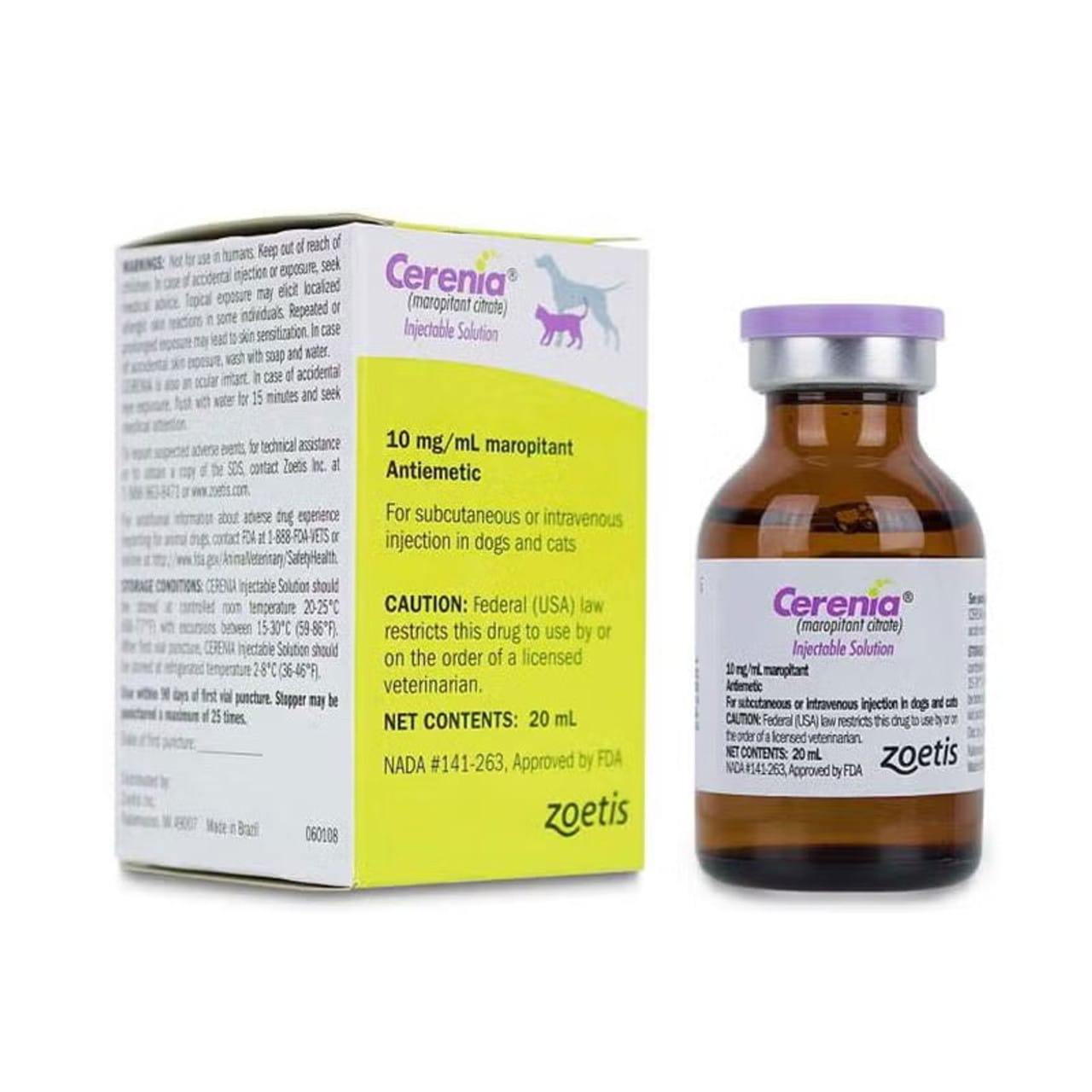
Cerenia Injection
Buy Cerenia Injection Online


Buy Cerenia Injection online with a valid veterinarian prescription and compare current listed pricing, available vial details, and safety basics before ordering. This page lets you match the selected injectable product to your pet’s order details while reviewing practical access factors.
You can also check handling notes, form information, and service context for US delivery from Canada when that applies to your order. Cerenia Injection is a veterinary maropitant injection used under a veterinarian’s direction for dogs and cats.
Before checkout, confirm the product form, concentration, vial size, and quantity shown on the listing. Injectable veterinary products should match the prescription exactly.
Price, Vial Options, and Access
Current listed pricing should be compared against the exact presentation selected on the page. For an injectable product, the concentration, vial volume, and quantity can affect the total amount supplied. A lower listed amount is not useful if it does not match the veterinarian’s order.
Cerenia Injection price searches often compare vial size and concentration because the product is not selected like a single tablet. If a 10 mg/mL injectable solution or 20 mL vial is shown, review whether the listing describes one vial, multiple vials, or another package configuration.
| What to compare | Why it matters |
|---|---|
| Form | Injection is different from oral tablets and may have separate directions. |
| Concentration | The mg per mL affects how a veterinarian calculates the administered amount. |
| Vial volume | Total contents may cover more than one administered dose. |
| Quantity | Pack count changes the selected product and listed total. |
| Handling needs | Injectable products need intact packaging and careful storage checks. |
Do not treat the vial size as a dose. A veterinarian calculates dosing from the pet’s weight, condition, species, and treatment plan. The page can help you compare Cerenia Injection cost factors, but it cannot replace the directions written by the prescribing veterinarian.
Quick tip: Match the vial concentration and quantity before comparing totals.
How to Buy Cerenia Injection Online
Choose the listed injectable solution that matches the prescription order, then provide the required order details during checkout. Online orders require a valid veterinarian prescription. Keep the clinic name, prescriber contact, pet information, and any label directions available in case details need confirmation.
- Select the presentation: Check vial size, concentration, and quantity.
- Confirm pet details: Species, weight, and diagnosis may be relevant.
- Review directions: Follow the veterinarian’s written use instructions.
- Prepare clinic information: Prescriber details may be confirmed when needed.
- Check handling notes: Injectable products should arrive intact and usable.
If supporting documents are requested, submit only the information needed to match the selected product to the veterinarian’s order. This helps reduce avoidable delays caused by unclear product names, tablet-versus-injection confusion, or missing prescriber information.
Some customers compare cash-pay access when coverage does not apply to a veterinary product. Review the current listing, selected quantity, and service details shown at checkout rather than assuming that two listings include the same total contents.
What Veterinarians Use This Injection For
Cerenia Injection contains maropitant citrate, an antiemetic, meaning an anti-vomiting medicine. Veterinarians use maropitant products to help manage vomiting and nausea-related problems in dogs and cats according to the product label and the pet’s clinical needs.
The injectable form may be selected when a pet cannot keep oral medication down, needs veterinary-supervised administration, or has directions that specify an injectable product. Cerenia injection for dogs and cats should not be substituted for tablets unless the veterinarian has clearly written that plan.
Vomiting can come from motion sickness, dietary problems, infections, medication effects, toxins, obstruction, kidney disease, liver disease, pancreatitis, and other causes. Because the causes differ, the correct product choice depends on the diagnosis rather than the symptom alone.
- Acute vomiting: Sudden vomiting needs veterinary assessment.
- Motion-related nausea: Directions may differ by product form.
- Medication-related vomiting: The clinic may coordinate timing.
- Cats and dogs: Species-specific safety checks still matter.
Injectable Solution Details to Match
This PDP is for the injectable presentation, not an oral tablet listing. The product may be described as Cerenia injectable solution, cerenia maropitant injection, or maropitant injection. Those names point to the same active ingredient family, but the selected listing still needs to match the prescription.
When a listing shows cerenia 10 mg/mL injectable or a 20 mL vial, read the presentation carefully. The concentration describes how much medicine is in each milliliter. The vial volume describes the total liquid in the container. Neither number tells you how much your pet should receive.
| Product detail | How to read it |
|---|---|
| Active ingredient | Maropitant citrate is the antiemetic component. |
| Form | Injectable solution is administered as directed by a veterinarian. |
| Concentration | mg/mL expresses strength per milliliter of solution. |
| Vial size | mL describes total volume in the vial. |
| Route and use | Follow the label and the clinic’s instructions. |
Cerenia Injection dose options should be discussed with the veterinarian, not chosen from the product page alone. If the written order lists a different form, strength, or species direction, clarify it with the clinic before selecting the product online.
Handling, Storage, and Shipping Basics
Injectable veterinary products need more handling attention than many oral medicines. Before ordering, check whether the product page lists storage instructions, packaging notes, or temperature considerations. After delivery, inspect the carton, vial, cap, and label before storing it as directed.
- Keep packaging intact: Do not use damaged or leaking vials.
- Follow label storage: Use the temperature range on the product label.
- Avoid contamination: Do not puncture a vial unless directed.
- Check appearance: Ask the clinic about cloudy or discolored solution.
- Track dates: Note opening dates when the label requires it.
Storage directions can differ by product label and country-specific packaging. Some injectable labels include instructions after the vial has first been punctured. If your veterinarian dispenses administration supplies or trains you to give injections, follow those clinic instructions exactly.
Where temperature control is needed for an injectable shipment, cold-chain shipping may be used to protect handling conditions. This does not change the veterinarian’s directions or guarantee that a product should be refrigerated after arrival.
Safety Checks Before Ordering
Cerenia Injection should be used only for the animal for whom it was prescribed. This is a veterinary injectable product, not a human anti-nausea medicine. Review the pet’s diagnosis, current medicines, and prior reactions before ordering a refill or new supply.
Commonly discussed adverse effects may include pain or swelling at the injection site, drooling, tiredness, decreased appetite, diarrhea, or changes in behavior. Vomiting that continues, worsens, or appears with blood, collapse, severe pain, bloating, dehydration, or suspected toxin exposure needs urgent veterinary attention.
- Allergy history: Report any reaction to maropitant.
- Liver concerns: Tell the veterinarian about known liver disease.
- Young animals: Age limits may apply on the label.
- Pregnancy or breeding: Ask about safety before use.
- Serious symptoms: Seek help for collapse or severe dehydration.
Vomiting medicines can reduce a symptom while the underlying cause remains. That is why a veterinarian may recommend exams, bloodwork, imaging, fluids, diet changes, or other treatment. Do not change dose timing, route, or duration without the clinic’s guidance.
Why it matters: A vomiting pet may need diagnosis, not only symptom control.
Interactions and Monitoring
Before using maropitant Cerenia Injection, make sure the veterinarian knows about all prescription drugs, over-the-counter products, supplements, and recent injections your pet has received. This is especially important when a pet has liver disease, is taking multiple medicines, or has a complex illness.
- Other medicines: Share anti-nausea, pain, and heart drugs.
- Supplements: Include herbal and digestive products.
- Recent anesthesia: Tell the clinic about procedures.
- Ongoing vomiting: Report continued symptoms promptly.
- Hydration signs: Watch gums, energy, and drinking.
Monitoring is practical, not complicated. Track whether vomiting stops, whether appetite returns, and whether any new symptoms appear after the cerenia shot. If the pet seems worse, unusually sedated, painful, or dehydrated, contact the veterinarian rather than giving extra doses.
Compare Related Pet Care Needs
If you are comparing veterinary products beyond this listing, the Pet Medications category can help you browse other prescribed animal medicines. Keep comparisons focused on the diagnosis and the product form your veterinarian selected.
For condition-based browsing, use Canine Motion Sickness, Canine Vomiting, or Feline Vomiting to separate motion-related problems from other vomiting concerns. These collections can support product navigation, but they do not determine which medicine is right for an individual pet.
Do not compare veterinary antiemetics by price alone. Species, route, diagnosis, duration, and clinic directions are more important than choosing the listing that appears simplest.
Authoritative Sources
The following sources provide additional label and manufacturer context for maropitant injectable products. Use them to support product understanding, then follow your veterinarian’s specific directions.
- Official manufacturer product information: Cerenia Product Information.
- Veterinary label summary: Cerenia Injectable Solution.
Label details can change by country and package. Always compare the dispensed product label with the veterinarian’s written directions.
This content is for informational purposes only and is not a substitute for professional medical advice.
Express Shipping - from $25.00
Shipping with this method takes 3-5 days
Prices:
- Dry-Packed Products $25.00
- Cold-Packed Products $35.00
Standard Shipping - $15.00
Shipping with this method takes 5-10 days
Prices:
- Dry-Packed Products $15.00
- Not available for Cold-Packed products
What is Cerenia Injection used for in dogs and cats?
Cerenia Injection contains maropitant citrate, an antiemetic used in veterinary medicine to help control vomiting and nausea-related problems in dogs and cats. The exact reason for use depends on the pet’s diagnosis, species, age, weight, and clinical condition. A veterinarian may choose the injectable form when oral medicine is not suitable or when supervised administration is needed.
How long does a Cerenia shot last?
The duration can vary by species, dose, route, and the condition being treated. Veterinary labels often describe once-daily use for certain indications, but that should not be used as personal dosing guidance. Ask the veterinarian how long the injection is expected to help, when to reassess symptoms, and what to do if vomiting returns or continues.
What side effects should I watch for after Cerenia Injection?
Possible side effects can include injection-site pain or swelling, drooling, decreased appetite, tiredness, diarrhea, or behavior changes. Serious symptoms such as collapse, severe dehydration, bloody vomit, breathing trouble, facial swelling, or worsening abdominal pain need urgent veterinary attention. Report any unusual reaction to the clinic, especially if the pet has other illnesses or takes multiple medicines.
Is Cerenia Injection the same as maropitant?
Cerenia is a brand-name veterinary medicine that contains maropitant citrate. Maropitant is the active antiemetic ingredient. Product names may refer to Cerenia injectable solution, Cerenia maropitant injection, or maropitant injection, but the prescription should still match the exact brand, concentration, form, and vial size the veterinarian intended.
What should I ask my veterinarian before using this injection?
Ask why the injection was chosen, how it should be given, what symptoms should improve, and when to seek follow-up care. Also ask whether the pet’s age, liver health, pregnancy or breeding status, other medicines, or suspected toxin exposure changes the plan. Confirm storage instructions and whether any opened-vial time limits apply.
How should an unopened vial be stored?
Follow the storage directions printed on the product label and outer packaging. Injectable products should be kept in their original packaging, protected from damage, and stored within the labeled temperature range. Do not use a vial that is cracked, leaking, cloudy, discolored, or past its expiry date unless a veterinarian or pharmacist has specifically assessed it.
Rewards Program
Earn points on birthdays, product orders, reviews, friend referrals, and more! Enjoy your medication at unparalleled discounts while reaping rewards for every step you take with us.
You can read more about rewards here.
POINT VALUE
How to earn points
- 1Create an account and start earning.
- 2Earn points every time you shop or perform certain actions.
- 3Redeem points for exclusive discounts.
You Might Also Like
Select options
This product has multiple variants. The options may be chosen on the product page
Select options
This product has multiple variants. The options may be chosen on the product page
Select options
This product has multiple variants. The options may be chosen on the product page
Select options
This product has multiple variants. The options may be chosen on the product page
Related Articles
Diabetes, Type 2
What Fruits Are Good for Diabetics? How to Choose Wisely
Most people with diabetes can eat fruit. The best choices are whole fruits with fiber, such as berries, apples, pears, citrus, cherries, and kiwi. When people ask what fruits are…
Diabetes, Type 1
Blood Sugar Normal Range Chart: How to Read Key Numbers
A blood sugar normal range chart gives you a quick way to compare fasting, before-meal, after-meal, and A1C numbers with common clinical cutoffs. It matters because the same glucose value…
Uncategorized
Clots and Period: When Menstrual Blood Clots Need Attention
The phrase clots and period usually refers to blood clots that pass during menstruation. In many cases, small clots on the heaviest days are a normal result of brisk bleeding.…
Diabetes, Type 1
Type 1 Versus Type 2 Diabetes: Symptoms, Causes, and Care
type 1 versus type 2 diabetes comes down to why blood sugar rises. In type 1, the immune system destroys insulin-making cells in the pancreas, so the body makes little…