
Please note: a valid prescription is required for all prescription medication.
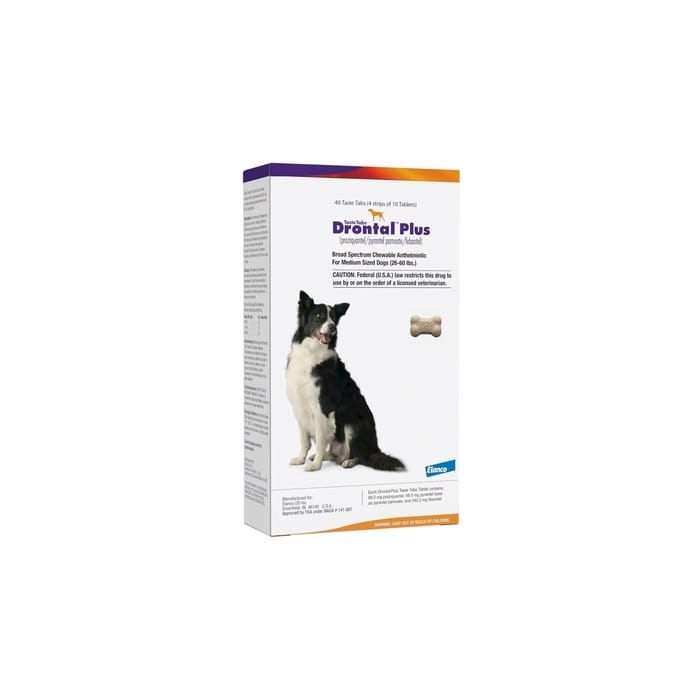
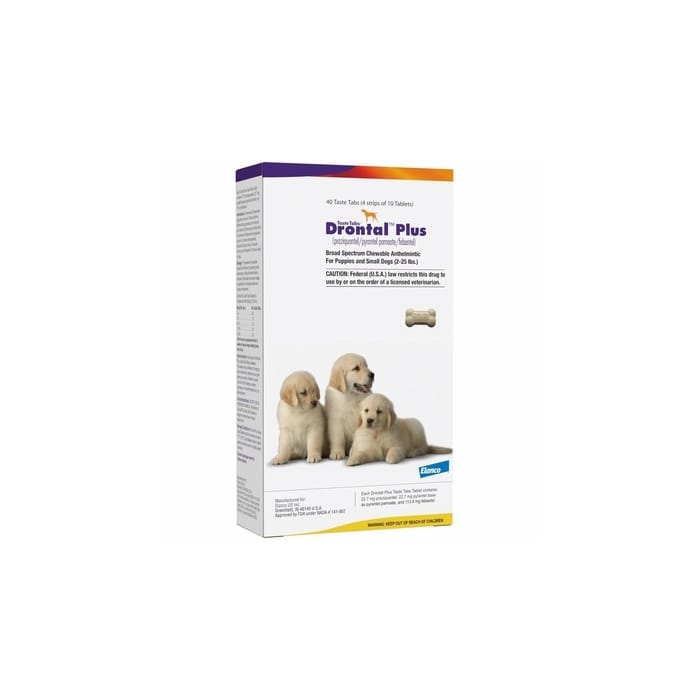
Drontal Plus
Drontal Plus Product Overview for Dogs
Price:
Price range: $217.99 through $549.99
You save


What Drontal Plus Is and How It Works
Drontal Plus is an oral dewormer used in dogs to treat common intestinal worm infections. It is typically used when a veterinarian suspects or confirms parasites on a stool test. This page explains expected use, safety points, and practical handling.
In our workflow, prescription details may be confirmed with the prescribing veterinarian when required. Some patients explore US shipping from Canada when coordinating pet prescriptions and refills. For broader browsing, the Pet Medications hub can help you compare formats and parasite targets.
This medicine combines multiple antiparasitic ingredients that work in different ways against helminths (parasitic worms). Praziquantel primarily targets tapeworms by disrupting the parasite’s outer surface. Pyrantel acts at the worm’s neuromuscular junction, leading to paralysis and expulsion in stool. Febantel is a pro-benzimidazole that is metabolized into related compounds that interfere with worm energy use. Because of this multi-ingredient approach, it is often positioned as a broad intestinal wormer rather than a single-parasite treatment.
Why it matters: Matching the parasite type to the product helps avoid under-treatment and unnecessary repeat dosing.
Who It’s For
Drontal Plus for Dogs is generally used for dogs with suspected or confirmed intestinal worms, including pets with exposure risks such as parks, kennels, hunting, or household contact with other animals. Veterinarians often base the decision on clinical signs (for example, diarrhea, weight loss, poor coat condition) plus a fecal exam, since many infected dogs have mild or nonspecific symptoms.
Parasites are commonly discussed by type, and the workup may differ by region. If you are learning the basics, these condition resources summarize typical signs and diagnostic approaches: Canine Tapeworm Infection, Canine Roundworm Infection, Canine Hookworm Infection, and Canine Whipworm Infection.
At a high level, this product is for canine use only; it should not be given to other species unless a veterinarian specifically directs that use. Situations that may require extra caution include very young animals, pets that are underweight or unwell, and dogs with a history of medication sensitivity. Pregnancy, breeding status, and concurrent parasite control products can also change the risk/benefit discussion. Always follow the package insert and the veterinarian’s instructions for the specific tablet type you have.
Dosage and Usage
Drontal Plus Dosage is determined by body weight and the specific tablet presentation, so the most important step is to use the label’s weight chart for that package. Many dogs receive an oral dose as a single administration, but a veterinarian may recommend follow-up testing or additional deworming based on the parasite identified and reinfection risk. Puppies and newly adopted dogs often follow a structured deworming plan that is different from adult maintenance.
Common label-style schedules
Veterinary deworming plans often pair treatment with prevention steps. A clinician may treat confirmed worms now, then advise a repeat fecal exam later to confirm clearance, especially in multi-pet homes. In puppies, schedules are commonly timed around early life stages, since immature immune systems and environmental exposure increase risk. If hookworms are suspected, follow-up matters because larvae can persist in the environment and reinfect pets. Bring the exact product carton to appointments so the veterinary team can verify the formulation, since different chewables or tablets can have different weight ranges.
Quick tip: If a dog spits out a dose, keep the remaining tablet and ask a clinic how to proceed.
Administration is usually straightforward: give the tablet by mouth, with or without food, as directed on the label. Do not change the number of tablets or split them unless the package instructions describe doing so. If vomiting occurs soon after dosing, or if the dog seems unusually weak, contact a veterinary clinic for individualized guidance. Environmental steps (prompt stool pickup, cleaning contaminated areas, and parasite prevention for other pets) can reduce reinfection and improve long-term control.
Strengths and Forms
Drontal Plus Tablet products are sold in multiple dog-size presentations, and the active ingredient amounts vary by SKU. Many owners recognize versions marketed as palatable “taste tabs,” but availability of specific chewable styles can differ by country and pharmacy. Because the strength depends on the tablet size category, it is safer to identify a product by its labeled dog weight range rather than relying on a remembered milligram number.
The combination is designed to cover several common intestinal worm groups. The exact list of targeted parasites is defined by the package insert for the version you have, and local parasite patterns may influence a veterinarian’s selection.
| Parasite group | Plain-language name | Typical confirmation method |
|---|---|---|
| Cestodes | Tapeworms | Fecal exam; segments seen |
| Nematodes | Roundworms and hookworms | Fecal flotation (stool test) |
| Nematodes | Whipworms | Fecal testing; repeat samples |
If a dog has diarrhea from a protozoan (single-celled parasite) such as Giardia, treatment may require a different plan. Some dewormers are used in veterinarian-directed protocols, but not every label includes protozoa as an indicated use. Ask a clinic to interpret results before assuming a worm medicine is the right fit.
Storage and Travel Basics
Drontal Plus should be stored according to the label directions for the specific package you have. In general, keep tablets in their original blister or container to protect them from humidity and accidental ingestion. Store at a stable room temperature and away from direct sunlight, unless the insert states otherwise.
When traveling, pack the carton or a photo of the full label, including the lot number and expiration date. This makes it easier for a veterinary team to confirm which formulation was used if questions come up later. Keep all pet medicines out of reach of children and animals, since chewable products can be attractive to pets. If your dog is on multiple parasite-control products, keep a simple list of names and dosing dates to reduce duplication.
Do not use tablets past the expiration date, and do not keep loose tablets in unmarked containers. If a tablet looks swollen, crumbling, or discolored, replace it rather than guessing about potency. For disposal, follow local guidance; many communities recommend sealed disposal to limit wildlife exposure.
Side Effects and Safety
Like many oral antiparasitics, Drontal Plus can cause mild gastrointestinal effects in some dogs. Commonly reported issues include vomiting, soft stool or diarrhea, reduced appetite, and temporary lethargy. These effects may be hard to separate from the underlying infection, since intestinal parasites can also cause digestive upset.
More serious reactions are uncommon but important to recognize. Contact a veterinarian promptly if a dog shows repeated vomiting, severe diarrhea, marked weakness, collapse, hives, facial swelling, trouble breathing, or persistent neurologic changes such as tremors or disorientation. If a dog has a heavy worm burden, passing worms or worm fragments in stool can occur after treatment; a clinic can help interpret what is expected versus concerning.
Extra caution is reasonable in dogs that are debilitated, have significant concurrent illness, or have reacted poorly to dewormers in the past. Adverse effects should be reported to a veterinary clinic so they can be documented and considered in future parasite-control plans. Bring the product packaging to the visit to support accurate identification and reporting.
Drug Interactions and Cautions
Before giving Drontal Plus, tell the veterinarian about all medications and supplements the dog receives. This includes flea and tick products, heartworm preventives, other dewormers, and any recent treatments from grooming or boarding facilities. Even when products target different parasites, overlapping ingredients or similar drug classes can increase the chance of side effects.
Caution is also relevant for dogs with known liver disease, severe gastrointestinal disease, or a history of seizures, since systemic illness can change how medications are tolerated. Reproductive status matters as well; pregnancy and lactation can affect which products are preferred and when treatment is scheduled. Age and minimum weight thresholds are formulation-specific, so verify those details on the exact carton you have.
If a stool test shows a parasite not covered by the label indication, a veterinarian may choose a different medicine or add another step, such as environmental control or retesting. Avoid combining treatments “just in case” without clinical direction, since it can complicate monitoring and may not improve outcomes. When uncertainty remains, a clinic may repeat fecal testing using a different method to improve detection.
Compare With Alternatives
Veterinary intestinal parasite treatment is often tailored to the parasite identified, the dog’s life stage, and whether prevention for other parasites (such as heartworm) is also needed. A broad dewormer may be chosen for mixed or likely exposures, while a narrower product may be used when a specific parasite is confirmed.
Examples of alternatives that may come up in veterinary discussions include tapeworm-focused praziquantel products and other broad-spectrum dewormers. For tapeworm-only therapy, a clinician may consider options such as Droncit Details, depending on species, dosing form, and local availability. For roundworm and hookworm coverage, fenbendazole products such as Panacur Suspension may be used in certain situations, particularly when a different dosing schedule is preferred.
Combination preventives that include monthly parasite control can also be part of a long-term plan, especially if a dog needs both intestinal parasite coverage and other prevention measures. If you want additional background on tapeworm treatment concepts, the guide Droncit For Cats And Dogs reviews common terminology and why species-specific selection matters. Final product choice should come from a veterinarian who can match findings to the label and the dog’s history.
Pricing and Access
Access to Drontal Plus varies by jurisdiction, pharmacy rules, and veterinary practice policies. In some regions it is handled as a prescription product, while in others it may be available through veterinary channels with documented oversight. When prescriptions are required, the process typically depends on an established veterinarian-client-patient relationship and an up-to-date weight so the correct tablet presentation can be selected.
Coverage is also variable. Pet insurance plans may reimburse eligible medications after purchase, but benefits differ widely, and many policies apply deductibles or limits. Some owners are comparing options without insurance, in which case the main drivers are tablet size category, number of doses prescribed, and whether follow-up fecal testing is recommended.
CanadianInsulin operates as a referral platform; when permitted, dispensing and fulfilment are handled by licensed third-party pharmacies. Documentation checks may include verifying the prescriber, confirming the animal’s details, and ensuring the product matches the written directions. Some patients consider cash-pay routes or cross-border fulfilment depending on eligibility and local rules. For general, non-time-limited information, see the Promotions Page for program terms and any posted updates.
Regardless of where the medicine is sourced, ask the veterinary team what success looks like for your dog’s situation. That may include symptom improvement, a repeat stool test, or environmental steps to reduce reinfection. Keeping a dated log of doses and fecal results can make future decisions more consistent and easier to review.
Authoritative Sources
The references below provide background on intestinal parasites, diagnostic testing, and general deworming principles. They can help you interpret veterinary recommendations and understand why prevention and retesting may be discussed alongside treatment.
- For parasite-prevention guidance from a veterinary group, see CAPC guidelines and life-cycle explanations.
- For official U.S. animal drug approval context, review FDA Green Book approved products.
- For clinical overviews of canine intestinal parasites, read Merck Veterinary Manual parasite summaries.
Medication handling and transport may involve prompt, express, cold-chain shipping when temperature control is required by product type.
This content is for informational purposes only and is not a substitute for professional medical advice.
Express Shipping - from $25.00
Shipping with this method takes 3-5 days
Prices:
- Dry-Packed Products $25.00
- Cold-Packed Products $35.00
Standard Shipping - $15.00
Shipping with this method takes 5-10 days
Prices:
- Dry-Packed Products $15.00
- Not available for Cold-Packed products
What worms does Drontal Plus treat in dogs?
Drontal Plus is commonly used for several intestinal worm types in dogs, particularly tapeworms and common nematodes such as roundworms, hookworms, and whipworms, depending on the specific label for the product version. These parasites can be identified by fecal testing, and some (like tapeworms) may also be suspected if segments are seen in stool or near the tail. A veterinarian can match the stool-test result to the label indication and advise whether follow-up testing or environmental cleanup is needed.
How soon should I expect to see worms after dosing?
Some dogs pass worms or worm fragments in stool after treatment, while others do not, even when treatment is effective. Timing can vary with the parasite type, the dog’s gut motility, and the degree of infection. Because appearance in stool is not a reliable “proof,” veterinarians may recommend a repeat fecal exam to confirm clearance, especially for whipworms or in kennel settings. If a dog has ongoing diarrhea, weight loss, or lethargy after treatment, contact a clinic for assessment.
Is Drontal Plus dosage based on weight?
Yes. Dosing is typically weight-based and tied to the specific tablet presentation (for example, small-, medium-, or large-dog formats). The safest approach is to use the weight chart and directions on the exact package you have and confirm your dog’s current weight with a clinic if it may have changed. Avoid substituting tablet sizes or splitting tablets unless the label specifically describes doing so. If a dose is missed or a dog spits out a tablet, a veterinary team can advise the next step based on timing and risk.
Can puppies take Drontal Plus?
Puppies are often dewormed on structured schedules because intestinal parasites are common early in life. Whether a specific Drontal Plus version is appropriate depends on the puppy’s age, weight, and overall health, plus the product’s label restrictions for that tablet type. Puppies may also need repeat doses and follow-up fecal testing because reinfection can occur in the environment or from the mother. Your veterinarian can recommend a plan that fits your puppy’s risk factors, vaccination timeline, and living situation.
What side effects should I watch for after deworming?
Mild gastrointestinal signs such as vomiting, soft stool, diarrhea, reduced appetite, or sleepiness can occur after deworming and may be temporary. Monitor hydration, energy level, and whether symptoms resolve over a short period. Seek veterinary help promptly for repeated vomiting, severe diarrhea, collapse, hives or facial swelling, breathing difficulty, or marked neurologic changes (tremors, severe weakness, disorientation). Keeping the product carton helps the clinic confirm the formulation and document any adverse reactions accurately.
What should I ask my veterinarian before giving a dewormer?
Useful questions include: Which parasite are we treating, and how was it confirmed? Does this product’s label match the parasite found and my dog’s age and weight? Should other pets be treated at the same time? Do we need a repeat fecal test, and when? Are there any concerns with my dog’s other medications, supplements, or flea/tick and heartworm products? Also ask what signs should prompt a call, especially if your dog has prior sensitivity to dewormers or ongoing gastrointestinal disease.
Rewards Program
Earn points on birthdays, product orders, reviews, friend referrals, and more! Enjoy your medication at unparalleled discounts while reaping rewards for every step you take with us.
You can read more about rewards here.
POINT VALUE
How to earn points
- 1Create an account and start earning.
- 2Earn points every time you shop or perform certain actions.
- 3Redeem points for exclusive discounts.
You Might Also Like
Select options
This product has multiple variants. The options may be chosen on the product page
Select options
This product has multiple variants. The options may be chosen on the product page
Select options
This product has multiple variants. The options may be chosen on the product page
Select options
This product has multiple variants. The options may be chosen on the product page
Related Articles
Type 2 Diabetes,
Oral Wegovy Explained: Facts, Risks, and Access Options
The phrase oral wegovy is best understood as a search term, not a settled product name. Most people use it to mean a pill version of semaglutide for weight management,…
Diabetes, General Health,
Glp-1 Drugs Over The Counter: What’s Real And What’s Not
Key Takeaways Prescription GLP-1 medicines are not sold as true OTC drugs. Many “GLP-1” supplements aim to support fullness, not mimic prescriptions. Online “no prescription” offers raise counterfeit and quality…
Diabetes, Type 2
GLP-1 Cost Without Insurance: Compare Cash-Pay Options
Key Takeaways Many people searching for glp-1 cost without insurance are trying to plan for a long-term expense. The total can change based on the drug, the pharmacy, and how…
Cardiovascular, Diabetes, Nephrology,
SGLT2 Inhibitors Drugs: Names, Uses, And Safety Notes
Key Takeaways They lower glucose by increasing urinary sugar loss. Common options include dapagliflozin, empagliflozin, canagliflozin, and ertugliflozin. Some products combine an SGLT2 inhibitor with metformin. Risks include dehydration and…