
Please note: a valid prescription is required for all prescription medication.
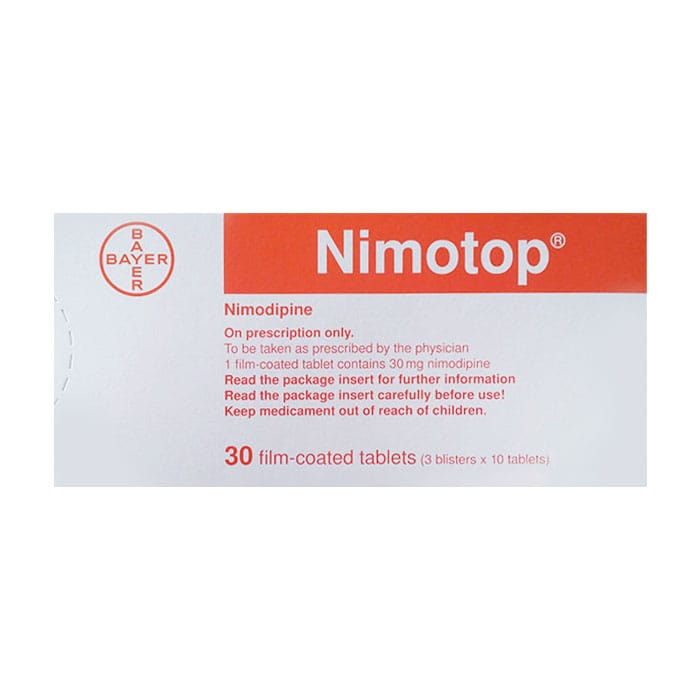
Nimotop
Nimotop 30 mg: Buy with Prescription and Safety Basics
Price:
$1,461.99
You save


Nimotop is a brand form of nimodipine, a prescription medicine used in specific neurologic care settings. This page summarizes Nimotop 30 mg, including labeled use, dosage basics, safety topics, and storage considerations. CanadianInsulin supports access through US shipping from Canada, with cash-pay options for people without insurance.
What Nimotop 30 mg Is and How It Works
Nimodipine belongs to the dihydropyridine (a blood-vessel–relaxing calcium-channel blocker) class. It is used after certain types of bleeding around the brain, where secondary problems can occur in the days that follow. The medicine is designed to affect blood vessels, especially in the brain, which is why it is used in neurocritical care pathways rather than for routine blood pressure treatment.
CanadianInsulin is a prescription referral platform that coordinates dispensing through licensed partner pharmacies. After a subarachnoid hemorrhage, clinicians may use nimodipine to reduce complications linked to vasospasm (sudden narrowing of brain arteries). By reducing calcium entry into vascular smooth muscle cells, it can help relax arteries and support blood flow. Effects on blood pressure can still occur, so monitoring is part of typical hospital care.
Who It’s For
This medicine is generally used for adults after an aneurysmal subarachnoid hemorrhage (bleeding into the space around the brain) to support neurologic outcomes. It is often started in the hospital and may be continued after discharge depending on the care plan. For background on the condition and common terminology, the Subarachnoid Hemorrhage hub can be used as a browsing starting point.
Use may not be appropriate for people with a known allergy to nimodipine or to ingredients in the formulation. Extra caution is commonly needed when baseline blood pressure is low, when there is significant liver impairment, or when multiple blood-pressure–lowering agents are used together. In practice, Nimotop 30 mg is selected within a broader neurology care plan; related topics and general education can be found in Neurology Articles and seasonal awareness resources such as Brain Injury Awareness Month.
Dosage and Usage
Only a prescriber can determine an appropriate regimen. For aneurysmal subarachnoid hemorrhage, product labeling commonly describes an oral schedule that totals 60 mg every 4 hours for a defined treatment course, often expressed as two 30 mg units per dose. In that context, Nimotop 30 mg may be one of the units used to reach the labeled dose. Timing, duration, and administration route should follow the official directions and the treating team’s protocol.
Oral administration is essential for this product. Nimodipine should not be given by intravenous (IV) injection, and it should not be prepared as an IV infusion from oral capsules or tablets. If doses are missed or delayed, institutions typically follow standardized instructions rather than doubling a later dose. The treating team may also align dosing with enteral feeding schedules, blood pressure checks, and other neurologic monitoring.
Practical administration notes (non-personalized)
In many hospitals, doses are spaced evenly across day and night to match the q4h schedule described in labeling. When oral swallowing is difficult, some care settings administer nimodipine using enteral access under institutional procedures, because handling can differ by formulation. Crushing or altering an oral solid can change how a drug is delivered, so any manipulation should be directed by a pharmacist or prescriber. If a caregiver sees references online to a “Nimotop 60 mg” dose, it often reflects the total per-dose amount rather than a single unit strength.
Quick tip: Keep an updated medication list to share during transitions of care.
Strengths and Forms
Nimodipine is supplied as an oral solid dosage form, and labeling will specify whether it is a capsule or tablet. In many markets, the most common unit strength is 30 mg, which is why searches often include phrasing like Nimodipine tablet 30 mg or Nimodipine 30mg tablet uses. Availability can vary by country, manufacturer, and pharmacy sourcing, so the dispensed presentation should always be confirmed from the package and dispensing label.
The table below clarifies how units and dose totals are often discussed. In this context, Nimotop 30 mg can be referenced as a unit used to assemble a labeled dose. Terms such as Nimotop 30 mg tablets, Nimodipine tablets 30 mg, Nimotop s 30 mg, or Nimotop tablete may appear on international listings or multilingual packaging, but the official label remains the best reference for form and handling.
| How it may be described | What it usually means |
|---|---|
| 30 mg unit | One oral capsule/tablet unit |
| 60 mg per dose | Often two 30 mg units taken together |
| Generic equivalent | Nimodipine (same active ingredient) |
Storage and Travel Basics
Storage directions can differ by manufacturer, so the package label should be followed first. In general, nimodipine is kept at controlled room temperature and protected from excess heat, moisture, and direct light. Keeping the medicine in its original packaging can reduce mix-ups and supports safe handling during a hospital discharge transition.
For travel, placing doses in carry-on luggage helps avoid temperature extremes that can occur in checked bags or vehicles. If a caregiver organizes doses in a weekly pill box, it helps to cross-check appearance and labeling to prevent substitution errors. For additional condition-area browsing, the Neurology category lists other medicines commonly used in neurologic care pathways.
Side Effects and Safety
Like other calcium-channel blockers, nimodipine can lower blood pressure and may cause dizziness, flushing, headache, nausea, or fatigue. In neurocritical care, clinicians frequently track blood pressure trends and overall neurologic status because hypotension can complicate recovery. Effects can be more noticeable when standing up quickly, when dehydrated, or when other blood-pressure–lowering medicines are also used.
When required, prescriptions may be confirmed with the prescriber before dispensing. Serious reactions can include fainting, markedly low blood pressure, a fast or irregular heartbeat, swelling of the face or throat, or severe rash. Any sudden worsening of neurologic symptoms after a hemorrhage is also treated as urgent. In follow-up care, Nimotop 30 mg should be reviewed alongside discharge instructions so dose timing and monitoring align with the overall plan.
Why it matters: Dizziness and low blood pressure can increase fall risk during recovery.
Drug Interactions and Cautions
Nimodipine is primarily metabolized through CYP3A4, so interactions are an important safety topic. Strong CYP3A4 inhibitors (such as certain azole antifungals or macrolide antibiotics) can raise nimodipine exposure, while inducers (such as rifampin, carbamazepine, phenytoin, or St. John’s wort) can reduce it. Grapefruit and grapefruit juice may also increase drug levels and are commonly avoided during therapy.
Other cautions include combining nimodipine with additional antihypertensives, alpha blockers, or nitrates, which may compound blood-pressure lowering. Liver impairment can also change drug clearance, which may affect tolerability. A pharmacist or prescriber typically reviews the full medication list, including over-the-counter products, before starting or continuing therapy after discharge.
Compare With Alternatives
Nimotop is the brand-name product; nimodipine is the generic equivalent with the same active ingredient. For aneurysmal subarachnoid hemorrhage, nimodipine has a specific role in protocols, and other calcium-channel blockers are not automatically interchangeable for this indication. In some settings, other agents may be used for blood pressure control or vasospasm management by specialized teams, using routes and monitoring that differ from oral nimodipine.
In neurologic care, additional medicines may be used for related problems but are not substitutes for nimodipine. For example, seizure-prevention or seizure-treatment plans may involve products such as Levetiracetam, and neuropathic pain strategies may include Gabapentin when appropriate for the clinical situation. Selection depends on diagnosis, comorbidities, and current monitoring needs.
Pricing and Access
People may search for terms like Nimotop 30 mg cost, Nimodipine 30 mg price, or Nimotop 30 mg cash price when comparing cash-pay options. Final pricing depends on the dispensed presentation, quantity, and pharmacy sourcing, and dollar amounts are not listed here. For those managing Nimotop 30 mg without insurance, documentation and prescriber oversight remain part of safe access.
Licensed Canadian pharmacies dispense prescription medications based on a valid prescription. If a prescription is required, the platform may verify details with the prescriber and then coordinate fulfillment once documentation is complete. If site-wide savings programs apply, details are listed on Current Promotions (availability and terms can change).
Authoritative Sources
For official labeling and safety details, consult these references:
- U.S. label information via DailyMed nimodipine listings.
- Patient-friendly drug overview via MedlinePlus nimodipine.
To proceed on the site, submit prescription details; fulfillment may use prompt, express, cold-chain shipping when appropriate.
This content is for informational purposes only and is not a substitute for professional medical advice.
Express Shipping - from $25.00
Shipping with this method takes 3-5 days
Prices:
- Dry-Packed Products $25.00
- Cold-Packed Products $35.00
Standard Shipping - $15.00
Shipping with this method takes 5-10 days
Prices:
- Dry-Packed Products $15.00
- Not available for Cold-Packed products
What is Nimotop used for?
It is used to improve neurological outcome after aneurysmal subarachnoid hemorrhage by reducing ischemic deficits linked to cerebral vasospasm. It is not a general blood pressure medicine.
How should I take Nimotop capsules?
Swallow capsules whole with liquid on the schedule set by your care team. Do not crush or chew. Hospital teams may give the capsule contents via a feeding tube using label-directed methods when swallowing is not possible.
Can I drink grapefruit juice with this medicine?
No. Grapefruit and grapefruit juice can raise nimodipine levels through CYP3A4 inhibition, increasing the risk of hypotension and other adverse effects.
What are common side effects?
Headache, flushing, dizziness, nausea, swelling in the legs, and changes in heart rate can occur. Seek medical help for severe dizziness, fainting, chest pain, or new neurological symptoms.
What if I miss a dose?
Take the missed dose when remembered unless it is close to the next one. Do not double up. If unsure, contact your healthcare provider for guidance.
Are there important drug interactions?
Strong CYP3A4 inhibitors (such as certain azoles or macrolides) can increase levels; strong inducers (such as rifampin or some anticonvulsants) can decrease levels. Other blood pressure–lowering medications may enhance hypotensive effects.
Is nimodipine ever given by IV?
No. This product is for oral use only. Intravenous administration of nimodipine has caused serious adverse events, including deaths, and is contraindicated.
What is nimodipine used for after subarachnoid hemorrhage?
Nimodipine is most commonly used after an aneurysmal subarachnoid hemorrhage (a type of bleeding around the brain). In that setting, clinicians use it to help reduce complications that can occur days after the bleed, including vasospasm (narrowing of brain arteries) that can affect blood flow. It is not used for all strokes or all headaches. The indication is specific, and treatment is typically part of a hospital-managed care pathway with careful neurologic and blood pressure monitoring.
How long is nimodipine therapy typically continued?
For aneurysmal subarachnoid hemorrhage, labeling and many hospital protocols describe a limited course rather than indefinite use. A common approach is continuing therapy for a set number of days (often expressed in weeks) to cover the period when delayed complications are most likely. The exact start date and stop date depend on when the hemorrhage occurred, the patient’s clinical status, and discharge planning. A prescriber should confirm the intended duration at transitions of care.
How is blood pressure monitored while taking nimodipine?
Because nimodipine can lower blood pressure, monitoring is usually built into the treatment plan, especially early in therapy. In the hospital, blood pressure and heart rate may be checked frequently and paired with neurologic assessments. After discharge, monitoring plans vary and may include home readings, clinic checks, or nursing visits depending on risk factors and other medications. Symptoms such as dizziness, fainting, or unusual weakness are typically treated as reasons to seek prompt clinical review.
Can nimodipine be given through a feeding tube?
In some inpatient settings, nimodipine may be administered through enteral feeding access when swallowing is not possible, but the method depends on the specific formulation and institutional protocols. Altering an oral capsule or tablet (opening, puncturing, or dispersing) can change how the medication is delivered and can introduce dosing errors if done incorrectly. For that reason, decisions about feeding-tube administration are usually directed by a prescriber and pharmacist, with clear step-by-step handling instructions.
What medicines and foods interact with nimodipine?
Nimodipine is affected by CYP3A4 interactions. Strong inhibitors (for example, some azole antifungals or macrolide antibiotics) can increase nimodipine exposure, while inducers (for example, rifampin, carbamazepine, phenytoin, or St. John’s wort) can decrease it. Grapefruit and grapefruit juice may also raise levels and are commonly avoided. Other blood-pressure–lowering drugs can add to hypotension risk. A complete medication list review is the safest way to screen for interactions.
What should I ask my clinician before starting Nimotop?
Helpful questions include: the intended indication (and whether it is aneurysmal subarachnoid hemorrhage), the planned duration, and what blood pressure targets or symptoms should prompt urgent evaluation. It is also important to discuss liver disease history, pregnancy or breastfeeding considerations, and whether any current medicines could interact through CYP3A4. If swallowing is difficult, asking about acceptable administration methods is important, since nimodipine should not be prepared for IV use. Confirming how to handle missed doses can prevent errors.
Rewards Program
Earn points on birthdays, product orders, reviews, friend referrals, and more! Enjoy your medication at unparalleled discounts while reaping rewards for every step you take with us.
You can read more about rewards here.
POINT VALUE
How to earn points
- 1Create an account and start earning.
- 2Earn points every time you shop or perform certain actions.
- 3Redeem points for exclusive discounts.
You Might Also Like
Select options
This product has multiple variants. The options may be chosen on the product page
Select options
This product has multiple variants. The options may be chosen on the product page
Select options
This product has multiple variants. The options may be chosen on the product page
Select options
This product has multiple variants. The options may be chosen on the product page
Related Articles
Uncategorized
High Blood Sugar: Symptoms, Causes, and Urgent Signs
Hyperglycemia is the medical term for glucose above your target range. In everyday language, it means high blood sugar. It can happen with diabetes, severe stress, illness, steroid medicines, or…
Respiratory, Weight Management
Zepbound for Sleep Apnea: Who It May Help and Why CPAP Still Matters
Zepbound for sleep apnea may be appropriate for some adults, but it is not a blanket replacement for standard apnea treatment. The current discussion mainly involves obstructive sleep apnea (OSA),…
Weight Management
Generic Wegovy: Availability, Alternatives, and Cost Context
Generic Wegovy is usually a search for a lower-cost semaglutide option, but the term can be misleading. A true generic is a regulator-approved equivalent to a brand medicine, and patients…
Type 2 Diabetes,
Generic Ozempic Explained for Patients and Caregivers
Key Takeaways People searching generic ozempic are usually trying to confirm whether a lower-cost semaglutide option is a true approved equivalent, a compounded product, or a different diabetes medicine. Separate…