
Shipping with this method takes 3-5 days
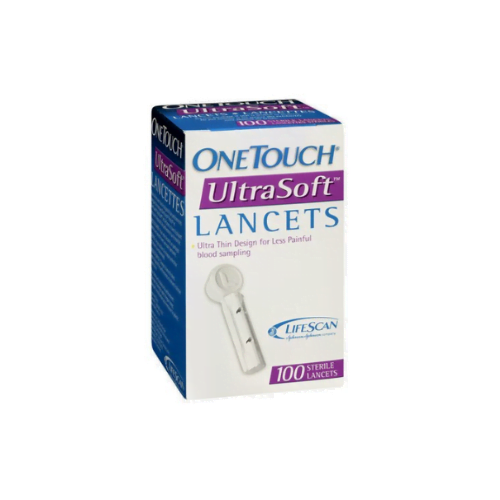

OneTouch Ultra Soft Lancets
Buy OneTouch Ultra Soft Lancets Online


OneTouch Ultra Soft Lancets are sterile, single-use diabetic lancets used with a compatible lancing device to obtain a small blood sample for glucose testing. You can buy OneTouch Ultra Soft Lancets online, view the current price, and choose the quantity shown during ordering to match your testing routine and clinician instructions.
These lancets do not measure blood glucose on their own. They work as part of a blood glucose monitoring setup that also includes a compatible lancing device, meter, and test strips. Match the lancet style to the device you use before placing an order, especially if you are replacing an older box or changing OneTouch device families.
OneTouch Ultra Soft Lancets Price and 100-Lancet Quantity Checks
The OneTouch Ultra Soft Lancets price should be read together with the box count and quantity in the cart. Many shoppers look for OneTouch Ultra Soft Lancets 100, so make sure the number of sterile lancets in the box matches what you expect. If more than one box can be added, the checkout total changes with the quantity.
Cost comparisons work best when the products are similar. Compare the lancet family, pack count, gauge description, device fit, and current stock status rather than judging by brand name alone. Soft lancets from another brand may look similar, but the internal shape may not seat correctly in your lancing device.
For US delivery from Canada, keep the shipping address, contact information, and item quantity accurate before submitting the order. Lancets are not refrigerated supplies, but the box should remain sealed, dry, and protected from crushing during storage and travel.
| Detail to review | Practical reason |
|---|---|
| Box count | Shows how many sterile, single-use lancets are included. |
| Quantity | Determines how many boxes are added to the order. |
| Gauge label | Helps compare needle thickness descriptions across lancet styles. |
| Lancing device | Confirms the lancet can be loaded and released correctly. |
| Related supplies | Keeps lancets, strips, and meters aligned with your testing system. |
Quick tip: Match the lancing device first, then review the count and gauge label.
How to Order OneTouch Ultra Soft Lancets
Start with the product name and box quantity, then compare those details with the lancing device you already use. OneTouch Ultra Soft Lancets are associated with fingerstick blood sampling, but they must fit the spring-loaded device that holds and releases the lancet. A glucose meter name alone is not enough to prove compatibility.
Keep your current lancet box, lancing device cap, or device instructions nearby if you are unsure which style you have. Older OneTouch UltraSoft, UltraSoft 2, Delica, and Delica Plus names may appear near one another in diabetes supply searches, but they are not automatically interchangeable. Do not force a lancet into a device if it does not load smoothly.
If you are replacing several items at the same time, browse the broader diabetes supplies category to separate lancets, lancing devices, meters, strips, pen needles, and other supplies. This helps prevent ordering a lancet that fits one device while the strips or meter belong to another system.
What These Lancets Do in Blood Glucose Testing
OneTouch Ultra Soft Lancets help create a small puncture in the skin so a blood drop can be applied to a compatible test strip. The meter then reads the sample from the strip. The lancet’s job is mechanical; it does not store readings, calculate glucose values, or replace the meter.
People living with diabetes may use fingerstick testing to support day-to-day monitoring when directed by a clinician. Testing schedules can vary for type 1 diabetes, type 2 diabetes, medication changes, illness, pregnancy, or hypoglycemia concerns. Follow the plan provided by your healthcare professional rather than changing testing frequency because supplies feel inconvenient.
Blood glucose monitoring supplies should be chosen as a set. A lancet fits into the lancing device, the strip fits the meter, and the meter result must be interpreted within your care plan. For condition-level information, the diabetes section can help place testing supplies in broader monitoring context.
- Product role: Creates a puncture for a capillary blood sample.
- Testing role: Works alongside a meter and compatible strips.
- Use pattern: Intended for single use after each fingerstick.
- Device decision: Must fit the correct lancing device.
- Supply decision: Should be kept separate from strip and meter compatibility.
Compatibility With OneTouch Lancing Devices
OneTouch UltraSoft lancets compatibility depends mainly on the lancing device, not the meter. A common question is what lancets work with OneTouch Ultra. The practical answer is that the meter reads blood on a strip, while the lancet belongs inside the device that punctures the skin.
Look for the exact lancing device name before ordering. OneTouch UltraSoft lancets, UltraSoft 2 references, Delica lancets, and Delica Plus lancets may be discussed together, but device families can differ. A lancet should sit securely, allow the cap to close, and release as described in the device manual.
If your current lancing device is worn, cracked, or hard to cock, replacing the device may be safer than trying different lancets repeatedly. Browse diabetes lancing devices when you need to compare device styles, caps, depth controls, and related supply needs.
Why it matters: A lancet can carry the right brand name and still be wrong for the device.
Gauge, Comfort, and Fingerstick Technique
Many customers look for one touch ultra soft lancets gauge size because gauge relates to needle thickness. Package labeling can vary between lancet families, so use the gauge shown on the box you are ordering rather than relying on old photos or general online summaries. A higher or lower gauge number should not be treated as the only comfort factor.
Fingerstick comfort also depends on depth setting, skin condition, hand temperature, site rotation, and whether the lancet is new. A reused lancet may become dull and can cause more discomfort, bruising, or irritation. Using a fresh sterile lancet for each test also reduces contamination risk.
Wash and dry your hands before testing. Warm hands may produce a blood drop more easily for some people. Use the depth setting described in the lancing device instructions, and do not increase depth repeatedly without clinical guidance if fingersticks are painful or difficult.
How to Use OneTouch Ultra Soft Lancets Safely
Use directions should come from the lancet packaging and the compatible lancing device manual. In general, the lancet is inserted into the device, the protective cover is removed, the cap is replaced, and the device is cocked before testing. The depth setting controls how far the lancet punctures the skin.
Never share lancets or lancing devices, even with family members. Blood can remain on small device parts, and sharing equipment can spread bloodborne infections. If multiple people in a household test glucose, each person should have their own lancing device and supply of sterile lancets.
- Wash and dry hands before handling supplies.
- Insert the lancet as directed by the device manual.
- Remove the protective cover without touching the needle tip.
- Replace the device cap and choose the instructed depth setting.
- Lance the chosen site and collect the blood drop.
- Remove the used lancet carefully after the test.
- Place the used lancet in an approved sharps container.
Do not use a lancet if the protective cover is loose, missing, or damaged. Store unused lancets in their original packaging until needed so the needle remains protected from contamination and accidental contact.
Storage, Travel, and Handling
Unused lancets should be kept in a clean, dry place at room temperature unless the package states otherwise. They usually do not require cold storage. Keep the box away from moisture, direct contamination, and areas where children or pets can reach it.
For travel, pack enough lancets for your planned testing schedule plus a small allowance for unexpected delays. Keep the lancing device, meter, strips, and lancets together so testing supplies are not separated. If possible, carry a puncture-resistant container for used lancets until proper disposal is available.
Do not place loose lancets in bags, pockets, or drawers. The protective cover reduces risk before use, but a loose used lancet can still injure another person. If a lancet spills from the box, handle it carefully and discard it if sterility is uncertain.
Skin Safety and Sharps Disposal
Lancets can cause brief pain, a small amount of bleeding, tenderness, bruising, or skin thickening at repeated puncture sites. Rotate fingers as instructed and avoid repeatedly puncturing irritated skin. Contact a healthcare professional if a puncture site becomes red, warm, swollen, increasingly painful, or drains fluid.
People with reduced hand sensation, poor circulation, bleeding disorders, or medicines that affect bleeding should ask a clinician how to test safely. This is also important if fingerstick wounds heal slowly, blood samples are difficult to obtain, or testing pain leads you to skip readings.
Used lancets are sharps. Place them directly into an approved sharps container after use, not loose in household trash or recycling. Follow local rules from your community, clinic, pharmacy, or municipal program when the container is ready for disposal.
Matching Lancets With Other Diabetes Supplies
Lancets are only one part of a home glucose testing setup. If readings are inconsistent, the cause may involve strips, meter coding or setup, sample size, handwashing, strip expiration, or storage conditions. A correct lancet cannot make an incompatible test strip work with a meter.
People with type 1 diabetes often need reliable access to monitoring supplies because insulin use can require close glucose awareness. The type 1 diabetes section provides broader context for supplies used with insulin-focused care. People with type 2 diabetes may also use fingerstick testing depending on medications, glucose goals, and clinician instructions; the type 2 diabetes section covers that wider care setting.
When comparing one touch ultra lancets with other soft lancets, separate brand familiarity from device fit. Accu-Chek, Microlet, and other lancet families may be appropriate for their own devices, but they should not be treated as universal replacements. Compare the device name, lancet style, gauge label, and package instructions before switching brands.
When to Ask a Healthcare Professional
Ask a clinician or diabetes educator if you are unsure how often to test, which site to use, or whether your lancing depth is appropriate. They can also help if your fingertips are sore, callused, bruised, or difficult to sample. Do not stop glucose monitoring because fingersticks are uncomfortable without discussing alternatives.
Seek prompt medical guidance for signs of infection, repeated bleeding that is hard to stop, faintness during testing, or frequent low or high glucose readings. Lancets help collect the sample, but glucose results still need interpretation within your treatment plan.
If you are changing meters or lancing devices, bring the new supplies to a healthcare visit or pharmacy consultation when possible. A short demonstration can prevent loading errors, help choose a comfortable depth, and reinforce safe disposal practices.
Authoritative Sources
Manufacturer packaging and the lancing-device manual should guide device-specific loading, depth, release, and removal steps. The following source supports general sharps-safety practices for used lancets.
- FDA sharps disposal containers guidance explains safer container features and handling practices for used sharps.
This content is for informational purposes only and is not a substitute for professional medical advice.
Blood Glucose Unit Converter
Convert glucose readings between mg/dL and mmol/L without changing the clinical value.
mg/dL
-
US reporting unit
mmol/L
-
International reporting unit
These calculations are for education only and do not replace clinical advice, diagnosis, or treatment. Always confirm medical decisions with a qualified healthcare professional.
HbA1c & eAG Calculator
Convert between HbA1c percentage and estimated average glucose using the ADAG relationship.
HbA1c
-
percentage
eAG mg/dL
-
estimated average glucose
eAG mmol/L
-
estimated average glucose
These calculations are for education only and do not replace clinical advice, diagnosis, or treatment. Always confirm medical decisions with a qualified healthcare professional.
CGM Time-in-Range Summary
Summarise CGM percentages across very low, low, in-range, high, and very high glucose bands.
Entered total
-
should equal 100%
Below range
-
very low plus low
Above range
-
high plus very high
Summary
-
common adult CGM targets vary by patient
These calculations are for education only and do not replace clinical advice, diagnosis, or treatment. Always confirm medical decisions with a qualified healthcare professional.
Carb Serving Calculator
Convert total carbohydrate grams into carb choices for meal planning and diabetes education.
Carb choices
-
total carbs divided by choice size
Rounded choices
-
nearest half choice
Carb calories
-
4 kcal per gram
These calculations are for education only and do not replace clinical advice, diagnosis, or treatment. Always confirm medical decisions with a qualified healthcare professional.
Glycaemic Load Calculator
Calculate glycaemic load from glycaemic index and available carbohydrate in a serving.
Glycaemic load
-
GI x carbs / 100
Range
-
single serving estimate
Total carbs used
-
serving carbs x servings
These calculations are for education only and do not replace clinical advice, diagnosis, or treatment. Always confirm medical decisions with a qualified healthcare professional.
Express Shipping - from $29.99
Prices:
- Dry-Packed Products $29.99
- Cold-Packed Products $39.99
Standard Shipping - $19.99
Shipping with this method takes 5-10 days
Prices:
- Dry-Packed Products $19.99
- Not available for Cold-Packed products
What are OneTouch Ultra Soft Lancets used for?
They are sterile lancets used with a compatible lancing device to puncture the skin and obtain a small blood sample for glucose testing. They do not measure glucose by themselves; the sample must be applied to a compatible test strip and read by a meter.
Do OneTouch Ultra Soft Lancets fit every OneTouch meter?
Compatibility is mainly about the lancing device, not the meter. Confirm the exact lancing device name and follow its manual before ordering or loading the lancet. Do not force a lancet that does not seat correctly.
Are OneTouch Ultra Soft Lancets single use?
Yes. Lancets are intended to be changed after each fingerstick. Reusing a lancet can dull the tip, increase discomfort, and raise contamination risk.
How should used lancets be disposed of?
Place used lancets directly into an approved sharps container or a puncture-resistant container accepted by your local disposal program. Do not leave used lancets loose in household trash, recycling, bags, or drawers.
What affects fingerstick comfort besides lancet gauge?
Comfort can depend on lancing depth, site rotation, skin condition, hand temperature, device condition, and whether a fresh lancet is used. If testing is painful or wounds heal slowly, ask a healthcare professional for guidance.
Rewards Program
Earn points on birthdays, product orders, reviews, friend referrals, and more! Enjoy your medication at unparalleled discounts while reaping rewards for every step you take with us.
You can read more about rewards here.
POINT VALUE
How to earn points
- 1Create an account and start earning.
- 2Earn points every time you shop or perform certain actions.
- 3Redeem points for exclusive discounts.
You Might Also Like
Select options
This product has multiple variants. The options may be chosen on the product page
Select options
This product has multiple variants. The options may be chosen on the product page
Select options
This product has multiple variants. The options may be chosen on the product page
Select options
This product has multiple variants. The options may be chosen on the product page
Related Articles
Diabetes, Type 1
Humulin N Dosage Chart: Safe Use and Adjustment Factors
A Humulin N dosage chart can help you organize a prescribed insulin plan, but it should not decide your dose. Humulin N is insulin isophane, also called NPH insulin (neutral…
Diabetes, Type 1
Humalog KwikPen Generic Options and Insulin Lispro Safety
A Humalog KwikPen generic search usually comes down to one key point: Humalog KwikPen contains insulin lispro, but insulin copies are not always handled like traditional small-molecule generics. Some products…
Diabetes
Insulin Syringe Sizes: Barrel, Needle, and Safety Basics
Insulin syringe sizes describe three things: how much the barrel holds, how long the needle is, and how thin the needle is. These details matter because insulin is measured in…
Diabetes, Type 1
Fiasp Cartridge Safety, Compatibility, and Mealtime Use
A Fiasp cartridge is a replaceable cartridge form of Fiasp, a faster-acting insulin aspart used around meals when prescribed for diabetes. It is meant for compatible reusable insulin pens, not…