
Please note: a valid prescription is required for all prescription medication.
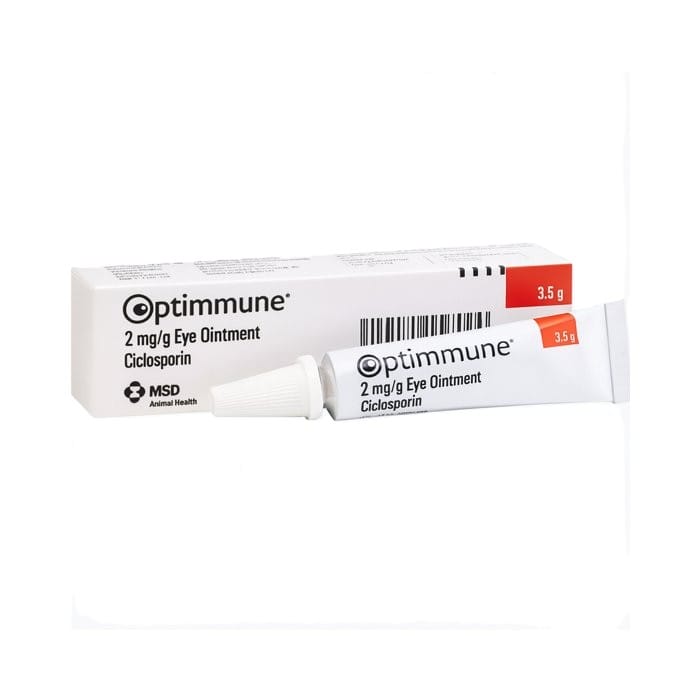
Optimmune
Buy Optimmune Online


Optimmune is a cyclosporine ophthalmic ointment for dogs with certain immune-related eye conditions. You can buy Optimmune for dogs online, view the current price, and choose the quantity that matches your veterinarian’s directions. Match the 0.2% ointment and tube information to the medicine your dog has been prescribed before checkout.
Optimmune ophthalmic ointment is not the same as an oral cyclosporine capsule, skin preparation, or simple lubricating eye product. The medicine is placed on the eye surface, and small differences in form, strength, and base can matter for canine eye treatment. If your dog has new pain, cloudiness, discharge, or squinting, ask a veterinarian before treating the eye as a routine refill.
Optimmune Price, Strength, and Tube Quantity
Optimmune price depends on the current store amount, the tube quantity chosen, and any checkout information tied to your order. Many Optimmune ophthalmic ointment references identify the product as 0.2% cyclosporine in a 3.5 g tube. The 3.5 g amount describes the tube contents, not a guaranteed number of treatment days.
When comparing cost, focus on the product name, ophthalmic ointment form, 0.2% strength, tube size, and total quantity. A lower-looking result may describe a different cyclosporine preparation, a compounded eye product, or an eye drop rather than Optimmune eye ointment. The most useful comparison is the exact medicine, strength, container size, and quantity your dog needs.
Tube duration varies because veterinary directions may differ by dog, condition, treated eye, and amount applied. One dog may receive medication in one eye, while another may need both eyes treated under veterinary supervision. If a tube runs out much earlier or lasts much longer than expected, the clinic can help determine whether application technique or adherence should be reviewed.
Why it matters: A 3.5 g tube is a package size, not a fixed treatment schedule.
How to Order the Ophthalmic Ointment
Order the ophthalmic ointment by matching the brand name, 0.2% cyclosporine strength, tube size, and quantity to the veterinary directions. Keep your veterinarian’s clinic information and written instructions nearby so the order matches the intended eye medicine. If professional clarification is needed, we may help confirm prescription details with the prescriber.
Search results and package descriptions can use similar wording, including Optimmune eye ointment, Optimmune ointment for dogs, or cyclosporine ophthalmic ointment. The customer-facing decision should still come back to the labeled form and strength. Optimmune is an ointment for canine eyes; terms such as Optimmune eye drops or dog eye drops Optimmune can lead to confusion if they point to a different form.
Customers arranging US delivery from Canada should keep the medication name, strength, quantity, and clinic information consistent throughout checkout. Products are supplied through licensed pharmacies, and order information should reflect the veterinary treatment plan rather than a substitution made only for convenience or price.
Product Details to Match Before Checkout
Optimmune eye ointment contains cyclosporine, an immunomodulating medicine used on the surface of the eye. Immunomodulating means it helps reduce certain immune-driven activity rather than acting like a standard lubricant or antibiotic. The 0.2% concentration is important, especially for dogs that previously used a compounded cyclosporine product with a different strength or base.
| Attribute | What to match |
|---|---|
| Form | Ophthalmic ointment for the eye, not an oral medicine or skin cream. |
| Active ingredient | Cyclosporine for veterinary ophthalmic use. |
| Strength | 0.2% cyclosporine when Optimmune 0.2 ophthalmic ointment is prescribed. |
| Tube size | Commonly identified as a 3.5 g tube; choose the needed quantity. |
| Species | Use for dogs only when a veterinarian directs treatment. |
Small wording differences deserve attention. A product described broadly as cyclosporine eye ointment for dogs may not have the same labeling, concentration, or ointment base as dog Optimmune. If the veterinary instructions name Optimmune 0.2 cyclosporine ophthalmic ointment for dogs, use that wording to guide the order.
What Optimmune Does for Dogs’ Eyes
Official labeling describes Optimmune ophthalmic ointment for management of chronic keratoconjunctivitis sicca, often called KCS or canine dry eye, and chronic superficial keratitis, often called CSK. KCS involves inadequate tear production or poor tear film protection. CSK is a long-term inflammatory corneal condition that can progress without ongoing veterinary care.
For dogs with KCS, the medicine helps address immune-related inflammation affecting tear production and eye-surface health. Dry eye may cause redness, thick discharge, dull-looking eyes, repeated irritation, or corneal surface damage. For CSK, a veterinarian may use ongoing eye exams to monitor corneal changes and decide whether the treatment plan remains appropriate.
Optimmune for dogs eyes should not be started only because an eye looks red or watery. Eye ulcers, trauma, infection, glaucoma, foreign material, and other problems can share similar signs. A veterinarian may need to examine the eye, measure tear production, or stain the cornea before deciding whether cyclosporine ophthalmic treatment is suitable.
Related condition categories can help you browse veterinary eye medicines by diagnosis, including Canine Dry Eye and Canine Chronic Superficial Keratitis. The broader Pet Medications category may also help when reviewing prescribed veterinary products by type.
Application and Handling Basics
Use Optimmune ointment only according to the veterinarian’s directions. Do not change the treated eye, amount, or timing based on general product information. If your dog uses more than one ophthalmic product, ask the clinic how to space them so one preparation does not interfere with another.
Clean handling reduces the chance of contaminating the tube tip. Wash your hands, avoid touching the tip to the eye, eyelid, fur, fingers, or any surface, and recap the tube after use. Keep the tube where children and animals cannot chew it, puncture it, or expose it to dirt.
- Read the label: Make sure the correct eye or eyes are being treated.
- Protect the tip: Do not touch it to the eye or surrounding fur.
- Separate eye products: Follow clinic instructions for timing between medicines.
- Keep packaging: Store the labeled box or tube information with the medicine.
- Do not share: A tube prescribed for one dog should not be used for another pet.
Quick tip: Keep the labeled packaging so the strength and directions stay with the tube.
Storage and Shipping Considerations
Storage should follow the package label. Optimmune ointment is generally handled at controlled room temperature, often within a range such as 59°F to 77°F or 15°C to 25°C. Avoid excessive heat, freezing, and direct sunlight, because temperature extremes may affect ophthalmic products.
Recap the tube tightly after each use and keep it in a clean, dry place. Do not use a tube that appears damaged, punctured, contaminated, or changed in appearance unless a veterinary professional says it is acceptable. If the medicine was exposed to unusual heat or freezing during travel, ask the clinic or pharmacist whether it should still be used.
Some orders may involve prompt, express, cold-chain shipping when appropriate for handling requirements. Do not store the ointment in a vehicle, near a window, or in a bathroom cabinet with high heat and humidity. Safe storage helps preserve the medicine and reduces the chance of accidental exposure.
Side Effects, Warnings, and Monitoring
Possible local reactions can include eye irritation, redness, rubbing, blinking, tearing, or temporary discomfort after application. Mild signs can still matter if they continue, worsen, or appear with discharge or pain. Contact the veterinarian if your dog resists treatment more than usual, seems more painful after use, or develops new cloudiness.
The label warns against use when viral or fungal eye disease is present or suspected. Dogs with corneal ulcers, eye injuries, heavy discharge, sudden vision change, bleeding, swelling, or severe squinting should not be managed as routine refill cases without assessment. Eye conditions can worsen quickly, and similar symptoms may come from problems that require different treatment.
Tell the veterinarian about other eye medicines, cleaning solutions, lubricants, antibiotics, anti-inflammatory drops, or systemic medicines your dog receives. Timing between products can affect comfort and how long each medicine stays on the eye surface. Also mention pregnancy, breeding, nursing, immune problems, or any prior sensitivity to cyclosporine or ophthalmic ointment bases.
Monitoring often includes tear production testing and corneal examinations. These visits help the veterinarian decide whether inflammation is controlled and whether the eye surface is protected. Do not stop long-term treatment because the eye looks clearer unless the veterinarian changes the plan.
Alternatives and Related Eye Medicines
Optimmune ophthalmic ointment is not interchangeable with a simple artificial tear. Lubricants may improve comfort and support the tear film, but they do not replace a prescribed cyclosporine product for immune-related KCS or CSK unless the veterinarian changes therapy. Other eye medicines may target infection, inflammation, eye pressure, or surface protection rather than immune-related tear-gland disease.
Some dogs may receive compounded cyclosporine or another ophthalmic treatment when a veterinarian decides it is appropriate. These preparations can differ in strength, base, stability, labeling, and how they feel in the eye. Ask the clinic before replacing Optimmune eye ointment for dogs with a compounded product, eye drop, or human-labeled medication.
There is not always a straightforward generic-for-brand decision for veterinary ophthalmic cyclosporine. Market naming and regulatory status can differ by country, and a similarly named cyclosporine product may not match the same concentration or veterinary labeling. For buying decisions, follow the medicine named by the veterinarian and compare active ingredient, strength, form, tube size, and species use.
Refills and Ongoing Treatment Decisions
Refill timing should reflect the written directions and how quickly the tube is being used. If the ointment runs out sooner than expected, your dog may be receiving too much per application, both eyes may be treated, or more frequent use may have been directed. If the tube lasts much longer than expected, missed applications or application technique may need discussion.
Chronic canine dry eye and CSK often require ongoing monitoring because eye comfort can improve before the underlying condition is fully controlled. A clearer-looking eye does not always mean tear production is normal or corneal inflammation has resolved. Follow-up examinations help the veterinarian adjust the plan and detect complications early.
Before each refill, consider whether anything has changed: new redness, discharge, squinting, cloudiness, missed doses, new medicines, or a different caregiver applying the ointment. Those details can help the clinic decide whether a routine refill is appropriate or whether your dog should be examined first.
Authoritative Sources
Official labeling and indications are available from DailyMed Optimmune Ophthalmic labeling.
Veterinary-use background on ophthalmic cyclosporine is available from VCA Hospitals cyclosporine ophthalmic information.
This content is for informational purposes only and is not a substitute for professional medical advice.
Express Shipping - from $29.99
Shipping with this method takes 3-5 days
Prices:
- Dry-Packed Products $29.99
- Cold-Packed Products $39.99
Standard Shipping - $19.99
Shipping with this method takes 5-10 days
Prices:
- Dry-Packed Products $19.99
- Not available for Cold-Packed products
What does Optimmune do for dogs’ eyes?
Optimmune contains cyclosporine, an immunomodulating medicine used on the eye surface. Official labeling describes it for management of chronic keratoconjunctivitis sicca, also called canine dry eye, and chronic superficial keratitis in dogs.
Is Optimmune an eye drop or an ointment?
Optimmune is an ophthalmic ointment. Search wording may mention drops, but the product is commonly identified as 0.2% cyclosporine ophthalmic ointment, often in a 3.5 g tube.
What can be used instead of Optimmune for dogs?
Alternatives depend on the diagnosis and veterinary plan. Lubricating tears, antibiotics, anti-inflammatory eye medicines, compounded cyclosporine, or other ophthalmic products may be used in some cases, but they should not replace Optimmune unless the veterinarian changes therapy.
Is there a generic for Optimmune for dogs?
A similar cyclosporine eye product may not match Optimmune’s veterinary labeling, concentration, or ointment base. Ask your veterinarian whether a generic, compounded, or alternative cyclosporine preparation is appropriate for your dog before substituting.
Can Optimmune cause side effects in dogs?
Possible local effects include irritation, redness, blinking, tearing, rubbing, or temporary discomfort after application. Contact the veterinarian if signs persist, worsen, or occur with pain, discharge, cloudiness, swelling, or apparent vision change.
Rewards Program
Earn points on birthdays, product orders, reviews, friend referrals, and more! Enjoy your medication at unparalleled discounts while reaping rewards for every step you take with us.
You can read more about rewards here.
POINT VALUE
How to earn points
- 1Create an account and start earning.
- 2Earn points every time you shop or perform certain actions.
- 3Redeem points for exclusive discounts.
You Might Also Like
Select options
This product has multiple variants. The options may be chosen on the product page
Select options
This product has multiple variants. The options may be chosen on the product page
Select options
This product has multiple variants. The options may be chosen on the product page
Select options
This product has multiple variants. The options may be chosen on the product page