
Please note: a valid prescription is required for all prescription medication.
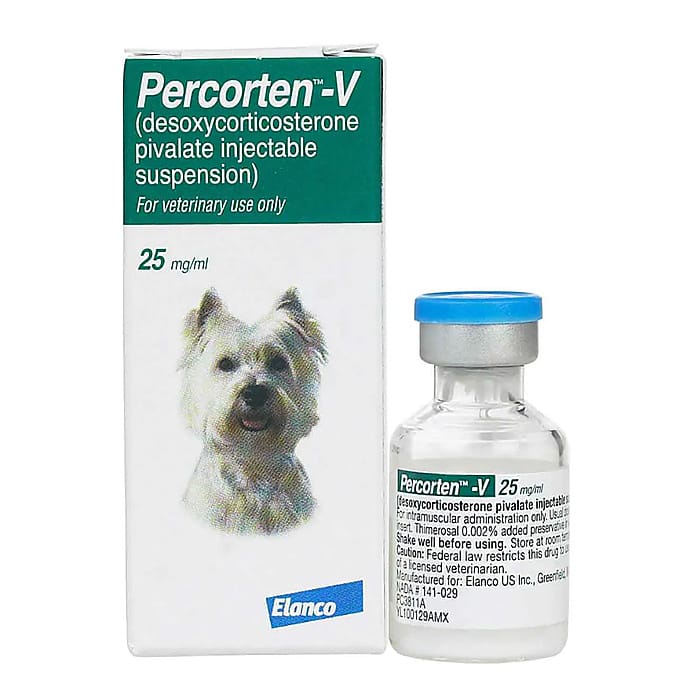
Percorten-V
Percorten-V for Dogs: Buy With Prescription Guidance
Price:
$353.99
You save


Percorten-V is a prescription veterinary injection used to help manage mineralocorticoid deficiency in dogs with hypoadrenocorticism, also called Addison’s disease. It replaces a hormone activity that helps the body maintain sodium, potassium, and fluid balance. This page summarizes typical use, monitoring, safety, storage, and practical access considerations for ongoing therapy.
What Percorten-V Is and How It Works
This medicine contains desoxycorticosterone pivalate (often shortened to DOCP), a mineralocorticoid (salt-balance hormone) replacement. In dogs with Addison’s disease, the adrenal glands do not produce enough hormones, which can disrupt electrolytes like sodium and potassium and affect hydration. DOCP helps support those electrolyte and fluid processes over time, but it does not replace cortisol. CanadianInsulin supports prescription referrals and may verify details with your veterinarian. Some patients explore US delivery from Canada when long-term treatment planning is needed.
Many dogs also need a separate glucocorticoid (cortisol-like) medicine, especially during illness or stress, because DOCP does not provide that effect. Monitoring usually focuses on how the dog is feeling (energy, appetite, drinking and urination) and on lab work that checks electrolyte balance. The goal is steady control between doses, not rapid symptom relief. Dispensing is completed by licensed partner pharmacies where regulations allow, which helps keep the prescribing and dispensing roles appropriately separated.
Who It’s For
This treatment is generally used in dogs diagnosed with primary hypoadrenocorticism (Addison’s disease) when the veterinarian has determined mineralocorticoid replacement is needed. Some dogs are diagnosed after an “Addisonian crisis,” while others are identified through chronic signs such as low energy, gastrointestinal upset, or recurrent dehydration. For background on the condition, the Canine Addisons Disease hub can help you browse related context and products.
It may not be appropriate for every patient. Dogs with certain heart, kidney, or fluid-balance disorders may need extra caution because mineralocorticoid therapy can influence sodium retention and blood pressure. Your veterinarian may also reassess the plan if a dog has uncontrolled vomiting/diarrhea, severe weakness, or abnormal electrolytes that require urgent stabilization first. Percorten-V is intended for veterinary use under a prescribed plan; it is not a general-purpose steroid and should not be started based on symptoms alone.
Dosage and Usage
DOCP therapy is typically given by injection on a repeating schedule, with the interval and dose individualized to the dog’s response and lab results. Early in treatment, veterinarians often recheck electrolytes after the first dose and again before the next planned injection to see whether the interval needs adjustment. Over time, stable patients may move to less frequent lab monitoring, but periodic checks remain important because needs can change with age, diet, and concurrent illness.
Why it matters: Small electrolyte shifts can occur before obvious symptoms return.
Administration technique matters because this is an injectable suspension. Clinics may give the injections in-office, or they may train a caregiver when home administration is appropriate. If you’re learning about injection supplies and handling, Insulin Pen Vs Syringe is a practical primer on injection tools and basic differences, even though it is written for diabetes care. Percorten-V dosing should not be changed without veterinary direction, especially if vomiting, diarrhea, lethargy, collapse, or marked changes in drinking and urination occur.
Strengths and Forms
This product is supplied as a sterile injectable suspension for veterinary use. It is commonly provided in multidose vial packaging, and the exact presentation available can vary by jurisdiction and by pharmacy sourcing. Because it is a suspension, it may require specific handling steps before drawing up a dose, which your veterinarian or dispensing pharmacy can confirm based on the label for the dispensed product.
It is not an oral tablet, and it is not interchangeable with glucocorticoids such as prednisone. When clinicians talk about “Addison’s meds,” they may be referring to both mineralocorticoid replacement (DOCP or an oral mineralocorticoid) and a separate glucocorticoid plan. For a general overview of how different medication classes work, Common Diabetes Medications explains class-based thinking in plain language, which can help when reading veterinary instructions for multi-drug regimens.
Storage and Travel Basics
Always follow the storage instructions on the product label and the pharmacy-provided insert for the vial you receive. Injectable suspensions often have temperature and light considerations, and they should be kept in their original packaging when possible. Avoid freezing unless the label explicitly allows it, and do not use the vial if it appears contaminated or if the suspension cannot be reconstituted to the expected appearance after gentle mixing per the label directions.
Quick tip: Keep a written dose-and-date log for each injection.
For travel or boarding, plan ahead so the administration date and monitoring appointments are clear. If someone else will be caring for your dog, share written instructions from the veterinarian and the clinic’s contact details. Building routines can reduce missed doses and confusion; while it is written for people, Living With Diabetes Tips includes practical ideas for tracking medications and planning around regular health tasks. Bring the original labeled container to appointments so lot and expiry information is available if questions arise.
Side Effects and Safety
Mineralocorticoid replacement can shift fluid and electrolyte balance, so side effects may relate to those changes. Some dogs may show increased thirst or urination, restlessness, or changes in appetite, especially while the dose and interval are being optimized. Injection-site discomfort can occur with many injectable medicines. Your veterinarian may interpret signs alongside electrolyte values to decide whether the schedule needs refinement.
More serious concerns can include weakness, collapse, persistent vomiting/diarrhea, severe lethargy, or signs of dehydration, which may indicate an adrenal crisis or another urgent problem. Contact a veterinary clinic promptly if severe symptoms occur, particularly if your dog cannot keep water down. Long-term management often includes watching body weight, muscle condition, and overall stamina, especially if a glucocorticoid is also used. For general context on weight changes with steroid-like therapies, Insulin And Weight Gain discusses how hormone-active medicines can affect appetite and weight patterns, which can help you frame questions for your veterinarian.
Drug Interactions and Cautions
Because DOCP affects sodium and potassium regulation, veterinarians consider other medicines and diets that influence electrolytes, hydration, kidney function, and blood pressure. Diuretics, certain heart medications, and drugs that alter potassium levels may require closer monitoring. Changes to dietary sodium or major diet shifts can also influence lab values, so it helps to tell the clinic if you plan to change foods or if your dog’s eating habits change significantly.
Glucocorticoids (such as prednisone or prednisolone) are often part of Addison’s management, but their dose is typically tailored to the individual dog and situation. Using additional steroid products, certain anti-inflammatory drugs, or medications that affect gastrointestinal tolerance may complicate symptom interpretation. If your dog has multiple chronic conditions, keeping a single updated medication list is useful at every visit. Caregiver stress is common with long-term conditions; Diabetes Diagnosis Mental Health covers practical coping themes that can apply to any ongoing care plan.
Compare With Alternatives
Veterinarians may consider several approaches for mineralocorticoid replacement, depending on the dog’s diagnosis details, caregiver preferences, and monitoring access. One alternative is another DOCP brand (for example, Zycortal), which uses the same active ingredient class but may differ in labeling details and availability. Another approach is oral fludrocortisone acetate, a mineralocorticoid with some glucocorticoid activity; it is taken by mouth and may require different monitoring patterns and adherence habits.
The choice is usually less about “better” and more about fit: injection interval versus daily oral dosing, how a dog tolerates each option, and how stable electrolytes remain between checks. Some patients on Percorten-V still require a separate glucocorticoid plan for stress dosing or baseline support, which is a distinct part of Addison’s management. To browse other animal-health items on the site for comparison by form or category, you can review the Pet Medications hub. A veterinarian is the best source for deciding whether switching therapies is appropriate.
Pricing and Access
Access to mineralocorticoid replacement is shaped by prescription requirements, regional rules, and the need for ongoing monitoring. In many cases, the clinic provides a written or electronic prescription and shares diagnosis and dosing context so the correct product is dispensed. Cross-border fulfillment can be considered when eligibility and jurisdiction permit. If coverage applies, the documentation needed can differ by plan; if paying without insurance, budgeting often depends on dose size, monitoring frequency, and appointment costs rather than the vial alone.
Availability can vary, especially for specialized veterinary injectables. If a dose is due soon, it helps to plan around clinic hours and lab recheck timing so electrolytes can be assessed as intended. For general strategies on organizing medication-related expenses and tracking refills, Cut Insulin Costs offers frameworks that may be adaptable, even though it focuses on diabetes medicines. If you have questions about documentation, your role is to confirm the current prescription directions with your veterinarian and keep the most recent lab dates available.
Authoritative Sources
For regulatory and product-specific labeling context, this FDA resource is a helpful starting point: Animal Drugs At FDA.
For a veterinary clinical overview of Addison’s disease and monitoring concepts, consult this reference: Merck Vet Manual.
When permitted and after prescription verification, partner pharmacies may coordinate prompt, express, cold-chain shipping for temperature-sensitive items.
This content is for informational purposes only and is not a substitute for professional medical advice.
Express Shipping - from $25.00
Shipping with this method takes 3-5 days
Prices:
- Dry-Packed Products $25.00
- Cold-Packed Products $35.00
Standard Shipping - $15.00
Shipping with this method takes 5-10 days
Prices:
- Dry-Packed Products $15.00
- Not available for Cold-Packed products
What is Percorten-V used for in dogs?
Percorten-V is used for mineralocorticoid replacement in dogs diagnosed with primary hypoadrenocorticism (Addison’s disease). In this condition, the adrenal glands do not produce enough hormones to maintain normal sodium, potassium, and fluid balance. The medication helps support more stable electrolyte control between veterinary visits. It does not replace cortisol, so many dogs also need a separate glucocorticoid plan determined by a veterinarian. Diagnosis and ongoing monitoring are important because similar symptoms can occur with other illnesses.
How is DOCP therapy monitored after an injection?
Monitoring usually includes blood tests that measure electrolytes, especially sodium and potassium, along with a clinical check of hydration, appetite, energy, and drinking and urination patterns. Early in treatment, veterinarians commonly recheck labs after the first dose and again near the end of the dosing interval to see whether the dose or interval needs adjustment. Once stable, some dogs move to less frequent testing, but periodic checks remain important because needs can change with stress, diet, aging, or other diseases.
How often are injections typically given?
Injection schedules are individualized. Many dogs receive mineralocorticoid replacement on a repeating interval that is adjusted based on electrolyte results and how the dog feels between doses. Some patients need shorter or longer intervals over time, particularly if their sodium and potassium drift before the next injection date. Because changes can lead to serious symptoms, it’s important that any adjustments be made by a veterinarian using recent lab work rather than by trial-and-error at home.
What side effects should I watch for?
Possible side effects can include changes in thirst or urination, appetite shifts, restlessness, or injection-site discomfort, especially when the regimen is being optimized. More serious warning signs include severe weakness, collapse, persistent vomiting or diarrhea, marked lethargy, or signs of dehydration. These can indicate an adrenal crisis or another urgent problem that needs prompt veterinary assessment. If your dog is also taking a glucocorticoid, ask your veterinarian how to distinguish steroid effects from electrolyte-related symptoms.
Can Percorten-V be used with prednisone or other steroids?
Yes, many dogs with Addison’s disease receive a glucocorticoid (such as prednisone or prednisolone) in addition to mineralocorticoid replacement, because DOCP does not provide cortisol activity. The exact steroid choice and dose are individualized and may change during illness, travel, surgery, or other stressors. Tell your veterinarian about all medications and supplements, including anti-inflammatory drugs, because overlapping side effects (like appetite changes or gastrointestinal upset) can complicate monitoring and decision-making.
How should the vial be stored and handled at home?
Follow the storage directions on the label and any pharmacy-provided instructions. Keep the vial in its original packaging when possible, and avoid temperature extremes such as freezing or overheating unless the label specifically allows it. Because the product is an injectable suspension, the vial may need gentle mixing as directed before drawing up a dose; do not shake or handle it in a way the label warns against. Do not use the vial if it looks contaminated or the appearance changes unexpectedly.
What should I ask my veterinarian before starting or refilling?
Useful questions include: what lab tests will be checked and when; what symptoms suggest the dose interval is too long or too short; whether a baseline glucocorticoid is needed; and how to manage illness or stress days. Ask how diet changes might affect electrolytes, and whether any current medications could interact with mineralocorticoid therapy. Also confirm who should administer injections and what technique is recommended. Keeping a written schedule and recent lab dates can make these discussions more efficient.
Rewards Program
Earn points on birthdays, product orders, reviews, friend referrals, and more! Enjoy your medication at unparalleled discounts while reaping rewards for every step you take with us.
You can read more about rewards here.
POINT VALUE
How to earn points
- 1Create an account and start earning.
- 2Earn points every time you shop or perform certain actions.
- 3Redeem points for exclusive discounts.
You Might Also Like
Select options
This product has multiple variants. The options may be chosen on the product page
Select options
This product has multiple variants. The options may be chosen on the product page
Timolol Maleate Ophthalmic Solution
Price range: $38.99 through $42.99
You save
- In Stock
- Express Shipping
Select options
This product has multiple variants. The options may be chosen on the product page
Select options
This product has multiple variants. The options may be chosen on the product page
Related Articles
Type 2 Diabetes,
Generic Liraglutide For Weight Loss: A Practical Guide
People searching for generic liraglutide for weight loss usually want clear answers on three points: whether an approved lower-cost version exists, how it differs from brand-name products, and what access…
Type 2 Diabetes,
Liraglutide Vs Semaglutide Comparison Guide For Patients
Key Takeaways People searching liraglutide vs semaglutide usually want a practical comparison, not a slogan. The most useful differences involve formulation, schedule, approved uses, side effect patterns, and the paperwork…
Weight Management
Generic Zepbound: Availability, Status, and Options
Key Takeaways Patients and caregivers often search for generic zepbound when they need a clear answer about availability, labeling, and lower-cost access. The term is common online, but it does…
Type 2 Diabetes,
Oral Wegovy Explained: Facts, Risks, and Access Options
The phrase oral wegovy is best understood as a search term, not a settled product name. Most people use it to mean a pill version of semaglutide for weight management,…