
Please note: a valid prescription is required for all prescription medication.
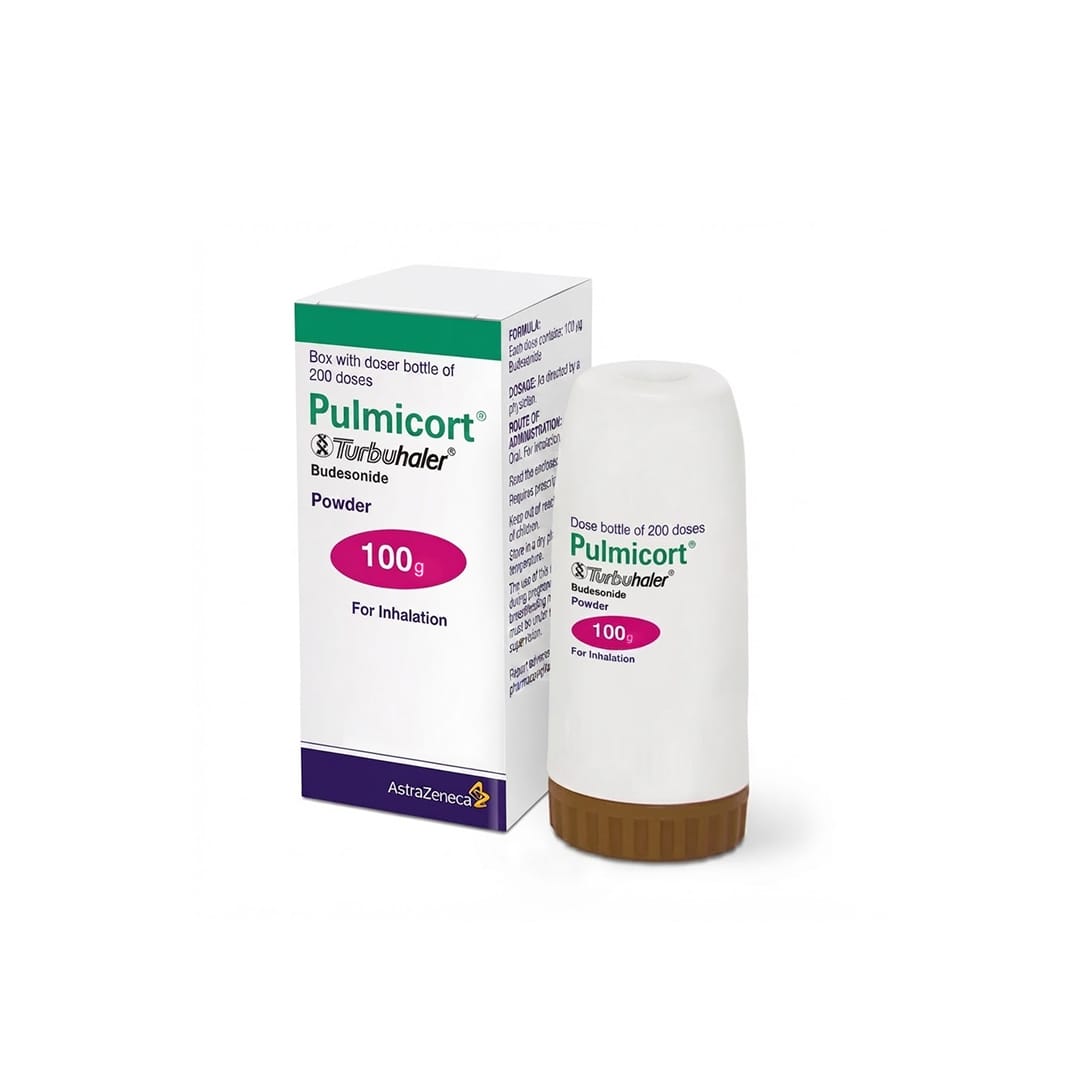
Pulmicort Turbuhaler
Buy Pulmicort Turbuhaler Online


Pulmicort Turbuhaler is a budesonide dry powder inhaler used for ongoing asthma control. It can be bought online from Canada, with the strength and quantity chosen during ordering and matched to the directions given by your healthcare professional.
This inhaler is a maintenance treatment, not a fast-acting reliever for sudden breathing symptoms. It helps reduce airway inflammation over time when used regularly as directed, while a separate rescue inhaler may still be needed for rapid symptom relief if one has been recommended.
Pulmicort Turbuhaler is inhalation-driven, which means the dose is drawn into the lungs when you breathe in through the mouthpiece. Technique matters with this device, so the active ingredient, strength per inhalation, and Turbuhaler name should all match the medicine you were told to use.
Pulmicort Turbuhaler Price and Strength Selection
The Pulmicort Turbuhaler price depends on the inhaler strength, quantity, and pack configuration shown during ordering. A price comparison is most useful when it is based on the exact strength per inhalation and the total inhaler quantity, rather than the brand name alone.
Commonly discussed strengths include Pulmicort Turbuhaler 100 mcg, Pulmicort Turbuhaler 200 mcg, and Pulmicort Turbuhaler 400 mcg. These terms should be used only to match the mcg strength already chosen for your treatment plan, because a stronger device is not a simple substitute for taking more or fewer inhalations from another device.
If you are comparing Pulmicort Turbuhaler cost from Canada for US delivery from Canada, focus on the complete order: brand name, active ingredient, device, strength, and quantity. We may review order details when needed so the requested medicine aligns with the information provided.
| Detail | What to match |
|---|---|
| Active ingredient | Budesonide should be the intended inhaled corticosteroid. |
| Device | Turbuhaler should be the intended dry powder inhaler. |
| Strength | Match the mcg per inhalation exactly. |
| Quantity | Use the number of inhalers or packs shown during ordering. |
| Directions | Follow the written inhalation instructions given for your therapy. |
Quick tip: Do not treat the total number of inhalations in a device as a single dose.
How to Order Pulmicort Turbuhaler Online
To order Pulmicort Turbuhaler online, choose the inhaler strength and quantity that match your treatment directions, then complete the required checkout information. The main product decision is the exact Turbuhaler strength, because dose wording and inhaler strength must work together.
- Choose Pulmicort Turbuhaler as the brand and device.
- Match budesonide strength per inhalation to your directions.
- Choose the quantity needed for the intended treatment period.
- Keep the labeled packaging and instructions available after receiving it.
- Ask a healthcare professional to demonstrate technique if use is uncertain.
A dry powder inhaler, a nebulizer ampule, an oral respiratory medicine, and a rescue inhaler are not interchangeable. If you need to browse broader inhaled and respiratory medicines, the Respiratory Products category can help you distinguish product types before discussing changes with a clinician.
Ordering from Canada can be useful for customers who want a clear view of the current product strength and total quantity before checkout. Shipping and handling should protect the inhaler from avoidable heat, moisture, and package damage, but the device should still be stored according to the leaflet after arrival.
What This Asthma Inhaler Is Used For
Pulmicort Turbuhaler is used as maintenance treatment for asthma. Budesonide is an inhaled corticosteroid, a steroid medicine that helps reduce inflammation in the airways and may help prevent symptoms such as wheezing, chest tightness, shortness of breath, and asthma-related cough.
It is not used to treat a sudden asthma attack. If acute symptoms appear, follow the asthma action plan provided by your clinician and use a fast-acting reliever if one has been prescribed or recommended for that purpose.
Will Pulmicort help with a cough? It may help when cough is related to asthma inflammation and the medicine is used consistently as directed. A new, severe, worsening, or persistent cough should be assessed because cough can also come from infection, reflux, allergies, irritants, or other respiratory conditions.
The official Canadian leaflet describes Pulmicort Turbuhaler as a treatment for asthma in adults and children 6 years of age and older. Age, inhaler technique, and the ability to inhale strongly through the mouthpiece matter because the Turbuhaler depends on the user’s breath to deliver the powder.
If you are browsing by condition, Asthma Products can help organize respiratory medicines connected with asthma care. Use that category for navigation, not as a reason to change an existing asthma plan without medical guidance.
Device Technique and Dose Wording
The Turbuhaler is a multidose dry powder inhaler. Unlike a pressurized spray inhaler, it does not propel medicine into the mouth; the user loads the dose as instructed and then inhales through the mouthpiece with enough force to carry the powder into the lungs.
Typical technique points include holding the device correctly, loading the dose only as directed, breathing out away from the mouthpiece, sealing the lips around the mouthpiece, and taking a deep, forceful breath in. The mouthpiece should not be breathed into before inhaling the dose because moisture can affect dry powder inhalers.
Budesonide may also appear in medical records or labels by its non-brand name. If the medicine has been described as budesonide Turbuhaler 200mcg, Pulmicort 200 Turbuhaler, or another similar wording, the practical match is the active ingredient, device, and mcg strength per inhalation.
- Do not shake or prime the device unless the leaflet instructs it.
- Do not wash the mouthpiece with water unless official instructions say to do so.
- Do not exhale into the inhaler after loading a dose.
- Rinse the mouth and spit after use if instructed.
- Replace or refill based on the dose indicator and treatment plan.
Why it matters: Poor technique can reduce the amount of medicine reaching the lungs.
Storage, Handling, and Travel
Pulmicort Turbuhaler should be kept dry and capped when not in use. Moisture can interfere with dry powder inhalers, so avoid storing the device in a steamy bathroom, near a sink, or inside a damp bag.
Temperature extremes can also create practical problems. Do not leave the inhaler in a hot car or in direct sunlight for long periods, and keep the labeled packaging available when traveling so the product name, strength, and instructions remain easy to identify.
When traveling, carry enough maintenance medicine for the planned time away and keep rescue medicine available if it is part of your asthma plan. A maintenance inhaler is used to reduce inflammation over time, while a reliever inhaler is used for rapid symptom relief when appropriate.
Dry cloth cleaning is generally safer for exterior care than water exposure, unless the official leaflet gives different directions. If powder build-up, damage, moisture exposure, or a stuck mechanism occurs, ask a pharmacist or clinician whether the inhaler should still be used.
Side Effects, Warnings, and Monitoring
Common side effects of Pulmicort Turbuhaler can include throat irritation, hoarseness, cough, headache, and oral thrush, also called oral candidiasis. Rinsing the mouth and spitting after inhalation may reduce the chance of thrush, but the leaflet and clinician instructions should guide your routine.
Contact a healthcare professional if mouth soreness, white patches, persistent hoarseness, worsening cough, fever, or signs of infection develop. Seek urgent medical help for sudden wheezing after inhalation, swelling of the face or throat, hives, trouble breathing, blue lips, severe shortness of breath, or difficulty speaking.
Inhaled corticosteroids can have broader steroid effects, especially with high exposure or long-term use. Clinicians may monitor growth in children, eye health in people at risk for glaucoma or cataracts, bone health in people at risk for osteoporosis, and adrenal function when steroid exposure is a concern.
Before starting or continuing therapy, discuss glaucoma, cataracts, osteoporosis risk, liver disease, immune system concerns, tuberculosis, recent infections, or exposure to chickenpox or measles. Pregnancy and breastfeeding questions should also be reviewed because asthma control and medicine safety both matter.
Do not stop an inhaled corticosteroid suddenly or change the frequency without clinical guidance. Worsening nighttime symptoms, increased rescue inhaler use, reduced activity tolerance, or repeated asthma flare-ups may mean the asthma plan needs reassessment.
Interactions and Other Respiratory Medicines
Budesonide exposure can increase when used with strong CYP3A4 inhibitors. This group includes medicines such as ketoconazole, itraconazole, ritonavir, cobicistat, and some macrolide antibiotics, including clarithromycin.
Tell your clinician and pharmacist about all inhalers, nasal sprays, oral steroids, prescription medicines, over-the-counter products, and supplements. Combining several steroid products can increase the chance of steroid-related effects, particularly with long-term use or higher total steroid exposure.
Pulmicort Turbuhaler should also be distinguished from other budesonide products. Nebulized budesonide, nasal budesonide, and other inhaler devices may contain the same active ingredient but deliver it differently and may have different directions.
Monitoring usually focuses on symptom control, inhaler technique, nighttime awakenings, activity limitation, and rescue inhaler use. Some people are asked to track peak flow readings or bring the inhaler to visits so technique can be checked directly.
Brand Status and Discontinuation Questions
Some people ask whether Pulmicort Turbuhaler was discontinued because product names, devices, and market availability can differ between countries. A change in one market does not automatically mean the medicine is unavailable everywhere or that budesonide inhalers are no longer used for asthma care.
Pulmicort Turbuhaler remains a recognizable budesonide dry powder inhaler name in Canadian product information. When comparing Canadian and U.S. product names, focus on the exact medicine being supplied, the device instructions, and the strength per inhalation rather than assuming every Pulmicort device is the same.
Country-specific naming can be confusing because Pulmicort Flexhaler, Pulmicort Turbuhaler, nebulized budesonide, and other corticosteroid inhalers may appear in different references. They may share a related active ingredient or treatment class, but device technique and labeled directions can differ.
Related Respiratory Choices
Related respiratory products can help clarify the difference between maintenance therapy, nebulized therapy, oral respiratory medicines, and rescue treatment. The right comparison starts with the condition being treated, the route of administration, and the device the patient can use correctly.
- Respiratory Resources provide articles about inhalers and breathing-treatment topics.
- Respiratory Products group inhalers and other breathing medicines by product type.
- Asthma Products organize medicines connected with asthma care.
A Turbuhaler may be convenient for some users, but it requires a sufficiently strong inhalation through the device. Younger children, older adults, or people with severe symptoms may need technique assessment before relying on a dry powder inhaler.
If therapy is being changed from another inhaler, ask how the dose comparison should be handled. Microgram strength, inhaler design, lung delivery, and dosing schedule all affect how one asthma treatment relates to another.
Authoritative Sources
The following sources support the asthma-use, device, and safety points discussed for budesonide inhalation powder. They are useful for confirming official instructions but do not replace individualized clinical guidance.
- Official Canadian patient leaflet for Pulmicort Turbuhaler use instructions, asthma indication, and warnings.
- FDA-approved prescribing information for Pulmicort Turbuhaler 200 mcg device description and safety details.
- Mayo Clinic budesonide inhalation information for general patient-facing side effect and use context.
This content is for informational purposes only and is not a substitute for professional medical advice.
BMI Calculator
Estimate adult body mass index from height and weight, with metric and imperial units.
BMI
-
kg/m2 equivalent
Category
-
Adult screening range
These calculations are for education only and do not replace clinical advice, diagnosis, or treatment. Always confirm medical decisions with a qualified healthcare professional.
Peak Flow Zone Calculator
Calculate asthma peak-flow zones from personal best and current peak flow.
Current % best-current / personal best
Zone-green >=80%, yellow 50-79%, red <50%
Zone cutoffs-80% and 50% of best
These calculations are for education only and do not replace clinical advice, diagnosis, or treatment. Always confirm medical decisions with a qualified healthcare professional.
Express Shipping - from $29.99
Shipping with this method takes 3-5 days
Prices:
- Dry-Packed Products $29.99
- Cold-Packed Products $39.99
Standard Shipping - $19.99
Shipping with this method takes 5-10 days
Prices:
- Dry-Packed Products $19.99
- Not available for Cold-Packed products
What is Pulmicort Turbuhaler used for?
Pulmicort Turbuhaler is used as maintenance treatment for asthma. It contains budesonide, an inhaled corticosteroid that helps reduce airway inflammation when used regularly as directed.
Is Pulmicort Turbuhaler a rescue inhaler?
No. Pulmicort Turbuhaler is not a fast-acting reliever for sudden asthma symptoms. If you have acute wheezing or shortness of breath, follow your asthma action plan and use a rescue inhaler if one has been recommended.
What are common Pulmicort Turbuhaler side effects?
Common side effects can include throat irritation, hoarseness, cough, headache, and oral thrush. Rinsing the mouth and spitting after use may reduce thrush risk when this step is part of the inhaler instructions.
Will Pulmicort Turbuhaler help with a cough?
It may help if the cough is related to asthma inflammation and the inhaler is used consistently as directed. A new, severe, persistent, or worsening cough should be assessed by a healthcare professional.
How should Pulmicort Turbuhaler be stored?
Keep the Turbuhaler capped and dry, away from moisture, heat, and direct sunlight. Do not wash the mouthpiece with water unless the official leaflet instructs you to do so.
Why do Pulmicort Turbuhaler strengths matter?
Each strength represents a mcg amount per inhalation. A 100 mcg, 200 mcg, or 400 mcg Turbuhaler should be matched to the treatment directions rather than substituted based on appearance or brand name alone.
Rewards Program
Earn points on birthdays, product orders, reviews, friend referrals, and more! Enjoy your medication at unparalleled discounts while reaping rewards for every step you take with us.
You can read more about rewards here.
POINT VALUE
How to earn points
- 1Create an account and start earning.
- 2Earn points every time you shop or perform certain actions.
- 3Redeem points for exclusive discounts.
You Might Also Like
Select options
This product has multiple variants. The options may be chosen on the product page
Select options
This product has multiple variants. The options may be chosen on the product page
Select options
This product has multiple variants. The options may be chosen on the product page
Select options
This product has multiple variants. The options may be chosen on the product page