
Please note: a valid prescription is required for all prescription medication.
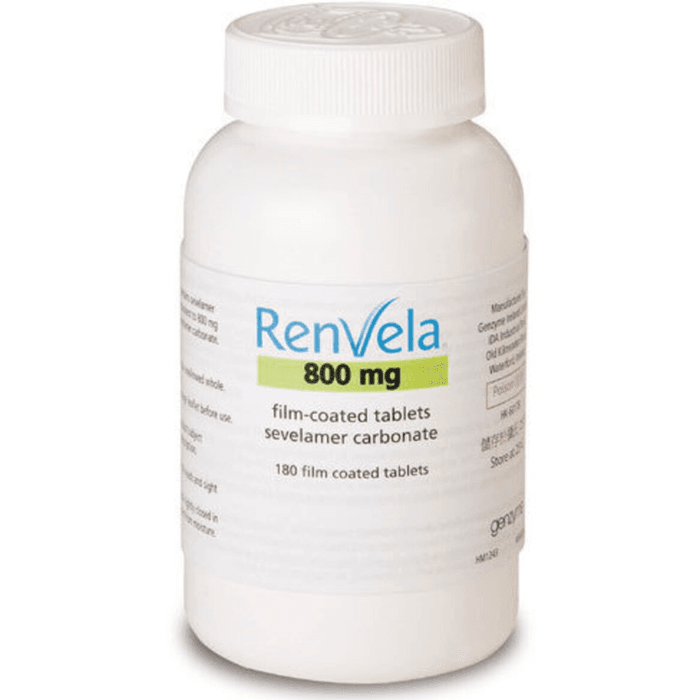
Renvela
Buy Renvela Online


Renvela is a phosphate binder medicine containing sevelamer carbonate. It can be bought online by choosing the form, strength, and quantity that match the directions from the kidney care team. Tablet and powder choices should be matched carefully because daily use, preparation, and unit counts differ by form.
Renvela is used in chronic kidney disease care to help control high serum phosphorus in people on dialysis. The medicine works inside the digestive tract, so meal timing and routine blood testing are important parts of safe use.
Renvela Price, Cost, and Form Selection
Renvela price depends on the form, strength, package quantity, and whether the item is supplied under the brand name or as sevelamer carbonate. Tablets and powder packets are counted differently, so the most useful comparison starts with total units supplied rather than the bottle or box alone.
The Renvela 800 mg price is usually evaluated by total tablet count when tablets are chosen. Powder is evaluated by packet or sachet count and packet strength. A lower bottle or box total may not represent a lower Renvela cost if the number of usable units or the strength differs.
Cash-pay customers often compare brand and generic sevelamer carbonate choices. Generic sevelamer carbonate may appear with its own package description, inactive ingredients, and appearance. The active ingredient may be the same, but the exact form and quantity still need to match the intended treatment plan.
Quick tip: Compare the same unit type whenever possible, such as tablet-to-tablet or packet-to-packet.
| Detail | How it affects the Renvela cost comparison |
|---|---|
| Form | Tablets and powder packets are prepared and counted differently. |
| Strength | Confirm the mg or g amount shown for the chosen form. |
| Quantity | Use total tablets, packets, or sachets when comparing supply. |
| Brand or generic | Sevelamer carbonate products may have different packaging and appearance. |
| Directions | The daily number of units depends on individualized instructions. |
US delivery from Canada may be part of the service context for some orders. Keep the medicine name, strength, and quantity organized during checkout, especially when several kidney medicines are used together.
How to Buy Renvela Online
Start with the prescribed medicine name and active ingredient: Renvela, sevelamer carbonate, or both. Then choose the tablet or powder form that matches the written directions. A Renvela 800 mg tab is one tablet unit, while a packet is a measured powder unit prepared before use.
Strength matters because sevelamer carbonate is used in different measured forms. Official labeling describes 800 mg tablets and powder for oral suspension in packet strengths including 0.8 g and 2.4 g where available. Do not switch between tablet and powder forms only because the active ingredient looks similar.
- Choose the form: tablet, packet, or sachet-style packaging as directed.
- Match the strength: check whether the amount is shown in mg or g.
- Count units: compare total tablets or packets, not only outer packaging.
- Review the name: brand Renvela and generic sevelamer carbonate may be organized separately.
- Keep medication records current: kidney care often involves several medicines with separate goals.
Orders may require detail review if the medicine name, strength, form, or quantity does not align with the information provided. Products are supplied through licensed pharmacies, and clear order information helps prevent avoidable delays or form-selection errors.
Tablets, Packets, and Strength Details
Renvela tablets and Renvela packets contain sevelamer carbonate, but they are not handled the same way. Tablets are generally swallowed whole according to labeling. Powder packets are mixed with liquid or food as directed and taken shortly after preparation.
The powder may not fully dissolve after mixing. A grainy appearance can be expected because the medicine acts in the gut rather than by dissolving completely into the bloodstream. Follow the preparation instructions supplied with the powder form and avoid saving mixtures unless the label specifically allows it.
| Form | Practical handling point |
|---|---|
| 800 mg tablet | Swallow whole unless a clinician gives different instructions. |
| Powder packet | Mix as directed shortly before the dose is taken. |
| Sachet-style packaging | Count each sachet as an individual powder unit. |
| Generic sevelamer carbonate | Check form, strength, appearance, and package count. |
Why it matters: The wrong form can change daily handling and the number of units supplied.
If swallowing large tablets is difficult, ask the kidney care team whether the powder form is appropriate. Do not crush or split tablets unless the medicine instructions and clinician guidance allow it.
What Renvela Is Used For
Renvela is used to control hyperphosphatemia, which means high phosphate in the blood, in people with chronic kidney disease on dialysis. Official labeling also describes use in children 6 years of age and older with chronic kidney disease on dialysis.
Sevelamer carbonate binds phosphate from food inside the digestive tract. Less phosphate is absorbed into the body, which can help lower serum phosphorus when used with dialysis, diet guidance, and routine lab monitoring. The medicine is usually taken with meals because it works on dietary phosphate.
Phosphate control is one part of kidney disease management. Dialysis timing, dietary phosphate intake, missed treatments, appetite changes, and other medicines can affect phosphorus levels. For condition-specific browsing, the Hyperphosphatemia category groups related kidney-care products and information.
Renvela does not replace a phosphate-conscious eating plan. Lab results help the kidney care team decide whether the current binder plan is working or whether diet, dialysis, or medicine instructions need further discussion.
Renvela Generic and Sevelamer Carbonate
Renvela is the brand name for sevelamer carbonate. Generic sevelamer carbonate products may be shown under the active ingredient rather than the brand name. This can affect how the product name appears on packaging, receipts, or medication lists.
Brand and generic products may share the same active ingredient while differing in inactive ingredients, tablet appearance, powder packaging, or package quantity. These differences can matter for people who track several daily medicines or who need a specific form for swallowing or preparation.
Country-specific naming and approval details can differ between markets. That does not change the practical buying step: use the medicine name, form, strength, and quantity required for the treatment plan, and keep records consistent across clinic visits and pharmacy orders.
Storage, Handling, and Travel
Store Renvela tablets and powder packets at room temperature unless the container or carton gives different instructions. Keep the container closed, protect the medicine from moisture, and avoid bathrooms or hot vehicles where heat and humidity can affect oral medicines.
Powder packets should stay sealed until they are prepared. Once opened, mix the contents according to the package directions and take the prepared suspension as directed. Keep packets dry during travel and avoid transferring powder into unmarked containers.
For travel, carry Renvela in original packaging with the label or order documentation. This helps identify the medicine, strength, and active ingredient if questions arise during dialysis visits, clinic appointments, or security checks.
When an order arrives, compare the medicine name, active ingredient, form, strength, and quantity against the order record. If the package appears damaged or the contents do not match the expected medicine, pause before use and contact the appropriate support channel or healthcare professional.
Side Effects, Warnings, and Monitoring
Renvela can cause digestive side effects. Common reactions reported with sevelamer products include nausea, vomiting, diarrhea, indigestion, abdominal pain, gas, and constipation. Some people may notice appetite changes or stomach discomfort when binder therapy is adjusted.
Renvela should not be used in people with bowel obstruction. A history of swallowing difficulty, severe constipation, major gastrointestinal surgery, intestinal narrowing, or serious gut motility problems should be discussed with a healthcare professional before use.
- Common effects: nausea, vomiting, diarrhea, indigestion, abdominal pain, flatulence, and constipation.
- Urgent symptoms: severe constipation, severe stomach pain, repeated vomiting, black stools, or trouble swallowing.
- Swallowing concern: Renvela tablets may be large for some people.
- Long-term nutrition: phosphate binders can affect absorption of some vitamins.
- Lab follow-up: serum phosphorus, calcium, bicarbonate, and nutrition markers may be monitored.
Constipation deserves attention because it can worsen or signal a more serious gastrointestinal problem. Report severe or persistent bowel changes, unusual abdominal pain, or signs of bleeding promptly. Allergic reactions are uncommon but possible with any medicine; swelling, rash with breathing trouble, or sudden severe symptoms need urgent care.
Routine monitoring helps connect the Renvela dosage plan to actual phosphorus control. Lab results, diet changes, missed dialysis treatments, new medicines, and digestive symptoms can all affect binder decisions. The Nephrology Articles section offers kidney-care reading that may help organize questions for appointments.
Interactions and Timing With Other Medicines
Sevelamer carbonate can bind some medicines in the gut and reduce their absorption. This interaction matters most for medicines where reduced absorption could change clinical control. Healthcare professionals may separate administration times or monitor response when needed.
Examples discussed in labeling and clinical references include ciprofloxacin, levothyroxine, and mycophenolate mofetil. Other narrow-therapeutic-index medicines may also require attention. Keep an updated medication list that includes prescription medicines, over-the-counter products, vitamins, and supplements.
Fat-soluble vitamins and folic acid status may be reviewed during long-term binder therapy. Vitamin D, vitamin K, and nutrition-related markers can be important in dialysis care, especially when appetite, diet restrictions, or gastrointestinal symptoms change.
Meal timing should follow the kidney care plan. Because Renvela binds phosphate from food, taking it away from meals may reduce usefulness unless a clinician has given specific instructions for a particular situation.
Related Kidney Care Products and Categories
Renvela belongs to the phosphate binder group, but kidney care often involves several medication classes. Potassium binders, diuretics, blood pressure medicines, iron therapies, and calcium-based binders may serve different goals. They are not automatic substitutes for sevelamer carbonate.
The Nephrology Products category can help organize kidney-related medicines by treatment area. Use category browsing to keep phosphate control, potassium control, blood pressure, fluid balance, and anemia-related therapies separate.
If several kidney medicines are taken together, keep each product tied to its lab target or clinical purpose. For Renvela, the key target is serum phosphorus. For other medicines, the goal may involve potassium, fluid balance, blood pressure, hemoglobin, calcium, or glucose control.
Brand-to-generic comparisons are most useful when the active ingredient, form, strength, and quantity are aligned. Therapeutic class comparisons should be handled through the kidney care team, because different binders can have different mineral content, side effect profiles, and monitoring needs.
Authoritative Sources
Official FDA labeling provides detailed information on Renvela indications, strengths, contraindications, adverse reactions, interactions, and administration: Renvela prescribing information.
A clinical drug reference summarizes sevelamer uses, precautions, side effects, and administration considerations: Mayo Clinic sevelamer overview.
This content is for informational purposes only and is not a substitute for professional medical advice.
eGFR Calculator
Estimate kidney filtration using the 2021 CKD-EPI creatinine equation.
eGFR
-
mL/min/1.73 m2
G category
-
requires clinical context
These calculations are for education only and do not replace clinical advice, diagnosis, or treatment. Always confirm medical decisions with a qualified healthcare professional.
Creatinine Clearance Calculator
Estimate creatinine clearance using the Cockcroft-Gault equation.
CrCl
-
mL/min estimate
These calculations are for education only and do not replace clinical advice, diagnosis, or treatment. Always confirm medical decisions with a qualified healthcare professional.
Urine Albumin-Creatinine Ratio Calculator
Calculate urine albumin-creatinine ratio from spot urine albumin and creatinine values.
uACR
-
mg/g
uACR
-
mg/mmol
Category
-
A1/A2/A3 albuminuria range
These calculations are for education only and do not replace clinical advice, diagnosis, or treatment. Always confirm medical decisions with a qualified healthcare professional.
Fractional Excretion of Sodium Calculator
Calculate FENa from urine sodium, serum sodium, urine creatinine, and serum creatinine.
FENa-percentage
These calculations are for education only and do not replace clinical advice, diagnosis, or treatment. Always confirm medical decisions with a qualified healthcare professional.
Fractional Excretion of Urea Calculator
Calculate FEUrea from urine urea, serum urea/BUN, urine creatinine, and serum creatinine.
FEUrea-use matching urea/BUN conventions
These calculations are for education only and do not replace clinical advice, diagnosis, or treatment. Always confirm medical decisions with a qualified healthcare professional.
Express Shipping - from $29.99
Shipping with this method takes 3-5 days
Prices:
- Dry-Packed Products $29.99
- Cold-Packed Products $39.99
Standard Shipping - $19.99
Shipping with this method takes 5-10 days
Prices:
- Dry-Packed Products $19.99
- Not available for Cold-Packed products
What is Renvela used for?
Renvela is used to control high blood phosphate, also called hyperphosphatemia, in people with chronic kidney disease on dialysis. It works in the digestive tract by binding phosphate from food so less is absorbed.
Is Renvela the same as sevelamer carbonate?
Renvela is the brand name for sevelamer carbonate. Generic sevelamer carbonate may be supplied under the active ingredient name, but the form, strength, inactive ingredients, appearance, and package quantity should still be checked carefully.
How should Renvela tablets and packets be compared?
Compare tablets by total tablet count and strength, such as 800 mg tablets. Compare powder by total packets or sachets and packet strength. Tablet and powder units are not interchangeable without healthcare professional guidance.
What are common Renvela side effects?
Common side effects include nausea, vomiting, diarrhea, indigestion, abdominal pain, gas, and constipation. Severe constipation, severe stomach pain, repeated vomiting, black stools, or trouble swallowing should be treated as warning symptoms.
Can Renvela interact with other medicines?
Yes. Sevelamer carbonate can bind certain medicines in the gut and reduce absorption. Ciprofloxacin, levothyroxine, and mycophenolate mofetil are examples discussed in clinical references, so timing and monitoring may need review.
How should Renvela be stored?
Store Renvela at room temperature unless the label states otherwise. Keep tablets and packets dry, keep containers closed, and protect powder packets from moisture until they are prepared for use.
Rewards Program
Earn points on birthdays, product orders, reviews, friend referrals, and more! Enjoy your medication at unparalleled discounts while reaping rewards for every step you take with us.
You can read more about rewards here.
POINT VALUE
How to earn points
- 1Create an account and start earning.
- 2Earn points every time you shop or perform certain actions.
- 3Redeem points for exclusive discounts.
You Might Also Like
Select options
This product has multiple variants. The options may be chosen on the product page
Select options
This product has multiple variants. The options may be chosen on the product page
Select options
This product has multiple variants. The options may be chosen on the product page
Select options
This product has multiple variants. The options may be chosen on the product page