
Questions about peptides? Click here to schedule a free consultation with a physician.
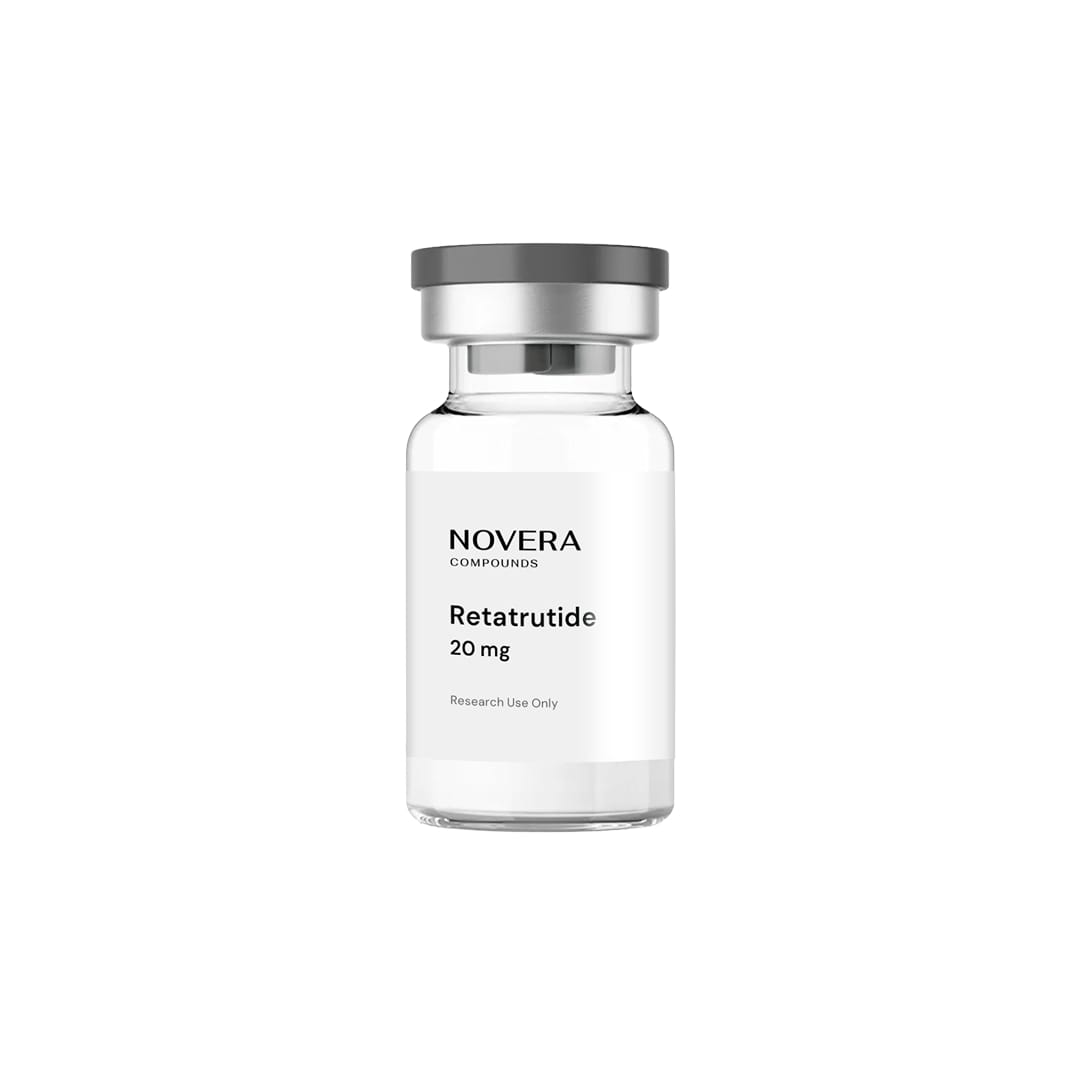


Retatrutide is a synthetic research peptide studied for activity at GLP-1, GIP, and glucagon receptors, three hormone pathways involved in metabolic regulation. Retatrutide can be ordered online for research use, with current price information shown during checkout and product selection based on the available quantity and presentation. It is not approved as a personal treatment and is not intended for human consumption, self-administration, veterinary use, diagnosis, or therapeutic application.
Also known as LY3437943, Retatrutide is often described as a triple agonist because it is designed to engage multiple metabolic hormone receptors at the same time. Scientific interest has focused on how combined receptor activity may affect appetite signaling, energy balance, glucose regulation, insulin-related pathways, and lipid metabolism. These topics overlap with public interest in obesity, type 2 diabetes, and modern incretin-based research, but research peptide availability, clinical trial participation, and approved medical treatment are separate categories.
Retatrutide Price and Ordering Context
Retatrutide price and cost can vary by the quantity, product format, and current catalogue status shown at the time of ordering. Use the displayed product information to match the available selection with the intended research need; do not infer a personal dose, injection schedule, or treatment plan from product quantity or online discussion.
Because Retatrutide is a research peptide, ordering it is different from obtaining an approved medication for obesity, diabetes, or weight management. A clinical trial may provide investigational access under a study protocol, while approved medical treatment is directed by a licensed clinician using authorized medicines. Product ordering does not replace clinical trial enrollment or medical care.
Quick tip: If your question is about trial participation, start with the sponsor or ClinicalTrials.gov rather than product ordering information.
Current Status, Trials, and Availability
Retatrutide remains closely associated with clinical research and investigational development. Public trial records and sponsor updates describe studies evaluating LY3437943 in people with obesity, overweight, and related metabolic conditions. Trial participation depends on protocol criteria, site availability, screening, and sponsor processes; it is not the same as purchasing a research peptide.
Questions such as how to get Retatrutide, whether Retatrutide is available now, or when Retatrutide will be available usually refer to three different situations. Research peptide availability means a material is supplied for non-clinical investigation. Clinical trial access means joining a regulated study if eligible. Approved treatment availability means a health authority has authorized a medicine for a specific use. Retatrutide should not be treated as an approved weight loss drug or obesity treatment unless an appropriate authority has approved that exact product for that use.
There is generally no charge to join a clinical trial, although study-related costs and reimbursements vary by protocol and site. The trial team is the right source for information about screening, visits, study medication, and participant responsibilities.
Chemical Makeup
| Product name | Retatrutide |
| Other known names | Retatrutide; LY3437943; triple agonist |
| Peptide class | GLP-1, GIP, and glucagon receptor agonist research peptide |
| Molecular formula | C₂₂₈H₃₅₀N₄₈O₆₈ |
| Molecular weight | ~4731.4 g/mol |
| Molecular type | Synthetic peptide |
| Appearance | Lyophilized powder |
| Intended use | Research use only; not for human or veterinary administration |
Product Overview
Retatrutide was engineered to activate multiple metabolic hormone receptors rather than a single incretin pathway. GLP-1, short for glucagon-like peptide-1, is one of the best-known incretin pathways involved in insulin-related signaling and appetite regulation. GIP, or glucose-dependent insulinotropic polypeptide, is another incretin pathway involved in nutrient response. Glucagon signaling contributes to glucose and energy mobilization.
The triple-receptor profile makes Retatrutide relevant to research on integrated endocrine signaling. Instead of looking at one receptor in isolation, Retatrutide allows investigation of how GLP-1, GIP, and glucagon receptor activity may interact in complex biological systems. This is why it is often discussed alongside broader categories such as GLP-1 agonists, metabolic peptides, and non-insulin diabetes research.
Current areas of scientific interest include:
- Multi-receptor metabolic signaling
- GLP-1 receptor pathway activity
- GIP receptor function
- Glucagon receptor signaling
- Energy expenditure and energy homeostasis
- Appetite and satiety signaling pathways
- Glucose and lipid metabolism research
- Endocrine system integration
Technical Specifications
| Parameter | Specification |
|---|---|
| Product Name | Retatrutide |
| Peptide Class | Triple hormone receptor agonist |
| Target Receptors | GLP-1, GIP, glucagon |
| Molecular Type | Synthetic peptide |
| Purity | Research grade |
| Appearance | Lyophilized powder |
| Solubility | Suitable for controlled research reconstitution |
| Storage Conditions | Store according to product documentation |
| Intended Use | Research and analytical applications only |
Product quantities and handling information should be followed as provided with the supplied material. Do not translate a research quantity into Retatrutide dosage or dosing instructions for personal use, and do not rely on online trial dosing summaries to guide use outside a study.
Scientific Background
Retatrutide was developed within a wider scientific effort to study multi-receptor agonism in metabolic disease. Earlier incretin-based medicines focused mainly on GLP-1 receptor signaling, while newer investigational compounds explore whether combining GLP-1, GIP, and glucagon pathways can produce distinct metabolic effects. Retatrutide is one of the best-known peptides in this triple-agonist category.
Peer-reviewed clinical research has evaluated Retatrutide in adults with obesity and has reported meaningful changes in body weight in trial settings. Those findings do not make a research peptide an approved medication for self-directed weight loss. They show why the compound has become important in metabolic science and why ongoing trial results are being watched closely.
Retatrutide also sits within a broader landscape of diabetes and weight-management research. People interested in approved treatment pathways should discuss authorized options with a clinician and may also browse related categories such as weight management, diabetes medications, and peptides for general product context.
Research Applications
Multi-Receptor Metabolic Signaling
A central use of Retatrutide in scientific investigation is the study of combined hormone receptor signaling. Simultaneous GLP-1, GIP, and glucagon receptor activity may help clarify how endocrine pathways coordinate metabolic responses. This has made the peptide relevant to studies of energy balance, nutrient response, and metabolic adaptation.
GLP-1 Receptor Pathway Research
The GLP-1 receptor is involved in glucose regulation, insulin-related signaling, gastric emptying pathways, appetite signaling, and satiety responses. Retatrutide is used in research settings to examine GLP-1 pathway activity in combination with other receptor systems rather than as an isolated single-target model.
GIP Receptor Function
GIP signaling is involved in nutrient sensing and metabolic regulation. Scientific work with Retatrutide may help evaluate how GIP receptor activity contributes to broader incretin and endocrine network behavior, especially when it occurs alongside GLP-1 and glucagon receptor engagement.
Glucagon Receptor Investigations
Glucagon receptor signaling plays an important role in energy mobilization and glucose balance. In the Retatrutide model, glucagon receptor activity is studied as part of a combined triple-agonist profile. This can support investigation of how energy expenditure, substrate use, and feedback signaling interact.
Appetite, Feeding Behavior, and Energy Homeostasis
Retatrutide research has also focused on neuroendocrine pathways involved in appetite, feeding behavior, and satiety. These pathways are complex and involve communication between peripheral metabolic signals and central nervous system circuits. Findings from controlled studies should not be interpreted as personal weight loss instructions.
Mechanisms Under Investigation
Current scientific literature describes Retatrutide as a peptide designed to activate GLP-1, GIP, and glucagon receptors. Its biological activity is being studied through several overlapping mechanisms that may influence metabolic signaling, energy regulation, appetite pathways, and glucose or lipid metabolism. Many details remain under investigation.
- Simultaneous engagement of GLP-1, GIP, and glucagon receptors
- Modulation of integrated metabolic signaling networks
- Effects on energy homeostasis pathways
- Interaction with endocrine feedback systems
- Participation in glucose and lipid metabolism models
- Influence on appetite-related neuroendocrine signaling
Why it matters: Multi-receptor activity may help explain why Retatrutide is studied differently from single-pathway GLP-1 compounds.
Safety Boundaries and Handling
Retatrutide supplied as a research peptide is not intended for human consumption, therapeutic use, diagnostic use, veterinary administration, or clinical application. It should be handled only according to the product documentation and applicable safety practices for peptide materials. Storage conditions should be followed carefully because peptide stability can be affected by temperature, moisture, light exposure, and repeated handling.
Public clinical trials have monitored adverse events and safety outcomes under controlled protocols. Common incretin-related effects discussed in the broader GLP-1 and metabolic drug class may include gastrointestinal symptoms such as nausea, vomiting, diarrhea, constipation, or abdominal discomfort, but trial observations do not establish safe personal use of a research peptide. Anyone seeking treatment for obesity, diabetes, or another medical condition should speak with a qualified healthcare professional about approved options and monitoring needs.
When shipping or storage logistics are relevant, peptide materials may require careful temperature-aware handling such as prompt, express, cold-chain shipping. Follow the instructions provided with the product after receipt, and avoid using damaged, improperly stored, or unclear materials.
Research Significance
Retatrutide represents a major development in multi-receptor peptide research because it brings three metabolic hormone pathways into one investigational compound. Its profile has supported research into coordinated endocrine signaling, metabolic adaptation, weight-related biology, glucose regulation, and energy expenditure.
Interest in Retatrutide trial results is high because obesity and type 2 diabetes remain major areas of clinical research. Still, a trial result is not the same as broad approval, and trial dosing information is not a dosing guide for use outside the study. Retatrutide dosage questions should be answered only within an authorized clinical trial or by official product labeling if a regulator approves a specific medicine in the future.
For people comparing metabolic research areas, related reading categories include weight-management articles, type 2 diabetes articles, and broader diabetes articles. These materials can help place incretin and metabolic research in context without replacing professional medical advice.
Quality and Research Standards
Research-grade Retatrutide is manufactured under quality-control procedures intended to support consistency, purity, and product integrity. Batch-level standards and documentation help confirm that the material is appropriate for its stated research purpose. The product should be stored, prepared, and handled only in line with the accompanying instructions.
Analytical testing supports identity and quality assessment, but it does not convert a research peptide into an approved medication. Retatrutide should not be marketed, administered, or used as a personal treatment based on online claims about Retatrutide benefits, weight loss outcomes, or future availability.
How Retatrutide Compares With Related Metabolic Categories
Retatrutide is often compared with GLP-1 receptor agonists because GLP-1 activity is part of its mechanism. The key difference is that Retatrutide is designed as a triple agonist, with activity at GLP-1, GIP, and glucagon receptors. This makes it mechanistically distinct from single GLP-1 pathway products and relevant to research on combined metabolic signaling.
It is also different from approved medicines supplied for diagnosed conditions. Approved products have authorized labeling, defined indications, established dosing instructions, and regulated safety information. Retatrutide research peptide information should be read in its own context, separate from authorized diabetes and weight-management products available through appropriate medical pathways.
Important Notice
This material is supplied for scientific research, analytical testing, and educational applications. It is not intended for human consumption, veterinary administration, medical treatment, diagnosis, or therapeutic application. Anyone handling peptide materials is responsible for following applicable regulations, storage instructions, safety practices, and product documentation.
Do not use Retatrutide as a substitute for approved care for obesity, diabetes, chronic weight management, or another health condition. Questions about clinical trials should be directed to the study sponsor or a registered trial site, while questions about personal treatment should be directed to a licensed healthcare professional.
Authoritative Sources
Manufacturer and clinical research updates can help confirm whether information refers to development status, trial data, or product access. Useful starting points include the Manufacturer development update, a Peer-reviewed metabolic research report, and public study records on ClinicalTrials.gov.
This content is for informational purposes only and is not a substitute for professional medical advice.
Research & Education Tool
Retatrutide Dosage Calculator
Enter the vial amount, diluent volume, and target amount to estimate concentration, draw volume on a 1 mL U-100 syringe, and approximate vial yield.
For research and educational use only. Check all values against the product label, certificate of analysis, and any applicable professional guidance before relying on the result.
mg
Concentration
-
mcg / mL
Volume per Dose
-
-
Estimated Draws / Vial
-
rounded down to whole draws
Draw Reference
Enter values to estimate the syringe mark.
0
-
-
-
-
BMI Calculator
Estimate adult body mass index from height and weight, with metric and imperial units.
BMI
-
kg/m2 equivalent
Category
-
Adult screening range
These calculations are for education only and do not replace clinical advice, diagnosis, or treatment. Always confirm medical decisions with a qualified healthcare professional.
Calorie & TDEE Calculator
Estimate resting energy needs and daily calorie range from age, sex, body size, and activity level.
Hold Ctrl or Cmd to select more than one calculator.
BMR
-
estimated calories/day at rest
Maintenance
-
BMR multiplied by activity
Weight loss guide
-
maintenance minus 500 kcal/day
These calculations are for education only and do not replace clinical advice, diagnosis, or treatment. Always confirm medical decisions with a qualified healthcare professional.
Weight Loss Timeline Calculator
Estimate a simple timeline from current weight, goal weight, and average daily calorie deficit.
Estimated weekly change
-
based on 3,500 kcal per lb
Estimated time
-
simple arithmetic estimate
Approx. date
-
if average deficit is maintained
These calculations are for education only and do not replace clinical advice, diagnosis, or treatment. Always confirm medical decisions with a qualified healthcare professional.
Weight-Loss Progress Calculator
Track percentage body-weight change and progress toward a target weight.
Weight change
-
current vs starting weight
Body weight change
-
percent of starting weight
Goal progress
-
change achieved toward goal
These calculations are for education only and do not replace clinical advice, diagnosis, or treatment. Always confirm medical decisions with a qualified healthcare professional.
Express Shipping - from $29.99
Shipping with this method takes 3-5 days
Prices:
- Dry-Packed Products $29.99
- Cold-Packed Products $39.99
Standard Shipping - $19.99
Shipping with this method takes 5-10 days
Prices:
- Dry-Packed Products $19.99
- Not available for Cold-Packed products
Is Retatrutide still in clinical trials?
Yes, Retatrutide is associated with ongoing clinical research and investigational development. Public trial records describe studies evaluating LY3437943 in obesity, overweight, and related metabolic conditions. Trial participation is separate from ordering a research peptide.
Can I get Retatrutide now?
Retatrutide may be available as a research peptide, but that is not the same as an approved personal treatment. Clinical trial access depends on study criteria and site screening, while approved medical treatment requires a regulator-authorized product and clinician direction.
How do I get into a Retatrutide trial?
Start with the sponsor’s trial website or ClinicalTrials.gov and search for Retatrutide or LY3437943. Each study has its own inclusion criteria, location requirements, screening process, visit schedule, and participant responsibilities.
How much does it cost to join a Retatrutide trial?
Clinical trials generally do not charge participants for the investigational study drug, but details vary by protocol and site. The trial team can explain study-related visits, possible reimbursements, travel expectations, and any participant costs.
Is Retatrutide the same as a GLP-1 medication?
Retatrutide includes GLP-1 receptor activity, but it is designed as a triple agonist that also targets GIP and glucagon receptors. That makes it different from medicines that act mainly through the GLP-1 pathway.
What is Retatrutide used for in research?
Retatrutide is used to study integrated metabolic signaling, including GLP-1, GIP, and glucagon receptor pathways. Research topics include appetite signaling, energy expenditure, glucose regulation, lipid metabolism, and endocrine system coordination.
Is there a Retatrutide dosage for weight loss?
Retatrutide research peptide information should not be used as a dosing guide. Trial dosing is controlled by study protocols, and personal treatment decisions should be made only with approved medicines and qualified medical supervision.
Rewards Program
Earn points on birthdays, product orders, reviews, friend referrals, and more! Enjoy your medication at unparalleled discounts while reaping rewards for every step you take with us.
You can read more about rewards here.
POINT VALUE
How to earn points
- 1Create an account and start earning.
- 2Earn points every time you shop or perform certain actions.
- 3Redeem points for exclusive discounts.
You Might Also Like
Select options
This product has multiple variants. The options may be chosen on the product page
Select options
This product has multiple variants. The options may be chosen on the product page
Select options
This product has multiple variants. The options may be chosen on the product page
Select options
This product has multiple variants. The options may be chosen on the product page