
Please note: a valid prescription is required for all prescription medication.
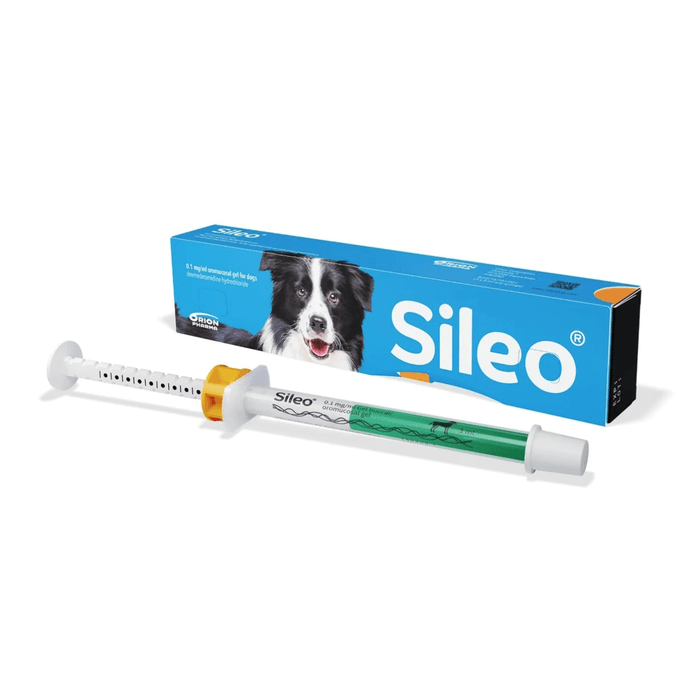
Sileo Gel
Buy Sileo Gel Online


Sileo Gel is a dexmedetomidine oromucosal gel for dogs used for noise aversion. You can buy Sileo Gel online, view the current price, and choose the quantity shown during ordering that matches your veterinarian’s directions. This medicine is placed on the lining of the mouth, so the form, timing, and handling instructions matter.
Sileo Gel for dogs is intended for event-based use around loud noises such as fireworks, thunder, or other predictable sound triggers. The gel is not a treat, food additive, routine daily calming supplement, or general obedience aid. Use the veterinary label and official instructions for the amount, timing, and repeat-use limits for your dog.
Sileo Gel Price, Quantity, and Product Selection
The Sileo Gel price should be read together with the quantity, form, and total contents shown during ordering. An oromucosal gel applicator may contain more than one marked amount, and one use for a dog depends on veterinary directions. A lower or higher displayed total is only meaningful when the form and quantity are the same.
When reviewing Sileo Gel cost for US delivery from Canada, focus on the visible product total and any service-related charges shown during checkout. Cash-pay customers should also compare the active ingredient and oromucosal gel form against the veterinary label rather than comparing only a general pet-medication estimate.
Dose-based veterinary products can be easy to misread because the full contents of the applicator are not necessarily a single use. Do not choose or change a dose based on the gel markings alone. The ordering decision is to match the medicine, form, and quantity to the directions already provided for your dog.
| Ordering point | What to verify |
|---|---|
| Product name | Sileo Gel should match the name on the veterinary label. |
| Active ingredient | Dexmedetomidine identifies the medicine used in this oromucosal gel. |
| Form | Oromucosal gel is placed on oral tissue, not mixed into food. |
| Quantity | The quantity shown during ordering determines how much product is included. |
| Directions | Your veterinarian’s instructions determine timing, amount, and repeat use. |
Quick tip: Match the product name and form first, then compare the total price.
How to Order Sileo Gel Online
Order Sileo Gel online by choosing the oromucosal gel quantity that matches your dog’s veterinary directions. Keep your dog’s current weight, clinic information, and label directions available during checkout in case order details need clarification. We may help confirm medication details when needed to support an accurate veterinary order.
If you order Sileo Gel from Canada, use the same product name, active ingredient, and form shown on the veterinary label. Do not rely on an older label, another pet’s directions, or online anecdotes about storms or fireworks. A dog’s health status, weight, other medicines, and past response can change the safest plan.
Before completing the order, look for stock messages, quantity limits, and handling notes shown during checkout. If a noise event is expected soon, avoid changing the timing or amount to fit a schedule unless your veterinarian has told you how to do that safely. Event-based medicines work best when the use plan is clear before the noise starts.
- Match the form: Choose dexmedetomidine oromucosal gel when that is the medicine directed.
- Verify the quantity: Review the number of units or packs included before checkout.
- Use current directions: Follow the most recent veterinary label for your dog.
- Plan ahead: Ask your veterinarian about timing before predictable loud events.
What Sileo Gel Does for Dogs
Sileo noise aversion gel is used to help dogs with acute fear or anxiety linked to loud sounds. Noise aversion may involve trembling, pacing, hiding, panting, vocalizing, trying to escape, destructive behavior, or clinginess during sound events. Common triggers include thunder, fireworks, construction, traffic, celebrations, or other sudden noises.
The active ingredient, dexmedetomidine hydrochloride, is an alpha-2 adrenergic agonist. In plain terms, it affects nervous-system signaling involved in stress responses. Sileo dexmedetomidine gel is used around specific noise events, not as a daily behavior medication for every anxiety trigger.
This medicine may be one part of a broader noise-aversion plan. Your veterinarian may also recommend safe spaces, white noise, training, desensitization, environmental management, or other treatments depending on your dog’s symptoms. For condition-specific context, see the Canine Noise Aversion section.
Why it matters: Sileo Gel is most appropriate when the trigger and use instructions match the veterinary plan.
Oromucosal Gel Use and Dose Basics
Sileo oromucosal gel is placed on the lining of the mouth, commonly between the cheek and gums. Oromucosal placement matters because the medicine is intended to absorb through oral tissues. It should not be stirred into food, smeared on treats, or used as a casual calming product.
Many owners search for Sileo Gel dosage before a storm or fireworks event, but the safe amount is dog-specific. Follow the veterinary label and official product instructions for the amount, timing before the event, and maximum repeat use. If you are unsure how to interpret the applicator markings, ask your veterinarian to demonstrate before use.
If a dog swallows some or all of the gel, absorption may differ from proper placement on the gums. Do not automatically give extra gel to replace a swallowed amount. Contact your veterinarian for instructions, especially if your dog seems unusually sleepy, weak, uncoordinated, or unresponsive.
- Form: Oromucosal gel for dogs.
- Ingredient: Dexmedetomidine hydrochloride.
- Use setting: Predictable or occurring noise-aversion events.
- Direction source: Veterinary label and official product instructions.
How Long It May Last and What to Watch For
The duration of effect can vary by dog, dose direction, health status, and the noise event. Official instructions should guide when the gel is given and whether repeat use is allowed. Do not use social media timelines or another dog’s response to set your dog’s schedule.
After use, watch your dog’s alertness, breathing, coordination, gum color, and ability to stand or respond normally. Some calming is expected when the medicine works as intended, but excessive sedation is not the goal. If the response seems stronger than expected, do not repeat use without veterinary guidance.
Noise events can also change a dog’s behavior independently of medication. A frightened dog may hide, refuse food, tremble, or seek close contact. Monitoring both fear signs and medicine effects helps your veterinarian decide whether the same plan remains appropriate for future events.
Storage, Handling, and Shipping Basics
Store Sileo Gel in its original container with the veterinary label attached. Keep it away from children, other pets, and household members who may not understand its purpose. Follow the storage range printed on the package and avoid heat, moisture, and direct light unless the label allows that location.
Dexmedetomidine can affect people if accidentally swallowed or absorbed through mucous membranes. Avoid direct contact with skin, eyes, and the mouth. If contact occurs, follow the label’s first-aid directions and seek medical guidance when needed, especially after significant exposure.
For travel, keep the gel secured with the label and protect the applicator from damage. Do not leave it in a hot car, checked bag, or unsecured purse. When shipping instructions appear during checkout, follow the stated handling notes; prompt, express, cold-chain shipping language may appear only when it applies to the order path.
- Keep it labeled: Store the gel with veterinary directions attached.
- Prevent access: Secure it from children, pets, and unintended users.
- Avoid exposure: Do not touch the gel with eyes, mouth, or broken skin.
- Protect the applicator: Pack it carefully when traveling.
Side Effects, Warnings, and Monitoring
Dexmedetomidine gel for dogs can cause side effects, and some dogs should not use it. Veterinary labeling warns against use in dogs with severe cardiovascular, respiratory, liver, or kidney disease, and in dogs with shock, severe weakness, exhaustion, or heat stress. Tell your veterinarian if your dog is pregnant, nursing, very young, elderly, or medically fragile.
Possible side effects include sleepiness, vomiting, pale gums, lack of coordination, urinary accidents, and changes in heart rate or blood pressure. Mild calming may occur with intended use, but deep sedation, collapse, trouble breathing, blue or very pale gums, or an unusual response requires urgent veterinary help. Do not give more gel to compensate for a missed, partial, or swallowed amount unless your veterinarian specifically instructs you to do so.
Human exposure is an important safety concern. Sileo Gel should never be used by a person, shared with another household, or handled casually. Accidental ingestion or significant contact may cause drowsiness, low blood pressure, or other effects. Pregnant people and anyone with cardiovascular concerns should be especially careful to avoid contact.
Interactions and Veterinary Follow-Up
Tell your veterinarian about every medicine, supplement, sedative, flea product, and calming aid your dog receives. Dexmedetomidine may have additive effects with products that slow the nervous system, affect heart rate, or change blood pressure. This can include some pain medicines, tranquilizers, anesthetic agents, and other anxiety treatments.
Follow-up is useful when noise events repeat across a season. Your veterinarian may review how often the gel is needed, how your dog responds, and whether new health problems or medicines change the plan. A dog that tolerated a medicine previously may need reassessment after illness, injury, weight change, or a new diagnosis.
Keep brief notes after each use if your veterinarian recommends it. Record the trigger, timing, observed calming, side effects, and any unusual behavior. These notes can help refine the plan without relying on memory during stressful events.
How This Gel Differs From Other Calming Options
Sileo calming gel for dogs is an event-based veterinary medication for noise aversion. It differs from daily behavioral medicines, nutritional calming products, pheromone products, training tools, and injectable sedatives. The right choice depends on the trigger, onset needs, safety profile, and whether your dog needs occasional support or a broader behavior plan.
Some dogs with noise aversion also have separation distress, generalized anxiety, pain, cognitive changes, or medical conditions that worsen fear responses. Those situations may require a different treatment plan. Sileo for dog anxiety should not be treated as a universal answer for every anxious behavior.
To browse broader animal-health categories, see Pet Medications. Category browsing can help you understand how veterinary medicines are organized, but the veterinarian’s diagnosis and label directions should determine the product used for your dog.
Authoritative Sources
These sources support the product identity, labeled use, handling, and safety points summarized above.
This content is for informational purposes only and is not a substitute for professional medical advice.
Express Shipping - from $29.99
Shipping with this method takes 3-5 days
Prices:
- Dry-Packed Products $29.99
- Cold-Packed Products $39.99
Standard Shipping - $19.99
Shipping with this method takes 5-10 days
Prices:
- Dry-Packed Products $19.99
- Not available for Cold-Packed products
What does Sileo Gel do?
Sileo Gel is a dexmedetomidine oromucosal gel for dogs used for noise aversion. It is intended for fear or anxiety linked to loud sounds such as thunder, fireworks, or similar noise events.
How is Sileo Gel used in dogs?
Sileo Gel is placed on the lining of the mouth, commonly between the cheek and gums, so it can absorb through oral tissue. Follow the veterinary label and official product instructions for timing, amount, and repeat-use limits.
What happens if my dog swallows Sileo Gel?
If your dog swallows the gel, do not automatically give more. Absorption may differ from proper gum placement, so contact your veterinarian for guidance, especially if your dog becomes very sleepy, weak, uncoordinated, or hard to wake.
What happens if Sileo Gel gets on human skin or in the mouth?
Avoid direct human exposure because dexmedetomidine can affect people. If the gel contacts skin, eyes, or the mouth, follow the label’s first-aid directions and seek medical guidance when needed, particularly after significant exposure.
What side effects can Sileo Gel cause?
Possible side effects include sleepiness, vomiting, pale gums, lack of coordination, urinary accidents, and changes in heart rate or blood pressure. Deep sedation, collapse, breathing trouble, or a severe unusual reaction needs urgent veterinary attention.
Can Sileo Gel be used with other calming medicines?
Tell your veterinarian about all medicines, supplements, sedatives, and calming aids your dog receives. Dexmedetomidine may have additive effects with products that affect the nervous system, heart rate, or blood pressure.
Rewards Program
Earn points on birthdays, product orders, reviews, friend referrals, and more! Enjoy your medication at unparalleled discounts while reaping rewards for every step you take with us.
You can read more about rewards here.
POINT VALUE
How to earn points
- 1Create an account and start earning.
- 2Earn points every time you shop or perform certain actions.
- 3Redeem points for exclusive discounts.
You Might Also Like
Select options
This product has multiple variants. The options may be chosen on the product page
Select options
This product has multiple variants. The options may be chosen on the product page
Select options
This product has multiple variants. The options may be chosen on the product page
Select options
This product has multiple variants. The options may be chosen on the product page