
Please note: a valid prescription is required for all prescription medication.
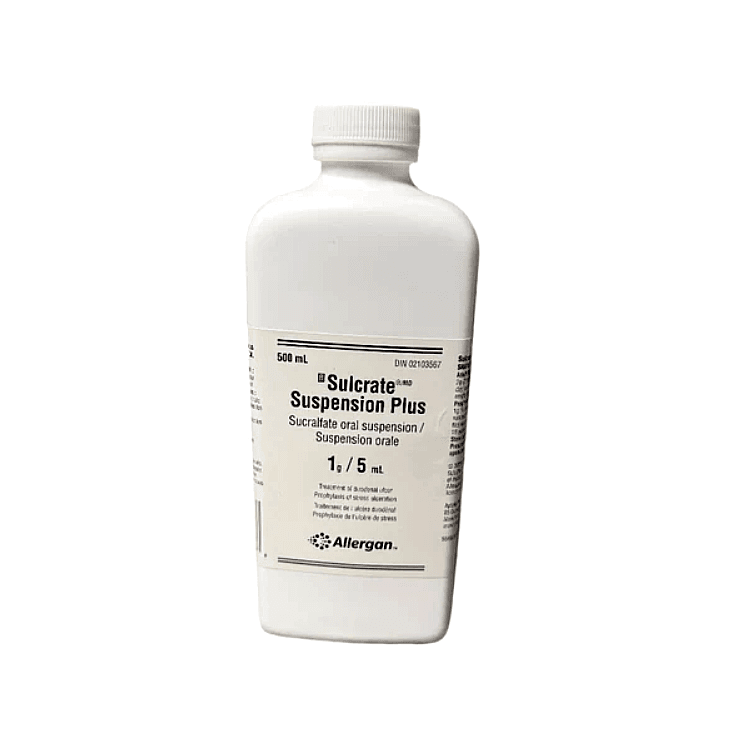
Sulcrate Suspension Plus
Sulcrate Suspension Plus Uses, Safety, and Handling
Price:
$98.99
You save


Sulcrate Suspension Plus is a liquid form of sucralfate used to help protect irritated areas in the upper digestive tract. It is most often used to support healing when ulcers or inflammation are present. This page explains how it works, practical use basics, and key safety points to review with a clinician or veterinarian.
What Sulcrate Suspension Plus Is and How It Works
This medicine contains sucralfate, a mucosal protectant (lining-coating agent). Rather than lowering stomach acid, it primarily works locally by forming a sticky barrier over damaged tissue. In an acidic environment, sucralfate can bind to proteins in an ulcer bed and help shield the area from acid, pepsin, and bile salts. Prescription details may be confirmed with the prescriber before referral as part of routine documentation checks.
Some patients explore US delivery from Canada when cross-border fulfilment is appropriate for their situation. In practice, sucralfate oral suspension is often chosen when a liquid is easier to swallow, when precise mL measurement is preferred, or when a prescriber wants a coating effect along the esophagus. Because it can adhere to the lining, it may also bind other medicines in the gut, which is why spacing doses is a recurring theme in safe use.
Why it matters: A coating medicine can help symptoms, but timing with other drugs often determines how well everything works together.
Clinical use and labeling vary by country and setting. In human care, sucralfate is commonly associated with ulcer management and related upper GI irritation. In veterinary practice, sucralfate is also used as a gastroprotectant, but the diagnosis, dosing schedule, and monitoring are species-specific. Dispensing is completed by licensed third-party pharmacies where permitted, which helps keep the prescriber’s instructions aligned with the final labeled product.
Who It’s For
Clinicians may consider Sulcrate Suspension Plus for conditions where protecting the upper gastrointestinal (GI) lining is part of the plan. Examples can include ulcer disease, gastritis (stomach lining inflammation), reflux-related irritation, or esophagitis (esophagus inflammation). The underlying cause matters, since ulcers may be related to infection, anti-inflammatory medicines, severe physiologic stress, or other conditions that require separate treatment.
People comparing options for reflux symptoms may also want background on GERD patterns and triggers; CanadianInsulin’s browseable Gerd hub organizes related therapies by category. For ulcer-specific context, the Peptic Ulcer Disease hub can help frame common medication classes that may be used alongside a protective agent.
Not everyone is a good candidate. Sucralfate is generally avoided in anyone with a known hypersensitivity to its ingredients. Extra caution is often used in advanced kidney disease because small amounts of aluminum may be absorbed, and accumulation is a concern in severe renal impairment. In veterinary use, “sulcrate suspension plus for dogs” searches are common, but dogs (and cats) should only receive sucralfate under a veterinarian’s direction, since GI obstruction risk, concurrent diseases, and feeding plans can change the approach.
Dosage and Usage
Follow the prescriber’s directions and the product label for timing and measurement. Sucralfate suspensions are often taken on an empty stomach to improve contact with the lining, and they may be scheduled around meals and bedtime depending on the condition being treated. If the plan includes antacids or acid-suppressing therapy, the prescriber may specify how to separate them to avoid interfering with the coating effect.
For Sulcrate Suspension Plus dosing, the most important “how” details are usually practical rather than numeric: shake the bottle well, measure with an oral syringe or dosing device, and take it consistently at the times provided. If a feeding tube is involved, instructions may include pausing feeds and flushing the tube before and after administration to reduce clogging and to support medication contact with the GI lining.
Quick tip: Use a marked oral syringe for mL accuracy, then rinse it promptly.
Because sucralfate can bind other drugs in the gut, spacing other oral medications is often needed. This includes some antibiotics and thyroid replacement, among others. If diet adjustments are part of a reflux or nausea plan for another medication, resources such as Can Wegovy Cause Heartburn may offer general context on heartburn patterns, but medication timing should still be individualized by the treating clinician.
Strengths and Forms
Sulcrate Suspension Plus is supplied as an oral liquid suspension intended for measured dosing in mL. Sucralfate products may also exist as tablets in some markets, which can be an option when swallowing is not a barrier or when a clinician prefers that presentation. The exact concentration and bottle size should be confirmed on the dispensing label, since formulations can differ across manufacturers and jurisdictions.
Some listings and searches refer to common concentrations such as “1 g per 5 mL” or mention larger formats (for example, a “200 mL” bottle). Those details should be verified on the specific product you receive rather than assumed from a search term. For patients and caregivers who want to compare GI-focused medication categories, the Gastrointestinal hub is a practical place to browse classes and forms.
In veterinary settings, oral suspensions are sometimes favored for smaller animals, picky eaters, or when a feeding plan is structured around multiple medications. If you are looking broadly at animal health items, the Pet Medications hub groups products by type, but a veterinarian should confirm whether sucralfate is appropriate for a particular pet’s condition.
Storage and Travel Basics
Storage guidance should follow the label for the specific bottle. Many sucralfate suspensions are kept at controlled room temperature, protected from excessive heat, and not frozen. Keep the cap tightly closed to reduce contamination and evaporation that could affect suspension quality.
Because this is a suspension, settling can occur over time. Shake well before each dose so the liquid is evenly mixed. Use clean measuring devices, and avoid touching the bottle opening with fingers or an unclean syringe. If the product has a beyond-use date or an expiration date on the label, do not use it past that date.
For travel, carry the bottle in its original packaging with the prescription label attached when possible. Bring a dosing device and a small cleaning plan, such as bottled water for rinsing. If nausea, reflux, or stomach irritation is part of a broader medication regimen, it can also be helpful to understand which symptoms might be medication-related; for general GI side-effect context with common therapies, see Foods To Avoid With Trulicity as a non-prescriptive overview of typical triggers and symptom patterns.
Side Effects and Safety
Most side effects of sucralfate are related to the gastrointestinal tract. Constipation is commonly reported, and some people notice nausea, bloating, dry mouth, or an unpleasant taste. Because the drug acts locally and is minimally absorbed, systemic effects are generally less prominent than with many other medications, but individual tolerance varies.
With Sulcrate Suspension Plus, safety planning should include how to recognize symptoms that need urgent evaluation. Severe abdominal pain, repeated vomiting, inability to tolerate fluids, black or tarry stools, or vomiting blood can signal significant GI bleeding or another emergency. Also seek immediate care for signs of a serious allergic reaction such as hives, swelling of the face or throat, or trouble breathing.
- Persistent severe stomach pain: needs evaluation
- Black stools or blood: urgent assessment
- Swelling or wheeze: emergency care
- New confusion in kidney disease: review meds
Special caution is often used in advanced kidney disease because aluminum accumulation is a concern with long-term exposure. Another practical risk is reduced absorption of other oral medications if spacing is not followed. If you take medicines that already have a narrow dosing window, ask your clinician how to separate them and what monitoring, if any, is appropriate.
Drug Interactions and Cautions
Sucralfate can physically bind to other medicines in the GI tract, reducing how much of those drugs are absorbed. This interaction is not limited to one drug class, so a medication list review is important. Clinicians often recommend separating sucralfate from other oral medications by a set interval, but the exact spacing can differ by drug and clinical goal.
Examples of medicines that may be affected include certain antibiotics (such as fluoroquinolones or tetracyclines), thyroid hormone replacement, digoxin, and some seizure medications. Antacids may also interfere if taken too close to sucralfate. If you have diabetes and take metformin or other agents that can cause GI symptoms, it can be helpful to separate “side effect” discomfort from ulcer-type pain; Metformin Possible Side Effects is a general reference on what GI reactions can look like with common therapies.
| Interaction type | What to watch for | Common management approach |
|---|---|---|
| Binding in the gut | Reduced effect of the other drug | Separate dosing times as directed |
| Renal impairment | Aluminum accumulation concerns | Avoid prolonged use without monitoring |
| Feeding tubes | Clogging or reduced delivery | Flush tube and follow protocol |
Other cautions depend on the patient. Difficulty swallowing, aspiration risk, significant constipation, and complex multi-drug regimens can change how a prescriber uses a suspension. Pregnancy and breastfeeding considerations should be reviewed with the treating clinician; systemic absorption is low, but decisions still rely on the full clinical picture.
Compare With Alternatives
When a clinician chooses a lining protectant, they usually compare it with options that reduce acid or address the underlying cause of irritation. Sulcrate Suspension Plus is one approach in the “protective coating” category, while other strategies aim to decrease acid exposure or treat infection. The best fit depends on diagnosis, symptom pattern, and how quickly relief is needed.
Common alternatives or complements include proton pump inhibitors (PPIs) and H2-receptor antagonists, which reduce acid production, and bismuth-containing products that can soothe irritation in some contexts. If medication-related injury is suspected, clinicians may also adjust NSAIDs (nonsteroidal anti-inflammatory drugs) or add protective therapy based on risk. In veterinary medicine, a veterinarian may compare sucralfate with acid suppressants or diet strategies, especially when vomiting, esophagitis, or ulceration is present.
For broader educational reading on digestive health topics and medication classes, CanadianInsulin’s Gastrointestinal article hub can be used to browse related guides. For individual decisions, the prescriber’s diagnosis and the product label remain the main references.
Pricing and Access
Access to sucralfate suspension may depend on prescription status, local regulations, and pharmacy availability. Many jurisdictions require a prescription for sucralfate products, and refill rules can vary. Coverage is plan-specific, and out-of-pocket cost can differ by formulary placement, formulation, and dispensing pharmacy. For patients without insurance, documentation and prescription verification still matter, and the prescriber’s directions should match the labeled product received.
CanadianInsulin operates as a prescription referral service and may confirm prescription details with the prescriber. Cross-border fulfilment may be considered when eligibility and local rules allow. If you are comparing general affordability resources, the Promotions Page lists site-wide program information, but it does not replace benefit verification with an insurer or clinician-led therapy planning.
Before starting, it can help to have a current medication list, allergy history, and kidney function history available for review. In veterinary cases, provide the pet’s weight, diagnosis, current diet, and all supplements, since spacing and feeding plans often influence how a sucralfate liquid is used.
Authoritative Sources
For labeling-level details on sucralfate, a neutral reference is the drug monograph and prescribing information. A practical starting point is DailyMed sucralfate listings and labeling information.
For clinical background on ulcer disease and related evaluation, a general medical reference is Merck Manual Professional overview of peptic ulcer disease.
When temperature control is needed, prompt, express, cold-chain shipping may be used to help protect product quality.
This content is for informational purposes only and is not a substitute for professional medical advice.
Express Shipping - from $25.00
Shipping with this method takes 3-5 days
Prices:
- Dry-Packed Products $25.00
- Cold-Packed Products $35.00
Standard Shipping - $15.00
Shipping with this method takes 5-10 days
Prices:
- Dry-Packed Products $15.00
- Not available for Cold-Packed products
What is sucralfate oral suspension used for?
Sucralfate oral suspension is used to help protect irritated tissue in the upper gastrointestinal tract. It is most closely associated with ulcer disease, but clinicians may also use it when the esophagus or stomach lining is inflamed and needs a protective barrier while the underlying cause is treated. It does not primarily work by reducing stomach acid. The specific reason for use, duration, and whether other medicines are needed depends on the diagnosis and the prescriber’s plan.
How should I time sucralfate liquid around other medications?
Sucralfate can bind to other oral medications in the digestive tract and lower their absorption. For that reason, prescribers often recommend separating it from other pills or liquids by a time interval. The exact spacing can differ depending on the other drug (for example, certain antibiotics or thyroid hormone). Share a complete medication and supplement list with the clinician or pharmacist so they can provide timing instructions aligned to your regimen and the product label.
Can Sulcrate Suspension Plus be used for dogs or other pets?
Sucralfate is used in veterinary medicine, including for dogs, as a gastroprotectant in selected conditions such as suspected ulceration or esophagitis. However, pets require species-specific dosing and monitoring, and the plan often depends on diet, concurrent medicines, and whether vomiting is present. Do not start or adjust sucralfate for a pet without a veterinarian’s directions. Ask the vet how to give it with meals, how to space it from other drugs, and what signs should prompt urgent reassessment.
What side effects should I watch for with sucralfate suspension?
Constipation is one of the more common side effects, and some people notice nausea, bloating, dry mouth, or an unpleasant taste. Seek urgent care for signs of serious problems such as black or tarry stools, vomiting blood, severe or worsening abdominal pain, or symptoms of an allergic reaction (hives, swelling, trouble breathing). If you have advanced kidney disease, discuss safety monitoring because aluminum accumulation can be a concern with prolonged exposure.
Does sucralfate reduce stomach acid like PPIs or H2 blockers?
No. Sucralfate is generally considered a mucosal protectant rather than an acid-suppressing drug. It works mainly by forming a barrier over irritated or ulcerated tissue and helping shield it from acid and digestive enzymes. Proton pump inhibitors and H2-receptor antagonists reduce acid production, which may be used instead of or in addition to sucralfate depending on the diagnosis. A clinician can explain which mechanism best matches the cause of symptoms and the treatment goal.
What should I ask my clinician or veterinarian before starting this medicine?
Ask what diagnosis is being treated and whether testing or follow-up is needed. Confirm how and when to take the suspension, how to separate it from other medications, and what to do if a dose is missed. Review kidney function history and any history of constipation, swallowing difficulty, or feeding tubes. If this is for a pet, ask about timing with food, interactions with other veterinary drugs, and which signs (vomiting, black stools, lethargy) should prompt urgent evaluation.
Rewards Program
Earn points on birthdays, product orders, reviews, friend referrals, and more! Enjoy your medication at unparalleled discounts while reaping rewards for every step you take with us.
You can read more about rewards here.
POINT VALUE
How to earn points
- 1Create an account and start earning.
- 2Earn points every time you shop or perform certain actions.
- 3Redeem points for exclusive discounts.
You Might Also Like
Select options
This product has multiple variants. The options may be chosen on the product page
Select options
This product has multiple variants. The options may be chosen on the product page
Select options
This product has multiple variants. The options may be chosen on the product page
Select options
This product has multiple variants. The options may be chosen on the product page
Related Articles
Type 2 Diabetes,
Liraglutide Vs Semaglutide Comparison Guide For Patients
Key Takeaways People searching liraglutide vs semaglutide usually want a practical comparison, not a slogan. The most useful differences involve formulation, schedule, approved uses, side effect patterns, and the paperwork…
Weight Management
Generic Zepbound: Availability, Status, and Options
Key Takeaways Patients and caregivers often search for generic zepbound when they need a clear answer about availability, labeling, and lower-cost access. The term is common online, but it does…
Type 2 Diabetes,
Oral Wegovy Explained: Facts, Risks, and Access Options
The phrase oral wegovy is best understood as a search term, not a settled product name. Most people use it to mean a pill version of semaglutide for weight management,…
Diabetes, General Health,
Glp-1 Drugs Over The Counter: What’s Real And What’s Not
Key Takeaways Prescription GLP-1 medicines are not sold as true OTC drugs. Many “GLP-1” supplements aim to support fullness, not mimic prescriptions. Online “no prescription” offers raise counterfeit and quality…