
Please note: a valid prescription is required for all prescription medication.
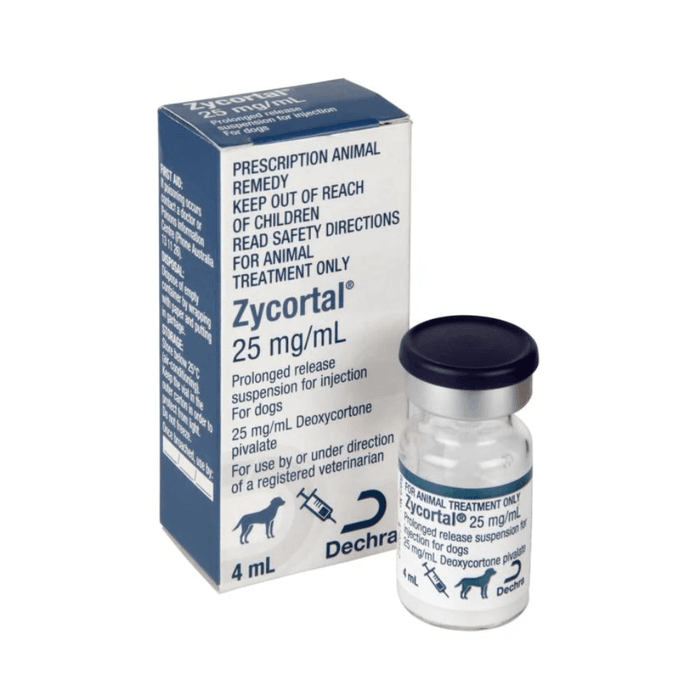
Zycortal
Zycortal for Dogs: Buy With Prescription Guidance
Price:
$306.99
You save


Zycortal is a prescription injectable suspension used in dogs that need mineralocorticoid replacement for hypoadrenocorticism (Addison’s disease). It is given as periodic injections, with follow-up monitoring directed by a veterinarian. This page reviews practical, label-aligned basics for use, safety, storage, and access.
What Zycortal Is and How It Works
This medicine provides desoxycorticosterone pivalate, a long-acting mineralocorticoid (salt-balance hormone) replacement. In primary hypoadrenocorticism, the adrenal glands cannot make enough hormones—especially aldosterone—so the body struggles to hold onto sodium and water and to regulate potassium. A mineralocorticoid replacement helps restore electrolyte balance, supports hydration, and reduces the risk of weakness, dehydration, and abnormal heart rhythms linked to high potassium. We coordinate prescription referrals; licensed third-party pharmacies dispense where permitted.
Some dogs also need a separate glucocorticoid (stress hormone) supplement, often given by mouth, because this treatment does not replace cortisol. It is not a substitute for emergency care when a dog is in shock or severely ill (an “Addisonian crisis”). Some patients explore Ships from Canada to US when coordinating ongoing veterinary refills across borders. For broader context and other veterinary items, you can browse the Pet Medications hub.
Who It’s For
This treatment is generally used for dogs diagnosed with primary hypoadrenocorticism that require ongoing mineralocorticoid replacement. Diagnosis is typically confirmed by a veterinarian using history, examination findings, and laboratory testing (often including electrolyte abnormalities and an ACTH stimulation test). Dogs with Addison’s disease can have vague symptoms—poor appetite, vomiting, diarrhea, weight loss, or low energy—so testing and follow-up are important even after symptoms improve.
Use may be inappropriate in dogs with a known hypersensitivity to ingredients. Extra caution may be needed in pets with conditions where salt and water retention could worsen health, such as certain heart problems, uncontrolled high blood pressure, or significant kidney disease. Your veterinarian will weigh benefits and risks, especially if a dog is pregnant, nursing, very young, or medically fragile. For condition-level background and related options, see the Canine Addisons Disease hub.
Dosage and Usage
Dosing is individualized and usually based on body weight, lab values, and clinical response. In many practices, injections are given at a regular interval (often about once monthly), but the exact schedule can vary. The injection is typically administered subcutaneously (under the skin) by a veterinary professional, and dose adjustments may be made over time to keep sodium and potassium in the target range.
If a dose is delayed or a clinic visit is missed, the safest next step is to contact the veterinary team for instructions rather than trying to “make up” a dose. Keeping a simple medication calendar can reduce missed injections. Owners who want a general refresher on injection devices and handling basics may find Insulin Pen Vs Syringe useful, even though it discusses human medicines.
Why it matters: Consistent follow-up helps prevent electrolyte shifts that can become urgent.
Monitoring and follow-up
Monitoring is a core part of therapy. A veterinarian may recheck electrolytes at set points after starting or changing the regimen, then periodically once stable. Dogs may also need assessment for dehydration, blood pressure changes, body weight trends, and overall energy level. Because stress, illness, or surgery can change hormone needs, owners are often asked to call the clinic if vomiting, diarrhea, poor intake, or unusual weakness occurs. Building routines around chronic care can help; for general habit ideas, Living With Diabetes Tips provides practical tracking concepts that can be adapted for pet care.
Strengths and Forms
This product is supplied as an injectable suspension intended for veterinary use. A commonly referenced presentation is Zycortal 25 mg/mL in a multi-dose vial (often 4 mL), though availability can vary by region and pharmacy source. Because it is a suspension, gentle mixing is typically needed so the dose drawn up is consistent from one injection to the next.
The prescriber’s instructions and the package insert should guide preparation, injection technique, and any clinic-specific protocols. Many practices also document the injection site and date to support consistent follow-up scheduling.
| Form | Strength | Typical presentation |
|---|---|---|
| Injectable suspension | 25 mg/mL | Multi-dose vial; mL quantity may vary |
Storage and Travel Basics
Storage requirements should follow the product labeling provided with the vial. Many veterinary suspensions of this type are kept refrigerated and protected from freezing, heat, and direct light. Temperature excursions can affect how well a suspension mixes and how reliably a dose can be measured. If a vial has been exposed to extreme temperatures or shows unusual clumping that does not re-suspend with gentle mixing, contact the dispensing pharmacy or your veterinary clinic for guidance.
For travel days, plan ahead so temperature control is maintained from clinic pickup to home storage. Use an insulated container as directed, and avoid leaving medicines in a parked car. If you want a general framework for traveling with temperature-sensitive injectables, Travel With Zepbound includes practical packing concepts that can be adapted for veterinary medications.
Quick tip: Keep a written note of storage instructions with the vial.
Side Effects and Safety
Like any hormone replacement, this treatment can cause side effects and requires monitoring. Some dogs may have mild injection-site reactions (such as soreness or swelling), changes in thirst or urination, appetite changes, or stomach upset. Because many dogs also receive a glucocorticoid, some observed effects (panting, increased appetite, restlessness) may relate to the companion steroid rather than the mineralocorticoid injection itself.
More serious concerns are usually tied to over- or under-replacement, which can shift electrolytes and fluid balance. Contact a veterinary clinic promptly if a dog develops marked lethargy, persistent vomiting or diarrhea, collapse, severe weakness, signs of dehydration, or a new heart rhythm concern noted by a clinician. With Zycortal, routine electrolyte checks are one of the main safety tools to reduce risk over time.
- Urgent signs: collapse or fainting
- GI concerns: repeated vomiting
- Hydration issues: severe weakness
- Neurologic changes: extreme lethargy
- Breathing changes: rapid breathing
Reporting new symptoms with timing (when the injection was given and when signs started) can help the veterinary team decide whether the issue is dose timing, stress-related need for glucocorticoid support, or another illness.
Drug Interactions and Cautions
Mineralocorticoid replacement affects salt and water handling, so other drugs that influence hydration, blood pressure, or electrolytes can matter. A veterinarian may want extra lab checks if a dog is also taking diuretics, ACE inhibitors, certain heart medications, or medicines that can affect kidney function. Supplements containing sodium or potassium should also be discussed, because they can complicate interpretation of follow-up labs.
Tell the veterinary team about all prescription drugs, over-the-counter products, and supplements, plus any recent diet changes. If multiple chronic conditions are being managed, keeping an updated medication list can reduce errors and improve communication across clinics. For a general overview of how medication classes differ and why interactions get complicated, Common Diabetes Medications offers a plain-language framework that can help with organizing questions for any long-term regimen.
Compare With Alternatives
Veterinarians choose mineralocorticoid replacement based on the dog’s diagnosis, monitoring needs, clinic workflow, and tolerance. Zycortal is one option; another approach is using a different formulation of desoxycorticosterone pivalate (often referenced under the brand Percorten-V). Some dogs are managed with oral fludrocortisone acetate, which provides mineralocorticoid activity but may require different dosing routines and monitoring plans.
It is also common for dogs with hypoadrenocorticism to receive an additional glucocorticoid (for example, low-dose prednisone) for baseline cortisol replacement and to cover stress events, as directed by a veterinarian. When comparing options, ask about:
- Monitoring plan: timing of electrolyte checks
- Visit schedule: injection vs oral routine
- Side effects: what to watch
- Stress coverage: illness and surgery plans
- Household fit: tracking and reminders
No single option is best for every dog; the safest choice is the one that can be monitored consistently.
Pricing and Access
Access depends on a valid veterinary prescription and appropriate documentation. Coverage varies widely across pet insurance plans, and many owners pay out of pocket; if a dog is without insurance, the clinic can often outline expected ongoing monitoring and refill cadence so budgeting is clearer. The total expense is influenced by the injection interval, required lab work, and whether a separate glucocorticoid is also prescribed.
Because this is a prescription medication, the prescriber’s directions should match the dispensed product and the clinic’s monitoring plan. Prescription details may be confirmed with the prescribing veterinarian. If cross-border fulfilment is being considered, eligibility and jurisdictional rules can affect what is possible, and the veterinary team may need to provide complete prescription information and contact details.
For readers interested in general, non-veterinary discussions about what drives medication expenses and how to organize cost-related questions, Cut Insulin Costs and Expert Shares 7 Tips provide practical frameworks that can be adapted to pet care conversations.
Authoritative Sources
For a veterinary overview of diagnosis and long-term management, review this clinical summary: Merck Veterinary Manual: hypoadrenocorticism in dogs.
For regulated product information and risk considerations, consult the public assessment documentation here: European Medicines Agency veterinary EPAR.
For U.S. regulatory listing and labeling references, use this searchable database: FDA Animal Drugs search page.
When temperature control is required, prompt, express, cold-chain shipping may be used to help protect product integrity.
This content is for informational purposes only and is not a substitute for professional medical advice.
Express Shipping - from $25.00
Shipping with this method takes 3-5 days
Prices:
- Dry-Packed Products $25.00
- Cold-Packed Products $35.00
Standard Shipping - $15.00
Shipping with this method takes 5-10 days
Prices:
- Dry-Packed Products $15.00
- Not available for Cold-Packed products
What is Zycortal used for in dogs?
Zycortal is used as mineralocorticoid replacement therapy for dogs diagnosed with primary hypoadrenocorticism (Addison’s disease). In this condition, the adrenal glands do not produce enough hormones that help regulate sodium, potassium, hydration, and blood pressure. Mineralocorticoid replacement supports electrolyte balance over the long term. Many dogs also need a separate glucocorticoid (often an oral steroid) for cortisol replacement, especially during illness or other stressors, as directed by a veterinarian.
How often are Zycortal injections given?
Injection timing is individualized. Many dogs receive the medication at regular intervals that are often about monthly, but the exact schedule can vary based on electrolyte results and clinical signs. After starting therapy or after a dose adjustment, veterinarians commonly recheck labs at planned points to see whether sodium and potassium are staying in range. Because timing affects safety, it’s best to follow the clinic’s calendar and contact the veterinary team if an appointment is missed or delayed.
What monitoring is needed after starting Zycortal?
Monitoring typically includes repeat bloodwork to assess electrolytes (especially sodium and potassium) and, in some cases, kidney-related values and hydration status. Early in treatment, checks may be more frequent to help fine-tune dose and interval; later, stable dogs may be monitored on a routine schedule set by the veterinarian. Owners can help by tracking appetite, vomiting or diarrhea, water intake, urination changes, and energy level, and by reporting changes along with the date of the last injection.
What side effects should I watch for in my dog?
Possible side effects can include mild injection-site soreness or swelling, changes in thirst or urination, appetite changes, or stomach upset. More serious problems may relate to under- or over-replacement and resulting electrolyte shifts. Seek veterinary care promptly for collapse, profound weakness, ongoing vomiting or diarrhea, signs of dehydration, or severe lethargy. If your dog is also taking a glucocorticoid, some signs (panting, restlessness, increased appetite) may be related to the steroid, so report all medicines being used.
Is Zycortal the same as Percorten-V?
Both products are associated with desoxycorticosterone pivalate (a long-acting mineralocorticoid). However, they are not necessarily interchangeable without veterinary direction, because labeling, administration approach, and supply considerations can differ by region. Your veterinarian will decide which product is appropriate and how to monitor response. If you are switching from one product to another, do not assume the same dose or interval applies; the clinic may want additional electrolyte checks during the transition.
Is there a generic for Zycortal?
Generic availability can vary by country and by regulatory status. In some settings, another desoxycorticosterone pivalate product may be available, while in others only the branded product is supplied. Because this is a long-acting hormone replacement with monitoring requirements, any substitution should be reviewed with the prescribing veterinarian. If you have questions about alternatives, ask about the active ingredient, concentration, vial size, and any differences in administration guidance or recommended monitoring.
What should I ask my veterinarian before the first injection?
Helpful questions include: what diagnosis testing confirmed Addison’s disease; what baseline labs will be tracked; when electrolytes will be rechecked after the first dose; what signs should trigger an urgent visit; and whether a separate glucocorticoid is needed for daily use or for stress events. Also ask about storage instructions for any take-home vial, how injection dates will be documented, and how other medicines (such as diuretics or heart drugs) might affect monitoring. Taking notes can make follow-up visits more efficient.
Rewards Program
Earn points on birthdays, product orders, reviews, friend referrals, and more! Enjoy your medication at unparalleled discounts while reaping rewards for every step you take with us.
You can read more about rewards here.
POINT VALUE
How to earn points
- 1Create an account and start earning.
- 2Earn points every time you shop or perform certain actions.
- 3Redeem points for exclusive discounts.
You Might Also Like
Select options
This product has multiple variants. The options may be chosen on the product page
Select options
This product has multiple variants. The options may be chosen on the product page
Select options
This product has multiple variants. The options may be chosen on the product page
Select options
This product has multiple variants. The options may be chosen on the product page
Related Articles
Type 2 Diabetes,
Generic Liraglutide For Weight Loss: A Practical Guide
People searching for generic liraglutide for weight loss usually want clear answers on three points: whether an approved lower-cost version exists, how it differs from brand-name products, and what access…
Type 2 Diabetes,
Liraglutide Vs Semaglutide Comparison Guide For Patients
Key Takeaways People searching liraglutide vs semaglutide usually want a practical comparison, not a slogan. The most useful differences involve formulation, schedule, approved uses, side effect patterns, and the paperwork…
Weight Management
Generic Zepbound: Availability, Status, and Options
Key Takeaways Patients and caregivers often search for generic zepbound when they need a clear answer about availability, labeling, and lower-cost access. The term is common online, but it does…
Type 2 Diabetes,
Oral Wegovy Explained: Facts, Risks, and Access Options
The phrase oral wegovy is best understood as a search term, not a settled product name. Most people use it to mean a pill version of semaglutide for weight management,…