
Please note: a valid prescription is required for all prescription medication.
Apidra Vials
Buy Apidra Vials Online


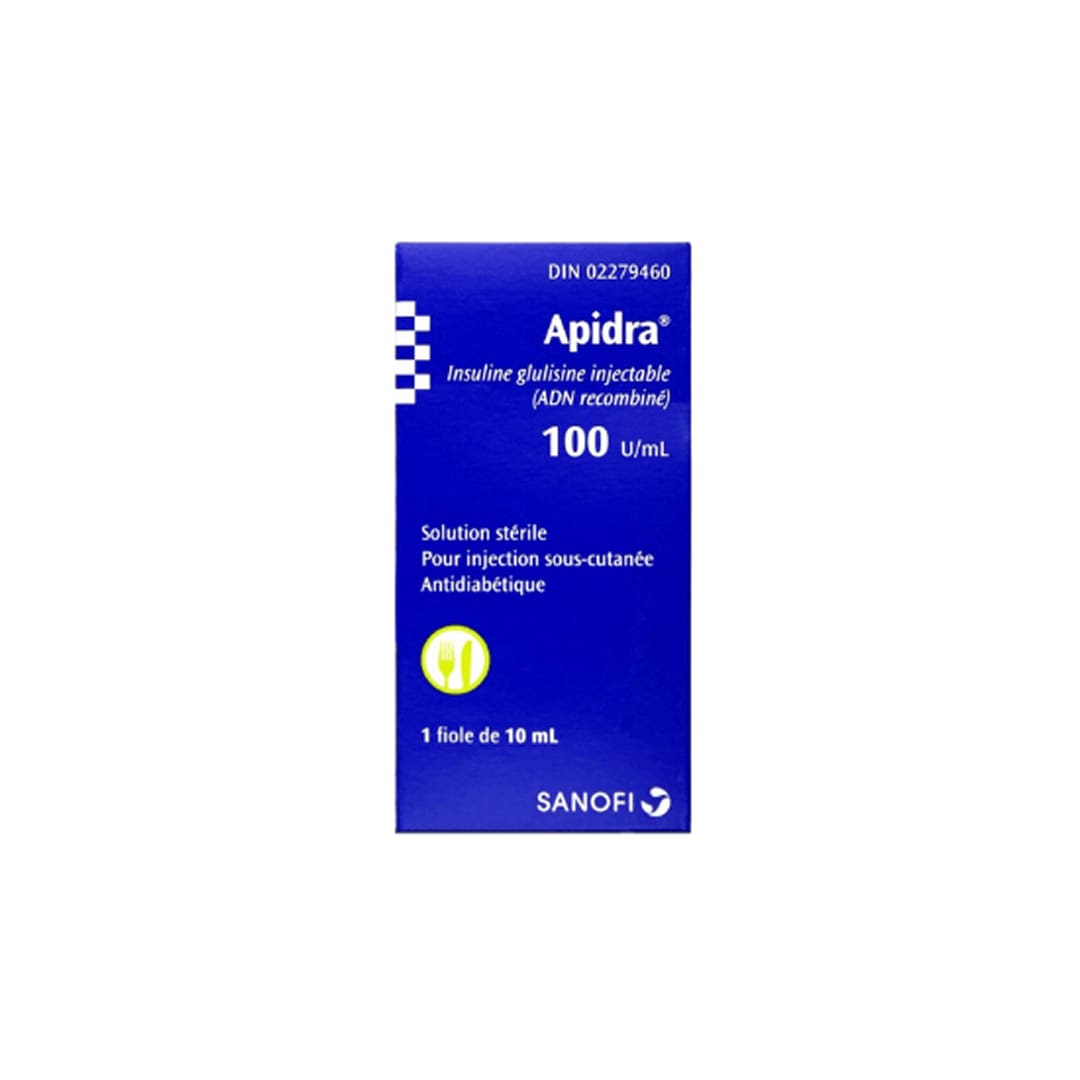
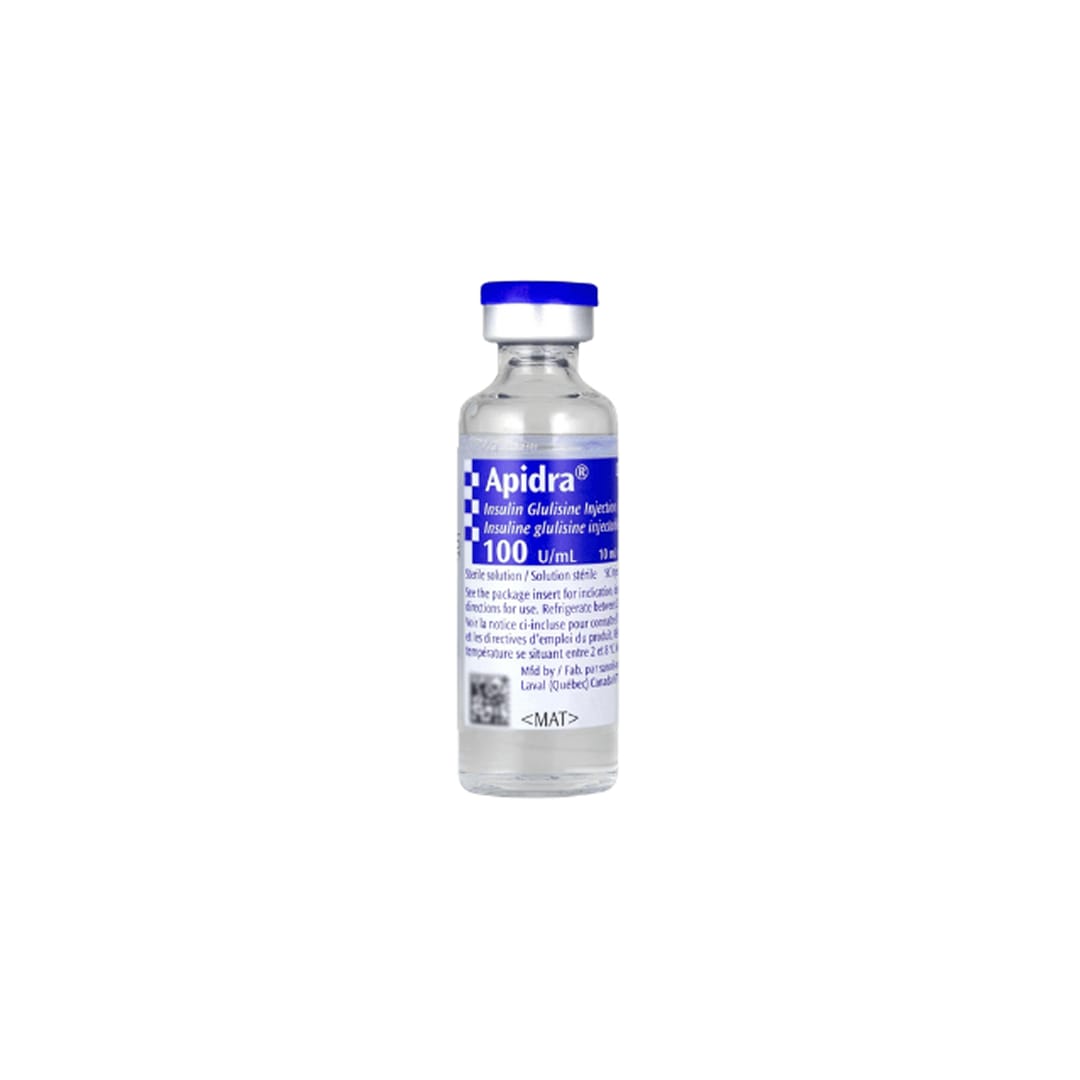
Apidra Vials contain insulin glulisine, a rapid acting insulin analogue used in diabetes treatment plans. Apidra Vials can be bought online, with the 100 units/mL vial strength matched to the directions from your clinician. Choose the vial quantity that fits your current treatment plan, supplies, and expected use.
Apidra is a mealtime or correction insulin when that approach is part of an individualized diabetes regimen. The vial format is important because it is used differently from a prefilled pen, and the total insulin in the vial affects how you plan refills, storage, and safe handling.
Apidra Vial Price, Strength, and Quantity
The Apidra vial price should be read together with the vial count, concentration, and total contents. A common Apidra 10 mL vial at 100 units/mL contains 1000 total units. Total units are not the same as a single dose; they describe how much insulin is in the container.
When you buy Apidra insulin vials online, match the active ingredient, concentration, form, and quantity to your treatment instructions. Vials are commonly used with U-100 insulin syringes or with a compatible insulin pump system when that method has been chosen by a clinician. Pen devices and cartridges have different preparation steps, storage routines, and supply needs.
| Attribute | What it means for ordering |
|---|---|
| Medication | Apidra, containing insulin glulisine. |
| Form | Solution for injection supplied in a multidose vial. |
| Concentration | 100 units/mL, also described as U-100 insulin. |
| Total vial contents | A 10 mL vial contains 1000 total units. |
| Use format | Used with appropriate U-100 supplies or pump instructions when applicable. |
Quick tip: Compare vial count and total units, not only the headline cost.
People looking at Apidra vial cost without insurance can use the cash-pay amount shown during ordering to understand the immediate purchase amount. Insurance coverage, reimbursement, deductibles, and plan paperwork can change out-of-pocket costs, so do not assume the same amount applies across pens, vials, or other insulin brands.
How to Order Apidra Vials Online
Start with the Apidra vial format and the 100 units/mL strength. Review the vial quantity carefully, then make sure your injection supplies, pump supplies, or storage plan match the way the vial will be used. Apidra should not be substituted with a different insulin, device, or concentration unless your clinician has directed that change.
Order details may be reviewed to make sure the medication name, strength, and quantity are clear. If clarification is needed, keep your current treatment information available so the order can be completed accurately.
For U.S. customers, Apidra vials may be arranged with US delivery from Canada as part of the service context. Because insulin is temperature sensitive, checkout and handling information may include prompt, express, cold-chain shipping. Review the address and contact information carefully because delivery timing and temperature handling matter for insulin.
- Medication match: Apidra, insulin glulisine.
- Strength match: 100 units/mL.
- Form match: vial rather than prefilled pen.
- Quantity match: vial count and total units.
- Supply match: U-100 supplies or pump materials as directed.
Do not choose a different format only because it appears more convenient. Changing from a vial to a pen, or from one rapid acting insulin to another, can affect training, supplies, timing, and dose workflow.
What Apidra Insulin Glulisine Vials Are Used For
Insulin glulisine is a rapid acting insulin analogue used to help control high blood sugar in diabetes mellitus. It is commonly used around meals or for correction dosing when that approach is part of the treatment plan. Rapid acting insulin begins working more quickly than basal insulin, so timing and glucose monitoring are important.
Apidra is not the same as long acting insulin. Many people who use mealtime insulin also use a separate basal insulin, but the exact regimen depends on diabetes type, meals, activity, glucose patterns, and clinician instructions. Information about type 1 diabetes and type 2 diabetes can help place insulin therapy in broader treatment context.
Insulin can be used in different diabetes care plans, including multiple daily injections and pump therapy when appropriate. If a pump is involved, follow the pump manufacturer’s instructions and your care plan for reservoir filling, infusion set changes, site rotation, and troubleshooting high glucose readings.
For broader disease education, the diabetes section explains how glucose control, monitoring, medication type, food, and activity can fit together. Use condition information for background only; it does not replace individualized insulin instructions.
Vial Format and Total Units
The Apidra injection vial contains a clear and colorless solution for injection. The 100 units/mL concentration means each milliliter contains 100 units of insulin glulisine. A 10 mL vial therefore contains 1000 units in total before any doses are drawn or pump reservoirs are filled.
This distinction matters when planning supply. One vial is not one dose, and the length of time a vial lasts depends on the dosing schedule, correction doses, pump-fill requirements, discard timing, and any insulin lost during preparation. Those practical factors should come from your care plan rather than from price alone.
Use only compatible supplies. For injections, that generally means U-100 insulin supplies when a vial is prescribed. If the vial is used with a pump, confirm that the insulin, reservoir, tubing, infusion set, and change schedule align with the pump instructions and your clinician’s plan.
Before first use, inspect the carton and vial. Do not use insulin that is cloudy, thickened, discolored, leaking, or contains particles. Also avoid any vial with damaged packaging or an expired date.
Why it matters: Matching the vial format reduces device, supply, and dosing-workflow errors.
Storage, Handling, and Travel
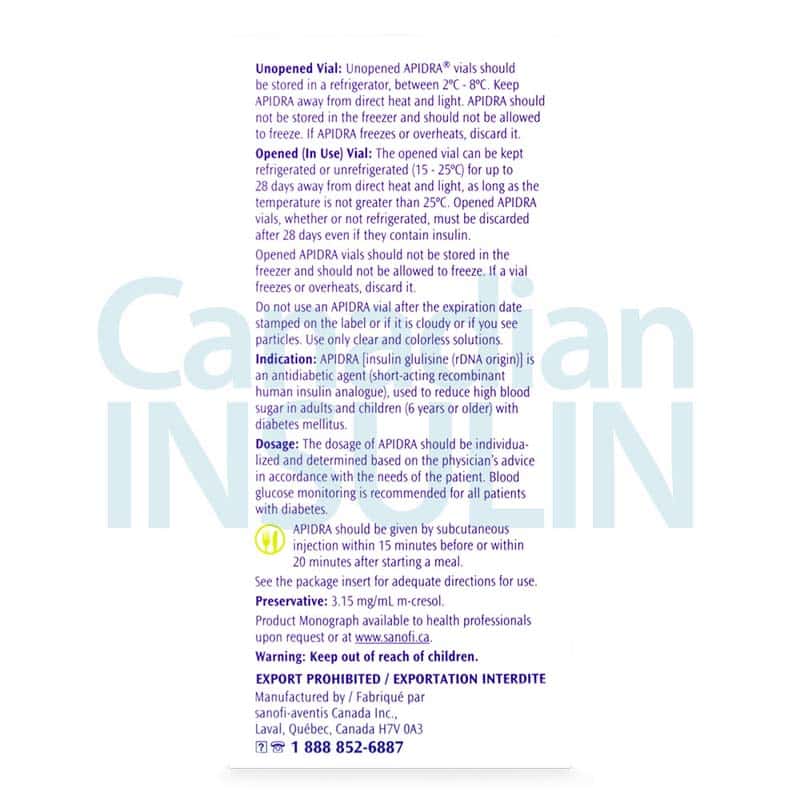
Insulin is sensitive to heat, freezing, and light. Unopened Apidra vials are typically stored in a refrigerator at 2°C to 8°C. Do not freeze the vial, and do not use insulin that has been frozen even if it later returns to liquid form.
After first use, follow the patient leaflet or carton instructions for in-use storage time and temperature. Writing the first-use date on the carton can help track when the vial should be discarded. Appearance alone cannot prove that an opened vial remains within its allowed use period.
Unpack insulin promptly after arrival. Inspect the carton, vial, and label before storing it. If the vial is warm, broken, leaking, cloudy, or otherwise abnormal, do not use it until you receive appropriate guidance.
Travel requires planning because glass vials can break and insulin can overheat or freeze. Keep insulin with you rather than in checked luggage. Use an insulated case when needed, but avoid direct contact between the vial and frozen gel packs or ice. Carry extra supplies if your clinician has advised a travel backup plan.
The article on insulin storage basics explains practical refrigeration, travel, and handling steps for temperature-sensitive insulin. For browsing other diabetes treatment products, the insulin products category can help distinguish vials, cartridges, and pens.
Side Effects, Warnings, and Monitoring
The most important safety risk with Apidra and other insulins is hypoglycemia, or low blood sugar. Symptoms may include sweating, shakiness, hunger, fast heartbeat, headache, blurred vision, confusion, weakness, or irritability. Severe hypoglycemia can cause seizures, loss of consciousness, or death if not treated promptly.
Do not use Apidra during an episode of low blood sugar. Apidra should also be avoided by anyone with a known hypersensitivity to insulin glulisine or an ingredient in the vial. Serious allergic reactions can include rash, swelling, wheezing, trouble breathing, dizziness, or a rapid heartbeat.
Other possible effects include injection site redness, itching, swelling, lipodystrophy, weight gain, and low potassium. Lipodystrophy means changes in the fat tissue under the skin, which can affect absorption. Rotating injection or infusion sites as instructed can lower the risk of repeated-site skin changes.
Low potassium can be serious, especially for people with kidney disease or those taking medicines that affect potassium levels. Contact a clinician promptly for severe weakness, muscle cramps, palpitations, or an irregular heartbeat. Sudden or persistent swelling, shortness of breath, or rapid weight gain should also be discussed, especially when insulin is used with thiazolidinediones, also called TZDs.
- Carry a low-glucose treatment source if your care plan includes one.
- Rotate injection or infusion sites as directed.
- Use glucose monitoring tools according to your plan.
- Do not change dose timing without clinical guidance.
- Seek urgent help for severe allergy symptoms or severe hypoglycemia.
Many medicines can change blood sugar or insulin needs. Examples include other diabetes medicines, corticosteroids, thyroid medicines, diuretics, some blood pressure medicines, and certain psychiatric medicines. Alcohol can also make glucose levels less predictable.
Beta blockers and some related medicines may mask warning signs of low blood sugar, such as a fast heartbeat. This can make regular glucose monitoring especially important when meals, exercise, illness, stress, or other medicines change. If readings are often outside target range, contact your care team instead of changing insulin use on your own.
Timing and Daily Use Questions
Rapid acting insulin is often used close to meals or for correction dosing, but timing rules are individualized. Your clinician should define how Apidra fits with meals, carbohydrate intake, glucose readings, activity, illness, and any basal insulin. This is especially important for people who use more than one insulin type.
Some people ask about insulin stacking. This means taking overlapping doses of rapid acting insulin before the earlier dose has finished working. Stacking can increase the risk of hypoglycemia, so correction intervals and timing rules should come from your care plan.
Missed meals, unexpected exercise, vomiting, illness, alcohol, and delayed eating can all change glucose patterns. A sick-day plan and a low-glucose plan can help you know when to monitor more often, when to treat hypoglycemia, and when to seek urgent care.
Diabetes education articles in the diabetes articles section can support general learning about monitoring, food, and treatment routines. People looking for insulin class comparisons can also browse the rapid acting insulin category.
Compare Apidra Vials With Related Insulin Choices
Apidra vials may fit a regimen that calls for insulin glulisine in a multidose vial. The vial format can be practical for people using U-100 injection supplies or pump reservoirs when that method is directed. It also requires careful storage, inspection, and supply planning.
Other rapid acting insulins may contain different active ingredients, such as insulin lispro or insulin aspart. Even when products are in the same class, they are not automatically interchangeable. Onset, duration, device steps, pump compatibility, and dose conversion questions can require clinician input.
The broader diabetes medications category can help you see where insulin fits among other glucose-lowering therapies. The diabetes products category is useful for browsing diabetes-related medication groups without assuming that one therapy can replace another.
If you are comparing vial versus pen use, focus on the product name, active ingredient, concentration, device steps, storage, and supplies. Prefilled pens may be more portable for some routines, while vials may fit pump or syringe-based use. The correct choice depends on the treatment plan and training.
Authoritative Sources
The sources below support the product identity, concentration, storage, use, and safety information summarized for Apidra insulin glulisine vials.
- Official Apidra product information: describes insulin glulisine injection 100 units/mL as a rapid acting insulin used for diabetes.
- Canadian patient medication information: provides patient-facing information on use, warnings, storage, and handling.
- UK summary of product characteristics: lists vial concentration and 10 mL contents for Apidra 100 units/mL solution for injection.
This content is for informational purposes only and is not a substitute for professional medical advice.
Blood Glucose Unit Converter
Convert glucose readings between mg/dL and mmol/L without changing the clinical value.
mg/dL
-
US reporting unit
mmol/L
-
International reporting unit
These calculations are for education only and do not replace clinical advice, diagnosis, or treatment. Always confirm medical decisions with a qualified healthcare professional.
HbA1c & eAG Calculator
Convert between HbA1c percentage and estimated average glucose using the ADAG relationship.
HbA1c
-
percentage
eAG mg/dL
-
estimated average glucose
eAG mmol/L
-
estimated average glucose
These calculations are for education only and do not replace clinical advice, diagnosis, or treatment. Always confirm medical decisions with a qualified healthcare professional.
HOMA-IR Calculator
Estimate insulin resistance from fasting glucose and fasting insulin values collected from the same blood draw.
HOMA-IR
-
screening estimate, not a diagnosis
Formula used
-
depends on glucose unit
These calculations are for education only and do not replace clinical advice, diagnosis, or treatment. Always confirm medical decisions with a qualified healthcare professional.
Carb Serving Calculator
Convert total carbohydrate grams into carb choices for meal planning and diabetes education.
Carb choices
-
total carbs divided by choice size
Rounded choices
-
nearest half choice
Carb calories
-
4 kcal per gram
These calculations are for education only and do not replace clinical advice, diagnosis, or treatment. Always confirm medical decisions with a qualified healthcare professional.
CGM Time-in-Range Summary
Summarise CGM percentages across very low, low, in-range, high, and very high glucose bands.
Entered total
-
should equal 100%
Below range
-
very low plus low
Above range
-
high plus very high
Summary
-
common adult CGM targets vary by patient
These calculations are for education only and do not replace clinical advice, diagnosis, or treatment. Always confirm medical decisions with a qualified healthcare professional.
Customer Reviews
5.0 Based on 6 Reviews
Write a Review Ask a Question - Reviews
- Questions
Filter Reviews:
ER
07/22/2024
Edwin R.  PR
PRits the Best insulin ,I ever use .The Best for glucosa control
07/23/2024
CanadianInsulin.com
Hi Edwin,Thank you for your feedback! We're delighted to hear that you find our insulin to be the best for glucose control. If you have any questions or need further assistance, please don't hesitate to reach out. We're here to support you.Thank you for choosing Canadian Insulin. Have a great day!
BB
05/28/2024
Barbara B.  US
USFive Stars all the way
I have been ordering from Canadian Insulin since the early 2000's, once the price of the insulin I use skyrocketed. Their customer service has always been top notch. Over the years, they have worked out a lot the kinks so that delivery times are much improved. The insulin is always new and arrives undamaged. If it weren't for their service, I would be paying at least 4x as much as I do now. Private insurance never covered my insulin and neither does my Medicare Part D. Thank you Canadian Insulin!!
05/28/2024
CanadianInsulin.com
Hi Barbara,Thank you for your wonderful review and for being a loyal customer since the early 2000s! We're thrilled to hear that our service has consistently met your needs and helped you save on insulin costs. If you have any questions or need further assistance, please don't hesitate to reach out. We're here to support you.Thank you for choosing Canadian Insulin. Have a great day!
ER
07/04/2023
Edwin R. PRI recommend this product
I still waiting for the insulin
I still waiting for the insulin
07/13/2023
CanadianInsulin.com
Hi Edwin,Thank you for reaching out and bringing this to our attention. We apologize for the delay in the delivery of your insulin. We understand the importance of receiving it promptly.We will take immediate action to improve our timely delivery. To do so, we'll assign someone to get in touch with you to gather more details and offer suitable resolution.We appreciate your patience and looking forward to resolving this matter to your satisfaction.Have a great day!
ER
04/06/2023
Edwin R. PRI recommend this product
Tracking number
I still waiting , for the tracking number.
04/06/2023
CanadianInsulin.com
Hi Edwin,This is Marilyn from Canadian Insulin, your Account Manager. I'd like to express my gratitude for taking the time to provide us with feedback.Please be advised that your order 30255 was shipped on March 29th, 2023. The expected time frame for delivery is March 4th, 2023. Some packages will arrive a few days before or after the expected delivery date, so we recommend tracking your order to avoid any complications with delivery.You will be able to track the status of your shipment with the link below.Tracking number: ET023294515CA https://tools.usps.com/go/TrackConfirmAction?tRef=fullpage&tLc=2&text28777=&tLabels=ET023294515CA%2C As per the tracking number, it seems like your order has been delivered to your address today at 1:41 pm April 6, 2023. Please note that your medication is safe for use at room temperature for 28 days. If, in any case you received it warmly, you may refrigerate the medication for 24 hours prior to use. Rest assured, it will not decrease the efficiency of the product itself. Please let me know if you have any further questions or need anything else.Sincerely,Marilyn O. Customer Service Representative Canadian Insulin www.canadianinsulin.comPhone: 1-844-560-7790 Fax: 1-866-951-0118 Email: Service@canadianinsulin.comOpen Mondays - Fridays between 9am-6pm EST
ER
09/17/2022
Edwin R. PRI recommend this product
The best insulin I ever use my A1c is below 6.54
Great.seller fast shipping
Express Shipping - from $29.99
Shipping with this method takes 3-5 days
Prices:
- Dry-Packed Products $29.99
- Cold-Packed Products $39.99
Standard Shipping - $19.99
Shipping with this method takes 5-10 days
Prices:
- Dry-Packed Products $19.99
- Not available for Cold-Packed products
What is Apidra Vial used for?
Apidra Vial contains insulin glulisine, a rapid acting insulin analogue used to help control high blood sugar in diabetes mellitus. It may be used around meals or for correction dosing when that is part of an individualized treatment plan.
How many units are in an Apidra 10 mL vial?
An Apidra 10 mL vial at 100 units/mL contains 1000 total units of insulin glulisine. Total units describe the amount in the vial, not the amount used for one dose.
Is Apidra Vial the same as a long acting insulin?
No. Apidra is a rapid acting insulin, while long acting insulin provides basal coverage over a longer period. Some people use both types, but the regimen and timing should come from the clinician’s instructions.
What are common side effects of Apidra?
The main risk is hypoglycemia, or low blood sugar. Other possible effects include injection site reactions, itching, swelling, lipodystrophy, weight gain, allergic reactions, and low potassium. Severe symptoms need urgent medical attention.
How should Apidra Vials be stored?
Unopened Apidra vials are typically refrigerated at 2°C to 8°C and should not be frozen. After first use, follow the patient leaflet for the allowed in-use storage time and temperature, and discard the vial when that period ends.
Can Apidra Vials be used in an insulin pump?
Some patients use rapid acting insulin in pump therapy when that method is part of their care plan. If using Apidra in a pump, follow the pump instructions and the clinician’s directions for reservoir filling, infusion set changes, and monitoring.
Rewards Program
Earn points on birthdays, product orders, reviews, friend referrals, and more! Enjoy your medication at unparalleled discounts while reaping rewards for every step you take with us.
You can read more about rewards here.
POINT VALUE
How to earn points
- 1Create an account and start earning.
- 2Earn points every time you shop or perform certain actions.
- 3Redeem points for exclusive discounts.
You Might Also Like
Select options
This product has multiple variants. The options may be chosen on the product page
Select options
This product has multiple variants. The options may be chosen on the product page
Select options
This product has multiple variants. The options may be chosen on the product page
Select options
This product has multiple variants. The options may be chosen on the product page