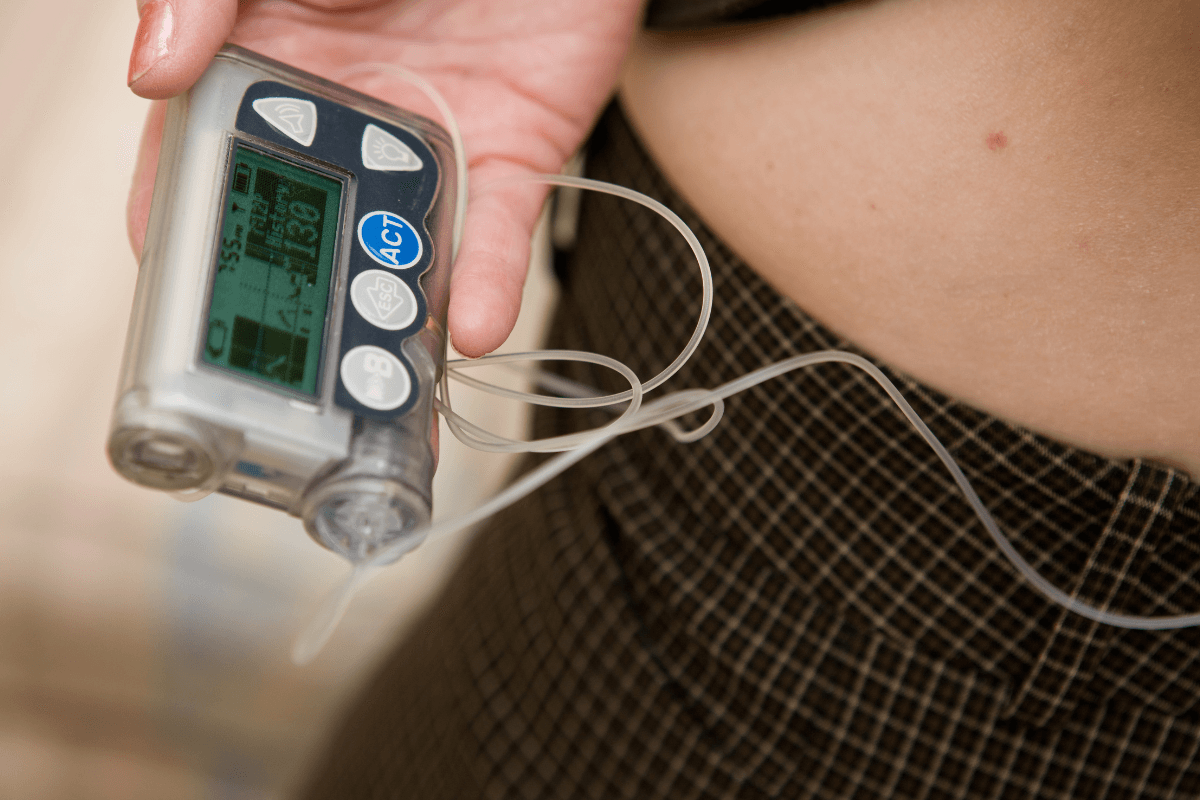
A Humalog insulin pump uses rapid-acting insulin lispro in small programmed amounts throughout the day, plus extra boluses for meals or corrections. This can support flexible diabetes management when pump settings, infusion sites, glucose monitoring, and backup plans are kept current.
The key benefit is precision. The key risk is interruption. Because pump therapy uses rapid-acting insulin rather than a long-acting background insulin, a blocked set, empty reservoir, or disconnected pump can lead to rising glucose more quickly than with some injection routines.
Key Takeaways
- Rapid delivery: lispro acts quickly for meals and corrections.
- Basal-bolus design: pumps deliver background and user-directed doses.
- Compatibility matters: use only pump-appropriate U-100 lispro.
- Safety depends: sites, alarms, monitoring, and backup insulin matter.
- Settings are personal: ratios and rates need clinician review.
How a Humalog Insulin Pump Works
A Humalog insulin pump delivers insulin lispro by continuous subcutaneous insulin infusion, often shortened to CSII. Subcutaneous means the insulin enters the fatty tissue under the skin. The pump pushes tiny amounts through tubing or a pod and into an infusion set.
Most pump programs have two main parts. The basal rate provides background insulin over 24 hours. Bolus doses cover carbohydrates, correction needs, or both. A pump does not decide every dose by itself unless it is part of an automated system with compatible sensor data and user settings.
Insulin lispro starts working faster than regular human insulin. This is why it fits pump therapy well. It can better match many meals and correction doses, although timing still depends on food type, activity, glucose trend, and clinical instructions. For more background on device terms, see What Is an Insulin Pump.
Humalog in insulin pump use also requires attention to concentration. External pumps generally use U-100 rapid-acting insulin when that product is approved for pump use. U-200 lispro should not be used in an insulin pump, because concentration errors can cause serious dosing problems.
Why it matters: Pump delivery can be precise, but it leaves less room for unnoticed interruptions.
Why Rapid-Acting Lispro Fits Pump Therapy
Rapid-acting insulin pump therapy depends on insulin that starts and clears within a practical window. Lispro is designed for this role. It helps pumps deliver small basal amounts and meal boluses without needing a separate long-acting insulin inside the device.
In daily life, this means the pump can adjust background delivery by time of day. Some people need more insulin before waking, during hormonal shifts, or around regular activity changes. Others need lower rates overnight or during planned exercise. These patterns are not universal, so pump settings should be reviewed with a diabetes care team.
The same rapid action also shapes safety. If delivery stops, there is no long-acting insulin depot continuing in the background. Glucose may rise, and ketones can develop in people at risk, especially those with type 1 diabetes. Pump users usually need a written plan for site failure, illness, ketone checks, and temporary injection use.
To understand lispro timing in more detail, you can review Humalog Onset, Peak, and Duration. For broader insulin delivery context, Diabetes Tech: Pens, Pumps, and CGMs explains how devices may work together.
Basal, Bolus, and Active Insulin Settings
Good pump outcomes depend on settings that match the person using the device. The main settings include basal rates, insulin-to-carbohydrate ratios, correction factors, glucose targets, and active insulin time. Each affects how the pump estimates or delivers insulin.
Basal rates
Basal rates are programmed by time blocks. They aim to cover background insulin needs when food is not actively raising glucose. Basal testing should be done only with clinician guidance, because illness, activity, stress, menstrual cycles, alcohol, and prior insulin can all distort results.
Meal and correction boluses
A meal bolus is based on carbohydrate intake and the insulin-to-carbohydrate ratio. A correction bolus is based on current glucose, target range, and insulin sensitivity. Many pumps combine these calculations, then subtract active insulin when appropriate.
The “3-hour rule” is often discussed as a practical reminder to avoid repeated correction dosing too soon. The exact time window varies by insulin action setting and care plan. The broader idea is to respect insulin on board, because rapid-acting insulin can keep lowering glucose for several hours.
Active insulin time
Active insulin time tells the pump how long a bolus may keep working. If it is set incorrectly, the pump may overestimate or underestimate insulin still active in the body. This can affect correction suggestions and may increase the chance of highs or lows.
Do not change pump settings on your own unless your clinician has taught you how. If you are reviewing dose concepts, Humalog Dosage Information gives a general overview of factors that can influence insulin plans.
Benefits and Limits Compared With Injections
Humalog pump insulin can offer more flexible basal delivery than a fixed injection schedule. It may help people who need different background rates across the day, want fewer needle sticks, or use CGM data to guide adjustments. Some systems can also use temporary basal rates, extended boluses, alerts, or automated insulin adjustments.
The trade-off is complexity. Pumps require device skills, supply management, alarm response, skin care, and troubleshooting. A person who misses alarms, has frequent site failures, or cannot check glucose during symptoms may face added risk.
Compared with injections, pump therapy usually changes the workflow rather than removing diabetes tasks. Carbohydrate estimates, glucose checks, sick-day planning, and hypoglycemia treatment still matter. Pens or cartridges may feel simpler for people who prefer a less device-heavy approach.
For a broader look at lispro’s role in modern insulin routines, see Humalog and Insulin Delivery. If you want to compare delivery formats, the product pages for Humalog Vial, Humalog Cartridge, and Humalog KwikPen can help you identify format differences without replacing clinical advice.
Pump Safety: Site Problems, Highs, and Lows
Humalog pump safety starts with recognizing that delivery problems can become urgent. A kinked cannula, loose adhesive, air in tubing, empty reservoir, or pump malfunction can reduce insulin delivery. Unexplained high glucose should prompt a check of the pump, site, reservoir, tubing or pod, and ketones when recommended.
Common lispro-related risks include hypoglycemia, injection or infusion-site reactions, and weight change with insulin therapy. Less common but serious concerns include severe allergic reactions and low potassium in susceptible people. Seek urgent care for severe low glucose, trouble breathing, swelling of the face or throat, confusion, persistent vomiting, or symptoms of diabetic ketoacidosis such as high ketones, abdominal pain, deep breathing, or marked drowsiness.
Infusion-site rotation helps reduce lipodystrophy, which means fatty tissue changes under the skin. Using the same area repeatedly can affect absorption. Many care teams suggest tracking site locations and avoiding areas with lumps, scarring, irritation, or poor adhesion.
Gastroparesis, or delayed stomach emptying, can make meal boluses harder to time. Some people discuss extended or split bolus patterns with their care team, especially for slow-digesting meals. No single pump is best for every person with gastroparesis, so the decision often depends on CGM compatibility, bolus features, dexterity, alarm needs, and clinician experience.
Quick tip: Keep written backup steps where you can find them during alarms or illness.
Monitoring Patterns Without Overreacting
Monitoring helps show whether pump settings fit real life. Finger-stick meters and continuous glucose monitors measure different things, so trend interpretation matters. CGM readings can help identify overnight rises, post-meal spikes, activity-related drops, and repeated lows.
Time in range is one useful summary metric for CGM users. It describes how much time glucose stays within a chosen target range. It does not explain the cause of every high or low, but it can help structure a care-team review.
The calculator below can help estimate time in range from readings or time blocks. It is a general tracking aid, not a dosing tool or a substitute for clinical judgment.
CGM Time-in-Range Summary
Summarise CGM percentages across very low, low, in-range, high, and very high glucose bands.
These calculations are for education only and do not replace clinical advice, diagnosis, or treatment. Always confirm medical decisions with a qualified healthcare professional.
When reviewing data, avoid changing several settings at once unless your care team directs it. One change can affect another. For example, a stronger correction factor may look helpful after meals, but the real issue might be delayed bolus timing, underestimated carbohydrates, or a basal mismatch.
Who May Be a Candidate for Pump Therapy
Pump therapy may be considered for people who need intensive insulin management and can manage device tasks safely. This includes many people with type 1 diabetes and some people with insulin-treated type 2 diabetes. The decision should account for glucose patterns, hypoglycemia history, daily schedule, comfort with technology, and access to supplies.
Skills matter as much as the device. Users need to respond to alarms, change infusion sets, estimate carbohydrates, treat lows, check ketones when advised, and keep backup insulin available. Caregivers may handle some of these tasks for children, older adults, or people with vision, dexterity, or cognitive barriers.
Some people explore pump therapy because injections feel restrictive. Others want more detailed basal control or better integration with CGM alerts. If you are browsing condition-related resources, the Type 1 Diabetes and Diabetes collections provide related navigation.
CanadianInsulin.com is a prescription referral platform. When medication access is relevant, prescription details may need confirmation with the prescriber, and dispensing is handled by licensed third-party pharmacies where permitted.
Practical Questions to Ask Before Starting
Before starting a Humalog insulin pump, it helps to clarify what the pump will and will not do. A pump can deliver precise insulin. It cannot remove the need for monitoring, site changes, or safety planning.
- Insulin compatibility: Which lispro formulation is approved for the device?
- Backup plan: What should happen if delivery stops?
- Ketone plan: When should ketones be checked?
- Site schedule: How often should sets be changed?
- Alarm response: Which alarms require immediate action?
- Data review: How often should settings be reassessed?
- Supply planning: Which reservoirs, pods, or sets are required?
Costs and access vary by plan, province or state, device, and supply needs. Total expenses may include infusion sets, reservoirs or pods, adhesives, sensors, batteries or chargers, and insulin. Some patients also ask about cash-pay options or cross-border fulfilment, depending on eligibility and jurisdiction.
For broader education, the Type 1 Diabetes Articles and Diabetes Articles sections can support ongoing learning about diabetes care topics.
Authoritative Sources
For label-backed information on pump use, concentration limits, warnings, and adverse reactions, review the DailyMed Humalog prescribing information.
For diabetes technology standards, the American Diabetes Association technology guidance discusses pump therapy, CGM use, and safety considerations.
For Canadian clinical context, see Diabetes Canada insulin therapy guidance, which reviews insulin therapy principles and safety planning.
Recap
A Humalog insulin pump can be effective because lispro works quickly and pumps deliver small, programmable amounts. This pairing can support flexible basal patterns, meal boluses, correction dosing, and CGM-informed review when used correctly.
The same features require discipline. Delivery interruptions, incorrect settings, site problems, or repeated correction doses can create safety concerns. Work with your care team to confirm device compatibility, dosing settings, monitoring goals, and backup steps before relying on pump therapy day to day.
This content is for informational purposes only and is not a substitute for professional medical advice.