
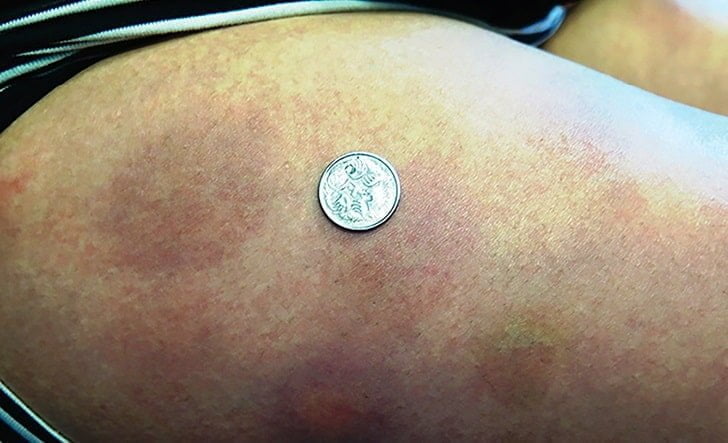
Insulin allergic reaction symptoms usually appear as itching, redness, swelling, hives, or firm raised skin near an injection or pump site. Rarely, symptoms spread beyond the skin and cause wheezing, throat tightness, dizziness, or low blood pressure. Recognizing the pattern matters because true insulin allergy is uncommon, but severe reactions need urgent care.
Most skin changes after insulin are local and mild. Some reflect irritation, injection technique, adhesive sensitivity, or site overuse rather than allergy. Still, any reaction that repeats after doses, spreads away from the injection area, or affects breathing should be discussed with a clinician.
Key Takeaways
- Local signs include itching, redness, swelling, hives, or firm lumps.
- Systemic symptoms, such as wheezing or dizziness, need urgent attention.
- Low blood sugar can feel alarming but is not an allergic reaction.
- Technique, storage, excipients, and pump materials can affect skin reactions.
- A symptom diary and photos can help clinicians identify the cause.
How Insulin Allergy Usually Shows Up
An allergic reaction to insulin most often starts at the place where insulin enters the skin. The area may itch, turn red, swell, burn, or form a raised welt. Some people describe a hard knot under the skin, while others notice a patch of hives around the injection site.
Timing helps separate insulin allergy symptoms from other causes. Immediate reactions can appear within minutes and may fade within hours. Delayed reactions can appear several hours later and last longer. A delayed hypersensitivity reaction means the immune system responds more slowly, often with an itchy rash or thickened patch rather than sudden hives.
True insulin allergy can involve the insulin molecule itself. It can also involve other ingredients in the product, such as preservatives or additives. Some reactions may relate to latex exposure, needles, infusion sets, skin cleansers, or pump adhesives instead of insulin.
Why it matters: The cause affects whether the next step is technique review, product review, allergy testing, or emergency care.
Local Symptoms: Rash, Itching, Swelling, and Welts
Local insulin allergic reaction symptoms are limited to the injection or infusion area. They are the most common pattern when hypersensitivity is suspected. These reactions may occur with a syringe, pen, vial, cartridge, or pump infusion set.
Common local signs include redness, itching, warmth, swelling, and raised wheals. Wheals are hive-like bumps that may appear pale in the center and red around the edges. The skin can feel tight or tender, especially when swelling develops quickly.
A skin reaction to insulin injection can also look like a firm plaque. This means the skin feels thickened or hardened in a small area. Some plaques are itchy; others are mainly sore or irritated. A photo taken soon after the reaction starts can help your clinician see the pattern more clearly.
Site overuse can complicate the picture. Repeated injections in the same area may cause lumps, bruising, scarring, or lipohypertrophy, which is fatty tissue buildup under the skin. These changes can make insulin absorption less predictable and may also make skin more reactive. If you are unsure how to space sites, review practical placement basics in Where To Inject Insulin and discuss your own rotation plan with your care team.
Systemic Symptoms and Emergency Warning Signs
Systemic insulin allergic reaction symptoms affect areas beyond the injection site. They are uncommon, but they can be serious. Symptoms may include widespread hives, flushing, facial swelling, lip or tongue swelling, chest tightness, wheezing, shortness of breath, dizziness, faintness, or a sudden drop in blood pressure.
Anaphylaxis is a severe, fast-moving allergic reaction that can affect breathing and circulation. It is a medical emergency. Call emergency services if symptoms include throat tightness, trouble breathing, fainting, confusion, blue lips, or swelling of the tongue or throat. Use prescribed emergency medicine, such as epinephrine, only as directed in your personal action plan.
Do not try to manage severe symptoms by changing insulin doses on your own. Insulin is essential for many people with diabetes, and stopping or altering it without medical guidance can be dangerous. Emergency teams can treat the reaction and help plan safer next steps with your diabetes and allergy clinicians.
How Long Does an Insulin Reaction Take?
An insulin injection allergic reaction may start within minutes, but timing varies. Immediate reactions often begin soon after a dose. They may include itching, hives, swelling, or flushing. Delayed reactions may appear later the same day or the next day, especially when the reaction is more eczema-like or plaque-like.
The duration also varies. Mild local redness may settle within hours. Larger welts, swelling, or firm patches may last for a day or more. Reactions that continue to enlarge, become painful, drain fluid, or develop fever should be assessed because infection, bruising, or another skin problem may be involved.
Patterns matter more than one isolated event. A single itchy spot after a cold injection may not mean allergy. Repeated hives after the same insulin, similar swelling at every dose, or symptoms that progress beyond the skin deserve medical review.
Quick tip: Record the insulin name, dose time, site, needle type, and symptom start time.
Allergy, Low Blood Sugar, or Anxiety: Key Differences
Low blood glucose is sometimes called an insulin reaction, but it is not an allergic reaction. Hypoglycemia usually causes sweating, shaking, hunger, fast heartbeat, tingling lips, anxiety, confusion, weakness, or blurred vision. These symptoms come from low glucose, not immune activation.
Insulin allergy symptoms usually involve skin changes after exposure to insulin or an insulin-related device. Itching, hives, localized swelling, or facial swelling point more toward an allergic process. Low glucose may happen at any time insulin action exceeds food intake, activity needs, or other factors.
Anxiety and vasovagal episodes can also mimic parts of a reaction. A vasovagal response may cause nausea, paleness, sweating, slow pulse, or faintness around injection time. Anxiety may cause chest tightness, trembling, or shortness of breath. These symptoms still deserve attention when they are severe, but the treatment pathway differs.
If symptoms occur after a rapid-acting insulin dose, the timing of insulin action may also matter. For background on onset, peak, and duration, see Insulin Aspart Timing. This can help frame a discussion with your clinician, but it should not replace individualized instructions.
Why Reactions Happen: Insulin, Additives, Devices, and Skin
Insulin hypersensitivity reaction is an immune response to insulin or something connected to its delivery. Clinicians often consider several possibilities before labeling someone allergic to insulin itself. This careful review can prevent unnecessary product changes.
Insulin molecule or formulation
Modern human insulins and analogs are designed for predictable glucose control, but any insulin can rarely trigger hypersensitivity. Some people tolerate one formulation better than another. Others react across several types, which may suggest shared immune targets or a reaction to an ingredient used in more than one product.
Basal and mealtime insulins may have different ingredients and absorption profiles. If a reaction clusters around one product, your clinician may compare formulation details and timing. For product-context reading, Lantus Side Effects explains safety considerations for one basal insulin, while NovoRapid Insulin Aspart covers a rapid-acting example.
Preservatives and additives
Some reactions may involve excipients, which are non-active ingredients used to stabilize or preserve a medicine. Examples in insulin products can include preservatives, zinc, or protamine in certain formulations. These ingredients vary by product, so a careful label review can help clinicians choose the next step.
Needles, adhesives, and pump sites
An insulin pump site allergic reaction may be caused by adhesive, infusion set materials, barrier products, antiseptics, or the insulin in the reservoir. Adhesive contact dermatitis often appears in the shape of the tape or patch. Insulin allergy more often follows the infusion area or injection path, though patterns can overlap.
People using pumps should not ignore repeated redness, itching, or swelling around infusion sites. Skin breakdown can increase discomfort and may raise infection risk. If you use animal-derived or less common insulin types, Animal Insulin Types provides additional background for discussions about formulation differences.
Reducing Mild Site Reactions Before They Escalate
Practical technique changes can reduce irritation and help reveal whether allergy is likely. These steps are not a substitute for medical evaluation when symptoms are severe or recurrent. They can, however, make routine injections gentler on the skin.
- Rotate sites: Avoid repeatedly using one small area.
- Let alcohol dry: Wet antiseptic can sting and irritate.
- Check insulin temperature: Very cold insulin may burn on injection.
- Use proper depth: Needle length and angle can affect irritation.
- Avoid inflamed skin: Do not inject through rash, bruising, or infection.
- Inspect supplies: Look for damaged pens, cloudy clear insulin, or expired products.
Storage matters because heat, freezing, and prolonged use beyond labeled instructions may affect insulin quality. Compromised insulin can also make glucose control less predictable. Follow the current product leaflet for storage and in-use handling, and ask a pharmacist or clinician if the product looks unusual.
Some people benefit from switching needles, adjusting injection technique, or changing the device under professional guidance. Product changes should be supervised, especially when you have had hives, swelling, or any systemic symptoms. You can browse the broader Diabetes Condition collection for medication categories, but clinical decisions should stay with your care team.
What to Prepare Before Talking With Your Clinician
A clear symptom record helps your clinician decide whether the issue looks allergic, irritant, infectious, or metabolic. Bring details rather than relying on memory. Include photos when possible, especially if the reaction fades before your appointment.
Useful details include the insulin name, lot number if available, device type, needle or infusion set brand, injection site, skin cleanser, and symptom timing. Note whether symptoms stayed local or spread. Also record whether you had low glucose symptoms at the same time.
Your clinician may consider skin testing, allergy referral, supervised product challenge, antihistamines, excipient review, or a carefully monitored switch. In complex cases, desensitization may be considered in specialist settings. Desensitization means giving gradually adjusted exposure under medical supervision to improve tolerance.
If you explore medication access or product categories online, keep the distinction clear. CanadianInsulin.com is a prescription referral platform, and dispensing is handled by licensed third-party pharmacies where permitted. For broad navigation, the Diabetes Medications category can help you see formulation types to discuss with a clinician.
Special Cases: Hives, Pump Adhesives, and Repeated Lumps
Hives after insulin injection suggest an allergic pattern, especially when they recur soon after dosing. Hives may stay near the site or spread. Widespread hives, swelling of the face, or breathing symptoms should be treated as urgent warning signs.
Adhesive reactions can be stubborn because the skin stays exposed for long periods. The rash may match the shape of a patch, tape, or sensor. A clinician may suggest changing skin-prep products, barrier methods, or devices, but avoid experimenting on broken or infected skin without guidance.
Repeated lumps need careful assessment. Some lumps are inflammatory. Others may be lipohypertrophy from repeated injections in the same region. If lumps persist, become painful, or interfere with absorption, ask your clinician to examine the area. The Dermatology Articles category may help you compare general skin reaction patterns, though it cannot diagnose your rash.
Authoritative Sources
Official labels and specialist resources describe hypersensitivity as a known, uncommon risk with insulin products. The FDA prescribing information for insulin glargine lists allergic reactions, including severe generalized allergy, as potential adverse reactions.
For clinical discussion of evaluation and management, the American Academy of Allergy, Asthma and Immunology outlines expert considerations for insulin allergy cases. For low glucose symptoms that may be confused with allergy, the CDC hypoglycemia treatment resource explains typical warning signs and general response steps.
Insulin allergic reaction symptoms should be taken seriously when they repeat, spread, or involve breathing, swelling, or faintness. Mild local irritation may improve with better technique, site rotation, or device review, but recurrent rash or hives deserves clinical evaluation. Bring your symptom record, product details, and photos so your care team can assess the safest path forward.
This content is for informational purposes only and is not a substitute for professional medical advice.


