
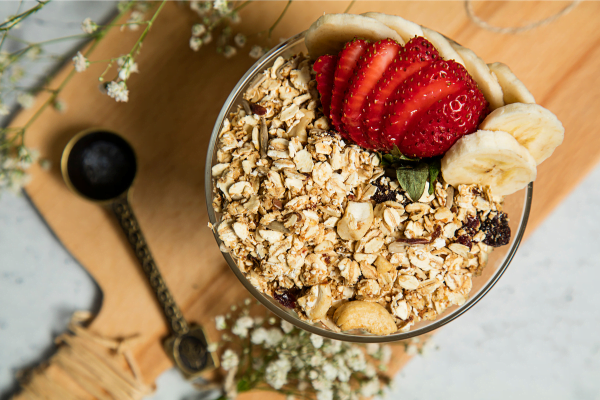
A person with diabetes can usually eat cereal when it is high in fiber, low in added sugar, made with whole grains, and served in a measured portion. The practical answer to what kind of cereal can a diabetic eat depends on the label, the serving size, the milk or yogurt used, and your own glucose response after breakfast.
Cereal is not automatically off limits. The problem is that many boxed cereals are refined, sweetened, and easy to over-serve. That combination can raise postprandial glucose (after-meal blood sugar) quickly. A better cereal breakfast slows digestion, adds protein, and keeps total carbohydrates predictable.
Key Takeaways
- Choose whole grains: Oats, bran, barley, and shredded wheat usually digest slower than refined flakes.
- Check added sugar: Aim for little or none, often 0–5 grams per serving.
- Prioritize fiber: Look for at least 4–5 grams per serving when tolerated.
- Measure the bowl: Large portions can double the carbohydrate load.
- Add protein: Greek yogurt, nuts, seeds, soy milk, or eggs can improve balance.
What Makes a Cereal Diabetes Friendly?
A diabetes friendly cereal is one that keeps carbohydrates steady rather than concentrated. Start with the ingredient list. Whole grain should appear first, such as whole oats, wheat bran, whole wheat, barley, rye, or brown rice. Then review the Nutrition Facts panel for fiber, added sugar, protein, and serving size.
Many people focus only on sugar. That matters, but it is not the whole picture. A cereal can be low in sugar and still digest quickly if it is made from refined corn, rice, or wheat. Another cereal may contain a small amount of sugar but more fiber and protein, which may blunt the glucose rise.
Use these practical label targets as a starting point:
- Fiber: At least 4 grams per serving, preferably more if tolerated.
- Added sugar: Ideally 0–5 grams per serving.
- Protein: Helpful when 7–10 grams per serving, though pairings can add more.
- Whole grain: Listed as the first ingredient.
- Serving size: Realistic for your bowl, not just the package claim.
For product-style examples and comparison points, see Best Cereals for Diabetics. Use those examples as label-reading practice, not as a universal ranking for every person.
How to Read the Label Before You Pour
The best cereal choice usually comes from comparing three numbers together: total carbohydrate, fiber, and added sugar. Total carbohydrate shows the overall glucose load. Fiber shows how much indigestible carbohydrate may slow absorption. Added sugar shows how much sweetener has been included beyond naturally occurring ingredients.
Start with the serving size. Some dense cereals list 1/2 cup as a serving, while lighter cereals may list 1 cup or more. If you pour two listed servings, the carbohydrate, sugar, and calories all double. Measuring once with a cup or kitchen scale can recalibrate what your usual bowl really contains.
Next, check the ingredient list for sugar aliases. These may include cane sugar, brown sugar, honey, maple syrup, corn syrup, rice syrup, molasses, malt syrup, evaporated cane juice, and fruit juice concentrate. These are still added sugars, even when they sound natural.
Quick tip: Compare cereals per serving and per 30 grams when serving sizes differ widely.
Some people look for sugar free cereal for diabetics. Sugar-free can help reduce added sugar, but it does not guarantee a low glucose response. The starch in refined grains still becomes glucose during digestion. Sugar alcohols and non-sugar sweeteners may also affect taste, tolerance, or digestion in some people.
Fiber, Glycemic Index, and Glycemic Load
Low glycemic cereal for diabetics usually has intact grains, more fiber, and less processing. The glycemic index (GI) ranks how quickly a carbohydrate-containing food raises blood glucose compared with a reference food. Lower-GI foods often raise glucose more gradually, but GI is only one tool.
Glycemic load (GL) adds portion size to the picture. This matters because a large bowl of a lower-GI cereal can still deliver many available carbohydrates. Smaller portions, higher fiber, and protein-rich pairings usually give a more controlled breakfast pattern.
The calculator below can help compare glycemic load when you know a food’s GI and available carbohydrate. It is a general math tool and does not replace individualized nutrition guidance.
Glycaemic Load Calculator
Calculate glycaemic load from glycaemic index and available carbohydrate in a serving.
These calculations are for education only and do not replace clinical advice, diagnosis, or treatment. Always confirm medical decisions with a qualified healthcare professional.
For a broader explanation of how GI fits into meal planning, read Glycemic Index in Diabetes. If you want to check published GI values, the University of Sydney maintains a searchable Glycemic Index database used for food comparisons.
Fiber deserves special attention. Soluble fiber, found in oats, barley, psyllium, and some bran products, forms a gel-like texture in the gut. This can slow stomach emptying and carbohydrate absorption. Insoluble fiber adds bulk and supports bowel regularity, but it may not affect glucose in the same way.
Increase fiber gradually if your current diet is low in it. A sudden jump can cause gas, bloating, or cramping. Drinking enough fluid also helps. For more on why fiber matters in diabetes eating patterns, see Fiber in a Diabetic Diet.
Cold Cereal, Oatmeal, and Common Breakfast Choices
Oatmeal for diabetics can be a strong option when it is plain, portioned, and minimally processed. Steel-cut oats and old-fashioned rolled oats usually digest more slowly than instant sweetened packets. Oat bran and barley porridge can also be useful because they contain soluble fiber.
Hot cereal still needs portion control. A large bowl of oats with brown sugar, dried fruit, and sweetened milk can become a high-carbohydrate meal. Better add-ins include cinnamon, chia seeds, ground flaxseed, chopped nuts, plain Greek yogurt, or a small portion of berries.
Cold breakfast cereals for diabetes vary widely. Plain bran cereals, shredded wheat, unsweetened muesli, and some high-fiber oat cereals may fit well. Crisped rice, corn flakes, frosted cereals, and sweetened granolas often digest faster or contain more added sugar. They are not always forbidden, but they are harder to fit into a predictable glucose plan.
Many readers ask whether Cheerios are good for diabetes. Plain oat O-shaped cereals may fit for some people when portions are measured and protein is added. Sweetened, honey-flavored, or coated versions usually add more sugar. The most useful test is your two-hour post-meal reading, or your continuous glucose monitor pattern if you use one.
If you want more non-cereal options, Breakfast Ideas for Diabetics offers balanced meals that combine protein, fiber, and slower carbohydrates.
Portions, Milk, and Pairings That Change the Meal
The same cereal can affect glucose differently depending on what you serve with it. Milk, yogurt, fruit, nuts, and seeds all change the carbohydrate, protein, fat, and fiber content of the meal.
Start with the cereal portion. A common listed serving may be 30–45 grams, depending on density. In a large bowl, it is easy to pour two servings without noticing. If your readings run high after cereal, the first change is often reducing the portion rather than eliminating the food.
Milk choice also matters. Cow’s milk contains lactose, a natural milk sugar, plus protein. Unsweetened soy or pea-based beverages often provide protein with fewer carbohydrates than regular milk. Unsweetened almond milk is usually low in carbohydrate but also low in protein. Flavored plant milks can contain added sugars, so check the label.
Pairings can improve fullness and reduce the urge to pour more cereal. Consider these options:
- Greek yogurt: Adds protein and a creamy texture.
- Nuts or seeds: Add fat, fiber, and crunch.
- Berries: Add sweetness with fiber.
- Eggs: Add protein without cereal carbohydrates.
- Nut butter: Adds richness in small amounts.
For people with type 2 diabetes who want more structured morning options, Type 2 Diabetes Breakfast Ideas gives examples beyond boxed cereal.
Cereals to Limit or Use With Caution
Cereals diabetics should avoid most often are the ones that combine refined grains, low fiber, and added sugars. These can raise glucose quickly and may not keep you full. They also make it harder to estimate a consistent carbohydrate load.
Watch for these common red flags:
- Frosted coatings: Sugar is added directly to the flakes or pieces.
- Sweet clusters: Granola-style clusters often contain syrups.
- Refined rice or corn: These cereals may digest quickly.
- Dried fruit blends: Portions can concentrate sugar fast.
- Chocolate or dessert flavors: Added sugar is usually higher.
Granola deserves a closer look. It can contain oats, nuts, and seeds, which sound helpful. But it often includes oil and sweeteners, and the serving size is usually small. A better approach may be using 1/4 cup as a topping over plain yogurt rather than eating a full bowl.
The phrase worst cereals for diabetics can be misleading because context matters. A small amount of a sweet cereal after exercise may affect someone differently than a large bowl on an inactive morning. Still, frequent high readings after a specific cereal are a strong sign to change the portion, pairing, or product.
When to Personalize Your Cereal Choice
Your glucose data should guide your final cereal choices. Check your reading before breakfast and about two hours after eating, if your care plan includes self-monitoring. A continuous glucose monitor can also show whether cereal causes a sharp spike, a delayed rise, or a more stable curve.
Medication timing and hypoglycemia risk can change breakfast planning. Insulin and some oral diabetes medicines can increase the risk of low blood glucose if meals are delayed, skipped, or much lower in carbohydrate than usual. Do not change medication doses based on cereal choices without guidance from your clinician.
Ask for individualized advice if you have repeated high or low readings after breakfast. It is also wise to involve a clinician or registered dietitian if you are pregnant, have kidney disease, have gastroparesis (delayed stomach emptying), have an eating disorder history, or follow a very low-carbohydrate plan.
Why it matters: The safest breakfast plan is the one that fits your medical context and your glucose data.
Authoritative Sources
The American Diabetes Association notes that carbohydrate amount and carbohydrate quality both affect glycemia. Its nutrition guidance also supports individualized meal planning. See the ADA Standards of Care for current clinical recommendations.
Diabetes Canada provides patient-focused nutrition guidance for balancing carbohydrate, fiber, and meal patterns in diabetes. Review its basic meal planning resource for practical portion concepts.
The American Heart Association offers public guidance on added sugars and heart health. Its added sugar guidance can help frame cereal label decisions.
Putting It All Together
So, what kind of cereal can a diabetic eat? A practical choice is a whole grain, high-fiber, low-added-sugar cereal served in a measured portion with protein or healthy fat. Plain oats, bran cereals, shredded wheat, unsweetened muesli, and some high-fiber oat cereals often fit better than frosted flakes, sweet clusters, or refined rice cereals.
Keep the process simple. Read the label, measure the serving, choose unsweetened milk or a protein-rich pairing, and review your glucose response. Over time, you can build a short list of breakfast cereals for diabetes that work reliably for your routine.
This content is for informational purposes only and is not a substitute for professional medical advice.


