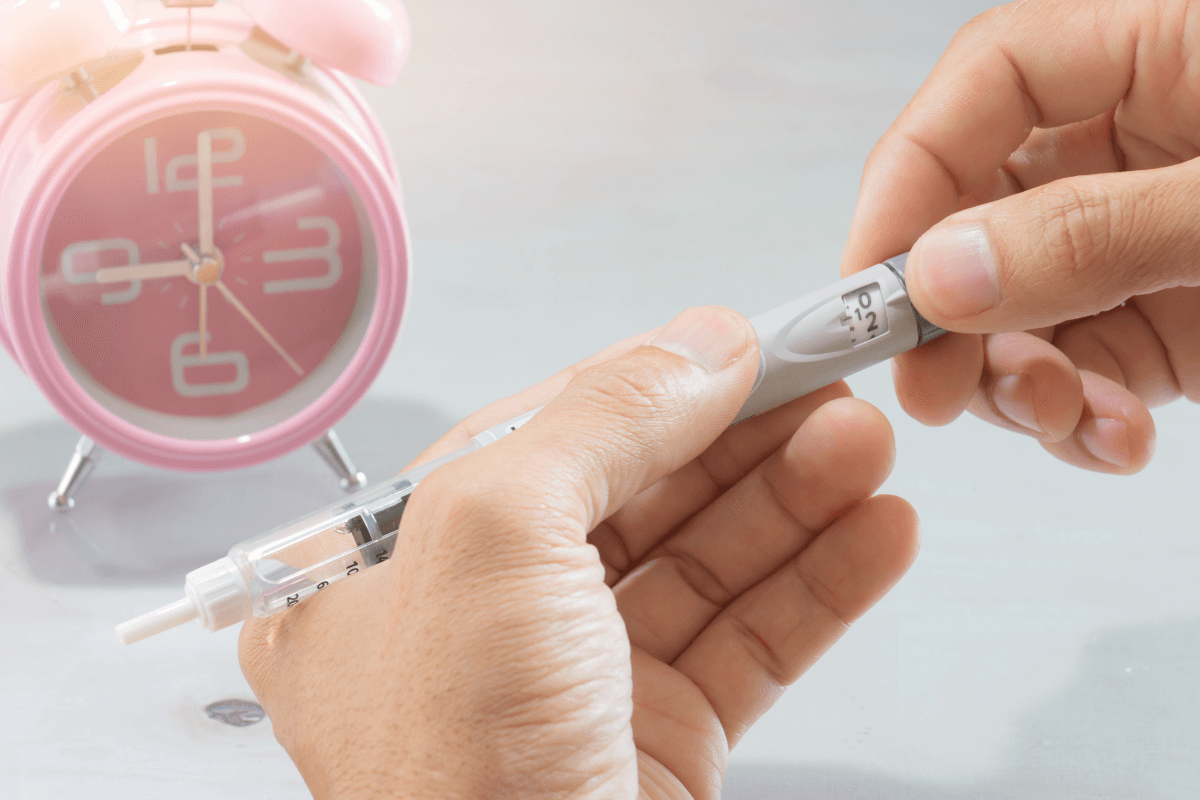
Toujeo dosage is individualized, but safe use usually follows a simple pattern: start from a clinician-approved baseline, inject once daily at a consistent time, and adjust gradually using fasting glucose trends. This matters because Toujeo is a long-acting basal insulin, not a fast correction insulin. Large or frequent changes can raise the risk of hypoglycemia (low blood sugar) or delayed dose stacking.
Toujeo is insulin glargine U-300, a concentrated form of long-acting insulin. It is used as basal insulin, meaning it helps cover background glucose needs between meals and overnight. It is not designed to manage a single high reading after food. For more background on how this insulin releases over time, see What Is Toujeo Insulin.
Key Takeaways
- Once-daily use is typical; consistency improves interpretation of readings.
- Starting doses depend on weight, prior insulin use, glucose targets, and hypoglycemia risk.
- Dose adjustments should be gradual and based on patterns, not single readings.
- Switching between glargine products needs close monitoring for several days.
- Pen capacity limits are not the same as a safe personal maximum.
How Toujeo Fits Into Basal Insulin Care
Toujeo provides background insulin coverage with a slow, prolonged action profile. It is injected under the skin and should not be mixed with other insulins in the same syringe or pen. Because it is concentrated at 300 units/mL, the pen is designed to show the prescribed unit dose without requiring manual conversion.
Basal insulin works differently from rapid-acting mealtime insulin. It mainly targets fasting and between-meal glucose patterns. If fasting readings remain above the agreed range over several days, a clinician may recommend a structured Toujeo dose adjustment. If lows occur, the plan may need review sooner.
Many adults compare basal options when they are starting insulin or changing therapy. A broader discussion of basal insulin timing, duration, and use appears in Basal Insulin Types. That context can help you understand why a once-daily basal schedule differs from mealtime correction plans.
Why it matters: Basal insulin changes often show their full effect over days, not hours.
Starting Dose and Titration: What the Plan Usually Considers
A Toujeo starting dose is not the same for every adult. Clinicians consider the type of diabetes, body weight, current glucose readings, kidney function, age, eating patterns, activity level, and previous insulin exposure. They also consider whether you have had recent hypoglycemia or reduced awareness of low blood sugar.
For some insulin-naive adults with type 2 diabetes, official labeling describes a weight-based starting approach. People already using basal insulin may begin from a conversion plan instead. These are prescribing decisions, so do not calculate or change your own dose without the clinician managing your diabetes care.
After starting, titration means gradual dose adjustment. A common clinical principle is to review fasting glucose patterns over several days before making changes. This helps separate a true pattern from a one-off reading caused by a late meal, illness, alcohol, exercise, missed medication, or meter variation.
The phrase Toujeo dosage chart can be misleading if it suggests a universal table. Charts can help organize information, but they cannot replace individualized targets or safety review. If you use a written plan, it should state when to hold, reduce, or call for advice, not only when to increase.
What to track before a dose review
- Fasting glucose readings: record several consecutive mornings.
- Dose timing: note missed, late, or repeated injections.
- Food changes: include late meals or unusual carbohydrates.
- Activity changes: note heavy exercise or reduced movement.
- Low symptoms: document timing and treatment used.
- Illness or stress: record infections, steroids, or major disruptions.
If you need a broader dosing framework for insulin discussions, Insulin Dosage Chart explains why insulin needs vary and why clinician-directed plans matter.
Timing, Meals, and Once-Daily Use
Most adults use Toujeo once daily at about the same time each day. Consistent timing helps keep basal coverage predictable and makes fasting glucose trends easier to interpret. The best time to take Toujeo is usually the time you can repeat reliably, such as a stable morning routine or bedtime routine.
Toujeo is not meal-dependent. In practical terms, Toujeo before or after meals is usually less important than keeping the injection time steady. That said, meal timing still affects glucose readings, so late dinners or snacks may influence morning numbers and complicate titration decisions.
Some readers ask about Toujeo twice-daily dosing. Once-daily dosing is the usual approach, but clinicians may individualize schedules in selected situations. Do not split doses or change frequency unless your prescriber gives specific instructions. Duplicate basal injections can cause prolonged hypoglycemia.
Shift work, travel, and disrupted sleep can make timing harder. If your schedule changes, ask your diabetes clinician how to move the injection time safely. Write down the new plan before changing it. This reduces confusion if another clinician later reviews your readings.
Quick tip: Pair the injection with one daily habit you rarely miss.
Onset, Duration, and Peak Expectations
Toujeo does not act like a rapid correction dose. It begins working gradually after injection and reaches a more stable effect after repeated daily use. This is why people may not see the full impact of a new Toujeo dosage immediately after the first injection.
The action profile is often described as relatively flat or peakless. That does not mean glucose will stay perfectly steady. Sleep, stress, infection, steroid medicines, alcohol, delayed meals, and activity can still shift readings. The practical question is whether fasting glucose forms a pattern over several days.
People often search for how long does it take for Toujeo to work because they expect a quick response after a high reading. Basal insulin works slowly and lasts beyond 24 hours in many adults. It is not meant to bring down a sudden post-meal spike. If readings are unexpectedly high or low, confirm the result and follow the action plan given by your care team.
A simple glucose unit converter can help when records use different units, such as mg/dL and mmol/L. It only converts values and does not interpret whether a reading is safe for you.
Blood Glucose Unit Converter
Convert glucose readings between mg/dL and mmol/L without changing the clinical value.
These calculations are for education only and do not replace clinical advice, diagnosis, or treatment. Always confirm medical decisions with a qualified healthcare professional.
For comparison with other long-acting options, Long-Acting Insulin Names summarizes onset, peak, and duration concepts across common basal insulins.
Switching From Lantus or Other Basal Insulins
Switching between basal insulins requires monitoring because products are not always interchangeable in day-to-day effect. Lantus and Toujeo both contain insulin glargine, but they differ in concentration and action profile. A prescriber may use a conversion approach, then adjust based on fasting readings and low-risk patterns.
Many searches mention a Lantus to Toujeo conversion calculator. A calculator may estimate units, but it cannot judge hypoglycemia risk, kidney changes, recent lows, missed doses, or your glucose target. Treat any calculator result as a discussion aid, not a final dosing decision.
The reverse switch also needs care. Toujeo to Lantus dose conversion may require a different plan because U-300 and U-100 glargine products can behave differently after injection. Blood glucose may drift during the first several days after a transition. This is a time for extra documentation, not rapid self-correction.
When comparing Toujeo vs Lantus dosing, focus on four questions: what dose was actually taken, when it was taken, what fasting trend followed, and whether lows occurred. Device differences also matter. For example, a pen may deliver in specific increments and have a per-injection maximum. If you want to understand the U-100 pen format for context, see Lantus SoloStar Pens.
Questions to ask before switching
- Conversion method: ask how the first dose was chosen.
- Monitoring plan: confirm how often to check fasting readings.
- Low threshold: know when to hold changes and call.
- Timing changes: clarify whether the injection time changes.
- Device training: review pen steps and dose increments.
Pen Limits, Maximum Dose, and “Too Much”
There is no single safe Toujeo maximum daily dose that applies to every adult. Insulin needs vary widely, especially in people with insulin resistance. The safer question is whether the prescribed dose matches your glucose pattern without causing lows, and whether the device can deliver the dose correctly.
The term “too much” usually means more insulin than your body currently needs. Signs may include sweating, shaking, hunger, confusion, weakness, blurred vision, or other symptoms of hypoglycemia. Severe low blood sugar can cause seizures, loss of consciousness, or injury. Urgent help is needed for severe symptoms, inability to swallow, or persistent lows despite treatment.
Do not use basal insulin as a quick correction for a high reading unless your clinician has specifically included that in your plan. Toujeo acts slowly, so extra doses can overlap later. This delayed stacking can be dangerous, especially overnight or when meals are skipped.
Pen capacity is a separate issue. Toujeo SoloStar and higher-capacity Toujeo pens have different delivery limits per injection. These limits describe what the pen can deliver, not what any one person should take. For device context, the Toujeo Doublestar Pen page can help you recognize how higher-capacity pen formats differ.
Dose Adjustments and Missed-Dose Safety
Toujeo dose adjustment should be structured and conservative. Changes are usually based on fasting readings, not on a single number taken after a meal. If you are unsure whether a high reading reflects food, illness, missed medication, or a true basal need, contact your diabetes team before making a large change.
Missed doses deserve special caution. Taking an extra basal dose to “catch up” can create overlap that lasts many hours. If you miss or delay an injection, follow the missed-dose instructions from your prescriber or the product information. Do not guess if you are not sure what to do.
Repeated lows need prompt review. The same is true for fasting highs that persist despite following the plan. Changes in kidney function, appetite, weight, pregnancy status, steroid use, alcohol intake, or activity can change insulin requirements. A dose that worked last month may not fit today.
People who use continuous glucose monitoring may also track time in range, overnight trends, and low patterns. Those data can be useful, but they still need interpretation in context. Meter checks may be needed if symptoms do not match the sensor reading.
For practical background on how frequently insulin is commonly reviewed, see Adjust Insulin Dose. Use it as educational context, not as a substitute for your personal titration plan.
Injection Technique and Daily Routine
Correct injection technique helps reduce unexplained variability. Toujeo is injected into subcutaneous tissue, which is the fatty layer under the skin. Common sites include the abdomen, thigh, and upper arm, depending on your training and ability to inject safely.
Rotate injection sites within the same general area to reduce lipohypertrophy, which means thickened or lumpy fatty tissue. Injecting into these areas can make absorption less predictable. Use a new pen needle each time, and keep the needle in place for the recommended dwell time after pressing the dose button.
Do not share insulin pens, even if a new needle is used. Sharing pens can transmit infections. Store unopened and in-use pens according to the product instructions. If insulin looks unusual, has been frozen, overheated, or mishandled, ask a pharmacist or clinician before using it.
Daily routines also affect safety. Keep your basal dose log near your glucose records. If another caregiver helps, use one shared record to reduce duplicate dosing. This is especially important during illness, travel, or hospital discharge, when medication routines may change quickly.
Who Needs Extra Clinical Review?
Some situations call for closer supervision before changing a Toujeo daily dose. These include frequent hypoglycemia, reduced awareness of lows, kidney or liver disease, pregnancy, major weight change, new steroid therapy, or a recent hospital stay. Older adults and people with irregular eating patterns may also need more cautious plans.
Seek urgent medical help for severe low blood sugar, confusion, fainting, seizures, or symptoms that do not improve after using your low-glucose plan. Also seek urgent care for signs of diabetic ketoacidosis, such as vomiting, abdominal pain, rapid breathing, fruity breath, or very high glucose with ketones, especially in people with type 1 diabetes.
For condition-level browsing, CanadianInsulin.com lists products by diabetes-related categories, including Diabetes, Type 1 Diabetes, and Type 2 Diabetes. Product access depends on prescription requirements, eligibility, and the pharmacy fulfilling the prescription where permitted.
Authoritative Sources
Official labeling is the best place to verify approved dosing language, pen instructions, contraindications, and warnings. The FDA Toujeo prescribing information provides label-backed details for U.S. use.
Manufacturer product information can also clarify device-specific steps and dose delivery limits. The Sanofi Toujeo product information includes patient and prescribing details for the product.
For broader diabetes standards, the ADA Standards of Care summarize evidence-based diabetes management recommendations and safety priorities.
Recap
Safe Toujeo dosage planning depends on consistent timing, gradual titration, accurate records, and a clear response plan for lows or missed doses. Use fasting trends rather than isolated readings, and review changes with the clinician managing your diabetes care. Switching from another basal insulin, changing device format, or increasing dose frequency should never be treated as a casual adjustment.
This content is for informational purposes only and is not a substitute for professional medical advice.