
Please note: a valid prescription is required for all prescription medication.
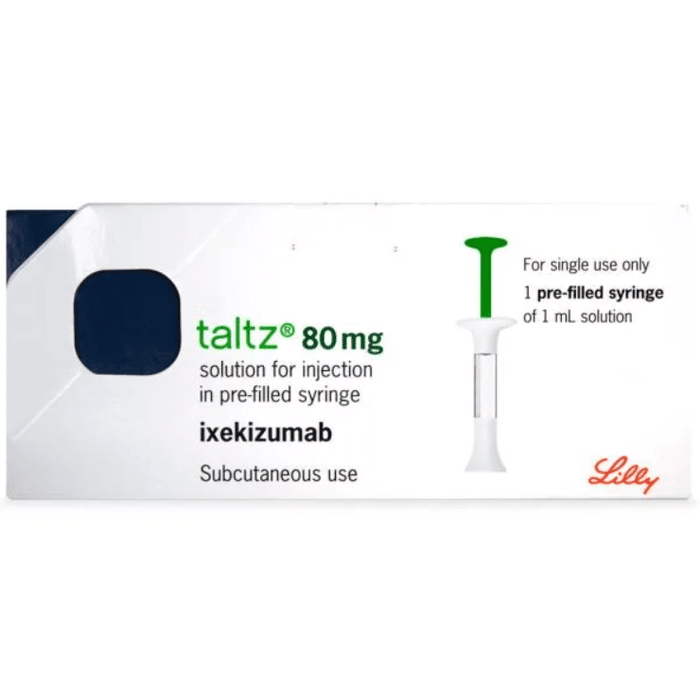
Taltz
Buy Taltz Online


Taltz is an injectable biologic medicine containing ixekizumab, a monoclonal antibody that targets interleukin-17A. It can be bought online by choosing the dose, device, and quantity shown during ordering and matching those details to clinician directions. Because Taltz is a refrigerated injection, device selection, cold storage, and safe handling are important parts of the order decision.
Many people look for Taltz price, Taltz cost, or ixekizumab cost because biologic medicines can vary widely by device, quantity, benefit plan, and treatment schedule. The amount shown for a product should be read together with the strength, form, pack count, and the number of injections needed for the current stage of therapy. For service context, some orders may involve US delivery from Canada and temperature-sensitive handling.
Taltz Price, Quantity, and Device Selection
Taltz price should be compared against the exact injection device and total quantity being ordered. Common product wording includes Taltz autoinjector, Taltz pen, and Taltz prefilled syringe. Those terms can look similar during shopping, but they describe different ways to deliver the same active ingredient, ixekizumab.
Searches for Taltz 80 mg price often refer to 80 mg injection presentations, including an autoinjector or prefilled syringe when those are offered. Do not judge Taltz cost per month from a single device amount unless the quantity matches the therapy schedule you were given. A starting period may use more injections than a maintenance period, so one device is not always equal to one month of treatment.
| Detail to review | Why it affects the order |
|---|---|
| Device type | An autoinjector and a prefilled syringe have different handling steps. |
| Strength and volume | The strength should match the directions from the treating clinician. |
| Total quantity | A one-device order and a multi-device order can change the effective treatment supply. |
| Cash-pay amount | Taltz price without insurance may differ from benefit-plan estimates. |
| Cold handling | Refrigerated biologics require careful packing, receipt, and storage. |
Taltz price with insurance can differ from the online cash amount because plan rules, deductibles, pharmacy benefits, and prior authorization requirements may apply outside the store checkout process. If you are comparing Taltz cash price with a benefit-plan estimate, keep the device, strength, quantity, and treatment interval the same. That makes the comparison more meaningful than looking at a single headline amount.
Quick tip: Match the device and strength first, then compare the total quantity and final amount.
Ixekizumab price and ixekizumab cost refer to the active ingredient in Taltz, not a separate generic product choice. Taltz is the brand name used for ixekizumab injection. If your clinician has discussed other skin-related therapies, the Dermatology Products collection can help you browse relevant treatment categories without treating price as the only decision point.
How to Buy Taltz Online
To buy Taltz online, choose the injection form and strength displayed for the product and make sure the wording matches the therapy directions you received. Check the brand name, active ingredient, device type, strength, and quantity before completing the order. If the directions name a specific pen, autoinjector, or syringe, use that device wording as the anchor.
The order process should be practical: select the product, enter the required order information, and review the medicine details before submission. We may review order details when a medicine requires clinical or documentation checks. Products are supplied through licensed pharmacies, and refrigerated medicines may need prompt, express, cold-chain shipping so the package is handled appropriately during transit.
Do not switch between the Taltz autoinjector and Taltz prefilled syringe because one appears easier to obtain or lower in cost. Device differences can affect grip, needle visibility, injection steps, and comfort preferences. If the device wording is unclear, ask the clinic or pharmacist which form is intended before ordering.
For a refrigerated biologic, delivery planning matters. Arrange for someone to receive the package, move it to the refrigerator promptly, and inspect the carton and device before use. If a package arrives damaged, frozen, or warm, do not guess whether the injection is still suitable.
Injection Forms, Strengths, and Active Ingredient
Taltz contains ixekizumab, a lab-made monoclonal antibody. It is given by subcutaneous injection, which means the medicine is injected under the skin. Product names may combine brand name, active ingredient, device, concentration, and pack quantity, so each label detail has a practical purpose.
The Taltz autoinjector is often described as a pen-like device that hides the needle during use. The Taltz prefilled syringe is a single-use syringe that allows the user to see the syringe barrel and injection process. Both are intended for injection, but the preparation steps, viewing window, needle exposure, and hand positioning can differ.
Many adult treatment plans use 80 mg presentations, and terms such as Taltz 80 mg autoinjector and Taltz 80 mg prefilled syringe are common. Other strengths or presentations may be used for certain patients or treatment plans, so do not assume every Taltz injection is interchangeable. The correct choice depends on the form and strength stated in your treatment directions.
- Brand name: Taltz.
- Active ingredient: Ixekizumab.
- Medicine type: Monoclonal antibody biologic.
- Route: Subcutaneous injection.
- Common device wording: Autoinjector, pen, or prefilled syringe.
- Selection rule: Match the device, strength, and quantity to clinician directions.
Taltz doses vary by condition and by treatment stage. A loading phase may involve a different number of injections than long-term maintenance. Do not change the dose, spacing, or number of injections based on price, convenience, or remaining supply.
Approved Uses and Treatment Fit
Taltz is used for inflammatory diseases in which interleukin-17A plays a role. Labeled uses include moderate to severe plaque psoriasis in appropriate patients, active psoriatic arthritis, ankylosing spondylitis, and non-radiographic axial spondyloarthritis. The same product may be considered for skin, joint, or spine-related inflammation, depending on diagnosis and clinical history.
For Taltz for plaque psoriasis, the main buying question is whether the injection form and quantity match the treatment schedule. For Taltz for psoriatic arthritis, device and strength checks are equally important because joint symptoms do not change the product identity. Axial spondyloarthritis and ankylosing spondylitis treatment plans also require the same careful form and storage review.
Condition categories can help you see where Taltz fits among related therapies. Browse products associated with Psoriasis, Psoriatic Arthritis, Ankylosing Spondylitis, and Axial Spondyloarthritis when you want to view condition-specific medication categories.
Taltz is not a quick-relief medicine for sudden pain, swelling, itching, or flares. It is used on a planned schedule as an immune-targeting treatment. If symptoms worsen, new symptoms appear, or the treatment goal is unclear, contact a healthcare professional before changing how the injection is used.
How Ixekizumab Works
Ixekizumab binds to interleukin-17A, often called IL-17A, which is an immune signaling protein involved in inflammation. By blocking IL-17A activity, Taltz can help reduce inflammatory pathways linked with psoriasis plaques, joint inflammation, and spine-related disease activity in approved uses. This mechanism is targeted, but it still affects immune function.
Because Taltz changes immune signaling, treatment decisions should account for infections, vaccine timing, other immune-modifying medicines, and medical history. It is not the same type of medicine as a steroid, a pain reliever, or a conventional nonbiologic anti-inflammatory drug. Device choice and storage matter, but suitability depends on clinical factors as well.
People sometimes compare biologics by mechanism, injection frequency, or visible symptom improvement. Those comparisons can be useful in a clinic visit, but they should not drive a medication switch during online ordering. If another biologic has been discussed, ask whether the active ingredient, approved use, and safety profile fit your diagnosis.
Storage, Cold-Chain Handling, and Travel
Taltz should usually be stored in the refrigerator in its original carton and protected from light. It should not be frozen, shaken, or exposed to heat. Refrigerated biologics can be damaged by temperature extremes, so the carton and device should be inspected when received.
Official labeling allows limited room-temperature storage under specific conditions. In general, Taltz may be kept at room temperature up to 30°C, or 86°F, for up to 5 days in the original carton. Once kept at room temperature, it should not be returned to the refrigerator, and it should be discarded if not used within the allowed time.
Before injection, the device is usually allowed to sit at room temperature for the time stated in the instructions for use. Do not warm it in a microwave, hot water, direct sunlight, or any other external heat source. Forced warming can damage the medicine or affect the device.
Why it matters: Temperature mistakes can make a biologic injection unsuitable for use.
Travel requires planning. Keep the device in its carton, protect it from light, and avoid checked luggage or parked vehicles where temperatures can swing sharply. If a device has been frozen, overheated, damaged, or left out beyond the allowed time, ask a pharmacist or clinician what to do before injecting.
Side Effects, Warnings, and Monitoring
Common side effects of Taltz can include injection-site reactions, upper respiratory infections, nausea, and fungal infections such as tinea. Injection-site reactions may involve redness, soreness, bruising, itching, or swelling where the medicine was injected. These effects should be monitored, especially if they are severe, spreading, or not improving.
Taltz can increase the risk of infection because it affects immune signaling. Tell a healthcare professional about current infections, recurrent infections, tuberculosis history, or recent exposure to serious contagious illnesses. Screening for tuberculosis may be considered before treatment, and infections should be watched for during therapy.
Serious allergic reactions can occur. Seek urgent medical care if symptoms such as trouble breathing, swelling of the face or throat, severe dizziness, chest tightness, or widespread hives happen after an injection. Taltz should not be used by someone who has had a serious hypersensitivity reaction to ixekizumab or any ingredient in the medicine.
New or worsening inflammatory bowel disease, including Crohn’s disease or ulcerative colitis, has been reported with medicines that affect IL-17 pathways. Report persistent diarrhea, blood in the stool, severe abdominal pain, or worsening bowel symptoms promptly. These symptoms are especially important if you already have a bowel inflammatory condition.
Do not use a device that appears damaged, has been frozen, contains cloudy or discolored liquid, or has visible particles unless the instructions specifically allow that appearance. Taltz devices are single-use. Dispose of used needles or devices in an appropriate sharps container according to local rules.
Vaccines, Interactions, and Missed-Dose Questions
Live vaccines should generally be avoided during Taltz treatment. Tell a healthcare professional about recent or planned vaccines, especially before travel, school, healthcare work, or other vaccine-related requirements. Non-live vaccines may still be considered, but timing should be planned clinically.
Share a complete list of medicines, supplements, and nonprescription products with the care team. Other immune-modifying therapies can affect infection risk when combined with Taltz. This includes some biologics, systemic immunosuppressants, and treatments used for inflammatory skin, joint, or bowel conditions.
If a dose is missed, do not double the next injection unless a healthcare professional gives that instruction. Missed-dose timing can depend on the treatment schedule and how late the dose is. Device problems, storage concerns, or uncertainty after an injection should also be discussed with a pharmacist or clinician.
Monitoring is individualized. It may include infection checks, tuberculosis screening, vaccine planning, and symptom review for bowel inflammation. Keep appointments and report health changes that could affect continued use of an immune-targeting medicine.
Related Biologic and Dermatology Choices
Taltz is one of several biologic medicines used in inflammatory dermatology and rheumatology. Related products may differ by active ingredient, target pathway, approved uses, warnings, injection device, storage instructions, and treatment schedule. A lower displayed amount for another product does not mean it is an appropriate substitute.
Ixekizumab is the active ingredient in Taltz, but that does not automatically mean a lower-cost generic version is available in the same way as many small-molecule medicines. Biologics are complex products, and brand, biosimilar, and market status can differ by country. If cost is a concern, ask the treating clinician which alternatives are clinically reasonable before changing therapies.
For broader condition education, the Dermatology Articles section can help with background reading on skin-related treatment topics. Use educational material to prepare better questions, not to replace individualized medical guidance.
When comparing Taltz with other biologics, focus on four practical questions: whether the medicine treats the diagnosed condition, whether the device and strength match the directions, whether storage requirements can be followed, and whether safety considerations fit the medical history. Those checks matter more than a single monthly estimate.
Authoritative Sources
The storage, safety, approved-use, and handling information above is based on official labeling and standard biologic-use precautions. Source documents can help you prepare questions for a healthcare professional.
- Official prescribing information: includes indications, contraindications, warnings, side effects, injection forms, and storage instructions for ixekizumab.
This content is for informational purposes only and is not a substitute for professional medical advice.
Affected Body Surface Area Calculator
Estimate affected body surface area using palm units and optional entered body-region percentages.
Estimated affected BSA-one palm approximates 1%
Check-screening estimate only
These calculations are for education only and do not replace clinical advice, diagnosis, or treatment. Always confirm medical decisions with a qualified healthcare professional.
Express Shipping - from $29.99
Shipping with this method takes 3-5 days
Prices:
- Dry-Packed Products $29.99
- Cold-Packed Products $39.99
Standard Shipping - $19.99
Shipping with this method takes 5-10 days
Prices:
- Dry-Packed Products $19.99
- Not available for Cold-Packed products
What is Taltz used to treat?
Taltz is used for inflammatory conditions such as moderate to severe plaque psoriasis, active psoriatic arthritis, ankylosing spondylitis, and non-radiographic axial spondyloarthritis in appropriate patients. A healthcare professional determines whether ixekizumab fits the diagnosis, treatment history, and safety profile.
Why does Taltz cost per month vary?
Taltz cost per month can vary because the number of injections may change by condition, treatment stage, device quantity, insurance rules, and cash-pay amount. A loading period may require a different number of injections than maintenance therapy.
Is Taltz the same as ixekizumab?
Taltz is the brand name for ixekizumab injection. Ixekizumab is the active ingredient. Generic-name price searches refer to the same active ingredient, but biologic brand, biosimilar, and market status can differ by country.
What is the difference between the Taltz autoinjector and prefilled syringe?
Both devices deliver ixekizumab by subcutaneous injection, but their handling steps differ. The autoinjector is pen-like, while the prefilled syringe allows more direct visibility of the syringe and injection process. Use the device specified in your treatment directions.
How should Taltz be stored?
Taltz is usually stored refrigerated in its original carton and protected from light. It should not be frozen or shaken. Labeling allows limited room-temperature storage under specific conditions, so follow the instructions supplied with the medicine.
What side effects should be watched for with Taltz?
Common side effects can include injection-site reactions, upper respiratory infections, nausea, and fungal infections. Serious allergic reactions, serious infections, and new or worsening inflammatory bowel disease symptoms require prompt medical attention.
Can live vaccines be used while taking Taltz?
Live vaccines should generally be avoided during Taltz treatment. Tell a healthcare professional about recent or planned vaccines so timing can be reviewed, especially before travel or work-related vaccine requirements.
Rewards Program
Earn points on birthdays, product orders, reviews, friend referrals, and more! Enjoy your medication at unparalleled discounts while reaping rewards for every step you take with us.
You can read more about rewards here.
POINT VALUE
How to earn points
- 1Create an account and start earning.
- 2Earn points every time you shop or perform certain actions.
- 3Redeem points for exclusive discounts.
You Might Also Like
Select options
This product has multiple variants. The options may be chosen on the product page
Select options
This product has multiple variants. The options may be chosen on the product page
Select options
This product has multiple variants. The options may be chosen on the product page
Select options
This product has multiple variants. The options may be chosen on the product page