
Please note: a valid prescription is required for all prescription medication.
Promotion
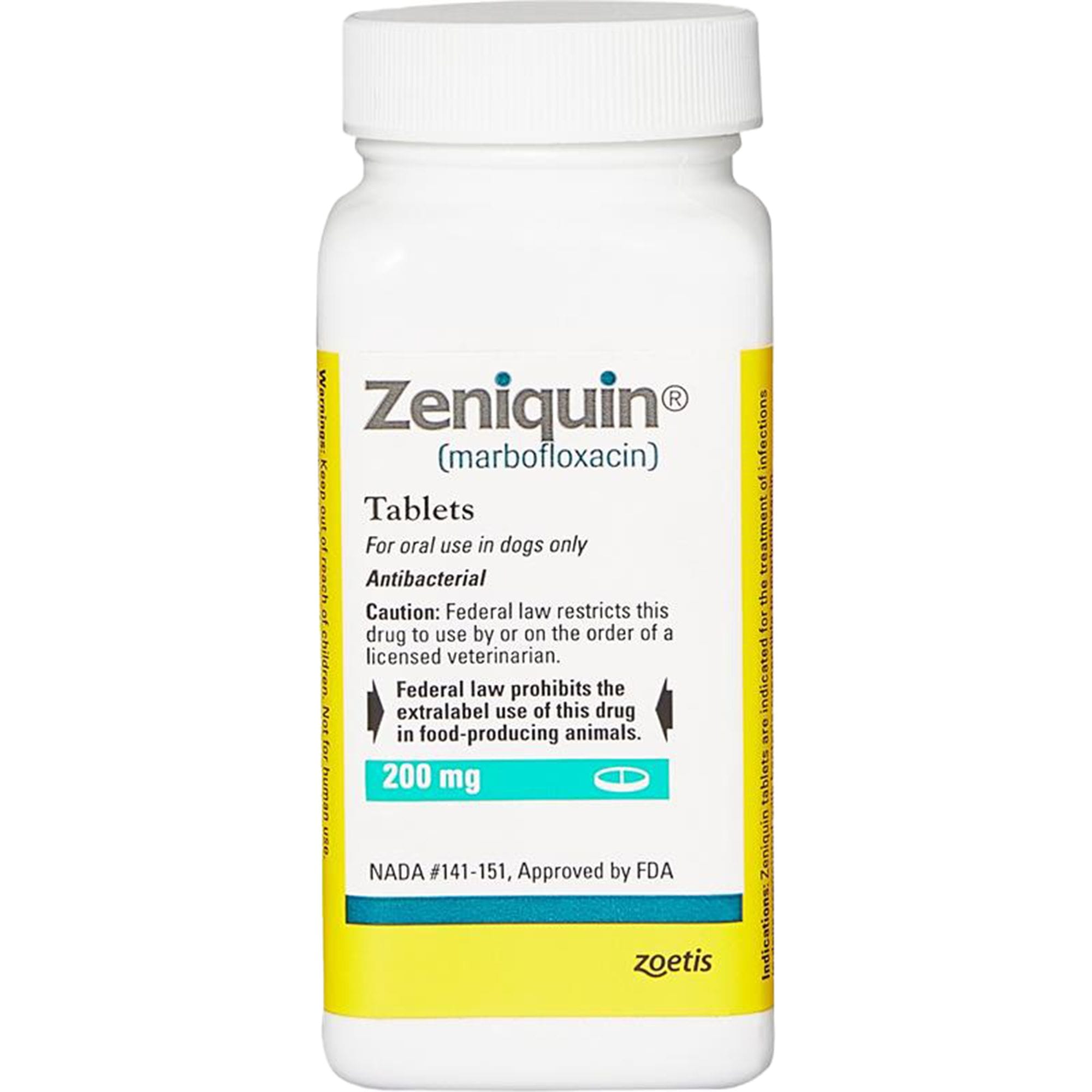

Zeniquin
Zeniquin® Tablets for Bacterial Infections in Dogs and Cats
Sitewide Super Sale - Get 15% off when you buy 3 or more of the same product using the code LESS15 at checkout.
Applies to all products originating from Canada. Maximum quantity limited to a 90-day supply per order.
Price:
Price range: $216.99 through $544.99
You save


Zeniquin is a veterinary fluoroquinolone antibiotic used in dogs and cats. It treats susceptible bacterial infections as directed by a veterinarian. This page helps you understand how it works, how to give it safely, and what to discuss with your vet before ordering.
What Zeniquin Is and How It Works
CanadianInsulin.com is a prescription referral platform. We verify prescriptions with your prescriber when required, and licensed Canadian pharmacies dispense your order. This medicine belongs to the fluoroquinolone class, which inhibits bacterial DNA gyrase and topoisomerase IV. That action prevents bacterial replication and supports clinical recovery. You can order with US delivery from Canada and may see lower cash prices, even without insurance.
Zeniquin® contains marbofloxacin, an antibacterial agent used in companion animals. It is absorbed after oral dosing and distributes to tissues commonly affected by infection. The treatment may be used for skin, soft tissue, and urinary tract infections caused by susceptible organisms as directed by a veterinarian.
Many households use zeniquin for dogs when cultures or local patterns suggest typical susceptibility. Vets may adjust plans based on patient history, age, and concurrent medications.
Who It’s For
This medicine is for veterinary patients only. It is intended for dogs and cats with bacterial infections documented or strongly suspected based on exam and local epidemiology. Do not use in animals with known fluoroquinolone hypersensitivity.
Use zeniquin for cats only under veterinary direction, with dose and duration set by the prescriber. Avoid use in growing puppies and kittens when possible, because fluoroquinolones may affect developing cartilage. Use caution in pets with seizure disorders or kidney impairment.
For canine urinary issues, your veterinarian may diagnose, culture, and select therapy. See our condition page on Canine UTI to learn more about signs and care pathways.
Dosage and Usage
Follow your veterinarian’s instructions exactly. The tablet is given by mouth, typically once daily, with or without food. If stomach upset occurs, giving with a small meal may help. Water should be available at all times.
Your veterinarian decides zeniquin dosage based on your pet’s weight, infection location, and susceptibility data. The course often continues for a period after symptoms improve to reduce relapse risk. Never share this prescription between pets or re-use old tablets without veterinary guidance.
Do not crush unless your veterinarian instructs you. If your pet struggles with swallowing tablets, ask about pill pockets or administration tips. Keep a simple log to track doses during multi-day therapy.
Strengths and Forms
This medicine is supplied as film-coated oral tablets. Commonly available strengths include 25 mg, 50 mg, 100 mg, and 200 mg. Some tablets are scored to assist with accurate splitting when prescribed by a veterinarian.
Availability may vary by pharmacy and time. If your prescribed strength is unavailable, your veterinarian may recommend an alternative strength with appropriate splitting, or a different agent. For reference, zeniquin 25 mg is often used for smaller patients when clinically appropriate.
Missed Dose and Timing
If you miss a dose, give it when you remember unless it is almost time for the next dose. If it is close to the next dose, skip the missed dose and resume the regular schedule. Do not double up doses. Consistent timing helps maintain steady antibiotic levels.
Set a reminder on your phone or use a chart to reduce missed doses during longer courses. If multiple doses are missed, contact your veterinarian for guidance.
Storage and Travel Basics
Store tablets at room temperature in the original container with the label intact. Protect from moisture and excessive heat. Keep out of reach of children and pets. Do not store in the bathroom, where humidity can be high.
When you travel with your pet, pack the medicine in your carry-on with the vet-labeled bottle. Bring a copy of the prescription or visit summary. Keep a small supply in a separate bag to avoid interruptions if luggage is delayed.
Benefits
This antibiotic can cover a broad range of susceptible gram-negative and some gram-positive bacteria. Once-daily dosing may support adherence during home treatment. The tablet format simplifies administration compared with liquids for many caretakers.
Because it is in the fluoroquinolone class, it may be selected when cultures or prior history suggest certain organisms. Your veterinarian weighs benefits against risks, especially in young or neurologically sensitive animals.
Side Effects and Safety
- Gastrointestinal upset: vomiting, diarrhea, soft stools
- Reduced appetite or lethargy
- Behavior changes: restlessness or agitation
- Hypersalivation or drooling
- In rare cases, neurologic signs
Serious but uncommon risks can include seizures in predisposed animals, hypersensitivity reactions, and cartilage effects in growing pets. Contact your veterinarian promptly if severe vomiting, tremors, seizures, difficulty walking, or hives occur. Stop the medicine and seek urgent care for signs suggestive of an allergic reaction.
Drug Interactions and Cautions
Certain antacids or supplements containing aluminum, magnesium, calcium, iron, or zinc can reduce absorption. Your veterinarian may recommend separating administration times. Use caution with drugs that lower the seizure threshold, such as some NSAIDs in sensitive animals.
Tell your veterinarian about all medicines, over-the-counter products, and supplements your pet receives. Do not use in animals with known fluoroquinolone allergy. Avoid use in growing dogs and cats when suitable alternatives exist.
For skin infections, cephalosporins may be considered by your vet. You can review our product page for Cephalexin and our article Cephalexin Guide for general background. For tick-borne conditions, tetracyclines are sometimes chosen; see Doxycycline and the article Doxycycline Guide.
What to Expect Over Time
With appropriate use, signs of infection may begin to ease during the course. Continue exactly as prescribed, even if your pet seems better before finishing. Stopping early can allow bacteria to persist and may lead to recurrence.
If you do not observe expected improvement or if new symptoms develop, contact your veterinarian for reassessment. Progress depends on infection site, organism, and overall health. Some cases need culture testing or imaging to guide therapy.
For recurrent urinary issues in dogs, culture-directed treatment is often helpful. The term canine zeniquin may appear in prior records; your vet will interpret that history while planning current care.
Compare With Alternatives
Veterinarians may consider other antibiotics based on culture results and patient factors. Enrofloxacin is another fluoroquinolone; see Baytril for one option. For beta-lactam coverage, amoxicillin-clavulanate is widely used; see Clavamox as a common choice. Selection should follow veterinary guidance and organism susceptibility.
Tablet form may aid dosing schedules compared to some liquids. For certain pets, zeniquin tablets are chosen when indicated by prior sensitivity patterns, but individual plans vary.
Pricing and Access
See current zeniquin price and compare package sizes before checkout. Canadian pricing is often competitive, with transparent options for your prescription. We provide US shipping from Canada with clear tracking and support. Checkout uses encrypted processes for your security.
If you need assistance, contact our support team to review order steps and documentation. You can also browse our broader catalog under Pet Medications for other veterinary needs.
Availability and Substitutions
Supply can vary by strength and count. If a specific tablet size is out of stock, your prescriber may suggest a different strength with appropriate splitting, or an alternative antibiotic. We cannot guarantee dates for restocks.
If a substitution is needed, your veterinarian will decide whether a different class is suitable. Culture and sensitivity results, when available, help guide that decision.
Patient Suitability and Cost-Saving Tips
This medicine may suit adult dogs and cats needing once-daily dosing for susceptible infections. It may not suit young, growing animals or those with neurologic conditions. Pets with kidney disease may require individualized plans from the veterinarian.
To save on total out-of-pocket costs, consider multi-month fills when appropriate and approved. Use refill reminders so you do not run out mid-course. Discuss generic marbofloxacin options with your veterinarian if a substitution could meet your pet’s needs and local regulations.
For respiratory or skin cases in cats, your vet may weigh options within our condition listings, including Feline Skin Infection. You can also review background antibiotic topics in our learning center, alongside Canine Respiratory Infection resources.
Questions to Ask Your Clinician
- Diagnosis and cultures: what organism is suspected?
- Dose and duration: how long should treatment continue?
- Administration tips: can I give with food?
- Monitoring: what side effects should I watch for?
- Alternatives: what if there is no response?
- Interactions: should supplements be separated from doses?
Authoritative Sources
See the manufacturer’s product information for veterinary use on the Zoetis website. You can review FDA Center for Veterinary Medicine materials for label and safety details. Health Canada’s Drug Product Database lists approved veterinary products for reference.
- Zoetis Zeniquin product information for veterinarians and pet owners
- FDA CVM Animal Drugs @ FDA database for marbofloxacin products
- Health Canada Drug Product Database search portal for veterinary listings
Ready to order? Place your prescription request now with prompt, express shipping and temperature-controlled handling when required.
Medical disclaimer: This content is for informational purposes only and is not a substitute for professional medical advice.
Express Shipping - from $25.00
Shipping with this method takes 3-5 days
Prices:
- Dry-Packed Products $25.00
- Cold-Packed Products $35.00
Standard Shipping - $15.00
Shipping with this method takes 5-10 days
Prices:
- Dry-Packed Products $15.00
- Not available for Cold-Packed products
What infections does this medicine treat?
Veterinarians use this antibiotic for susceptible skin, soft tissue, and urinary tract infections in dogs and cats. Use is based on exam findings and, when available, culture results.
How long should my pet take it?
Duration varies by infection site and response. Follow your veterinarian’s schedule exactly and complete the full course unless your veterinarian advises otherwise.
Can I give it with food?
It can be given with or without food. If your pet has stomach upset, a small meal may help. Avoid giving at the same time as antacids or mineral supplements without your vet’s guidance.
What if my pet vomits after a dose?
If vomiting occurs right after dosing, contact your veterinarian for advice. Do not give an extra dose unless your veterinarian tells you to do so.
Are there age restrictions?
Fluoroquinolones may affect developing cartilage. Use is generally avoided in growing puppies and kittens unless benefits outweigh risks. Your veterinarian will assess suitability.
Can it interact with supplements?
Yes. Products containing aluminum, magnesium, calcium, iron, or zinc can reduce absorption. Your veterinarian may recommend separating administration times.
Is splitting tablets okay?
Some tablets are scored. Only split if your veterinarian prescribes it and use a tablet cutter for accuracy. Keep halves in a dry, labeled container.
Rewards Program
Earn points on birthdays, product orders, reviews, friend referrals, and more! Enjoy your medication at unparalleled discounts while reaping rewards for every step you take with us.
You can read more about rewards here.
POINT VALUE
How to earn points
- 1Create an account and start earning.
- 2Earn points every time you shop or perform certain actions.
- 3Redeem points for exclusive discounts.
You Might Also Like
Select options
This product has multiple variants. The options may be chosen on the product page
Select options
This product has multiple variants. The options may be chosen on the product page
Select options
This product has multiple variants. The options may be chosen on the product page
Select options
This product has multiple variants. The options may be chosen on the product page
Related Articles
Weight Management
Zepbound storage: Keep It Safe With Clear Temperature Rules
This guide explains Zepbound storage so your medication stays effective. You will learn temperature limits, how long doses can stay unrefrigerated, travel practices, and what to do if a pen…
Weight Management
Zepbound and Fatigue: Practical Tips to Ease Tiredness Safely
Feeling drained after starting tirzepatide can be unsettling. Many users describe a mix of low energy, mild aches, and disrupted sleep early on. If you are navigating Zepbound and fatigue,…
Cardiovascular, Diabetes, Type
Mounjaro Heart Benefits Beyond Weight Loss: Evidence-Based Guide
Patients often ask how tirzepatide might support cardiovascular health beyond weight loss. Understanding Mounjaro heart benefits requires looking at mechanisms, evolving trial data, and safety signals. This guide synthesizes key…
Diabetes, Type 2
Ozempic Rebound: A Practical Guide to Prevent Weight Regain
Many people stop GLP-1 therapy and wonder what comes next. Appetite changes, routine shifts, and metabolism can collide. A clear plan helps you keep progress steady and predictable, not reactive.…