
Please note: a valid prescription is required for all prescription medication.
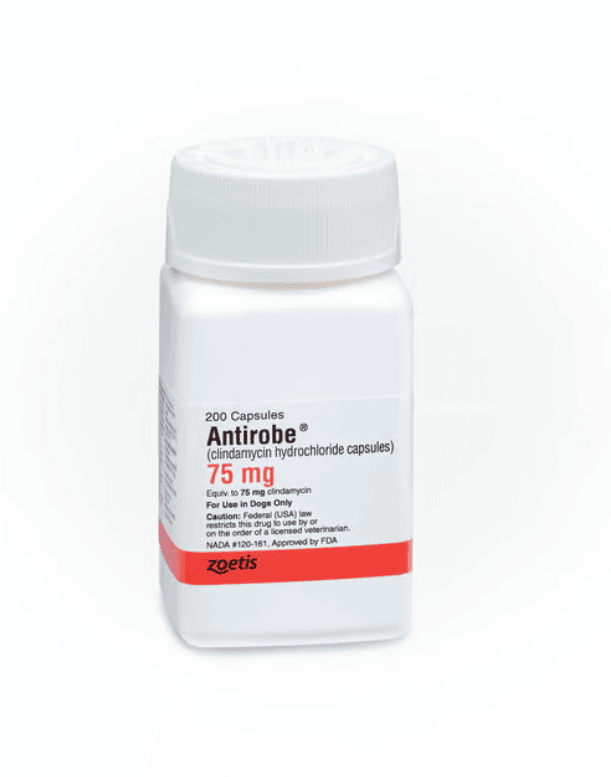
Antirobe
Buy Antirobe Online


Antirobe is a veterinary clindamycin hydrochloride antibiotic used for certain susceptible bacterial infections in pets. You can buy Antirobe online, view the current price, and choose the form and strength that match your veterinarian’s written directions. Capsules and oral solution are handled differently, so the animal species, dose strength, quantity, and measuring instructions should be matched before checkout.
Antirobe is commonly associated with infections involving the mouth, teeth, skin, wounds, abscesses, and bone when clindamycin is appropriate. It is not a treatment for viral illness, and it should not be shared between animals. US delivery from Canada may appear in the order flow for qualified purchases, depending on the service details shown at checkout.
Antirobe Price, Forms, and Strength Choices
The Antirobe price depends on the exact form, strength, and quantity being ordered. Capsules and oral solution may have separate price points because they are different preparations, not interchangeable package sizes. When you compare Antirobe cost, focus on the medicine format your veterinarian named rather than the brand name alone.
Antirobe clindamycin capsules are commonly referenced in 25 mg, 75 mg, and 150 mg strengths. Antirobe Aquadrops is an oral solution presentation, so bottle information and concentration matter more than capsule count. The total mL in a bottle describes the amount supplied, not a single administration amount.
Quick tip: Match species, form, strength, and quantity before comparing totals.
| Form | What to match | Practical buying point |
|---|---|---|
| Capsules | Capsule strength, count, and written directions | Antirobe 25 mg capsules, 75 mg capsules, and 150 mg capsules are different strength choices. |
| Oral solution | Bottle information, concentration, and measuring method | Liquid Antirobe is measured by volume and should be given with a suitable measuring device. |
| Quantity | Pack count, bottle count, or total units supplied | Changing quantity changes the total paid amount and the amount of medicine received. |
Antirobe capsules price comparisons should stay within the same strength whenever possible. A lower-strength capsule is not simply a cheaper version of a higher-strength capsule, because the prescribed amount may not align. If the veterinarian wrote clindamycin hydrochloride capsules with a specific strength, choose that strength rather than substituting another form on your own.
Some pet owners compare Antirobe without insurance or look at a cash-pay amount when veterinary medication coverage is limited. The meaningful number is the checkout total for the exact form and quantity being ordered. A general clindamycin for dogs price may not reflect Antirobe capsules, Aquadrops, or the pack size needed for the animal’s treatment plan.
How to Order Antirobe Online
Start with the medication form, then match the strength or liquid details to the clinic’s instructions. Enter the animal and order information carefully, including the species named for treatment. We may review order details when information needs clarification, especially when the form, strength, or quantity does not align with the directions provided by the veterinary team.
- Choose the form: select capsules or oral solution based on the written directions.
- Match the strength: use the capsule strength or liquid concentration named by the clinic.
- Confirm quantity: review bottle count, capsule count, or total units supplied.
- Check animal details: make sure the species and pet information are accurate.
- Review checkout: confirm shipping address, product form, and total cost before payment.
If multiple quantities are available, compare the full package rather than assuming each choice covers the same number of days. The correct quantity depends on the veterinary plan, infection type, animal size, and prescribed duration. Do not increase, decrease, or split a treatment course without speaking with the veterinarian.
For customers looking for Antirobe price from Canada or US shipping from Canada, logistics information is shown during the order process. Use the shipping details presented at checkout rather than assuming a timeline from previous orders. Keep the medicine in its original labeled container when it arrives, especially if another caregiver may help administer it.
What Antirobe Treats in Veterinary Care
Antirobe contains clindamycin, a lincosamide antibiotic. This class works against certain susceptible bacteria by interfering with bacterial protein production. The medicine is used when the veterinarian expects clindamycin to fit the infection site and the likely bacteria involved.
Label-aligned uses for dogs include infections involving the mouth, teeth, skin, wounds, abscesses, and bone when clindamycin is appropriate. Dental infections may also require cleaning, tooth treatment, pain control, or follow-up examination. The Canine Dental Infection collection can help organize related veterinary products when oral infection is part of the care plan.
Wounds and abscesses often need more than an antibiotic. Drainage, wound cleaning, culture testing, or rechecks may be needed if swelling, odor, discharge, or pain persists. For browsing by condition, the Canine Skin Infection collection groups products commonly considered in veterinary skin infection care.
Bone infections are more complex and usually require close veterinary monitoring. Treatment plans may depend on imaging, culture results, duration of therapy, surgery, or follow-up testing. The Canine Bone Infection category can help you find condition-specific product groupings, but medication choice should follow the veterinarian’s diagnosis.
Capsules, Aquadrops, and Species Matching
Capsules may be useful when the prescribed amount matches an available capsule strength. Antirobe 25 mg capsules, Antirobe 75 mg capsules, and Antirobe 150 mg capsules should be treated as distinct strength choices. Do not combine strengths or change capsule counts unless the veterinarian gave those exact instructions.
Antirobe oral solution, including Aquadrops, may be preferred when liquid measurement is needed. Liquid medication requires careful measuring, and kitchen spoons are not precise enough for pet dosing. Use the oral syringe or measuring device recommended by the veterinarian or supplied with the medicine.
Why it matters: Form mix-ups can lead to the wrong amount even when the active ingredient is the same.
Antirobe for dogs and Antirobe for cats should not be assumed to follow identical directions. Some labels and regional products may differ by species, form, or indication. If a cat cannot swallow capsules, or a dog resists liquid medicine, ask the clinic whether a form change is appropriate before ordering a different preparation.
Clindamycin hydrochloride capsules may irritate the throat or esophagus if they lodge during swallowing. Ask the veterinary team whether the capsule should be followed with water, food, or another administration method suitable for the animal. Report gagging, drooling, repeated swallowing, or difficulty eating after capsule use.
Storage, Handling, and Travel Basics
Store Antirobe according to the package label and any directions supplied with the order. Capsules and liquids may have different storage requirements, so read the container label before putting the medicine away. Keep all pet medicines away from children, other animals, moisture, and excess heat.
Oral solution should be closed tightly after use. If the label says to shake before measuring, do so each time to help keep the liquid consistent. Clean the measuring device as directed, and avoid transferring the solution into an unmarked bottle.
Capsules should remain in the labeled container until use. Do not mix strengths in one bottle, because capsule size or color can be confused later. If multiple pets in the home take medication, store each animal’s medicine separately.
Travel with Antirobe in its original container, including the directions. This helps another caregiver identify the medicine, strength, and animal it belongs to. If the product requires special handling during travel, follow the label and ask the veterinary team before exposing it to temperature extremes.
Side Effects, Warnings, and Monitoring
Antirobe side effects often involve the digestive system. Vomiting, loose stool, reduced appetite, drooling, or stomach upset may occur. Contact the veterinarian if symptoms are persistent, severe, bloody, or accompanied by weakness, fever, dehydration, or refusal to eat.
Clindamycin should not be used in animals with known hypersensitivity to clindamycin or lincomycin. It is also generally avoided in certain species, including rabbits, guinea pigs, hamsters, horses, and ruminants, unless a veterinarian specifically manages the risk. Sharing leftover medication with another animal can be dangerous.
- Digestive signs: vomiting, diarrhea, reduced appetite, or drooling should be monitored.
- Allergic signs: facial swelling, hives, breathing trouble, collapse, or severe weakness needs urgent care.
- Swallowing concerns: gagging, throat discomfort, or trouble eating after capsules should be reported.
- Infection changes: spreading redness, odor, fever, swelling, or pain may mean reassessment is needed.
- Wrong species risk: never use Antirobe for another pet without veterinary direction.
Tell the veterinarian about the animal’s health history before treatment, including liver disease, kidney problems, digestive illness, pregnancy, nursing, allergies, and all current medicines. Clindamycin may interact with some antibiotics or drugs that affect neuromuscular function. The clinic may adjust monitoring or choose a different medicine if the animal has added risk factors.
Antibiotics work best when used exactly as directed for the diagnosed infection. Skipping amounts, stopping early, or saving leftovers can make infection control harder. If the pet spits out medicine or a dose is missed, ask the veterinary team what to do rather than giving extra medication.
When to Expect Improvement
Visible improvement depends on the infection site, severity, drainage, dental disease, and bacterial susceptibility. Some swelling or discomfort may not improve until the source is treated, especially with dental disease, puncture wounds, abscesses, or bone involvement. Ask the veterinarian what signs should improve first and when a recheck is needed.
Do not use Antirobe to delay urgent care for deep wounds, facial swelling, severe oral pain, broken teeth, fever, collapse, or a pet that will not eat. Antibiotic selection is only one part of infection management. Procedures, culture testing, dental work, pain control, or wound care may be necessary.
If the infection looks worse during treatment, contact the clinic promptly. Warning signs include enlarging swelling, new discharge, bad odor, spreading redness, worsening limp, or persistent fever. The bacteria may not be susceptible, the infection source may still be present, or another diagnosis may need consideration.
Related Veterinary Infection Products and Categories
Antirobe is not interchangeable with every pet antibiotic. The veterinarian chooses an antibiotic based on suspected bacteria, infection location, patient history, previous drug reactions, and test results when available. To browse broader product groupings, use Pet Medications for veterinary items and Infectious Disease for infection-related products.
Other antibiotics may appear in veterinary discussions, but they are used for different circumstances. Doxycycline is often discussed for selected bacterial and tick-borne conditions, while amoxicillin-clavulanate products are used for other susceptible infections. Product substitution should come from the veterinarian, not from matching a broad antibiotic category.
The Infectious Disease articles category can help explain infection terminology and common treatment questions. Educational reading should support, not replace, the diagnosis and treatment plan from the veterinary team. Keep the written directions nearby when deciding whether two products truly match.
When comparing Antirobe with other veterinary infection medicines, match the active ingredient, brand or generic name, strength, form, and species directions. If the clinic named Antirobe clindamycin capsules, do not switch to Antirobe Aquadrops or another antibiotic unless the veterinary team approves the change.
Authoritative Sources
The following sources support product identity, veterinary uses, and safety cautions for clindamycin products used in animals.
- DailyMed clindamycin veterinary label provides capsule and oral solution information.
- Veterinary Medicines Directorate Antirobe product information describes capsule composition and veterinary use.
This content is for informational purposes only and is not a substitute for professional medical advice.
Express Shipping - from $29.99
Shipping with this method takes 3-5 days
Prices:
- Dry-Packed Products $29.99
- Cold-Packed Products $39.99
Standard Shipping - $19.99
Shipping with this method takes 5-10 days
Prices:
- Dry-Packed Products $19.99
- Not available for Cold-Packed products
What is Antirobe used for in dogs?
Antirobe is used in veterinary care for certain susceptible bacterial infections. Label-aligned uses for dogs include infections involving the mouth, teeth, skin, wounds, abscesses, and bone when clindamycin is appropriate.
Is Antirobe the same as clindamycin?
Antirobe contains clindamycin hydrochloride. The brand, form, strength, and species directions still matter, so do not switch between capsules, oral solution, or another clindamycin product without veterinary direction.
What side effects can Antirobe cause?
Digestive effects such as vomiting, diarrhea, reduced appetite, drooling, or stomach upset may occur. Severe diarrhea, bloody stool, facial swelling, breathing trouble, collapse, or extreme lethargy needs urgent veterinary attention.
Can Antirobe be used for cats?
Some clindamycin products are used in cats, but directions can differ by form and label. Use only the product and amount directed by the veterinarian for that specific cat.
How should Antirobe oral solution be measured?
Measure oral solution with the dosing device recommended by the veterinarian or product label. Do not use kitchen spoons, because they are not precise enough for pet medication.
What should I compare when looking at Antirobe cost?
Compare the same form, strength, and quantity. Antirobe 25 mg capsules, 75 mg capsules, 150 mg capsules, and Aquadrops oral solution are different purchasing choices and may not be interchangeable.
Rewards Program
Earn points on birthdays, product orders, reviews, friend referrals, and more! Enjoy your medication at unparalleled discounts while reaping rewards for every step you take with us.
You can read more about rewards here.
POINT VALUE
How to earn points
- 1Create an account and start earning.
- 2Earn points every time you shop or perform certain actions.
- 3Redeem points for exclusive discounts.
You Might Also Like
Select options
This product has multiple variants. The options may be chosen on the product page
Select options
This product has multiple variants. The options may be chosen on the product page
Select options
This product has multiple variants. The options may be chosen on the product page
Select options
This product has multiple variants. The options may be chosen on the product page