
Please note: a valid prescription is required for all prescription medication.
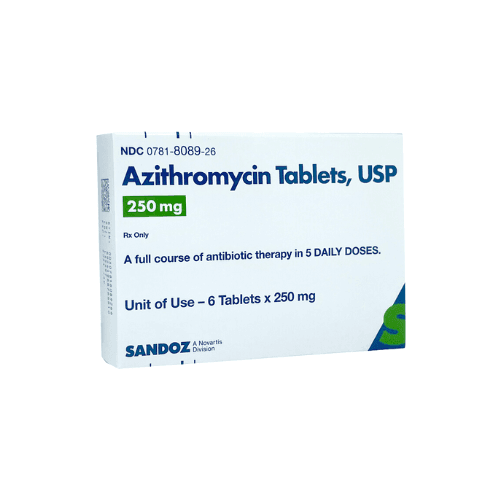
Azithromycin
Buy Azithromycin Online


Buy azithromycin online with a valid prescription and compare current listed pricing, tablet options, and key safety basics before placing an order. You can match azithromycin 250 mg or other listed strengths to your prescription, review factors that affect the final amount such as quantity and presentation, and check access details, including US delivery from Canada when applicable.
Azithromycin is a macrolide antibiotic, a medicine that slows or stops susceptible bacteria. It is sold as generic azithromycin and is also associated with the brand name Zithromax. Use this product page to confirm the exact strength, form, and order details your clinician prescribed.
Azithromycin 250 mg Price and Available Options
The current listed price is most useful when you read it beside the selected strength, tablet form, and total quantity. A lower line item may not represent the same treatment amount if it contains fewer tablets or a different strength. Match the listing to the directions on your prescription before comparing options.
Azithromycin tablets are commonly referenced as 250 mg and 500 mg strengths. If both are shown, compare the strength and tablet count together rather than assuming they are interchangeable. Zithromax tablets may also appear in searches, but the product selected at checkout should match the prescribed generic or brand name.
If ordering azithromycin without insurance, review the out-of-pocket amount shown for the selected option. Some customers also compare cash-pay details, but the practical check is the same: confirm strength, quantity, and any listed handling or order fees before checkout.
| Compare | Why it matters |
|---|---|
| Tablet strength | 250 mg and 500 mg tablets do not represent the same amount. |
| Total quantity | The tablet count affects the supplied treatment amount. |
| Brand or generic | Zithromax and generic azithromycin may be listed separately. |
| Order path | Some orders need prescriber details before they can proceed. |
Quick tip: Check the medicine name, strength, and quantity before comparing any displayed amount.
How to Buy Azithromycin Online
Choose the tablet option that matches your prescription, then enter the required order details during checkout. A valid prescription is required for this antibiotic. If information is incomplete, prescription details may be reviewed or verified with the prescriber when needed.
Keep the prescriber name, clinic contact information, and the directions from your medication label available. This helps avoid mismatches between the selected product and the intended treatment course. Supporting documents may be requested if the order details do not clearly match the product selected.
- Select the strength: confirm 250 mg or 500 mg.
- Check the quantity: compare total tablets supplied.
- Match the name: confirm generic or Zithromax wording.
- Review access details: cash-pay and cross-border options can depend on the order.
Azithromycin is often prescribed for short courses, so accuracy matters. Do not change the strength, tablet count, or directions to fit a listing. Ask the prescriber or pharmacist to clarify any mismatch before using the medicine.
Tablet Strengths and Order Details
An azithromycin 250 mg tablet is a strength, not a complete dosing plan by itself. Some treatment regimens may use more than one tablet at a time or different tablet strengths across a course. Follow the directions on your prescription label rather than copying another person’s schedule.
Searches for azithromycin 500 mg tablet, Zithromax 250 mg, or Z-Pak often reflect different presentations or prescribing patterns. A Z-Pak is commonly associated with a pack of six 250 mg tablets, but not every prescription uses that format. The safest product decision is to match the written instructions.
| Order detail | What to check |
|---|---|
| Strength | Confirm the milligram amount per tablet. |
| Quantity | Compare total tablets, not only package wording. |
| Directions | Use the prescriber’s written instructions. |
| Patient factors | Age, weight, liver health, and other medicines may matter. |
Why it matters: The listed tablet strength can differ from the total amount used during a full course.
What This Antibiotic Is Used For
Azithromycin is used for certain bacterial infections when the bacteria are expected to be susceptible. It may be prescribed for some respiratory tract infections, ear infections, skin infections, and sexually transmitted infections. It does not treat viral illnesses such as colds or flu.
The exact reason for treatment affects the product details your clinician chooses. For example, the prescribed strength, number of tablets, and length of therapy can differ by infection type. The page’s role is to help you select the correct listed product, not to diagnose the infection.
- Respiratory infections: browse Bacterial Respiratory Infection product listings.
- Ear infections: review the Ear Infection category.
- Skin infections: compare related Skin Infection options.
- STI care: view Sexually Transmitted Infection listings when relevant.
Dose, Course, and Timing Questions
Azithromycin dosage varies by infection, age, body weight, kidney or liver concerns, and other medicines. Some people search for azithromycin doses because they see common patterns online, but those examples are not a substitute for the directions written for a specific patient.
Symptoms may start to improve within a few days, but timing varies. Complete the course exactly as prescribed unless a clinician gives different instructions. Stopping early, skipping tablets, or saving leftover antibiotics can contribute to treatment failure or antibiotic resistance.
- Before checkout: confirm the prescribed tablet strength.
- Before first dose: read the pharmacy label carefully.
- If vomiting occurs: ask a clinician what to do next.
- If symptoms worsen: seek medical guidance promptly.
Do not share azithromycin tablets with another person, even if symptoms seem similar. Different infections may need different medicines, tests, or follow-up care.
Safety Basics Before Ordering
Common azithromycin side effects can include nausea, diarrhea, abdominal pain, vomiting, and headache. Many effects are mild, but severe diarrhea, bloody stools, yellowing of the skin or eyes, dark urine, fainting, chest pounding, or a widespread rash need prompt medical attention.
Azithromycin is contraindicated in people with known hypersensitivity to azithromycin, erythromycin, or other macrolide or ketolide antibiotics. It is also contraindicated in people with a history of cholestatic jaundice or liver dysfunction linked to prior azithromycin use.
- Heart rhythm risk: QT prolongation can cause dangerous arrhythmias.
- Liver warning: serious liver injury has been reported.
- Severe allergy: swelling, breathing trouble, or blistering rash is urgent.
- Severe diarrhea: Clostridioides difficile infection can occur after antibiotics.
- Muscle weakness: myasthenia gravis symptoms may worsen.
Tell the prescriber about heart rhythm problems, low potassium or magnesium, liver disease, myasthenia gravis, pregnancy, breastfeeding, and previous antibiotic reactions. This information helps determine whether this medicine is appropriate and what monitoring may be needed.
Interactions and Monitoring Checks
Azithromycin can interact with other medicines or increase the need for monitoring. Products containing aluminum or magnesium antacids should not be taken at the same time unless a clinician or pharmacist gives specific instructions. Timing matters because some products can affect absorption.
People taking warfarin or other blood thinners may need closer monitoring. Clinicians may also review medicines linked with heart rhythm effects, digoxin, colchicine, nelfinavir, certain statins, and other therapies that could change safety risk. Bring a complete medication list to the appointment.
- Antacids: ask about spacing from the dose.
- Blood thinners: monitoring may be needed.
- Heart medicines: rhythm-related risks should be reviewed.
- Other antibiotics: avoid duplicate therapy unless directed.
Alcohol is not the main interaction concern for most people, but it can worsen stomach upset or dehydration during illness. Follow the clinician’s advice for food, fluids, and activity while recovering.
Storage, Handling, and Delivery Checks
Azithromycin tablets are usually stored at room temperature in a dry place, away from excess heat and moisture. Keep tablets in the original container when possible so the strength, lot details, and directions stay with the product.
Do not store tablets in a bathroom or transfer them to an unlabeled container. If your order includes a different form, such as an oral suspension, follow the specific storage instructions on that label because liquids may have different requirements.
- On arrival: check the product name and strength.
- Before travel: keep the labeled container with you.
- At home: store away from children and pets.
- After treatment: ask about safe disposal of leftovers.
When delivery is available, inspect the package and label before using the medicine. Contact a pharmacist or clinician if the tablets, label, or directions do not match what was prescribed.
Compare With Related Infection Categories
Azithromycin is one antibiotic option, but it is not the right choice for every infection. Culture results, local resistance patterns, allergy history, pregnancy status, and the infection site can all affect the prescribed medicine. Do not substitute another antibiotic without medical direction.
For broader browsing by treatment area, the Infectious Disease product category can help you compare listed anti-infective options. Editorial content under Infectious Disease Articles can also support product questions, but your prescription remains the deciding document for this order.
Authoritative Sources
Official labeling and public drug resources should be used alongside your prescriber’s directions. Useful references include FDA prescribing information for Zithromax, MedlinePlus patient drug information, and DailyMed azithromycin tablet labeling.
This content is for informational purposes only and is not a substitute for professional medical advice.
{acf_product_technical_information}
Express Shipping - from $25.00
Shipping with this method takes 3-5 days
Prices:
- Dry-Packed Products $25.00
- Cold-Packed Products $35.00
Standard Shipping - $15.00
Shipping with this method takes 5-10 days
Prices:
- Dry-Packed Products $15.00
- Not available for Cold-Packed products
What is azithromycin 250 mg used for?
Azithromycin 250 mg is a tablet strength used in prescribed treatment plans for certain bacterial infections. Clinicians may prescribe azithromycin for some respiratory infections, ear infections, skin infections, or sexually transmitted infections when the bacteria are expected to be susceptible. The 250 mg strength does not define the full dose or course by itself. The number of tablets, timing, and treatment length should come from the prescription label.
Is azithromycin the same as Zithromax?
Azithromycin is the generic drug name. Zithromax is a brand name associated with azithromycin. Both may contain the same active ingredient, but the exact product selected should match the prescription, including strength, dosage form, and quantity. If the prescription specifies a brand or allows substitution, a pharmacist or prescriber can clarify which listed product is appropriate.
What should you avoid while taking azithromycin?
Avoid taking aluminum- or magnesium-containing antacids at the same time as azithromycin unless a clinician or pharmacist gives specific timing instructions. Do not share tablets, skip doses intentionally, or save leftovers for a future illness. Tell your clinician about heart rhythm medicines, blood thinners, liver disease, myasthenia gravis, and prior antibiotic allergies before starting treatment.
What side effects need medical attention?
Seek medical help promptly for trouble breathing, facial swelling, fainting, severe dizziness, chest pounding, yellowing skin or eyes, dark urine, severe abdominal pain, or a blistering rash. Severe or bloody diarrhea can occur during or after antibiotic treatment and may need urgent evaluation. Mild nausea, diarrhea, stomach discomfort, or headache can occur, but worsening symptoms should be discussed with a clinician.
What should I ask my clinician before taking azithromycin?
Ask why azithromycin was chosen, which strength and quantity you should receive, and how long the course should last. Review your allergy history, current medicines, heart rhythm concerns, liver problems, pregnancy or breastfeeding status, and any prior reaction to macrolide antibiotics. Also ask what to do if you miss a dose, vomit after a dose, or do not improve as expected.
Rewards Program
Earn points on birthdays, product orders, reviews, friend referrals, and more! Enjoy your medication at unparalleled discounts while reaping rewards for every step you take with us.
You can read more about rewards here.
POINT VALUE
How to earn points
- 1Create an account and start earning.
- 2Earn points every time you shop or perform certain actions.
- 3Redeem points for exclusive discounts.
You Might Also Like
Select options
This product has multiple variants. The options may be chosen on the product page
Select options
This product has multiple variants. The options may be chosen on the product page
Select options
This product has multiple variants. The options may be chosen on the product page
Select options
This product has multiple variants. The options may be chosen on the product page
Related Articles
Diabetes, Type 1
Continuous Glucose Monitoring: How CGMs Fit Diabetes Care
Continuous glucose monitoring is a way to track glucose throughout the day and night with a small wearable sensor. It matters because it shows patterns, direction, and alerts that a…
Dermatology, Infectious Disease,
How to Get Rid of a Cold Sore and Ease Symptoms Safely
A cold sore usually cannot be erased overnight. If you want to know how to get rid of a cold sore, the fastest practical step is to treat it early,…
Diabetes, Endocrine &
What Is Glucagon Like Peptide 1 and What Does It Do?
What is glucagon like peptide 1? In simple terms, it is a hormone your gut releases after you eat. Clinically, it is called glucagon-like peptide-1, or GLP-1, an incretin (a…
Type 2 Diabetes,
Does Metformin Cause Weight Loss? Expectations and Limits
Yes, metformin can cause modest weight loss in some people, but it is not primarily a weight-loss drug. If you are asking does metformin cause weight loss, the practical answer…