
Please note: a valid prescription is required for all prescription medication.
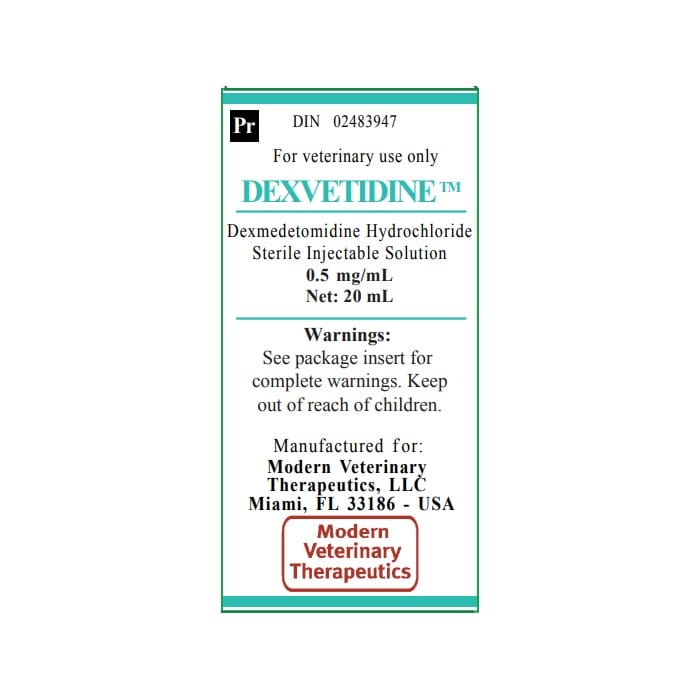
Dexvetidine Vial
Buy Dexvetidine Vial Online


Dexvetidine Vial is a veterinary dexmedetomidine product used in supervised animal-care settings for sedation and related procedure support. You can buy Dexvetidine vial online, view the current price, and choose the vial strength or quantity shown during ordering that matches the veterinarian’s written directions.
Dexmedetomidine is an alpha-2 adrenergic agonist, a medicine class that reduces certain nervous-system signals to produce sedation and pain control. Because this medicine can affect heart rate, breathing, blood pressure, and recovery time, the vial should be matched carefully to the veterinary plan rather than chosen from general dosing information.
Dexvetidine Vial Price and Vial Selection
Dexvetidine vial price depends on the vial, quantity, and any strength or concentration displayed during ordering. Match the name, active ingredient, form, concentration, and quantity to the veterinary order before evaluating the total checkout amount. A lower Dexvetidine cost is not useful if the vial does not match the procedure plan.
If more than one dexmedetomidine vial is shown, compare each vial by its label attributes rather than by container size alone. Total vial contents are not the same as a dose for a dog or cat. The veterinarian determines the dose from the animal’s species, current weight, health status, route, and other medicines used during the visit.
Some customers also compare cash-pay choices or US delivery from Canada service context when planning a veterinary procedure. Use the same vial form and quantity when comparing Dexvetidine Vial cost, because a different dexmedetomidine injection may have different labeling, concentration, or intended setting.
| What to match | Why it matters |
|---|---|
| Product name | Helps distinguish Dexvetidine from other dexmedetomidine products. |
| Active ingredient | Look for dexmedetomidine or dexmedetomidine hydrochloride wording. |
| Form | Confirms the item is an injectable vial for the intended veterinary use. |
| Strength or concentration | Guides preparation by the veterinary team, not self-dosing. |
| Quantity | Should align with the written clinic plan. |
Quick tip: Compare price only after the vial name, form, concentration, and quantity match the veterinary instructions.
How to Order Dexvetidine Vial Online
To order Dexvetidine vial online, choose the vial shown during ordering and enter the quantity that aligns with the veterinary directions. Keep the pet’s current details available, including species, weight, age, health conditions, and procedure timing, because those details may affect whether the medicine is appropriate for supervised use.
Do not use checkout to change a sedative plan. If the directions mention a different dexmedetomidine HCl injection, a different concentration, a human hospital product, or a specific clinic-administered route, ask the veterinary team to clarify before placing the order. Similar active-ingredient wording does not make two vials automatically interchangeable.
We may review order details when the medicine requires confirmation for safe veterinary use. For shipments that involve temperature-sensitive handling, prompt, express, cold-chain shipping may be used when appropriate for the medicine’s storage needs. Plan to receive the package promptly and follow the label after it arrives.
- Match the vial name with the veterinary order.
- Use the pet’s current species and weight when requested.
- Confirm the quantity before checkout.
- Keep clinic contact information available for questions.
- Inspect the vial and packaging when it arrives.
What Dexmedetomidine Injection Is Used For
Dexvetidine is associated with dexmedetomidine injection, which veterinary teams may use to provide sedation and analgesia, meaning pain relief, during animal-care procedures. Dexmedetomidine sedative use may be considered for examinations, imaging, minor procedures, wound care, restraint for treatment, or as part of a broader anesthetic plan.
Dexvetidine for dogs and Dexvetidine for cats should always be considered in the context of an individual animal. Species, body condition, temperament, heart health, breathing status, liver and kidney concerns, temperature regulation, and recent medicines can all change the risk-benefit decision. The same vial may be unsuitable for one pet and appropriate for another under monitoring.
This medicine is not a routine home calming product. It is generally tied to a planned veterinary setting where trained staff can monitor sedation depth, pulse, breathing, oxygenation, temperature, and recovery. If you are browsing other animal-health products, the Pet Medications category can help with broader veterinary product navigation.
Dexvetidine, Dexmedetomidine, and Precedex Vials
Dexvetidine Vial, dexmedetomidine vial, dexmedetomidine HCl injection, and dexmedetomidine hydrochloride vial are related names, but they may not refer to the same labeled product. The safest comparison uses the full label: active ingredient, concentration, vial contents, route, species context, and clinic instructions.
Precedex is a human dexmedetomidine brand, so searches for Precedex vial, Precedex cost, or Precedex price may show hospital products labeled for human ICU or procedural sedation. Human dexmedetomidine products are not automatically substitutes for a veterinary dexmedetomidine vial. Do not switch between them unless the veterinarian’s written directions specifically identify the product and strength.
Some human dexmedetomidine references describe concentrations such as 100 mcg/mL or premixed dexmedetomidine in sodium chloride. Those details answer what a human product may look like, not what Dexvetidine should be for a specific animal. For buying decisions, rely on the vial attributes shown during ordering and the veterinary plan.
Dosage, Strength, and Administration Checks
Do not calculate Dexvetidine dosage from general internet charts. Dexmedetomidine dosing is individualized and may differ by species, body weight, route, procedure, stress level, health status, and whether opioids, anesthetics, tranquilizers, or other sedatives are used. Even small concentration differences can matter during injection preparation.
The vial label shows how much medicine is in the container and the concentration available for preparation. It does not tell you how much a pet should receive. The veterinary team determines whether the injection is given, how it is monitored, whether additional medicines are used, and whether a reversal agent may be needed during recovery.
If the clinic asks you to bring the vial, keep it sealed, stored as directed, and clearly labeled. Do not draw up, dilute, mix, or administer injectable sedatives unless a veterinarian has directly trained and instructed you to do so for that situation. Many uses are intended for clinic administration under observation.
| Question to ask the clinic | Why it helps |
|---|---|
| Who will administer the injection? | Clarifies whether the vial is for clinic use only. |
| What monitoring will be used? | Helps you understand recovery expectations. |
| Should the pet fast beforehand? | Procedure preparation can affect sedation safety. |
| Will a reversal medicine be available? | Some alpha-2 sedatives may be reversed when clinically appropriate. |
| What signs require a call after discharge? | Improves follow-up planning after sedation. |
Handling, Storage, and Arrival Checks
Injectable veterinary medicines should be handled as sterile products. After delivery, inspect the outer packaging and the vial. Look for a secure seal, readable label, expiration date, leakage, cracks, cloudiness, particles, or anything inconsistent with the expected appearance. Do not use a vial that appears damaged or contaminated.
Storage instructions should follow the product label and the veterinarian’s directions. Keep the vial in its original packaging when possible, protect it from conditions outside the labeled range, and avoid freezing unless the label allows it. If a vial has been opened or prepared by a clinic, ask whether a beyond-use date applies.
Keep Dexvetidine away from children, other pets, and anyone not involved in the animal’s care. Needles, syringes, and other sharps should be stored securely and disposed of according to veterinary instructions and local rules. Never leave injection supplies where an animal can chew or swallow them.
Why it matters: Sterile handling protects the medicine and reduces avoidable safety problems before a procedure.
Side Effects, Warnings, and Monitoring
Dexmedetomidine can cause deep sedation, reduced responsiveness, slow heart rate, blood pressure changes, vomiting, pale gums, lower body temperature, and slower breathing. These effects may be expected in a monitored setting, but they can become dangerous without professional observation. Sedation depth and recovery should be watched closely.
This medicine may require extra caution or may be inappropriate for animals with significant heart disease, breathing problems, shock, severe weakness, advanced liver or kidney concerns, dehydration, unstable temperature regulation, or poor circulation. Very young, very old, pregnant, nursing, or medically fragile pets may also need a different plan or closer monitoring.
Dexmedetomidine effects can be stronger when combined with opioids, anesthetics, tranquilizers, other sedatives, or medicines that affect heart rate and blood pressure. Bring the clinic an updated list of the pet’s medications, supplements, flea and tick products, recent injections, and any prior sedation reactions.
Contact a veterinarian promptly if a pet has trouble breathing, collapses, has blue or very pale gums, remains unusually cold, cannot be awakened as expected, or has a prolonged or abnormal recovery after sedation. Clinics may use monitoring equipment and, when suitable, atipamezole or another planned intervention to manage alpha-2 sedative effects.
- Heart rate may slow during sedation.
- Breathing and oxygenation may need monitoring.
- Body temperature can drop during recovery.
- Vomiting may occur in some animals.
- Recovery time can vary between pets.
Pet Procedure Planning Questions
Before the procedure, ask the veterinary team how Dexvetidine fits into the full sedation or anesthesia plan. The answer may include fasting, timing, pain control, monitoring, discharge instructions, and whether other drugs will be given. This is more useful than looking for a universal Dexvetidine dosage chart.
Ask whether the pet’s recent health changes affect the plan. New coughing, vomiting, diarrhea, appetite changes, fainting, weakness, seizures, heat stress, or medication changes may be relevant. If the pet has previously had a slow recovery or unusual reaction to sedation, tell the clinic before the vial is used.
Recovery instructions should be clear before the pet goes home. Confirm when eating and drinking may resume, how warm the pet should be kept, what behavior is expected, and which signs require urgent contact. Sedated animals should be protected from stairs, swimming, rough play, and unsupervised activity until the clinic says normal routines can resume.
Related Pet Health Resources
Dexvetidine Vial is one part of a supervised veterinary-care plan, not a stand-alone home treatment choice. For broader animal medication browsing, use the pet medication category and then return to the exact vial, strength, and quantity directed by the clinic.
If you want to organize questions before a veterinary visit, the Pet Health section can help you navigate animal-health topics by condition area. Educational articles in Pet Health Articles may also help you prepare non-urgent questions about monitoring, recovery, and general pet care.
Use internal resources for browsing and preparation, not as dosing instructions. Injectable sedatives require individualized decisions, sterile handling, and monitoring that depend on the animal and the planned procedure.
Authoritative Sources
The following sources support drug-class, labeling, and safety context for dexmedetomidine products. The veterinarian’s directions and the product label remain the order-specific references for your pet.
- Veterinary dexmedetomidine product information: Dechra dexmedetomidine sterile injectable solution.
- Human dexmedetomidine label reference: FDA Precedex prescribing information.
- Dexmedetomidine injection label reference: DailyMed dexmedetomidine injection label.
This content is for informational purposes only and is not a substitute for professional medical advice.
Research & Education Tool
Dexvetidine Vial Dosage Calculator
Enter the vial amount, diluent volume, and target amount to estimate concentration, draw volume on a 1 mL U-100 syringe, and approximate vial yield.
For research and educational use only. Check all values against the product label, certificate of analysis, and any applicable professional guidance before relying on the result.
mg
Concentration
-
mcg / mL
Volume per Dose
-
-
Estimated Draws / Vial
-
rounded down to whole draws
Draw Reference
Enter values to estimate the syringe mark.
0
-
-
-
-
Express Shipping - from $29.99
Shipping with this method takes 3-5 days
Prices:
- Dry-Packed Products $29.99
- Cold-Packed Products $39.99
Standard Shipping - $19.99
Shipping with this method takes 5-10 days
Prices:
- Dry-Packed Products $19.99
- Not available for Cold-Packed products
What is Dexvetidine Vial used for?
Dexvetidine Vial is associated with dexmedetomidine, a veterinary sedative and analgesic used in supervised settings for procedures such as examinations, imaging, wound care, restraint for treatment, or as part of an anesthetic plan. The veterinarian decides whether it is suitable for the individual dog or cat.
How much does a vial of dexmedetomidine cost?
The vial cost depends on the specific vial, quantity, and any strength or concentration shown during ordering. Compare the same product name, active ingredient, form, concentration, and quantity when evaluating Dexvetidine vial price or dexmedetomidine injection cost.
Is Precedex the same as Dexvetidine?
Precedex is a human dexmedetomidine brand, while Dexvetidine is used in veterinary product context. They may share dexmedetomidine-related wording, but human and veterinary vials are not automatically interchangeable. Follow the veterinarian’s written product and strength directions.
Can I calculate Dexvetidine dosage from the vial concentration?
No. Vial concentration tells the veterinary team how much drug is in the container; it does not define the dose for a pet. Dexmedetomidine dosing depends on species, weight, health status, route, procedure, and other medicines used.
What side effects can dexmedetomidine cause in pets?
Dexmedetomidine may cause deep sedation, slow heart rate, blood pressure changes, vomiting, pale gums, lower body temperature, and slower breathing. These effects require appropriate monitoring. Contact a veterinarian urgently for breathing trouble, collapse, blue gums, or unusually prolonged recovery.
How should Dexvetidine Vial be stored after delivery?
Follow the vial label and veterinary directions. Keep the vial in its original packaging when possible, protect it from conditions outside the labeled range, and inspect for leakage, particles, cloudiness, cracks, or an unreadable label before use.
Rewards Program
Earn points on birthdays, product orders, reviews, friend referrals, and more! Enjoy your medication at unparalleled discounts while reaping rewards for every step you take with us.
You can read more about rewards here.
POINT VALUE
How to earn points
- 1Create an account and start earning.
- 2Earn points every time you shop or perform certain actions.
- 3Redeem points for exclusive discounts.
You Might Also Like
Select options
This product has multiple variants. The options may be chosen on the product page
Select options
This product has multiple variants. The options may be chosen on the product page
Select options
This product has multiple variants. The options may be chosen on the product page
Select options
This product has multiple variants. The options may be chosen on the product page