
Please note: a valid prescription is required for all prescription medication.
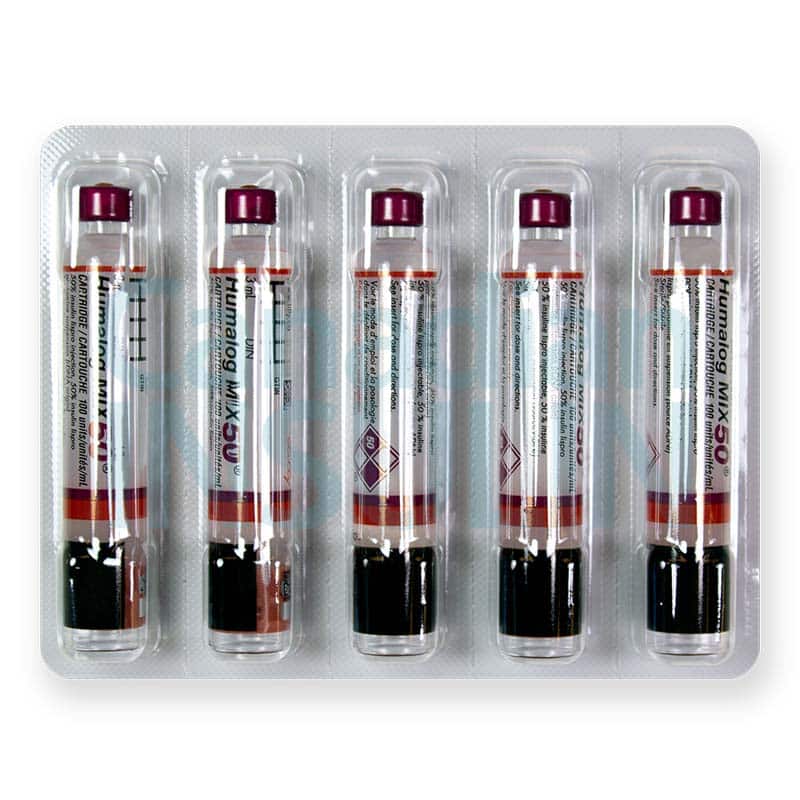
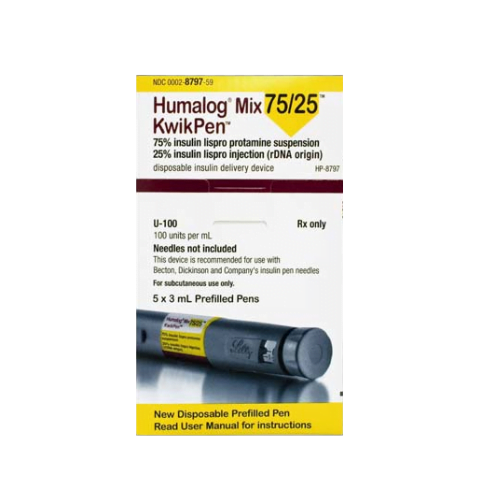
Humalog Mix Cartridges
Buy Humalog Mix Cartridges Online


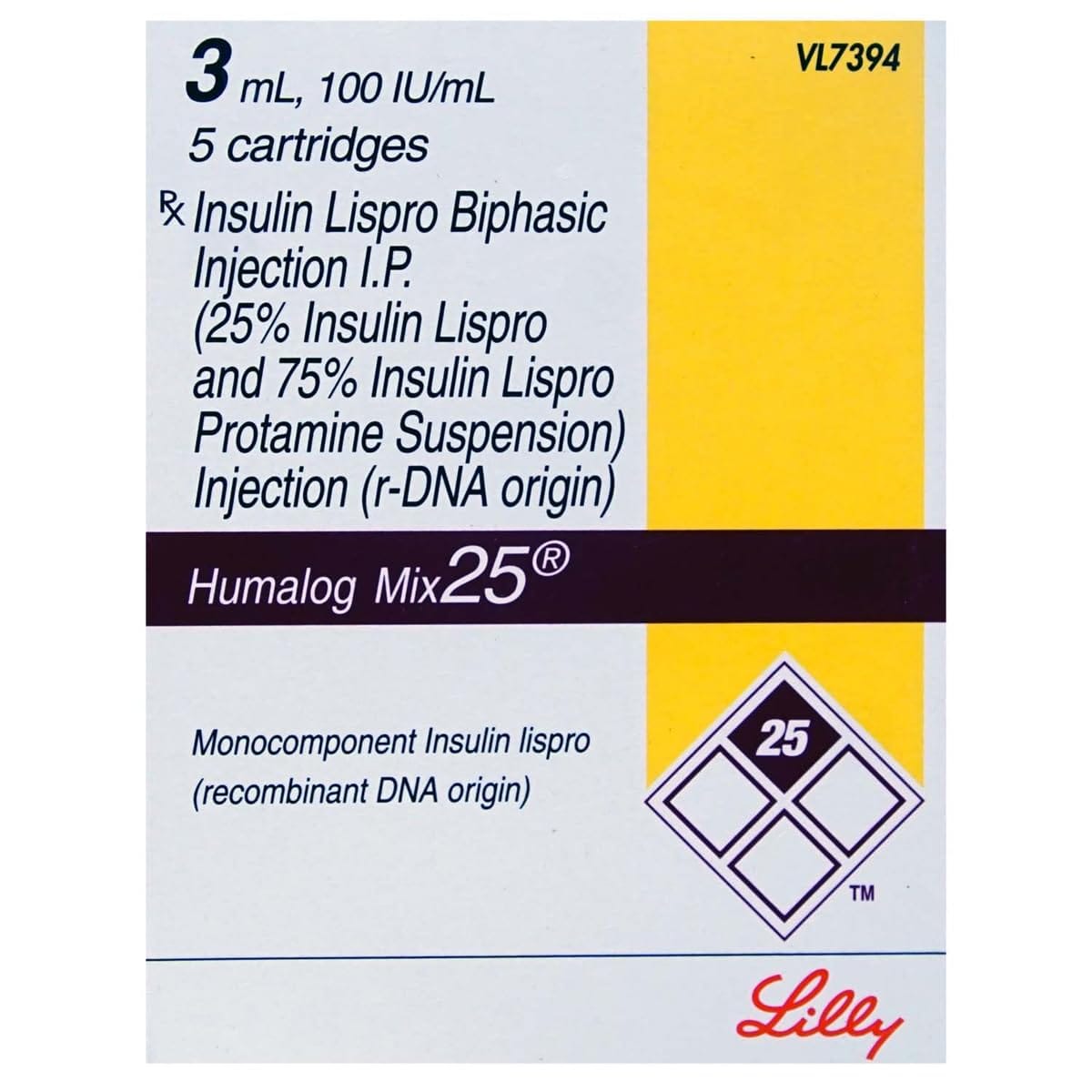
Humalog Mix Cartridges are premixed insulin cartridges that combine insulin lispro with insulin lispro protamine. They can be bought online by choosing the cartridge ratio, concentration, quantity, and reusable-pen format that matches your clinician’s directions. The cartridge format is intended for compatible pen systems, so the device wording matters as much as the Humalog Mix name.
Humalog Mix insulin cartridges are used for subcutaneous injection, meaning injection under the skin. The premixed formulation provides a rapid-acting insulin component and an intermediate-acting protamine component in one fixed ratio. Because the ratio is fixed, Humalog Mix 25 cartridge, Humalog Mix 50 cartridge, and Humalog Mix 75/25 cartridge wording should not be treated as interchangeable.
Humalog Mix Cartridges Price and Cartridge Selection
The Humalog Mix Cartridges price should be read together with the exact cartridge ratio, concentration, and pack quantity. A lower or higher cash-pay total may reflect a different mix ratio or amount supplied, not a like-for-like difference. Match the name and label wording first, then assess the current amount shown during ordering.
Many Humalog premixed insulin cartridges are supplied as 100 units/mL. A common 3 mL cartridge contains 300 total units, and a pack of 5 contains 15 mL, or 1,500 total units. Those totals describe supply size only; they are not dosing instructions and do not replace the schedule given by a healthcare professional.
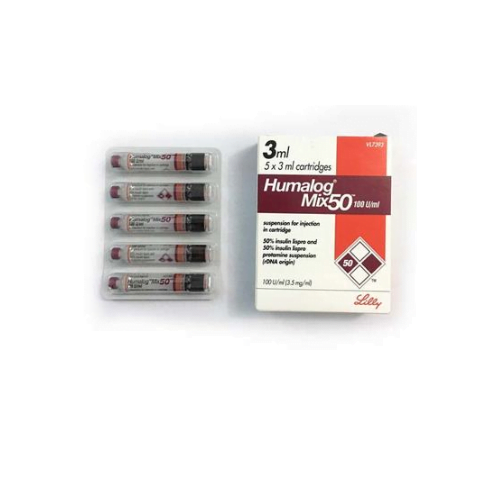
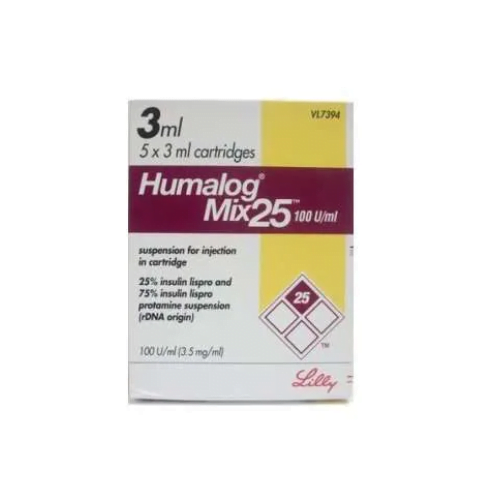
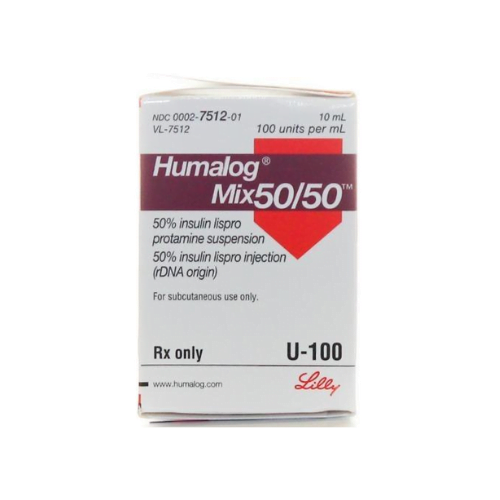
Humalog Mix 25 generally refers to a formulation with 25 percent insulin lispro and 75 percent insulin lispro protamine. Humalog Mix 50 refers to a 50 percent insulin lispro and 50 percent insulin lispro protamine blend. Some labels use Humalog Mix 75/25 cartridge wording for a related premixed insulin ratio, so read the cartridge name carefully before comparing the Humalog Mix Cartridges cost.
People reviewing Humalog Mix Cartridges without insurance often look at the cash-pay amount, pack count, and total units supplied. If your directions call for a premixed insulin cartridge rather than a vial or disposable pen, the pre-mixed insulin category can help you browse the same general insulin class.
Quick tip: Match the ratio and pen-cartridge wording before weighing price differences.
How to Order Humalog Mix Cartridges Online
To order Humalog Mix Cartridges online, choose the cartridge ratio and quantity that match the written directions you were given. Pay close attention to whether the cartridge is Mix25, Mix50, or another named ratio. Do not select a different mix simply because the displayed amount changes.
During ordering, keep the medication name, cartridge strength, mix ratio, quantity, and device information available. We may review order details when a medication choice needs clarification. This helps reduce the risk of receiving a premixed cartridge that does not match the intended insulin plan.
Humalog Mix Cartridges from Canada may involve refrigerated handling because insulin is temperature-sensitive. When service details show Humalog Mix Cartridges US shipping from Canada, review the address information and package instructions carefully. Insulin orders may use prompt, express, cold-chain shipping when temperature handling is appropriate.
Cartridge systems are device-specific. Some people use terms such as Humalog Mix 25 Penfill or Humalog Mix pen cartridges when referring to cartridge refills, but the pen system still needs to match the manufacturer’s instructions. Never force a cartridge into a reusable pen that is not designed for it.
Ratios, Strength, and Pack Details
Humalog Mix Cartridges contain insulin lispro, a rapid-acting insulin, and insulin lispro protamine, an intermediate-acting component. The protamine-suspended portion helps extend the action profile compared with rapid-acting insulin lispro alone. The product is a suspension, so proper resuspension before injection is part of safe use.
The ratio tells you how much of the insulin is rapid-acting versus protamine-suspended. A Humalog Mix 25 cartridge is not the same therapy as a Humalog Mix 50 cartridge because the fixed proportions differ. Switching ratios can change mealtime and background insulin coverage and should only happen under clinical direction.
| Cartridge detail | What to look for | Why it matters |
|---|---|---|
| Mix ratio | Mix25, Mix50, or 75/25 wording | Ratios provide different fixed insulin blends. |
| Concentration | Commonly 100 units/mL | Concentration affects total units in each cartridge. |
| Cartridge volume | Often 3 mL | One 3 mL cartridge contains 300 total units at 100 units/mL. |
| Pack quantity | Single cartridge or pack of 5 | The total supply changes with pack count. |
| Pen compatibility | Reusable pen named for the cartridge | Incorrect device fit can prevent safe dosing. |
Before using a cartridge, read the label and inspect the insulin. Premixed insulin should become uniformly cloudy after mixing as directed. Do not use a cartridge if it is cracked, leaking, frozen, contains clumps, or has particles stuck to the glass.
What This Premixed Insulin Is Used For
Humalog Mix is used to help control high blood sugar in people with diabetes who need insulin therapy. It is different from regular Humalog insulin lispro because the premixed product includes an intermediate-acting protamine component. That design can reduce the number of separate insulin products used, but it also reduces dose flexibility.
Premixed insulin may be chosen when a healthcare professional wants a fixed ratio of mealtime and longer-acting insulin coverage. The timing of injections, meals, activity, and glucose monitoring all affect how insulin works. Do not change the amount, timing, or ratio without guidance from the clinician managing your diabetes.
Diabetes treatment plans differ between type 1 diabetes and type 2 diabetes. Insulin may be part of care for either condition, depending on individual needs. The type 1 diabetes and type 2 diabetes sections provide broader context for how insulin fits into diabetes care.
Why it matters: A fixed-ratio insulin cartridge must match the treatment plan exactly.
Storage, Handling, and Travel
Insulin is sensitive to heat, freezing, and direct light. Unopened Humalog Mix Cartridges are commonly stored in the refrigerator, and frozen insulin should not be used. Once a cartridge is in use, follow the product leaflet for room-temperature limits and discard timing.
Before each injection, resuspend the cartridge only as directed by the manufacturer. Premixed insulin needs even mixing so the insulin concentration is consistent during dosing. Do not shake harshly unless the label specifically tells you to, and do not use the cartridge if the mixture does not look right after proper mixing.
When traveling, keep cartridges with your diabetes supplies and protect them from temperature extremes. Avoid leaving insulin in a hot vehicle, in checked luggage exposed to severe cold, or directly against an ice pack. For broader diabetes supply planning, the diabetes products category can help you organize related treatment needs.
On arrival after refrigerated transport, place unopened cartridges into proper storage promptly. If the package appears damaged or the insulin looks abnormal, do not inject it until the issue has been assessed according to the pharmacy and product instructions.
Side Effects, Warnings, and Monitoring
Insulin can cause hypoglycemia, or low blood sugar. Symptoms may include sweating, shaking, hunger, headache, fast heartbeat, irritability, confusion, dizziness, or weakness. Severe hypoglycemia can lead to seizures, loss of consciousness, injury, or emergency treatment.
Do not use this insulin during an episode of low blood sugar. It should also not be used by anyone with a known allergy to insulin lispro or any ingredient in the cartridge. Serious allergic reactions may include rash, swelling of the face or throat, trouble breathing, dizziness, or a rapid heartbeat.
Other possible effects include injection-site redness, itching, swelling, weight gain, and fluid retention. Insulin may also lower potassium levels in the blood, which can be serious in some people. Tell a healthcare professional about kidney problems, liver disease, heart failure, pregnancy, breastfeeding, illness, major activity changes, or meaningful meal-pattern changes.
Several medicines can affect blood glucose or change insulin needs. Examples include other diabetes medicines, corticosteroids, some diuretics, beta blockers, certain heart or blood pressure medicines, and alcohol. Beta blockers may also make some warning signs of low blood sugar harder to notice.
- Glucose plan: Keep fast-acting sugar available if you are at risk for lows.
- Device safety: Never share pens, cartridges, or needles.
- Injection route: Use only by subcutaneous injection unless a clinician gives different instructions.
- Insulin pumps: Premixed Humalog Mix cartridges are not used in pumps.
- Label check: Read the ratio before each cartridge change.
Blood glucose monitoring helps show whether the insulin plan is working as intended. Your care team may also review A1C, kidney function, liver function, meal timing, activity, and illness patterns. Seek urgent medical help for severe hypoglycemia, loss of consciousness, trouble breathing, swelling of the face or throat, or symptoms of ketoacidosis such as nausea, vomiting, abdominal pain, deep breathing, fruity breath, or unusual drowsiness.
How It Compares With Other Insulin Choices
Humalog Mix Cartridges are one presentation within the broader insulin category. They are not the same as rapid-acting insulin lispro alone, basal insulin, vials, or disposable premixed pens. Similar names can still mean different onset, duration, device, storage, and dosing schedules.
If your directions specify a reusable-pen cartridge, confirm the cartridge format rather than choosing a disposable pen. If they specify a different insulin class, do not substitute a premixed cartridge on your own. The broader insulin products category is useful for viewing insulin types by class and presentation.
Medication browsing can also be organized through the wider diabetes medications category. For condition-level education, the diabetes section can help place insulin therapy alongside monitoring and lifestyle planning.
Authoritative Sources
Official label and patient-information sources support the composition, handling, and safety points summarized above. Use these sources together with instructions from your healthcare professional.
- Lilly Canada patient information for Humalog Mix25 cartridges and pens
- FDA prescribing information for Humalog Mix75/25
- Medsafe consumer medicine information for Humalog cartridges
This content is for informational purposes only and is not a substitute for professional medical advice.
Blood Glucose Unit Converter
Convert glucose readings between mg/dL and mmol/L without changing the clinical value.
mg/dL
-
US reporting unit
mmol/L
-
International reporting unit
These calculations are for education only and do not replace clinical advice, diagnosis, or treatment. Always confirm medical decisions with a qualified healthcare professional.
HbA1c & eAG Calculator
Convert between HbA1c percentage and estimated average glucose using the ADAG relationship.
HbA1c
-
percentage
eAG mg/dL
-
estimated average glucose
eAG mmol/L
-
estimated average glucose
These calculations are for education only and do not replace clinical advice, diagnosis, or treatment. Always confirm medical decisions with a qualified healthcare professional.
Carb Serving Calculator
Convert total carbohydrate grams into carb choices for meal planning and diabetes education.
Carb choices
-
total carbs divided by choice size
Rounded choices
-
nearest half choice
Carb calories
-
4 kcal per gram
These calculations are for education only and do not replace clinical advice, diagnosis, or treatment. Always confirm medical decisions with a qualified healthcare professional.
Express Shipping - from $29.99
Shipping with this method takes 3-5 days
Prices:
- Dry-Packed Products $29.99
- Cold-Packed Products $39.99
Standard Shipping - $19.99
Shipping with this method takes 5-10 days
Prices:
- Dry-Packed Products $19.99
- Not available for Cold-Packed products
What are Humalog Mix Cartridges used for?
Humalog Mix Cartridges are premixed insulin cartridges used to help control high blood sugar in people with diabetes who need insulin therapy. They combine rapid-acting insulin lispro with an intermediate-acting insulin lispro protamine component.
Are Humalog Mix 25 and Humalog Mix 50 cartridges interchangeable?
No. Humalog Mix 25 and Humalog Mix 50 contain different fixed ratios of insulin lispro and insulin lispro protamine. Use the ratio directed by your healthcare professional and do not switch ratios without clinical guidance.
How should Humalog Mix Cartridges be stored?
Unopened cartridges are commonly kept refrigerated and protected from freezing, heat, and direct light. Once a cartridge is in use, follow the product leaflet for room-temperature storage limits and discard timing.
What side effects should I watch for with Humalog Mix?
The most important risk is low blood sugar, which may cause sweating, shaking, hunger, headache, fast heartbeat, confusion, or weakness. Other possible effects include injection-site reactions, weight gain, fluid retention, allergic reactions, and low potassium.
Can Humalog Mix Cartridges be used in any insulin pen?
No. Cartridges are designed for compatible reusable pen systems. Use only the pen device specified by the manufacturer or your care team, and never share pens, cartridges, or needles.
Rewards Program
Earn points on birthdays, product orders, reviews, friend referrals, and more! Enjoy your medication at unparalleled discounts while reaping rewards for every step you take with us.
You can read more about rewards here.
POINT VALUE
How to earn points
- 1Create an account and start earning.
- 2Earn points every time you shop or perform certain actions.
- 3Redeem points for exclusive discounts.
You Might Also Like
Select options
This product has multiple variants. The options may be chosen on the product page
Select options
This product has multiple variants. The options may be chosen on the product page
Select options
This product has multiple variants. The options may be chosen on the product page
Select options
This product has multiple variants. The options may be chosen on the product page
Related Articles
Weight Management
Weight Loss and Calories Calculator: Safe Planning Basics
A weight loss and calories calculator estimates daily calories for maintenance and planned weight change by using your age, sex, height, weight, activity level, and goal. It gives a starting…
Diabetes, Type 1
Humulin N Dosage Chart: Safe Use and Adjustment Factors
A Humulin N dosage chart can help you organize a prescribed insulin plan, but it should not decide your dose. Humulin N is insulin isophane, also called NPH insulin (neutral…
Diabetes, Type 1
Humalog KwikPen Generic Options and Insulin Lispro Safety
A Humalog KwikPen generic search usually comes down to one key point: Humalog KwikPen contains insulin lispro, but insulin copies are not always handled like traditional small-molecule generics. Some products…
Diabetes
Insulin Syringe Sizes: Barrel, Needle, and Safety Basics
Insulin syringe sizes describe three things: how much the barrel holds, how long the needle is, and how thin the needle is. These details matter because insulin is measured in…