
Please note: a valid prescription is required for all prescription medication.
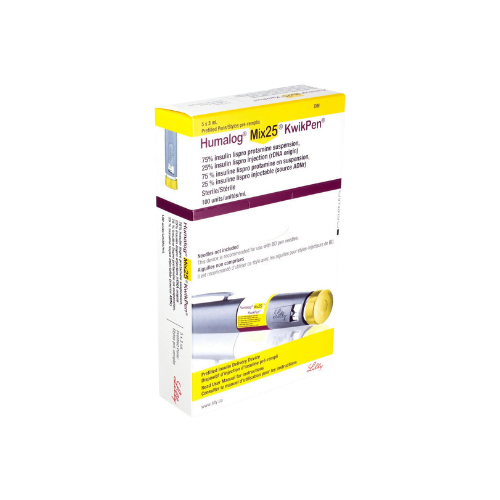
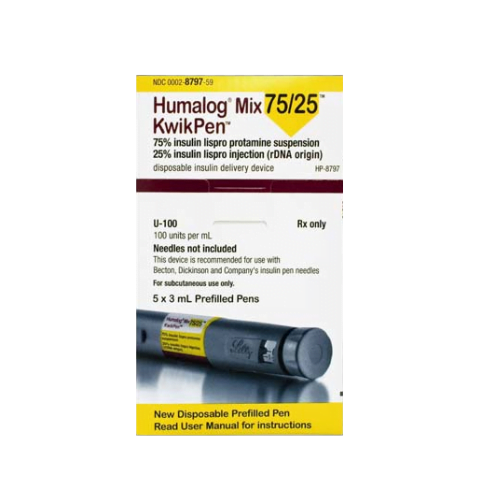
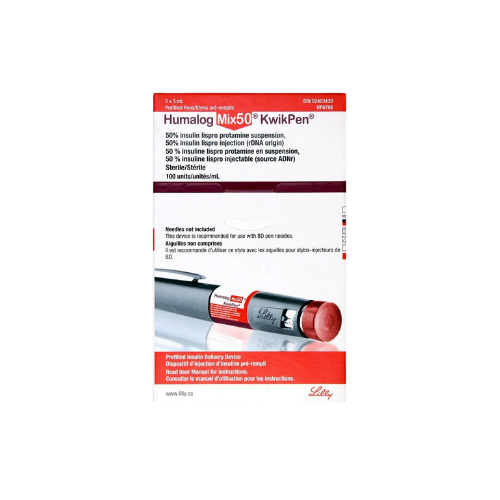
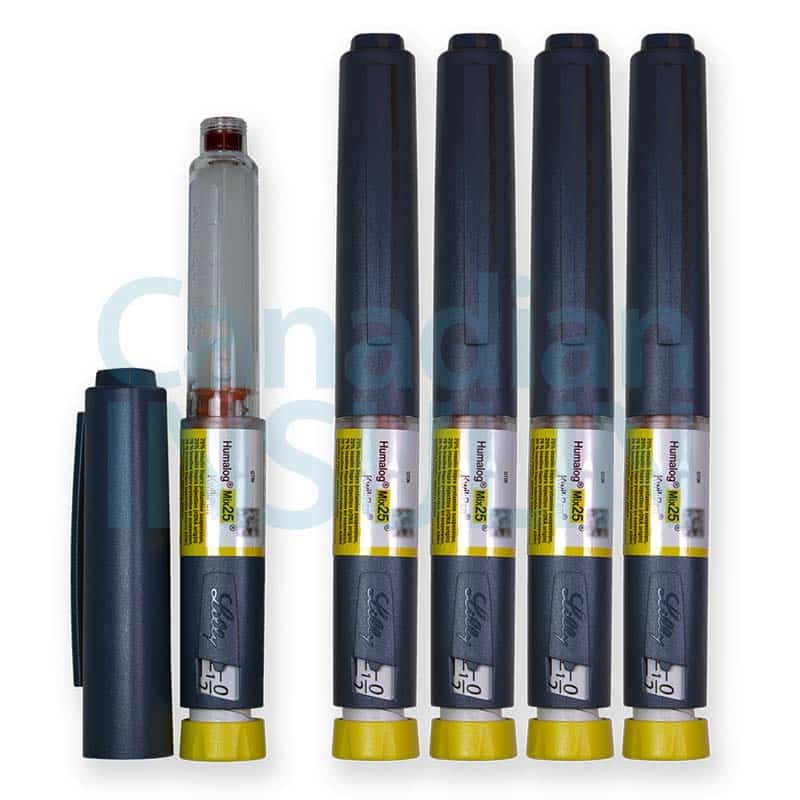
Humalog Mix KwikPens
Buy Humalog Mix KwikPens Online
Also available for your pet.


Humalog Mix KwikPens are prefilled insulin pens containing a premixed insulin lispro product. You can buy Humalog Mix KwikPens online, view the current price, and choose the mix ratio and quantity shown for the product while matching the order to your clinician’s directions. Each pen format should be selected by label name, ratio, device, and handling needs before checkout.
Humalog Mix is used as part of diabetes treatment to help control blood glucose. Because these products combine rapid-acting insulin lispro with an intermediate-acting insulin lispro protamine suspension, the mix ratio affects timing and use. Do not switch between Humalog Mix 75/25 KwikPen, Humalog Mix 50/50 KwikPen, Humalog Mix 25 KwikPen, or another premixed insulin unless your care team specifically tells you to do so.
Humalog Mix KwikPens Price and Mix Selection
The Humalog Mix KwikPens price depends on the pen ratio, quantity, and package configuration shown during ordering. Review the total before checkout, but also look at the insulin volume, number of pens, and exact product name. A lower checkout amount is not useful if the ratio or device does not match the insulin your clinician directed you to use.
Cash-pay customers often compare Humalog Mix KwikPens cost without insurance by looking at the total for the refill quantity they need. The comparison should be made against the same labeled mix and pen format. For example, a Humalog Mix 75/25 pen and a Humalog Mix 50/50 pen are not interchangeable just because both are Humalog Mix products.
| Ordering detail | What to match |
|---|---|
| Mix ratio | Use the exact labeled ratio or mix name your clinician provided. |
| Pen format | Choose a prefilled KwikPen when that is the intended device. |
| Concentration | Some Humalog Mix KwikPen labeling describes U-100 insulin. |
| Pen volume | Some official materials describe a 3 mL pen containing 300 units total. |
| Quantity | Match the number of pens or packs to your refill plan. |
| Supplies | Pen needles, testing supplies, and sharps containers may be separate. |
Why it matters: Total units in a pen describe supply, not the amount to inject at one time.
To browse other premixed insulin formats, use the Pre-Mixed Insulin category. Category browsing can help you see nearby forms, but treatment changes should come from a clinician who knows your glucose history and dosing plan.
How to Order Humalog Mix KwikPens Online
Start with the product name and ratio on your carton, prior pharmacy label, or written treatment plan. Then choose the Humalog Mix KwikPen insulin format that matches those directions. US delivery from Canada may be available for qualifying orders, and prompt, express, cold-chain shipping supports temperature-sensitive handling for insulin when used for the order.
- Choose the Humalog Mix KwikPen ratio shown for your treatment plan.
- Match the pen format, concentration, quantity, and label wording.
- Keep patient and clinician information available in case order details need review.
- Review cold-chain handling notes before completing checkout.
- Keep your current diabetes routine unchanged unless your clinician updates it.
The order total should be interpreted together with the amount of insulin supplied. A single 3 mL U-100 pen, when that wording appears on official labeling, describes 300 units in the device. That number is not a dose recommendation, and it does not predict how long the pen will last for every person.
If you are comparing a Humalog Mix KwikPen price from Canada with local cash-pay costs, keep the comparison exact. Use the same mix ratio, same pen type, and same quantity. Shipping, handling, needles, glucose monitoring supplies, and sharps disposal items can also affect the practical cost of using a refill.
What Humalog Mix KwikPens Are Used For
Humalog Mix products are insulin medicines used to help improve blood sugar control in people with diabetes mellitus. They contain insulin lispro, a rapid-acting insulin, and insulin lispro protamine suspension, an intermediate-acting component. This premixed design provides a set ratio in each dose rather than two separate insulin products drawn up individually.
Premixed insulin is often used around meals according to an individualized schedule. The exact timing depends on the mix, meal pattern, glucose monitoring results, and your clinician’s instructions. Humalog Mix is not the same as plain Humalog, which contains insulin lispro without the protamine suspension component.
People with type 1 or type 2 diabetes may be directed to use insulin as part of their care plan. The Diabetes condition section can help explain broader diabetes terminology, while the Type 1 Diabetes and Type 2 Diabetes sections provide condition-specific context. These sections are for education and do not replace individualized dosing or product selection.
Product Identity: Ratio, U-100 Strength, and KwikPen Format
The label name matters because Humalog Mix products are suspensions with a fixed balance of components. A Humalog Mix 75/25 KwikPen, Humalog Mix 50/50 KwikPen, and Humalog Mix 25 KwikPen refer to different mix ratios or market naming conventions. Do not rely on a photo, color, or shortened product name when choosing an insulin lispro mix pen.
U-100 means the insulin contains 100 units per mL. Some official KwikPen materials describe a disposable 3 mL pen with 300 total units. Those values help you identify the product and estimate supply, but they do not tell you how many units to inject. Dose instructions should come from your clinician and the label on the medicine you receive.
| Label wording | Practical meaning |
|---|---|
| Insulin lispro protamine KwikPen | The product includes an intermediate-acting protamine suspension component. |
| Insulin lispro mix pen | The pen is not plain rapid-acting insulin lispro alone. |
| U-100 | The concentration is 100 units per mL, not a dose instruction. |
| 3 mL pen | The number describes volume in the pen, not one injection amount. |
| KwikPen | The disposable prefilled device differs from cartridges or vials. |
The broader Insulin category can help you distinguish rapid-acting, intermediate-acting, long-acting, and premixed products. Use it for product navigation, then follow the exact insulin type and delivery device directed for you.
Using a Premixed Insulin Pen Safely
Humalog Mix KwikPens are suspensions, so the insulin must be mixed as directed before use. Patient instructions commonly describe rolling and inverting the pen to resuspend the insulin. Do not shake vigorously, and do not use the pen if the insulin does not look as described in the instructions supplied with the product.
The KwikPen is intended for single-patient use. Never share an insulin pen, even if the needle is changed, because sharing can transmit infection. Use a new compatible needle for each injection when instructed, prime the pen according to device directions, and remove the needle after use if the instructions tell you to do so.
- Before injecting: Inspect the pen label and the appearance of the insulin.
- During use: Follow the exact mixing and priming steps in the device instructions.
- After injecting: Dispose of the needle in an approved sharps container.
- Between doses: Store the pen according to the in-use storage limit.
- With problems: Ask a healthcare professional about blocked needles, leaks, or missed doses.
Pen needles are often supplied separately from the insulin. Keep the needle type, glucose meter or continuous glucose monitor supplies, low-glucose treatment, and sharps container available before starting a new pen. The Diabetes Supplies and Medications category can help you navigate related diabetes products.
Storage, Handling, and Travel Basics
Insulin is temperature sensitive. Unopened Humalog Mix KwikPens are generally stored in the refrigerator until first use, while in-use pens may have a separate room-temperature limit. Follow the storage temperature, discard date, and handling directions printed on the carton, pharmacy label, and patient leaflet.
Do not freeze insulin, and do not use a pen that has been frozen. Protect pens from direct heat, sunlight, and rough handling. Keep the cap on when the pen is not in use. Storing a pen with a needle attached can allow leakage, air entry, or needle blockage.
- At home: Separate unopened pens from the pen currently in use.
- During hot weather: Use a temperature-safe case when transporting insulin.
- When flying: Keep insulin in carry-on baggage rather than checked luggage.
- Before each dose: Inspect the suspension after mixing as instructed.
- After first use: Track the discard date for the specific pen.
Quick tip: Keep the carton until the last pen is finished so lot and expiry details stay available.
If you browse by treatment area, the Diabetes Articles category may help with general education on insulin handling and glucose routines. The instructions that come with your dispensed product remain the source for exact storage limits.
Side Effects, Warnings, and Monitoring
Hypoglycemia, or low blood sugar, is one of the most important risks with any insulin. Symptoms can include sweating, shaking, hunger, fast heartbeat, headache, confusion, weakness, or dizziness. Severe hypoglycemia can cause seizures, unconsciousness, or require emergency treatment.
Do not use insulin during an episode of hypoglycemia. Humalog Mix products are also contraindicated in people with a serious allergy to insulin lispro or any ingredient in the product. Serious allergic reactions can include generalized rash, swelling, breathing trouble, dizziness, or rapid heartbeat.
Other possible effects include injection-site redness, itching, swelling, weight changes, fluid retention, skin thickening or pits at injection areas, and low potassium. Rotate injection sites as instructed to reduce the risk of skin changes. Contact a healthcare professional if you have repeated low readings, unexplained high readings, severe symptoms, or signs of allergy.
- Monitoring: Follow your blood glucose testing plan and keep records.
- Illness: Ask when ketone testing or urgent care is needed.
- Meal changes: Reduced food intake can raise the risk of low glucose.
- Activity changes: Exercise may alter insulin needs and glucose patterns.
- Organ function: Kidney or liver changes can affect insulin response.
Many medicines can raise or lower blood glucose or change insulin needs. Corticosteroids, certain diuretics, thyroid medicines, some psychiatric medicines, other diabetes medicines, and alcohol can affect control. Beta blockers may make some warning signs of low blood sugar harder to notice. Thiazolidinediones, sometimes called TZDs, can cause fluid retention and may increase heart failure risk when used with insulin.
Comparing Related Insulin Formats
Related insulin products can look similar online, but the formulation and delivery device matter. If your clinician directed rapid-acting insulin lispro without a premix, Humalog KwikPen is a different product from a premixed insulin lispro protamine KwikPen. Plain Humalog does not include the intermediate-acting protamine suspension component.
If the same insulin family was directed in cartridge form, Humalog Mix Cartridges may be the closer format comparison. Cartridges require compatible reusable delivery devices, while KwikPens are disposable prefilled pens. The format affects supplies, storage routines, and how each refill is used.
For broader browsing, the Diabetes Medications category groups diabetes medicines beyond insulin. Use related products and categories to identify differences in form, class, or device, not to substitute one insulin for another without clinical direction.
Authoritative Sources
Official prescribing label: FDA Humalog Mix 75/25 label.
Manufacturer device instructions: Lilly KwikPen instructions for use.
Use the official label, device instructions, and the leaflet supplied with your medicine to confirm the ratio, storage, mixing steps, contraindications, and safety details for the exact pen you receive.
This content is for informational purposes only and is not a substitute for professional medical advice.
Blood Glucose Unit Converter
Convert glucose readings between mg/dL and mmol/L without changing the clinical value.
mg/dL
-
US reporting unit
mmol/L
-
International reporting unit
These calculations are for education only and do not replace clinical advice, diagnosis, or treatment. Always confirm medical decisions with a qualified healthcare professional.
HbA1c & eAG Calculator
Convert between HbA1c percentage and estimated average glucose using the ADAG relationship.
HbA1c
-
percentage
eAG mg/dL
-
estimated average glucose
eAG mmol/L
-
estimated average glucose
These calculations are for education only and do not replace clinical advice, diagnosis, or treatment. Always confirm medical decisions with a qualified healthcare professional.
HOMA-IR Calculator
Estimate insulin resistance from fasting glucose and fasting insulin values collected from the same blood draw.
HOMA-IR
-
screening estimate, not a diagnosis
Formula used
-
depends on glucose unit
These calculations are for education only and do not replace clinical advice, diagnosis, or treatment. Always confirm medical decisions with a qualified healthcare professional.
Carb Serving Calculator
Convert total carbohydrate grams into carb choices for meal planning and diabetes education.
Carb choices
-
total carbs divided by choice size
Rounded choices
-
nearest half choice
Carb calories
-
4 kcal per gram
These calculations are for education only and do not replace clinical advice, diagnosis, or treatment. Always confirm medical decisions with a qualified healthcare professional.
CGM Time-in-Range Summary
Summarise CGM percentages across very low, low, in-range, high, and very high glucose bands.
Entered total
-
should equal 100%
Below range
-
very low plus low
Above range
-
high plus very high
Summary
-
common adult CGM targets vary by patient
These calculations are for education only and do not replace clinical advice, diagnosis, or treatment. Always confirm medical decisions with a qualified healthcare professional.
Customer Reviews
5.0 Based on 3 Reviews
Write a Review Ask a Question - Reviews
- Questions
Filter Reviews:
JD
09/11/2025
James D.  US
USQuick pens
I have been using Canadian Insulin to deliver Quik pens for my diabetes. I live in the USA and find the pens are so much cheaper from this reputable company. The Quik pens arrive on time. Packaging is great. Insulated box with ice still solid in box.
09/11/2025
CanadianInsulin.com
Hi James,Thank you for taking the time to share your experience with us. We are so pleased to hear that your KwikPens have been arriving on time, well-packaged, and at a more affordable price. Providing safe, reliable, and cost-effective access to essential medications is at the heart of what we do, and it is wonderful to know that our service has met your expectations.We also appreciate your recognition of our packaging and shipping process. Ensuring that your medications arrive in excellent condition is a responsibility we take very seriously, and feedback like yours reaffirms our commitment to maintaining the highest standards of care.Your trust in Canadian Insulin means a great deal to us, and we are honored to be your partner in managing your health.Thank you once again for choosing Canadian Insulin. We look forward to continuing to serve your health and wellness needs.
JR
09/01/2023
Jose R. USI recommend this product
Great customer service!!
Met expectations
09/07/2023
CanadianInsulin.com
Hi Jose,Thank you for sharing your experience with us. Your feedback is greatly appreciated and allows us to continuously enhance our services.We're delighted to learn that you had a positive experience with our customer service. Your satisfaction is our priority and we're dedicated to maintaining this level of service.We look forward to serving you in the future. Have a great day!
EV
02/03/2023
Eddie V.  PR
PRI recommend this product
Humalog 25/75kwik Pens
Excellent, still using this product for the past 20 years.
Express Shipping - from $29.99
Shipping with this method takes 3-5 days
Prices:
- Dry-Packed Products $29.99
- Cold-Packed Products $39.99
Standard Shipping - $19.99
Shipping with this method takes 5-10 days
Prices:
- Dry-Packed Products $19.99
- Not available for Cold-Packed products
What is Humalog Mix KwikPen insulin used for?
Humalog Mix KwikPen insulin is used to help improve blood sugar control in people with diabetes mellitus. It combines rapid-acting insulin lispro with intermediate-acting insulin lispro protamine suspension in a fixed mix ratio.
Are Humalog Mix 75/25 and Humalog Mix 50/50 KwikPens the same?
No. The ratios describe different balances of insulin lispro protamine suspension and insulin lispro. Choose the exact ratio directed by your clinician and do not switch between mix ratios on your own.
How should Humalog Mix KwikPens be stored?
Unopened pens are generally refrigerated, while in-use pens may have a separate room-temperature limit. Follow the carton, pharmacy label, and patient leaflet, and do not use insulin that has been frozen.
Why does Humalog Mix insulin need to be mixed before use?
Humalog Mix is a suspension, so the insulin must be resuspended before injection. Device instructions commonly describe rolling and inverting the pen. Do not shake vigorously, and inspect the insulin as directed.
What are important side effects or warnings for Humalog Mix KwikPens?
Low blood sugar is a major insulin risk and can become severe. Other concerns include allergic reactions, injection-site reactions, skin changes, weight changes, swelling, and low potassium. Seek urgent help for severe symptoms.
Can Humalog Mix KwikPens be shared if a new needle is used?
No. Insulin pens should never be shared, even with a new needle, because sharing can transmit infection. Each KwikPen is intended for single-patient use only.
Rewards Program
Earn points on birthdays, product orders, reviews, friend referrals, and more! Enjoy your medication at unparalleled discounts while reaping rewards for every step you take with us.
You can read more about rewards here.
POINT VALUE
How to earn points
- 1Create an account and start earning.
- 2Earn points every time you shop or perform certain actions.
- 3Redeem points for exclusive discounts.
You Might Also Like
Select options
This product has multiple variants. The options may be chosen on the product page
Select options
This product has multiple variants. The options may be chosen on the product page
Select options
This product has multiple variants. The options may be chosen on the product page
Select options
This product has multiple variants. The options may be chosen on the product page
Related Articles
Weight Management
Weight Loss and Calories Calculator: Safe Planning Basics
A weight loss and calories calculator estimates daily calories for maintenance and planned weight change by using your age, sex, height, weight, activity level, and goal. It gives a starting…
Diabetes, Type 1
Humulin N Dosage Chart: Safe Use and Adjustment Factors
A Humulin N dosage chart can help you organize a prescribed insulin plan, but it should not decide your dose. Humulin N is insulin isophane, also called NPH insulin (neutral…
Diabetes, Type 1
Humalog KwikPen Generic Options and Insulin Lispro Safety
A Humalog KwikPen generic search usually comes down to one key point: Humalog KwikPen contains insulin lispro, but insulin copies are not always handled like traditional small-molecule generics. Some products…
Diabetes
Insulin Syringe Sizes: Barrel, Needle, and Safety Basics
Insulin syringe sizes describe three things: how much the barrel holds, how long the needle is, and how thin the needle is. These details matter because insulin is measured in…