
Please note: a valid prescription is required for all prescription medication.
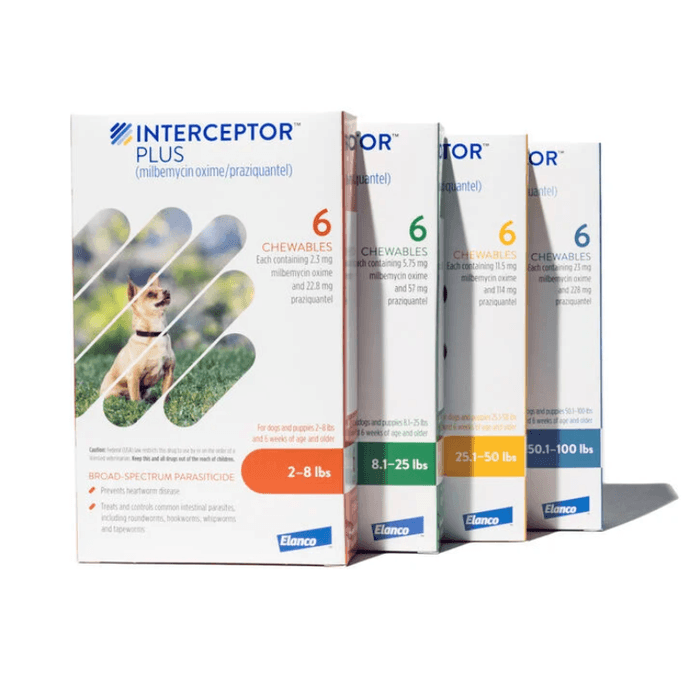
Interceptor Plus
Interceptor Plus for Dogs: Uses, Dosing, and Safety
Price:
Price range: $56.99 through $97.99
You save


Interceptor Plus is a veterinary chewable tablet that combines two antiparasitic (anti-worm) medicines, milbemycin oxime and praziquantel. It is used for monthly heartworm prevention and for treating certain intestinal worms in dogs; this page summarizes label-aligned basics, safety considerations, and practical handling. Some patients explore US delivery from Canada for ongoing veterinary prescriptions, depending on eligibility and jurisdiction.
What Interceptor Plus Is and How It Works
This medication is commonly prescribed to help prevent canine heartworm disease and to treat specific intestinal parasite infections. Heartworm prevention matters because heartworms are transmitted by mosquitoes, and infection can lead to serious heart and lung disease. For background on the condition and why prevention is emphasized, you can browse the Canine Heartworm Disease hub.
Milbemycin oxime is in the macrocyclic lactone class, which targets developing heartworm larvae and some intestinal worms. Praziquantel is an anthelmintic (dewormer) that acts against tapeworms by disrupting their protective outer structures, which helps the dog clear the infection. CanadianInsulin acts as a prescription referral service for eligible patients.
Products in this category are often used as part of a broader parasite-control plan that may also include flea and tick control, environmental cleanup, and routine veterinary screening. If you are comparing options across a broader list, the Pet Medications category can help you navigate what’s available.
Who It’s For
Veterinarians typically consider this medication for dogs that need ongoing heartworm prevention and coverage for selected intestinal parasites. The goal is to match parasite risk to the product’s spectrum, taking into account where the dog lives and travels, outdoor exposure, and household factors like multi-pet environments. For a high-level overview of common worm infections, the Canine Intestinal Worm Infections hub provides additional context.
Interceptor Plus is not for every animal. It is intended for dogs, and dosing is weight-based, so accurate, current weight is important for safe use. Puppies, underweight animals, or dogs that are ill may need extra veterinary assessment before starting any antiparasitic. Dogs with a history of medication sensitivity, neurologic disease, or suspected heavy parasite burdens may also require closer monitoring.
Heartworm preventives are generally started and continued under veterinary guidance. In many settings, clinicians recommend heartworm testing before beginning prevention, especially for dogs with an unknown history, missed doses, or recent relocation from a higher-risk region. This helps reduce the chance of starting prevention in a dog that may already have an active infection.
Dosage and Usage
Interceptor Plus is commonly given once monthly, year-round or seasonally, depending on the dog’s risk and the veterinarian’s plan. The dose is selected by body weight, using the product’s labeled weight ranges. If a dose is missed, the label and the prescribing veterinarian’s instructions should guide next steps rather than doubling up on tablets.
Quick tip: Keep a simple calendar reminder to support consistent monthly dosing.
Administration is typically straightforward because the medicine is provided as a flavored chewable. Some dogs readily accept it as a treat, while others do better when it is offered with a small amount of food or followed by a meal. The label directions should be followed closely, including any guidance about ensuring the full dose is consumed and what to do if vomiting occurs soon after dosing.
For households that track multiple prescriptions, it can help to keep a single medication list that includes the product name, strength range, and the date each dose was given. This kind of documentation is also useful at veterinary visits when discussing changes in parasite risk, travel, or combination regimens.
Strengths and Forms
This product is supplied as chewable tablets packaged for different canine weight ranges. Because strengths and presentations can vary by market, it’s important to confirm that the labeled weight range on the carton matches the dog’s current weight. Interceptor Plus is not a one-strength product, and using the wrong weight range can increase side effects or reduce intended protection.
Packaging formats may include multi-dose cartons designed for monthly administration. The number of tablets per box and the specific weight categories available can differ, so the prescription details should match the exact presentation intended by the veterinarian. When you review the package, look for the active ingredients, labeled weight range, lot number, and expiration date.
If your veterinarian changes your dog’s prevention plan (for example, changing products to add flea and tick coverage), ask whether any overlap, washout period, or timing adjustments are recommended. Avoid combining similar preventive classes unless a clinician specifically instructs it.
Storage and Travel Basics
Store chewable parasite preventives according to the package labeling, generally at controlled room temperature and protected from excess heat and moisture. Keep tablets in their original packaging until use to help prevent degradation and to preserve identifying information if you need to report a problem. As with all veterinary medicines, store out of reach of children and animals to reduce the risk of accidental ingestion.
When traveling, carry the product in its original carton or blister packaging and avoid leaving it in hot cars, direct sunlight, or humid environments like bathrooms. If you travel across regions with different parasite risks, your veterinarian may recommend changes in timing or additional testing. Keep contact information for your veterinary clinic available in case side effects occur away from home.
If a tablet looks damaged, discolored, or has been exposed to extreme conditions, contact a pharmacist or veterinarian for handling guidance rather than using it. Do not use expired medication unless a clinician specifically advises otherwise.
Side Effects and Safety
Like many antiparasitics, Interceptor Plus may cause mild, short-lived side effects in some dogs. Commonly reported issues can include vomiting, diarrhea, drooling, reduced appetite, or transient lethargy. These effects are not always caused by the medication itself, but they warrant attention, especially if they are persistent or severe.
Why it matters: Rapid recognition of serious reactions can help a clinic triage promptly.
More serious reactions are less common but can include allergic-type symptoms (facial swelling, hives, trouble breathing), marked weakness, collapse, or abnormal neurologic signs such as tremors or unsteadiness. Seek veterinary evaluation urgently if these occur. Dogs with certain genetic sensitivities that affect drug transport (often discussed as MDR1-related sensitivity) may require extra caution with some macrocyclic lactones; your veterinarian can advise whether testing or alternative options are appropriate.
Another safety consideration is heartworm status. Dogs with unknown prevention history may be tested before starting, and dogs with suspected infection should be managed under veterinary supervision. Monitoring after the first dose can be especially important for animals with incomplete records or recent adoption.
Drug Interactions and Cautions
Veterinary medication interaction data can be more limited than in human medicine, so it’s important to share a complete list of what your dog takes. This includes other parasite preventives, flea and tick products, antibiotics, supplements, and any medicines used for seizures, anxiety, or pain. Combining multiple antiparasitics without a clear plan can increase the chance of side effects.
Caution may be appropriate in dogs that are very young, debilitated, recovering from illness, or have a history of neurologic symptoms. If your dog has had an adverse reaction to a dewormer or heartworm preventive in the past, tell the veterinarian which product and what happened. Also ask about timing if your dog is being treated for an active intestinal worm infection while starting prevention.
If another pet in the household receives a different preventive, avoid mix-ups by storing products separately and labeling them clearly. For multi-pet homes, a simple checklist can reduce dosing errors.
Compare With Alternatives
Parasite prevention plans can vary widely because products differ in what they cover and how they are given. Some alternatives target heartworm prevention plus selected intestinal worms, while others add flea and tick coverage or use a topical instead of an oral chew. Examples your veterinarian might discuss include other monthly heartworm preventives, combination products that include flea control, and broad-spectrum chewables that also address ticks.
How heartworm prevention differs
Not all preventives are interchangeable. Differences can include active ingredients, which parasites are covered (and at what life stage), dosing intervals, and whether a product is appropriate for a dog with certain health conditions. Some regimens combine separate products (for example, one for heartworm and intestinal worms and another for fleas and ticks), while others use a single combination medication. Switching between approaches may change how you schedule doses and how you monitor for side effects, so it’s best done with a documented plan.
If your dog has frequent exposure to wooded areas, dog parks, or wildlife, you may be balancing risk from multiple parasites at once. Practical considerations also matter, including palatability, the dog’s ability to tolerate oral medications, and how easy it is for the household to stay on schedule. A veterinarian can help weigh these factors against local parasite patterns.
Pricing and Access
Because this is a prescription veterinary medication, access typically requires a current prescription from a licensed veterinarian. Prescription details may need to match the exact weight-range presentation, and records such as your dog’s current weight and recent heartworm test result may be relevant depending on clinical history. Licensed third-party pharmacies dispense and fulfill prescriptions where permitted.
Costs can vary based on the dose range, the number of doses supplied, and the policies of the dispensing pharmacy. Coverage is also variable; pet insurance plans may reimburse some medications, while many families use cash-pay, including situations without insurance. In some cross-border situations, documentation and eligibility rules can affect whether a product can be supplied, and some patients may see listings that note Ships from Canada to US.
For general education on organizing long-term medication budgets and tracking refills, these site resources may be helpful in a broader household context:
- Diabetes Management Tips
- Common Diabetes Medications
- Common Toujeo Side Effects
- Insulin Pen Vs Syringe
- Living With Diabetes Tips
If you are reviewing site-wide informational updates, you can also reference the Promotions Page for non-clinical notices; it should not replace veterinary guidance or the product label.
Authoritative Sources
For prevention timing and testing guidance, review the American Heartworm Society resources: https://www.heartwormsociety.org/.
For general veterinary drug oversight information, see the FDA Center for Veterinary Medicine: https://www.fda.gov/animal-veterinary.
For clinical background on heartworm and intestinal parasites, consult the Merck Veterinary Manual: https://www.merckvetmanual.com/.
When temperature control is required, packaging may be selected for prompt, express, cold-chain shipping based on product needs.
This content is for informational purposes only and is not a substitute for professional medical advice.
Express Shipping - from $25.00
Shipping with this method takes 3-5 days
Prices:
- Dry-Packed Products $25.00
- Cold-Packed Products $35.00
Standard Shipping - $15.00
Shipping with this method takes 5-10 days
Prices:
- Dry-Packed Products $15.00
- Not available for Cold-Packed products
What does Interceptor Plus treat in dogs?
This medication is used as part of parasite control in dogs. It is commonly prescribed for heartworm prevention and for treatment of selected intestinal worms, which can include common roundworms, hookworms, whipworms, and tapeworms depending on the dog’s diagnosis and local risk. Parasite coverage can differ by product and by region, so it’s important to rely on the veterinary prescription and the carton labeling for the exact indications and directions for your dog.
How often is Interceptor Plus typically given?
Many dogs receive this medicine on a once-monthly schedule, using a tablet matched to the dog’s current weight range. Some veterinarians recommend year-round prevention, while others tailor timing to local mosquito season, travel, and lifestyle. If a dose is late or missed, the next steps should be guided by the product label and the prescribing veterinarian rather than by giving extra doses. Consistent scheduling is a key part of prevention plans.
Does my dog need a heartworm test before starting?
Veterinarians often recommend heartworm testing before starting a preventive, especially if a dog is new to your home, has an unknown prevention history, has missed doses, or recently moved from another region. Testing helps identify dogs that may already have heartworm infection and need a different management approach. Your veterinarian can explain what test is used, how often retesting is advised, and how test timing fits with ongoing monthly prevention.
What side effects should I watch for after a dose?
Mild gastrointestinal signs such as vomiting, diarrhea, drooling, or reduced appetite can occur with many antiparasitic medicines and may be short-lived. Sleepiness or lower energy can also happen. More serious warning signs include facial swelling, hives, trouble breathing, collapse, severe weakness, or abnormal neurologic signs such as tremors or unsteady walking. If severe symptoms occur, urgent veterinary evaluation is appropriate. Keep the package available so a clinic can confirm the exact product and dose range.
Can Interceptor Plus be used with flea and tick products?
Some dogs use a heartworm-and-worm preventive along with a separate flea and tick product, while others use an all-in-one combination medication. Whether products can be used together depends on the active ingredients, the dog’s health history, and the veterinarian’s plan. Share the full list of preventives and other medicines your dog receives, including topicals, collars, and oral products. Avoid adding or stacking parasite products without veterinary guidance, since overlapping classes can increase side effects.
What should I ask my veterinarian before switching preventatives?
Useful questions include: what parasites are most relevant in your area; whether your dog needs heartworm testing before switching; how to time the last dose of the current preventive and the first dose of the new one; and whether any additional products are needed for fleas, ticks, or specific worms. Also ask what side effects to monitor during the transition and what to do if a dose is missed. Bringing a list of past products and dates can make this discussion easier.
Rewards Program
Earn points on birthdays, product orders, reviews, friend referrals, and more! Enjoy your medication at unparalleled discounts while reaping rewards for every step you take with us.
You can read more about rewards here.
POINT VALUE
How to earn points
- 1Create an account and start earning.
- 2Earn points every time you shop or perform certain actions.
- 3Redeem points for exclusive discounts.
You Might Also Like
Select options
This product has multiple variants. The options may be chosen on the product page
Select options
This product has multiple variants. The options may be chosen on the product page
Select options
This product has multiple variants. The options may be chosen on the product page
Related Articles
Type 2 Diabetes,
Oral Wegovy Explained: Facts, Risks, and Access Options
The phrase oral wegovy is best understood as a search term, not a settled product name. Most people use it to mean a pill version of semaglutide for weight management,…
Diabetes, General Health,
Glp-1 Drugs Over The Counter: What’s Real And What’s Not
Key Takeaways Prescription GLP-1 medicines are not sold as true OTC drugs. Many “GLP-1” supplements aim to support fullness, not mimic prescriptions. Online “no prescription” offers raise counterfeit and quality…
Diabetes, Type 2
GLP-1 Cost Without Insurance: Compare Cash-Pay Options
Key Takeaways Many people searching for glp-1 cost without insurance are trying to plan for a long-term expense. The total can change based on the drug, the pharmacy, and how…
Cardiovascular, Diabetes, Nephrology,
SGLT2 Inhibitors Drugs: Names, Uses, And Safety Notes
Key Takeaways They lower glucose by increasing urinary sugar loss. Common options include dapagliflozin, empagliflozin, canagliflozin, and ertugliflozin. Some products combine an SGLT2 inhibitor with metformin. Risks include dehydration and…