
Please note: a valid prescription is required for all prescription medication.
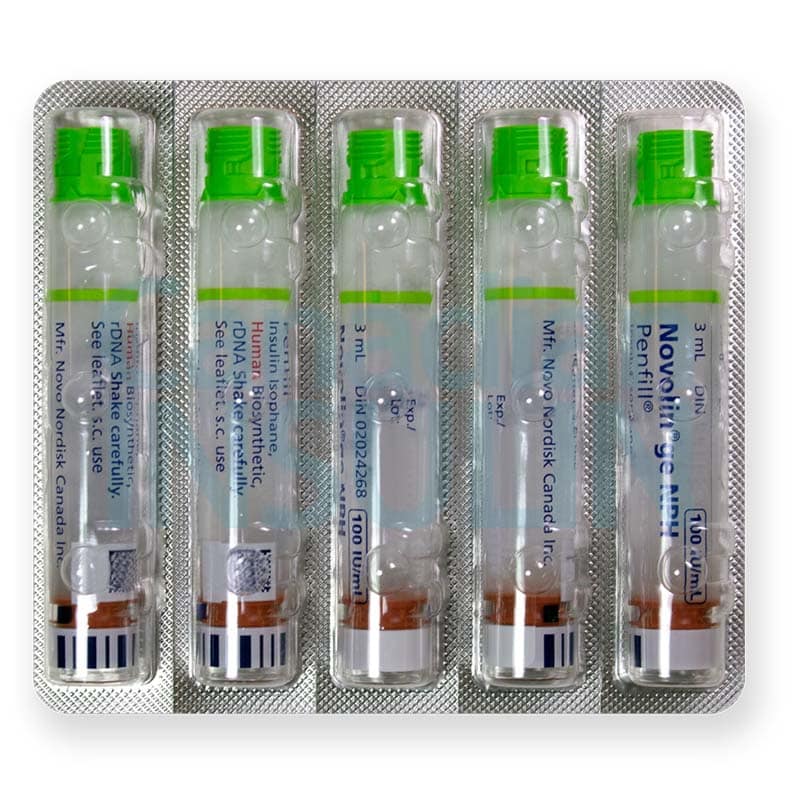
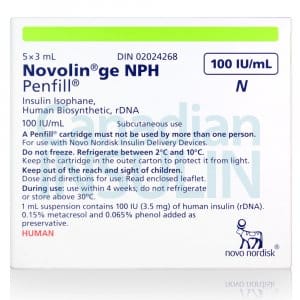
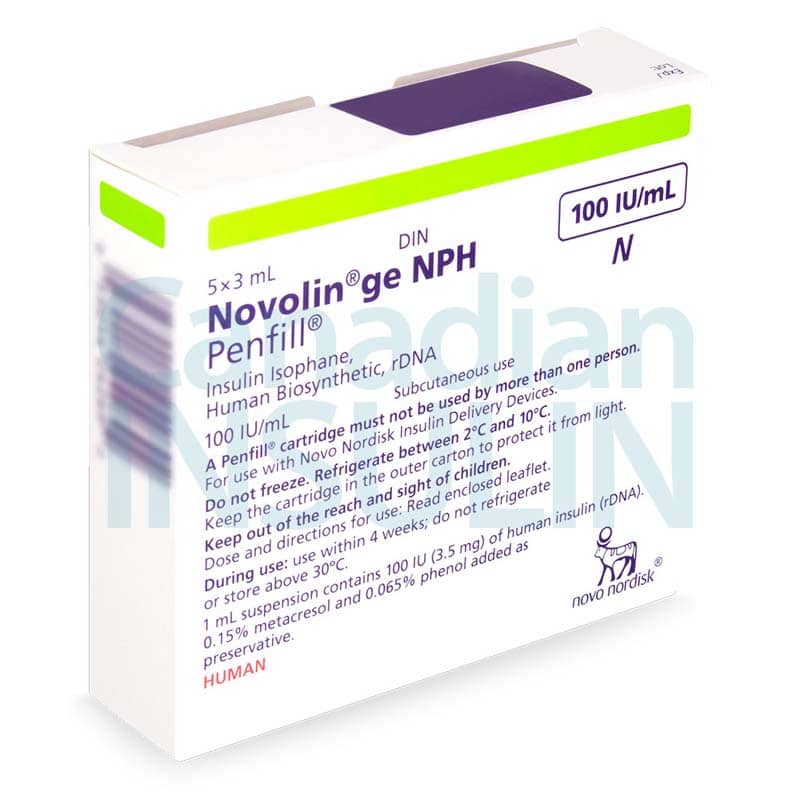
Novolin GE NPH Penfill Cartridge
Novolin GE NPH Penfill Cartridge Uses, Dosage Basics, and Storage
Price:
$89.99
You save


Novolin GE NPH is an intermediate-acting human insulin used to help manage glucose levels in diabetes. Novolin GE NPH Penfill Cartridge is a pen-compatible cartridge format intended for subcutaneous dosing with a reusable insulin pen device. This page summarizes how it works, typical usage patterns, safety issues, and handling basics to discuss with a clinician.
What Novolin GE NPH Penfill Cartridge Is and How It Works
This medicine contains insulin isophane (NPH), a human insulin suspension designed to provide “basal” (background) insulin coverage between meals and overnight. Because it is a suspension rather than a clear solution, it needs gentle mixing before each use so the insulin is evenly distributed. NPH insulin generally starts working a few hours after injection, has a noticeable peak effect, and then tapers over much of the day or night; the exact timing varies by person, dose, and injection site.
CanadianInsulin.com may help confirm prescription details with the prescriber. Some patients explore US shipping from Canada when their prescribed insulin option differs by region. In diabetes care, NPH is commonly paired with meal-time insulin or used as part of a basal-bolus plan when clinically appropriate. For broader condition context, you can review the site’s browsing hubs for Diabetes and Type 2 Diabetes.
Why it matters: With NPH insulin, the peak can increase hypoglycemia risk if meals, activity, or dosing timing shift.
Who It’s For
NPH (isophane) insulin may be prescribed for people with type 1 or type 2 diabetes when a clinician determines intermediate-acting basal insulin is appropriate. It can be used alone in some situations, but it is often combined with other diabetes therapies. Treatment selection depends on goals, daily routine, glucose patterns, and the ability to monitor and respond to low glucose events.
This product is not for treating diabetic ketoacidosis (DKA), which requires urgent medical management and typically intravenous insulin. It should not be used in anyone with a known hypersensitivity to insulin isophane or any component of the formulation. If a person is having frequent severe hypoglycemia or cannot reliably monitor glucose, clinicians may recommend a different regimen or additional supports. To compare other non-insulin medication classes that may be used in type 2 diabetes, the Common Diabetes Medications guide can help frame a discussion with a care team.
Dosage and Usage
Dosing is individualized by the prescriber based on glucose monitoring, meal patterns, activity level, and other medicines. NPH insulin is commonly used once or twice daily as a basal insulin, sometimes with rapid-acting or short-acting insulin at meals when needed. Because NPH has a peak, clinicians may align dosing times with meals or bedtime to reduce overnight or mid-day lows, depending on a person’s glucose profile.
How you use the device matters for consistent dosing. Novolin GE NPH Penfill Cartridge is intended for use with compatible pen systems and pen needles, following the specific instructions for the pen and the cartridge. The insulin should be gently rolled and tipped as directed until it looks uniformly cloudy; avoid vigorous shaking, which can create bubbles and reduce dosing accuracy. Rotate injection sites within the same body area to reduce lipodystrophy (fatty tissue changes) that can alter absorption.
Quick tip: Keep a consistent routine for priming and site rotation to reduce day-to-day variability.
- Inject subcutaneously only.
- Prime per pen instructions.
- Rotate sites regularly.
- Monitor for hypoglycemia signs.
Strengths and Forms
NPH Penfill products are typically supplied as cartridges intended for reusable insulin pens rather than disposable prefilled pens. Labeling and availability can vary by market and pharmacy source, so it is important to match the exact product name, cartridge type, and concentration to the prescription.
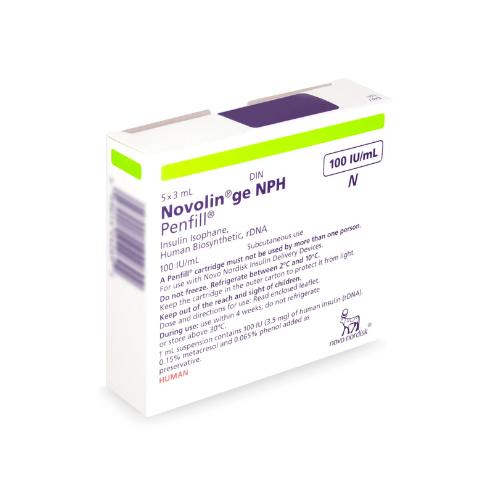
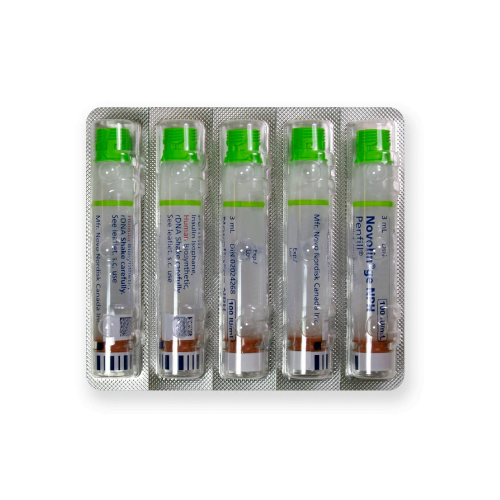
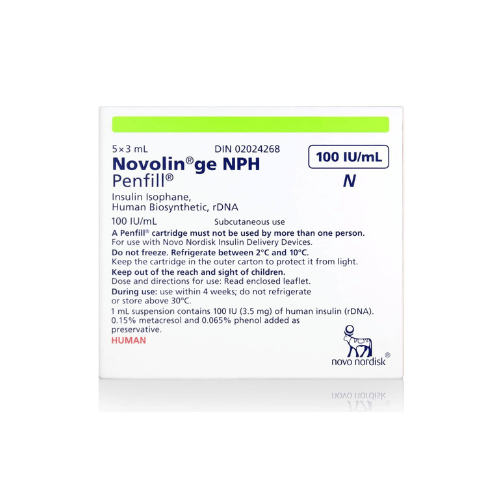
For this product, Novolin GE NPH Penfill Cartridge is commonly referenced as human insulin isophane NPH at 100 IU/mL in 3 mL cartridges, and some configurations may be listed as cartons containing multiple 3 mL cartridges (for example, 5 x 3 mL). Always confirm the concentration (IU/mL), cartridge volume, and pen compatibility before use.
| Attribute | What you may see |
|---|---|
| Insulin type | Human insulin isophane (NPH) suspension |
| Concentration | 100 IU/mL |
| Cartridge volume | 3 mL |
| Delivery | Reusable pen with Penfill cartridge |
Storage and Travel Basics
Insulin potency can drop if it is exposed to heat, freezing, or prolonged light. Store unopened cartridges as directed on the product labeling, and do not use any insulin that has been frozen. When a cartridge is in use, follow the specific instructions for allowable room-temperature storage and in-use time limits, since these can differ by product and market authorization.
Before each injection, check the appearance. NPH is expected to look uniformly cloudy after gentle mixing; do not use it if it remains clumpy, has particles that do not disperse, or looks abnormal in any way. Novolin GE NPH Penfill Cartridge should also be protected from excessive agitation during travel, since bubbles can interfere with accurate pen dosing.
For travel, carry supplies in an insulated container that prevents direct contact with ice packs. Keep spare pen needles, glucose testing supplies, and a plan for managing hypoglycemia. If you use continuous glucose monitoring, remember that sensor readings can lag behind blood glucose during rapid changes.
Side Effects and Safety
The most important safety concern with any insulin is hypoglycemia (low blood glucose). Symptoms can include sweating, shakiness, hunger, headache, irritability, confusion, or palpitations. Severe hypoglycemia can cause seizure, loss of consciousness, or injury and needs urgent help. Because NPH has a peak effect, lows may occur if meals are delayed, carbohydrate intake is reduced, or activity increases unexpectedly.
Other potential effects include weight gain, injection-site reactions (redness, itching, swelling), and lipodystrophy with repeated injections in the same spot. Rare but serious risks can include allergic reactions and hypokalemia (low potassium), particularly in people with other risk factors. If glucose readings become unpredictable, discuss technique, timing, and device function with the care team; do not make dose changes without clinical guidance. If you want broader education on monitoring strategies across diabetes medicines, browsing the Diabetes Articles hub can be a helpful starting point.
Drug Interactions and Cautions
Many medicines and lifestyle factors can change insulin needs. Alcohol can increase the risk of hypoglycemia, especially when combined with missed meals or increased activity. Corticosteroids, some antipsychotics, and certain hormonal therapies may raise glucose and increase insulin requirements. Illness, vomiting, fever, and dehydration can also shift insulin sensitivity and meal intake, requiring a clinician’s guidance on “sick day” plans.
Some drugs can mask typical warning signs of hypoglycemia. Beta-blockers, for example, may blunt tremor and palpitations, making lows harder to recognize. Other glucose-lowering medicines used in type 2 diabetes may increase hypoglycemia risk when combined with insulin, depending on the agent. For background on common oral medication classes that might be used alongside insulin, see the DPP 4 Inhibitors resource and the related overview on Januvia Drug Class.
Compare With Alternatives
NPH insulin is one option for basal coverage. Another common approach uses longer-acting basal insulin analogs (such as insulin glargine, insulin detemir, or insulin degludec), which generally have flatter activity profiles and less pronounced peaks. A clinician may consider these when hypoglycemia risk, schedule variability, or overnight control are concerns. Formularies and prior authorization rules can also influence which basal insulin is selected.
Short-acting or rapid-acting insulins are used for meal coverage and correction dosing, rather than background needs. In some regimens, people use premixed insulins that combine intermediate-acting and short-acting components in fixed ratios. Each option has tradeoffs in flexibility, monitoring demands, and how meals and activity must be coordinated. For non-insulin comparisons in type 2 diabetes, the general discussion in Invokana Vs Metformin can provide context on how different classes target glucose in different ways, even though they are not substitutes for insulin.
Pricing and Access
Access to insulin cartridges can depend on the exact prescription wording, local market authorization, and the pen system a person uses. Insurance coverage varies widely by plan, and documentation requirements may apply when switching brands or cartridge formats. People paying cash or managing care without insurance may see different out-of-pocket totals based on pharmacy source, pack configuration, and whether supplies like pen needles are covered separately.
Dispensing is completed by licensed third-party pharmacies where permitted. Novolin GE NPH Penfill Cartridge may require prescription verification and, in some cases, additional confirmation that the cartridge format matches the prescriber’s intent. If you are comparing options, it can help to browse the site’s navigation hubs for Diabetes and Diabetes Medications, and to review any general updates listed on the Promotions page as informational notices rather than guarantees.
When discussing access with a clinician or pharmacist, consider confirming the exact insulin type (NPH/isophane), concentration, and pen compatibility, plus how you will monitor glucose during any transition. Keep in mind that cross-border fulfilment considerations can involve jurisdictional rules and product labeling differences, so the prescription details need to be consistent and clear.
For additional education that may support shared decision-making, the Type 2 Diabetes Articles hub organizes related topics in one place.
Authoritative Sources
For general consumer-friendly information on NPH insulin, see this reference from MedlinePlus: Insulin NPH (Human) Injection.
For hypoglycemia recognition and response principles, see this educational resource from the American Diabetes Association: Low Blood Glucose (Hypoglycemia).
For medication safety context on insulin as a high-alert medicine, see this Institute for Safe Medication Practices reference: High-Alert Medications in Acute Care.
When cross-border fulfilment is permitted, handling may involve prompt, express, cold-chain shipping to support temperature control.
This content is for informational purposes only and is not a substitute for professional medical advice.
Express Shipping - from $25.00
Shipping with this method takes 3-5 days
Prices:
- Dry-Packed Products $25.00
- Cold-Packed Products $35.00
Standard Shipping - $15.00
Shipping with this method takes 5-10 days
Prices:
- Dry-Packed Products $15.00
- Not available for Cold-Packed products
What does NPH insulin mean?
NPH stands for Neutral Protamine Hagedorn, also called insulin isophane. It is an intermediate-acting human insulin suspension used to provide background (basal) insulin coverage. Compared with long-acting basal insulin analogs, NPH tends to have a more noticeable peak effect after dosing, which can increase the risk of low blood glucose if meals are delayed or activity changes. Because it is a suspension, it must be gently mixed until uniformly cloudy before each injection.
How do I mix an NPH Penfill cartridge before use?
NPH insulin is a cloudy suspension, so gentle resuspension is important for consistent dosing. Follow the product labeling and your pen device instructions, which commonly involve rolling the cartridge between the palms and slowly tipping it back and forth until it looks evenly cloudy. Avoid vigorous shaking, which can create bubbles and interfere with accurate dosing. If the insulin does not become uniformly cloudy, looks clumpy, or has particles that do not disperse, do not use it and ask a pharmacist for guidance.
How long does NPH insulin work after an injection?
NPH insulin is considered intermediate-acting, meaning it typically begins working a few hours after injection, reaches a peak effect later, and then tapers off over much of the day or night. The exact onset, peak, and duration vary between people and can change with dose size, injection site, temperature, and activity. Your prescriber uses glucose monitoring patterns to decide whether NPH is taken once daily or split into two doses and how it fits with meal-time insulin, if used.
What are the warning signs of low blood sugar with insulin?
Low blood sugar (hypoglycemia) can cause sweating, shakiness, hunger, headache, dizziness, irritability, or a fast heartbeat. More serious symptoms include confusion, behavior changes, trouble speaking, seizures, or loss of consciousness. If you use insulin, your care team should provide a plan for checking glucose and treating lows, including when to use fast-acting carbohydrate and when to seek urgent help. Some medicines, such as beta-blockers, can reduce typical warning signs, so monitoring is especially important.
Can I use Penfill cartridges with any insulin pen device?
Penfill cartridges are designed to fit specific reusable insulin pen systems, and compatibility is not universal. The cartridge type, dimensions, and the pen’s dosing mechanism must match. Before using a new cartridge format, confirm the exact pen model you have, the cartridge system it accepts, and the needle type recommended for that pen. Also confirm the insulin concentration (IU/mL) on the cartridge label matches the prescription. If there is any mismatch or uncertainty, ask a pharmacist to verify compatibility before first use.
What should I ask my clinician before switching insulin types or devices?
Ask whether the new product is the same insulin type (for example, NPH/isophane versus long-acting analog), the same concentration (IU/mL), and the same delivery format (cartridge versus prefilled pen). Discuss how the timing of doses might differ and what glucose monitoring is recommended during the transition. It is also reasonable to ask for a review of injection technique, site rotation, and how to recognize and manage hypoglycemia. Do not change doses or switch products without a prescriber’s direction.
Rewards Program
Earn points on birthdays, product orders, reviews, friend referrals, and more! Enjoy your medication at unparalleled discounts while reaping rewards for every step you take with us.
You can read more about rewards here.
POINT VALUE
How to earn points
- 1Create an account and start earning.
- 2Earn points every time you shop or perform certain actions.
- 3Redeem points for exclusive discounts.
You Might Also Like
Select options
This product has multiple variants. The options may be chosen on the product page
Select options
This product has multiple variants. The options may be chosen on the product page
Select options
This product has multiple variants. The options may be chosen on the product page
Select options
This product has multiple variants. The options may be chosen on the product page
Related Articles
Type 2 Diabetes,
Oral Wegovy Explained: Facts, Risks, and Access Options
The phrase oral wegovy is best understood as a search term, not a settled product name. Most people use it to mean a pill version of semaglutide for weight management,…
Diabetes, General Health,
Glp-1 Drugs Over The Counter: What’s Real And What’s Not
Key Takeaways Prescription GLP-1 medicines are not sold as true OTC drugs. Many “GLP-1” supplements aim to support fullness, not mimic prescriptions. Online “no prescription” offers raise counterfeit and quality…
Diabetes, Type 2
GLP-1 Cost Without Insurance: Compare Cash-Pay Options
Key Takeaways Many people searching for glp-1 cost without insurance are trying to plan for a long-term expense. The total can change based on the drug, the pharmacy, and how…
Cardiovascular, Diabetes, Nephrology,
SGLT2 Inhibitors Drugs: Names, Uses, And Safety Notes
Key Takeaways They lower glucose by increasing urinary sugar loss. Common options include dapagliflozin, empagliflozin, canagliflozin, and ertugliflozin. Some products combine an SGLT2 inhibitor with metformin. Risks include dehydration and…