
Please note: a valid prescription is required for all prescription medication.
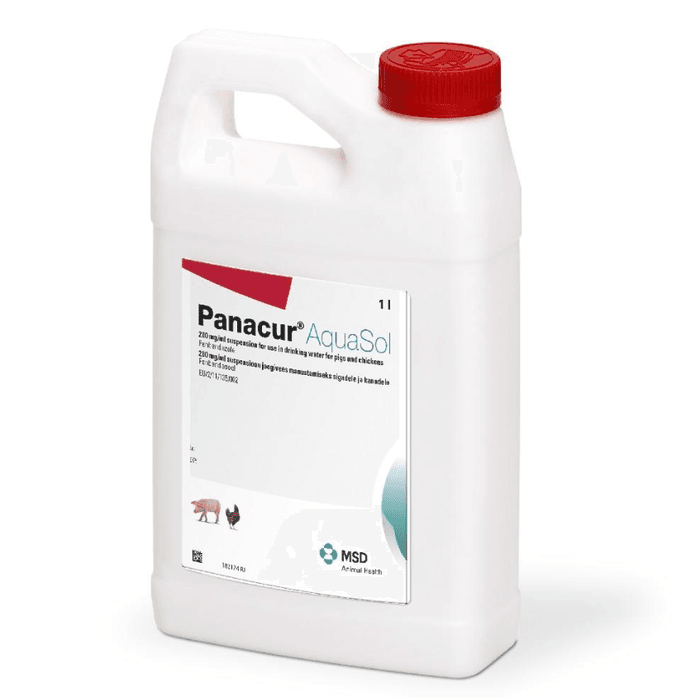
Panacur Aquasol
Buy Panacur AquaSol Online


Panacur AquaSol is a fenbendazole oral suspension for administration through drinking water in chickens and pigs. You can buy Panacur AquaSol online, view the current price during ordering, and choose the available quantity that matches veterinary directions for the flock or herd. The supplied concentration should be matched carefully because Panacur AquaSol 200 mg/mL is not the same as paste, granules, tablets, or injectable medicines.
This dewormer is used for specific gastrointestinal nematodes, which are roundworm-type internal parasites. Because it is mixed into drinking water, product choice depends on the animal species, the active ingredient strength, the water system, and the treatment plan. If the order is being shipped to the United States, US delivery from Canada may be part of the service path for this product.
Panacur AquaSol Price and Quantity Selection
Panacur AquaSol price depends on the quantity being ordered and the current store amount shown at checkout. When reviewing Panacur AquaSol cost, focus on the total volume supplied, the 200 mg/mL fenbendazole concentration, and whether the product is the drinking-water oral suspension. A lower bottle count or similar brand name does not prove that another product is interchangeable.
Cash-pay customers should compare the final checkout amount with the animal-care plan, expected flock or herd size, and the amount of medicated water that must be prepared. The most important buying decision is matching the product form and concentration to the intended use. Do not substitute a feed granule, paste, or different liquid unless the veterinarian changes the treatment plan.
| Ordering detail | What to verify |
|---|---|
| Active ingredient | Fenbendazole, an antiparasitic deworming medicine. |
| Strength | 200 mg/mL should match the AquaSol direction. |
| Form | Oral suspension for use through drinking water. |
| Species | Directions should be specific to chickens or pigs. |
| Quantity | Total volume should fit the planned group treatment. |
For broader animal-health browsing, the Pet Medications category groups available veterinary products in one place. Keep Panacur AquaSol selection narrow, because fenbendazole products can differ in route, concentration, and target species.
How to Order Panacur AquaSol Online
To order Panacur AquaSol online, choose the AquaSol oral suspension and review the strength, quantity, and species direction before checkout. Keep animal-care records available so the order can be matched to the intended flock or herd. If the form or strength does not match the written treatment direction, resolve the mismatch before use.
- Choose the oral suspension intended for drinking water.
- Match the 200 mg/mL fenbendazole concentration.
- Separate chicken and pig treatment plans.
- Review total mL and the number of containers.
- Keep records of product lot, start date, and finish date.
The order process should support a practical product decision. Panacur AquaSol drinking water use requires more than choosing a bottle size, because every treated animal must have access to medicated water during the treatment window. Water-line setup, holding tanks, dosing pumps, and actual water intake can all affect whether the group consumes the intended amount.
Quick tip: Match the concentration and route before judging value by package size.
What Panacur AquaSol Is Used For
Panacur AquaSol is used as a veterinary dewormer for chickens and pigs when fenbendazole treatment is appropriate. Official product information identifies it as a 200 mg/mL oral suspension for use in drinking water in those target species. It is intended for certain gastrointestinal nematodes, not for every parasite or every animal species.
In chickens, a drinking-water dewormer may be chosen when group treatment is needed and the flock can reliably drink from the treated water source. In pigs, it may be used as part of a herd parasite-control plan when the labeled species and parasite target fit the situation. The parasite concern, production setting, and any follow-up testing should be directed by a veterinarian or animal-health professional.
- Chickens: confirm the flock group, parasite concern, and water access.
- Pigs: match treatment to the herd plan and weight group.
- Food animals: follow residue and withdrawal instructions from the label.
- Water delivery: ensure medicated water reaches all animals intended for treatment.
For species-focused browsing, the Intestinal Worms In Poultry collection and Intestinal Worms In Swine collection keep poultry and swine parasite-related products separate. These links can help avoid mixing flock and herd treatment decisions.
Fenbendazole Strength, Mixing, and Drinking-Water Use
Fenbendazole is an anthelmintic, meaning a deworming drug used against certain internal worms. Panacur AquaSol 200 mg/mL is a concentrate suspension, so the medicine must remain evenly distributed when prepared and administered. It should not be treated like a dry feed additive, oral paste, tablet, or injectable product.
Mixing and distribution matter because group dosing depends on drinking behavior. A tank, medicator, or water line may need to be prepared according to the label. Animals that are stressed, ill, moved to a new pen, or competing poorly for water may drink less than expected, which can affect treatment consumption.
| Product factor | Why it affects use |
|---|---|
| Suspension | The container and prepared water may require handling to maintain even distribution. |
| Water route | Treatment depends on normal drinking by the full group. |
| Group size | Total body weight and water intake influence planning. |
| Use window | Prepared medicated water should be used as directed by the label. |
Why it matters: Uneven water delivery can lead to under-treatment in some animals and excess exposure in others.
Dosage and Withdrawal Points to Confirm
Panacur AquaSol dosage should follow the official product label and veterinary direction for the exact species. Do not calculate a dose from another fenbendazole product, because different forms may have different strengths, routes, and measuring methods. A paste dose, granule amount, or tablet plan cannot be safely converted by appearance alone.
Many buyers ask whether treatment is given for one day, three days, or longer. The answer depends on species, parasite target, label directions, and the animal-care plan. Do not shorten or extend the schedule without professional guidance, because duration affects parasite exposure and food-animal residue management.
- Species: chickens and pigs require separate directions.
- Weight: group body weight may be part of treatment planning.
- Water intake: consumption should be realistic for the group.
- Duration: follow the labeled treatment window.
- Withdrawal: confirm timing for meat, offal, or eggs when applicable.
Food-producing animals need special attention to withdrawal intervals. These instructions are designed to reduce residue risk in the food supply. Keep treatment records that show the product name, concentration, date mixed, date finished, group treated, and any withdrawal timing provided on the label.
Storage, Handling, and Delivery Logistics
Store and handle Panacur AquaSol according to the package and official label. Because it is a suspension, shaking, measuring, dilution, and water-system preparation may affect how evenly fenbendazole is delivered. Avoid applying storage assumptions from refrigerated vaccines, biologics, or injectable medicines unless the label gives that instruction.
- Before mixing: inspect the container, seal, and label.
- During preparation: follow the dilution and water-system directions.
- During treatment: monitor whether animals are drinking normally.
- After treatment: clean tanks, lines, or equipment if instructed.
- Recordkeeping: save lot and date information with flock or herd notes.
Delivery logistics should be reviewed before checkout, including address, quantity, and any handling instructions shown during ordering. The supplied shipping service may include prompt, express, cold-chain shipping when appropriate for the item. If the package arrives damaged, the seal appears inconsistent, or the label does not match the order, hold the product aside and contact support before use.
Safety, Warnings, Interactions, and Monitoring
Safety decisions for this dewormer should be based on the label, the target species, and the condition of the animals being treated. Panacur AquaSol is not a human medication and should not be used for household self-treatment. It also should not be used in species outside the labeled or professionally directed plan.
Before treatment, the veterinarian should know about recent dewormers, antibiotics, vaccines, supplements, feed changes, and any sick or dehydrated animals. Overlapping management steps can make it harder to judge response or identify the cause of adverse signs. Duplicate antiparasitic treatment may also create avoidable exposure.
- Allergy concern: report any past reaction to fenbendazole products.
- Weak animals: ask about treatment timing for ill or dehydrated animals.
- Recent wormers: avoid accidental duplicate therapy.
- Food production: follow withdrawal directions exactly.
- Water access: make sure timid or sick animals can drink.
Monitor the group during treatment. Watch for appetite changes, abnormal manure, reduced water consumption, weakness, or signs that some animals cannot reach the water source. If many animals become unwell at once, assess the water system promptly and seek veterinary help.
Serious problems require timely assessment. Contact a veterinarian if animals show severe weakness, persistent refusal to drink, marked digestive changes, unusual neurologic signs, suspected overdose, or worsening condition during treatment. For food animals, also ask before sending treated animals or eggs into the food supply when withdrawal timing is unclear.
How This Dewormer Differs From Related Panacur Products
Several Panacur products contain fenbendazole, but they are not automatically interchangeable. Product form determines how the medicine is given, how it is measured, and which species directions apply. AquaSol is specifically a drinking-water oral suspension, so comparisons should start with route and concentration rather than brand name alone.
| Product type | Selection difference |
|---|---|
| Drinking-water oral suspension | Designed for group administration through water systems. |
| Other liquid suspension | May have different directions, species, or administration method. |
| Granules | May be mixed with feed or used under a different plan. |
Related formulations can help clarify why the exact form matters. Panacur Suspension and Panacur Granules may contain the same active drug class, but the route, strength, and label directions can be different. Use the product named in the animal-care plan unless a veterinarian changes it.
Buying Questions to Resolve Before Use
Before completing an order, confirm that the product name reads Panacur AquaSol, the concentration is 200 mg/mL, and the intended use is oral administration through drinking water. The species should be clear, because poultry and swine directions are not interchangeable. If several groups are being treated, keep each flock or herd record separate.
For Panacur AquaSol for chickens, ask whether all birds will have access to the treated water and whether eggs or meat require withdrawal timing. For Panacur AquaSol for pigs, ask how group weight and water intake have been estimated and whether any animals need separate management. These questions help make the purchase fit the treatment plan.
- Which species and age group will be treated?
- Which parasite or parasite group is being targeted?
- How will the water system deliver treated water evenly?
- What treatment dates and withdrawal dates must be recorded?
- What signs should trigger a veterinary call?
Do not rely on online dose charts that are not tied to the exact product label. A similar product name, a Safeguard AquaSol reference, or another fenbendazole formulation may not match Panacur AquaSol concentration, route, or country-specific labeling. The safest buying decision is the one that matches the actual container, label, species, and professional direction.
Authoritative Sources
Manufacturer information supports the product concentration, target species, and drinking-water formulation: MSD Animal Health Panacur AquaSol.
A Canadian veterinary monograph describes Panacur AquaSol as a 200 mg/mL fenbendazole concentrate suspension for oral administration via drinking water: Panacur AquaSol For Animal Use.
This content is for informational purposes only and is not a substitute for professional medical advice.
Express Shipping - from $29.99
Shipping with this method takes 3-5 days
Prices:
- Dry-Packed Products $29.99
- Cold-Packed Products $39.99
Standard Shipping - $19.99
Shipping with this method takes 5-10 days
Prices:
- Dry-Packed Products $19.99
- Not available for Cold-Packed products
What is Panacur AquaSol used for?
Panacur AquaSol is a fenbendazole dewormer used in drinking water for chickens and pigs when the labeled species and parasite target fit the treatment plan. It is used for certain gastrointestinal nematodes, not every parasite or every animal species.
Is Panacur AquaSol 200 mg/mL the same as other Panacur products?
No. Panacur AquaSol 200 mg/mL is an oral suspension intended for drinking-water administration. Other Panacur products, such as suspensions or granules, may have different strengths, routes, and directions, so they should not be substituted without veterinary direction.
How is Panacur AquaSol given to chickens or pigs?
Panacur AquaSol is administered through drinking water according to the label and veterinary plan. The amount, duration, and water-system setup depend on species, group size, water intake, and the parasite target.
What should be checked before buying Panacur AquaSol online?
Check the product name, 200 mg/mL strength, oral suspension form, intended drinking-water use, species direction, and total quantity. Also confirm withdrawal timing for food-producing animals before treatment starts.
What safety issues matter with Panacur AquaSol?
Important safety points include correct species selection, accurate water delivery, recent dewormer use, sick or dehydrated animals, and food-animal withdrawal intervals. Contact a veterinarian if animals show severe weakness, refusal to drink, major digestive changes, or suspected overdose.
Rewards Program
Earn points on birthdays, product orders, reviews, friend referrals, and more! Enjoy your medication at unparalleled discounts while reaping rewards for every step you take with us.
You can read more about rewards here.
POINT VALUE
How to earn points
- 1Create an account and start earning.
- 2Earn points every time you shop or perform certain actions.
- 3Redeem points for exclusive discounts.
You Might Also Like
Select options
This product has multiple variants. The options may be chosen on the product page
Select options
This product has multiple variants. The options may be chosen on the product page
Select options
This product has multiple variants. The options may be chosen on the product page
Select options
This product has multiple variants. The options may be chosen on the product page