
Please note: a valid prescription is required for all prescription medication.
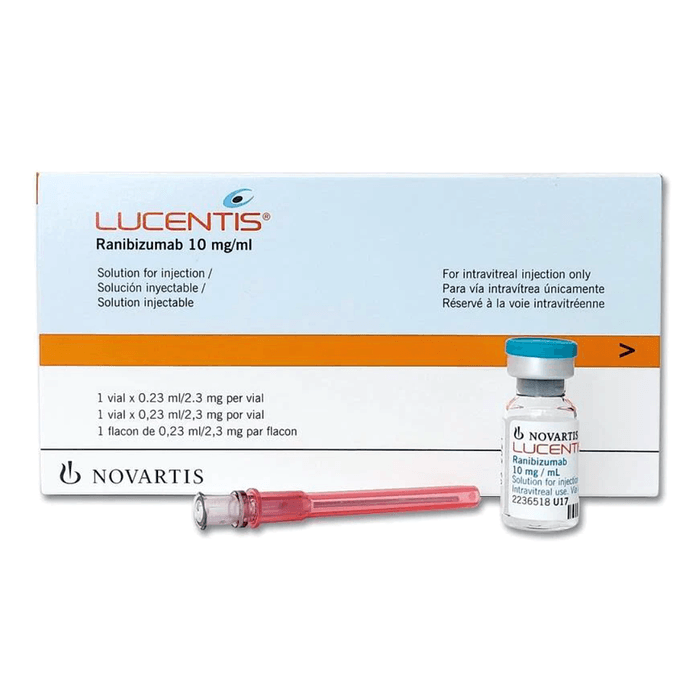
Lucentis Vial
Buy Lucentis Vial Online


Lucentis Vial is a ranibizumab injection vial used by eye specialists for intravitreal injection, which means injection into the eye. It can be ordered online in the 10 mg/mL, 0.23 mL vial format, and the strength and vial size should match the clinic’s written directions for the appointment. This medicine is prepared and administered by a trained eye care professional, not self-injected at home.
The vial format matters because Lucentis is a sterile ophthalmic biologic. The clinic withdraws the measured amount needed for treatment under controlled conditions and discards unused medicine according to its procedure. If you are arranging US delivery from Canada, coordinate the timing and receiving plan with the treating retina office before the injection visit.
Lucentis Vial Price and Strength Details
The Lucentis Vial price should be read together with the exact format being ordered. For this product, the key identifiers are ranibizumab injection, 10 mg/mL concentration, and 0.23 mL vial volume. A vial, prefilled syringe, or different quantity can change the final total, even when the brand name looks similar.
When evaluating Lucentis Vial cost, keep the concentration and vial volume consistent. The amount inside the vial is not the same as a self-measured dose. Retina clinics prepare intravitreal medicines using sterile technique, so the product format should follow the office’s instructions rather than a guess based on milliliters.
| Product attribute | What to verify |
|---|---|
| Medicine name | Lucentis Vial |
| Active ingredient | Ranibizumab injection |
| Strength | 10 mg/mL |
| Vial volume | 0.23 mL |
| Format | Single-use vial for clinic preparation |
| Use setting | Intravitreal injection by an eye specialist |
Quick tip: Match the medicine name, strength, vial volume, and quantity before comparing the final checkout total.
How to Order Lucentis Vial Online
To order Lucentis Vial online, choose the 10 mg/mL, 0.23 mL vial format and the quantity needed for the planned clinic visit. Keep the retina office’s instructions available so the medicine, strength, and vial count can be aligned with the treatment plan. Do not switch to another ranibizumab format unless the clinic specifically directs that change.
Before checkout, decide whether the vial should be received by the clinic or brought to the appointment according to office policy. Some retina practices prefer to receive refrigerated medicines directly so staff can inspect the package, store it correctly, and prepare it when the patient arrives. Others may give separate transport instructions for a short trip to the office.
We may review order details when needed to help match the medicine and quantity to the information provided. This is especially important for refrigerated ophthalmology biologics because incorrect format selection or poor timing can disrupt a scheduled injection visit.
What Lucentis Injection Is Used For
Lucentis contains ranibizumab, an anti-VEGF medicine. Anti-VEGF medicines block vascular endothelial growth factor, a signal that can contribute to abnormal blood vessel growth and fluid leakage in the retina. By targeting this pathway, ranibizumab is used in several retinal diseases where swelling, leakage, or abnormal vessels may threaten vision.
Eye specialists may prescribe Lucentis for wet age-related macular degeneration, diabetic macular edema, diabetic retinopathy, macular edema after retinal vein occlusion, and myopic choroidal neovascularization. The diagnosis should come from a retina examination, retinal imaging, and the clinician’s treatment plan. Similar symptoms, such as blurred central vision or distortion, can occur in different retinal conditions.
- Wet age-related macular degeneration involves abnormal blood vessels under the retina.
- Diabetic macular edema refers to fluid-related swelling in the macula linked with diabetes.
- Macular edema from retinal vein occlusion can occur after a blocked retinal vein.
- Myopic choroidal neovascularization involves abnormal vessel growth associated with severe nearsightedness.
These condition categories can help you understand why an eye injection may be prescribed, but they do not replace a retina specialist’s assessment. The same medicine may be used differently depending on the treated eye, disease activity, response to prior injections, and monitoring results.
Vial Size, Dose Language, and Clinic Administration
The Lucentis 10 mg/mL vial contains 0.23 mL of solution. This vial size identifies the product container, not the instruction to inject the full contents. For many adult retinal conditions, official labeling describes a measured intravitreal injection volume prepared from the sterile vial, but the treating specialist decides the actual schedule and clinic procedure.
Questions about a Lucentis intravitreal injection dose should be directed to the retina clinic. Dose timing can vary by condition, response, eye imaging, and follow-up findings. Some patients receive monthly injections during active treatment, while others follow a different interval chosen by the specialist.
Lucentis is not the same as every other anti-VEGF injection. Aflibercept, bevacizumab, and faricimab are different medicines with their own formulations, labeling, and clinic workflows. A written order for a ranibizumab injection vial should not be treated as permission to substitute another retina drug during checkout.
Why it matters: Accurate vial selection helps the clinic prepare the intended sterile eye injection.
Storage, Handling, and Cold-Chain Planning
Lucentis is a refrigerated biologic medicine. The vial should generally be stored at 2°C to 8°C, protected from light, and kept from freezing. It should remain in the carton until use whenever possible, and it should not be shaken.
Temperature control is important because ranibizumab is a protein-based medicine. Heat, freezing, or rough handling can affect product quality. If the carton is damaged, the vial appears cloudy, or visible particles are present, the clinic or pharmacist should assess the medicine before use.
When timing an injection appointment, build in enough time for the order, receipt, storage, and clinic preparation process. Temperature-sensitive orders may use prompt, express, cold-chain shipping when appropriate, but appointment timing should still be coordinated with the retina office. Avoid leaving the vial in a car, checked luggage, mailbox, or any uncontrolled temperature setting.
The Ophthalmology category can help distinguish retina medicines from other eye products, including drops and non-retina treatments. Category browsing should be used for orientation only, not to select an alternative therapy without clinical direction.
Side Effects, Warnings, and Monitoring
Lucentis can cause eye-related side effects, including redness, eye discomfort, floaters, irritation, increased eye pressure, and bleeding on the surface of the eye. Mild irritation can occur after an injection, but worsening pain or sudden vision changes need urgent medical attention. The clinic should provide aftercare instructions after each procedure.
Lucentis should not be used in an eye with an ocular or periocular infection, active inflammation inside the eye, or known hypersensitivity to ranibizumab or a product component. These contraindications matter because an intravitreal injection can worsen serious eye problems when infection or inflammation is present.
Serious risks reported with intravitreal injections include endophthalmitis, retinal detachment, traumatic cataract, and increased intraocular pressure. Endophthalmitis is a severe infection inside the eye. Retinal detachment means the retina pulls away from its normal position. Both can threaten vision and require urgent evaluation.
- Vision warning signs: sudden decrease in vision, new shadows, or many new floaters.
- Pain warning signs: worsening eye pain, pressure, or light sensitivity.
- Redness warning signs: spreading redness, discharge, or swelling after injection.
- General warning signs: chest pain, weakness, trouble speaking, or facial drooping require emergency care.
After an injection, follow the retina office’s directions about rubbing the eye, contact lenses, swimming, makeup, driving, and eye drops. Advice can differ depending on the treated eye and procedure details. Follow-up visits are important because the specialist may measure eye pressure, examine the retina, and assess response with imaging.
Interactions, Health History, and Follow-Up
Ranibizumab is injected into the eye, so it is not used like a daily oral medicine. Even so, the treating clinician should know about current medicines, supplements, allergies, prior eye injections, recent eye surgery, bleeding problems, and major cardiovascular history. This information helps the clinic plan procedure precautions and follow-up monitoring.
Anti-VEGF medicines have been associated with possible arterial thromboembolic events, such as stroke or heart attack, although the absolute risk varies by patient and study. Tell the retina specialist about any recent stroke, heart attack, blood clot, or major health change before the next injection visit. Individual treatment intervals should remain a clinic decision.
Monitoring may include vision testing, dilated eye examination, retinal imaging, and intraocular pressure checks. These visits help determine whether fluid, bleeding, or abnormal vessels are improving. Ordering should align with the next planned treatment date and the office’s handling process.
Comparing Related Retina Choices
Lucentis and Eylea are both used in retina care, but they are not the same medicine. Lucentis contains ranibizumab, while Eylea contains aflibercept. They may be discussed for some overlapping retinal conditions, yet their dosing schedules, labels, and preparation steps differ.
Some retina specialists may also discuss bevacizumab or newer anti-VEGF medicines. Those discussions should not be handled as a direct checkout substitution. If the clinic requested Lucentis Vial, the ordered medicine should match the ranibizumab vial format unless the clinician changes the plan.
For broader reading about eye-treatment topics, the Ophthalmology articles section may help explain common retina and vision-care terms. Condition pages such as retinopathy of prematurity can also help separate pediatric retina terminology from adult retinal diseases, although Lucentis use decisions require specialist oversight.
Before Checkout Checklist
A short check can prevent ordering the wrong ophthalmology medicine. Small differences in brand, concentration, vial volume, or format can affect how a retina clinic prepares the injection. Use the written clinic instructions as the reference point.
- Medicine: confirm Lucentis Vial, not another anti-VEGF product.
- Ingredient: confirm ranibizumab injection.
- Strength: confirm 10 mg/mL.
- Vial size: confirm 0.23 mL.
- Quantity: match the number of vials needed for the scheduled visit.
- Receiving plan: ask whether the office expects direct receipt or patient transport.
- Storage: keep the medicine refrigerated and protected from light as directed.
If any detail differs from the clinic’s instructions, pause and ask the office for clarification. Lucentis Vial should be handled as a clinic-administered specialty eye medicine, not as a routine self-use injectable.
Authoritative Sources
Official prescribing information supports the labeled indications, dose language, contraindications, safety risks, and storage requirements for ranibizumab injection: FDA prescribing information for Lucentis.
This content is for informational purposes only and is not a substitute for professional medical advice.
Express Shipping - from $29.99
Shipping with this method takes 3-5 days
Prices:
- Dry-Packed Products $29.99
- Cold-Packed Products $39.99
Standard Shipping - $19.99
Shipping with this method takes 5-10 days
Prices:
- Dry-Packed Products $19.99
- Not available for Cold-Packed products
What is Lucentis Vial used for?
Lucentis Vial contains ranibizumab, an anti-VEGF medicine used by eye specialists for certain retinal conditions. These include wet age-related macular degeneration, diabetic macular edema, diabetic retinopathy, macular edema after retinal vein occlusion, and myopic choroidal neovascularization.
What size vial is Lucentis?
This Lucentis Vial is the 10 mg/mL ranibizumab injection in a 0.23 mL vial. The vial volume identifies the container size; the clinic prepares the measured intravitreal injection amount under sterile conditions.
How often are Lucentis injections needed?
Injection timing depends on the retinal condition, eye imaging, treatment response, and the specialist’s plan. Some treatment regimens use monthly injections during active management, while others use different intervals set by the retina clinic.
What should you avoid after a macular degeneration injection?
Follow the clinic’s aftercare instructions. Many clinics advise avoiding eye rubbing and ask patients to follow specific guidance about contact lenses, swimming, makeup, driving, and eye drops. Worsening pain, redness, discharge, or sudden vision changes need urgent medical attention.
Is Lucentis Vial the same as Eylea?
No. Lucentis contains ranibizumab, while Eylea contains aflibercept. Both are anti-VEGF eye medicines used in retina care, but they have different formulations, labels, and clinic dosing workflows.
Rewards Program
Earn points on birthdays, product orders, reviews, friend referrals, and more! Enjoy your medication at unparalleled discounts while reaping rewards for every step you take with us.
You can read more about rewards here.
POINT VALUE
How to earn points
- 1Create an account and start earning.
- 2Earn points every time you shop or perform certain actions.
- 3Redeem points for exclusive discounts.
You Might Also Like
Select options
This product has multiple variants. The options may be chosen on the product page
Select options
This product has multiple variants. The options may be chosen on the product page
Select options
This product has multiple variants. The options may be chosen on the product page
Select options
This product has multiple variants. The options may be chosen on the product page