
Please note: a valid prescription is required for all prescription medication.
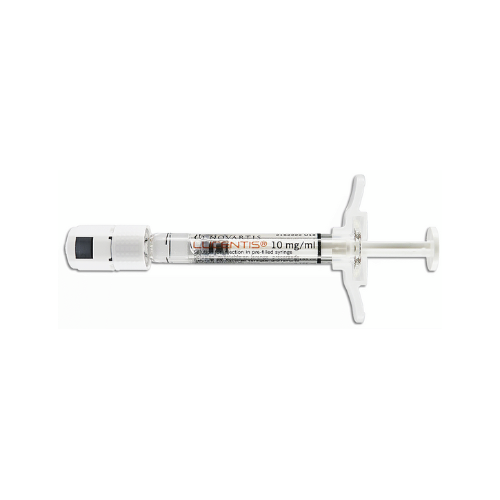
Lucentis Prefilled Syringe
Buy Lucentis Prefilled Syringe Online


Lucentis Prefilled Syringe is a ranibizumab injection used by eye care professionals for intravitreal treatment, meaning the medicine is injected into the eye under sterile clinic conditions. You can buy Lucentis Prefilled Syringe online and choose the strength and quantity shown during ordering to match the directions from your retina clinic. The prefilled device helps reduce preparation steps in the treatment setting, but it is not designed for self-injection at home.
Lucentis is temperature sensitive and should stay in its carton until professional handling. Match the brand name, ranibizumab active ingredient, dose wording, and prefilled syringe form before arranging an appointment. If your clinic uses its own medicine supply, confirm whether you should obtain the syringe separately before relying on the displayed total.
Lucentis Prefilled Syringe Price, Strength, and Quantity
The Lucentis Prefilled Syringe price depends on the strength, quantity, and form shown during ordering. The most useful cost comparison is the exact ranibizumab prefilled syringe your clinic named, not a vial, a different anti-VEGF medicine, or a clinic-administered bill that includes professional services. Cash-pay totals can also differ from insurance or reimbursement pathways.
Lucentis descriptions may refer to a Lucentis 10 mg/mL prefilled syringe, a Lucentis 0.5 mg prefilled syringe, or a Lucentis 0.3 mg prefilled syringe depending on the presentation and treatment context. Concentration, total fill, and administered dose are separate details. The eye care team prepares the sterile field and administers the amount directed for the treated eye.
Quick tip: Match the strength and syringe form first, then evaluate the final checkout total.
| Detail to match | Why it matters |
|---|---|
| Brand and active ingredient | Lucentis contains ranibizumab, and the order should match the clinic’s intended medicine. |
| Strength wording | Terms such as 0.5 mg, 0.3 mg, and 10 mg/mL describe different label details. |
| Device form | A prefilled syringe is not the same presentation as a vial. |
| Quantity | The number of syringes should align with the treatment visit plan. |
| Temperature handling | Cold-chain handling can affect the practical total and appointment planning. |
How to Order Lucentis Prefilled Syringe Online
Ordering should begin with the exact product name and strength on the clinic paperwork. Choose the ranibizumab prefilled syringe form, review the quantity, and make sure the appointment timing supports refrigerated storage before the injection visit. We may help review order details if clarification is needed.
When supported for an order, US delivery from Canada may be coordinated with prompt, express, cold-chain shipping. Because Lucentis is a biologic medicine, plan ahead so the unopened carton can be kept under the storage conditions described by the product label and your clinic. Do not open the syringe, clean the sterile parts, or try to prepare it yourself.
- Match the medicine: Confirm Lucentis, ranibizumab, and prefilled syringe wording.
- Choose the strength: Use the strength shown that matches the clinic directions.
- Set the quantity: Align the order with the planned injection visit.
- Plan storage: Keep refrigerated handling in mind before the appointment.
- Bring clinic information: Have treatment paperwork available if product details need clarification.
Lucentis intravitreal injection must be administered by a trained eye care professional. A home syringe delivery does not change the sterile injection process, eye pressure checks, or follow-up plan used by the retina clinic.
What Lucentis Treats
Lucentis belongs to the anti-VEGF class. VEGF means vascular endothelial growth factor, a signal that can contribute to abnormal blood vessel growth and leakage in the retina. Ranibizumab binds VEGF in the eye, which can help treat certain retinal conditions when an eye specialist selects it.
Approved uses vary by country and product label. Lucentis is commonly associated with wet age-related macular degeneration, diabetic macular edema, diabetic retinopathy, macular edema following retinal vein occlusion, and myopic choroidal neovascularization. The diagnosis named by your clinic should guide how you read dose, follow-up, imaging, and monitoring information.
For condition-specific navigation, see Wet Age-Related Macular Degeneration, Diabetic Macular Edema, Diabetic Retinopathy, Retinal Vein Occlusion Macular Edema, and Myopic Choroidal Neovascularization. These condition pages can help you match clinic terminology to the retinal disease being treated.
Prefilled Syringe Form and Clinic Administration
The prefilled syringe is intended to simplify some preparation steps for the clinic, not to make the injection a home procedure. Intravitreal injections require sterile preparation, eye surface cleaning, professional technique, and post-injection instructions. If both eyes require treatment, official product information describes using a separate syringe or vial and a separate sterile field for each eye.
Do not use the syringe if the package appears damaged, the cap is detached, the solution looks cloudy or discolored, or particles are visible. Leave inspection and preparation to the professional administering the injection. If the carton has been dropped, frozen, overheated, or opened, contact the clinic before the appointment.
The wording on ranibizumab prefilled syringes can be confusing because labels may include concentration, total volume, and delivered dose. Concentration describes how much ranibizumab is in each milliliter of solution. The dose is the amount the clinician administers into the eye after preparing the device according to professional instructions.
- Active ingredient: Ranibizumab is the medicine in Lucentis.
- Route: Intravitreal use means injection into the eye.
- Device: The prefilled syringe differs from a vial presentation.
- Professional handling: Sterile preparation belongs in the clinic.
Cash-Pay and Clinic Billing Considerations
If you are evaluating Lucentis Prefilled Syringe without insurance, focus on the same strength, form, and quantity named by the retina clinic. A Lucentis injection cost shown by a clinic may include the medicine, examination, imaging, injection procedure, facility charges, or follow-up care. An online medicine total usually isolates the syringe itself.
Some clinics supply anti-VEGF medicines directly, while others may ask the patient to arrange the product. Confirm the workflow before ordering so the syringe arrives in the condition and timing the clinic expects. If the clinic does not accept patient-supplied biologic medicines, a lower displayed medicine total may not be useful.
Why it matters: Like-for-like comparison prevents confusion between medicine cost and full clinic visit billing.
Storage, Light Protection, and Transport
Lucentis is generally stored refrigerated at 2°C to 8°C and protected from light. Keep the carton closed, do not freeze it, and do not leave it in a hot car. Temperature control helps maintain product quality before the eye care professional prepares the injection.
If the appointment time changes, ask the clinic how to keep the medicine until the new visit. Do not repeatedly warm and cool the syringe unless the clinic gives specific instructions. If there is concern about a temperature excursion, package damage, or freezing, do not use the product without professional guidance.
Travel planning should account for both cold storage and sterile handling. Do not place the syringe in checked luggage or remove it from the carton for convenience. Bring the labeled carton and any storage documentation if the clinic asks for them.
- Refrigerate: Follow the label storage range for unopened product.
- Protect from light: Store the syringe in its carton.
- Avoid freezing: Do not use a product that may have frozen.
- Do not open: Leave sterile components intact for the clinic.
Side Effects, Warnings, and Monitoring
Lucentis should not be used in an eye with an ocular or periocular infection, in active intraocular inflammation, or in someone with known hypersensitivity to ranibizumab or any component. Tell the eye specialist about eye pain, redness, swelling, discharge, recent eye surgery, recent injection, or new infection symptoms before treatment.
Common eye-related reactions may include conjunctival hemorrhage, eye pain, floaters, irritation, increased tearing, and a temporary rise in intraocular pressure. Conjunctival hemorrhage means bleeding on the white part of the eye and can look alarming even when it is not the same as bleeding inside the eye. The clinic’s after-injection instructions are important because expected irritation and urgent symptoms can overlap.
Serious risks after intravitreal anti-VEGF injections include endophthalmitis, retinal detachment, increased intraocular pressure, and rare arterial thromboembolic events such as stroke or heart attack. Endophthalmitis is a severe infection inside the eye that needs urgent care. Seek same-day eye care for severe pain, worsening redness, sudden vision loss, marked light sensitivity, increasing discharge, many new floaters, flashes, or a curtain-like shadow.
Before and after treatment, the retina team may measure eye pressure, examine the retina, review vision changes, and schedule imaging. Mention pregnancy, breastfeeding, allergies, recent cardiovascular events, and all eye medicines or procedures. Those details help the clinician decide whether treatment-day assessment or follow-up should be adjusted.
After the Injection: Practical Recovery Questions
After a macular degeneration or retinal injection, many clinics advise patients not to rub the treated eye and to avoid exposing it to contamination. Follow the specific instructions about drops, activity, hygiene, contact lenses, swimming, makeup, and eye shields. Mild scratchiness or tearing can occur, but worsening symptoms should be reported as directed.
Eye healing after an injection often feels different from person to person. Temporary blur, surface irritation, or a small red patch on the white of the eye may happen after treatment. Severe pain, decreasing vision, increasing redness, pus-like discharge, or a sudden shower of floaters is not a routine recovery sign.
Plan transportation if the clinic recommends it, especially if vision is blurry or the eye is patched. Keep the after-hours phone instructions close after the visit. Regular follow-up matters because anti-VEGF treatment decisions often depend on vision testing, retinal imaging, and the response seen at later appointments.
Comparing Lucentis With Other Anti-VEGF Treatments
Lucentis, Eylea, Avastin, and other anti-VEGF treatments are not automatically interchangeable. They contain different active ingredients or may be prepared in different ways. The choice can depend on diagnosis, prior response, dosing interval, eye history, coverage rules, and the retina specialist’s treatment plan.
A prefilled syringe may reduce some clinic preparation steps compared with a vial, but it still requires professional sterile handling. Do not substitute another anti-VEGF medicine because it appears less expensive or more familiar. Ask the clinic which product name, form, and strength should be used for the planned injection.
To browse related eye-care categories, visit Ophthalmology Products. For general educational articles about eye conditions and treatments, the Ophthalmology Articles category may help frame questions for the retina clinic.
| Comparison point | How to use it |
|---|---|
| Active ingredient | Ranibizumab is different from aflibercept or bevacizumab. |
| Presentation | Prefilled syringe and vial products may have different clinic workflows. |
| Condition treated | Label indications and monitoring schedules can differ by medicine and country. |
| Follow-up plan | Vision testing and retinal imaging guide ongoing treatment decisions. |
Authoritative Sources
The following sources support key product, storage, administration, and safety points. They do not replace the instructions from your eye care team.
- FDA prescribing information describes ranibizumab indications, administration, contraindications, warnings, and adverse reactions.
- UK summary of product characteristics describes the Lucentis pre-filled syringe presentation, storage conditions, and professional administration requirements.
- Official Lucentis prescribing information provides current manufacturer labeling on strengths, preparation, and safety.
This content is for informational purposes only and is not a substitute for professional medical advice.
Research & Education Tool
Lucentis Prefilled Syringe Dosage Calculator
Enter the vial amount, diluent volume, and target amount to estimate concentration, draw volume on a 1 mL U-100 syringe, and approximate vial yield.
For research and educational use only. Check all values against the product label, certificate of analysis, and any applicable professional guidance before relying on the result.
mg
Concentration
-
mcg / mL
Volume per Dose
-
-
Estimated Draws / Vial
-
rounded down to whole draws
Draw Reference
Enter values to estimate the syringe mark.
0
-
-
-
-
Express Shipping - from $29.99
Shipping with this method takes 3-5 days
Prices:
- Dry-Packed Products $29.99
- Cold-Packed Products $39.99
Standard Shipping - $19.99
Shipping with this method takes 5-10 days
Prices:
- Dry-Packed Products $19.99
- Not available for Cold-Packed products
How is Lucentis Prefilled Syringe administered?
Lucentis is administered as an intravitreal injection, meaning it is injected into the eye by a trained eye care professional under sterile clinic conditions. It is not a self-injection product.
What does Lucentis treat?
Lucentis is used for certain retinal diseases selected by an eye specialist, including wet age-related macular degeneration, diabetic macular edema, diabetic retinopathy, macular edema after retinal vein occlusion, and myopic choroidal neovascularization, depending on the country label and diagnosis.
Which is better, Lucentis or Eylea?
There is no single better choice for every patient. Lucentis contains ranibizumab, while Eylea contains aflibercept. The decision depends on the eye condition, prior response, visit schedule, safety history, coverage, and the retina specialist’s judgment.
What should I avoid after a macular degeneration injection?
Follow the clinic’s instructions. Many patients are told not to rub the treated eye and to avoid contamination risks such as swimming, eye makeup, or contact lenses for a period of time if the clinic advises it. Contact the clinic urgently for severe pain, worsening redness, discharge, or sudden vision changes.
How long does the eye take to heal after a Lucentis injection?
Mild irritation, tearing, blur, or a red spot on the white of the eye may improve over a short period, but recovery varies. Severe pain, decreasing vision, increasing redness, many new floaters, flashes, or a curtain-like shadow requires urgent eye care.
How should Lucentis Prefilled Syringe be stored before the clinic visit?
Lucentis is generally stored refrigerated at 2°C to 8°C, protected from light, and not frozen. Keep it in the carton and do not open or manipulate the syringe before professional handling.
Rewards Program
Earn points on birthdays, product orders, reviews, friend referrals, and more! Enjoy your medication at unparalleled discounts while reaping rewards for every step you take with us.
You can read more about rewards here.
POINT VALUE
How to earn points
- 1Create an account and start earning.
- 2Earn points every time you shop or perform certain actions.
- 3Redeem points for exclusive discounts.
You Might Also Like
Select options
This product has multiple variants. The options may be chosen on the product page
Select options
This product has multiple variants. The options may be chosen on the product page
Select options
This product has multiple variants. The options may be chosen on the product page
Select options
This product has multiple variants. The options may be chosen on the product page