
Please note: a valid prescription is required for all prescription medication.
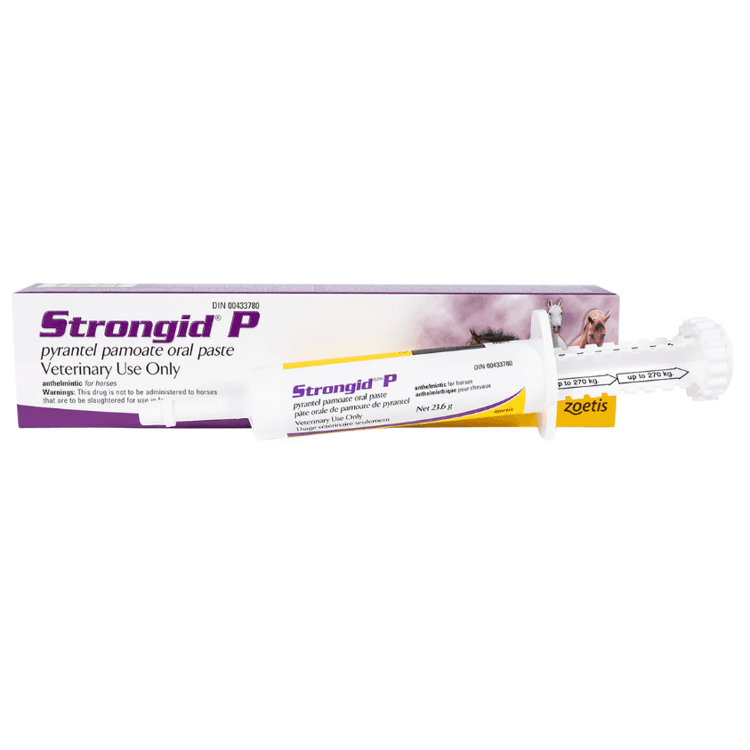
Strongid P
Strongid P horse wormer: How to Buy and Use Safely
Price:
$184.99
You save


Strongid P is a veterinary oral dewormer used in horses to address certain intestinal parasites. This page explains how Strongid P horse wormer is typically used, what “pyrantel pamoate” means, and what to know about handling and safety. It also summarizes practical steps to discuss with a veterinarian and what to check on the product label.
What Strongid P Is and How It Works
Strongid P is an anthelmintic (anti-parasite) medicine for horses, and it is commonly associated with the active ingredient pyrantel pamoate. If a prescription is required, details can be verified with the prescribing veterinarian. The medicine works in the gastrointestinal tract and is intended for parasites that live in the intestines, rather than parasites in the bloodstream or tissues.
Some patients explore US shipping from Canada when cross-border fulfilment is permitted for their situation. Strongid P horse wormer belongs to a group of dewormers that affect parasite neuromuscular function, which can lead to paralysis of susceptible worms so they can be passed from the gut. Because parasite risks vary by region, pasture conditions, and herd movement, many equine programs pair deworming with monitoring and farm management rather than relying on a fixed calendar alone. For background on parasite topics, you can browse the Intestinal Worms hub and the Pet Medications category for related items.
Why it matters: Matching the product to the parasite risk helps reduce unnecessary exposure and resistance pressure.
Who It’s For
This medicine is intended for horses as directed by the product label and a veterinarian’s plan. A veterinarian may recommend Strongid P horse wormer when a horse has a history, exam findings, or monitoring results that suggest intestinal parasite control is appropriate. Some barns also use targeted treatment approaches, where only certain horses are treated based on fecal egg counts and clinical context.
Strongid P is not meant for human use. It should also be used cautiously in horses that are severely ill, stressed, or underweight, where any gastrointestinal upset could be harder to tolerate. If a horse has had a prior reaction to dewormers or to pyrantel products, that history matters. In practice, “who it’s for” is often less about age alone and more about the overall picture: exposure risk, pasture hygiene, stocking density, and travel between farms.
- Common candidates: horses needing routine parasite control per veterinary guidance
- Higher attention: horses with past colic or GI sensitivity
- Extra planning: barns managing parasite resistance concerns
- Avoid assumptions: do not treat based only on appearance
Dosage and Usage
Dewormer dosing is typically based on body weight and the product’s labeled directions. For Strongid P horse wormer, the amount administered is generally selected using a weight estimate and the calibration on the dosing device, if provided. Underdosing can reduce effectiveness, while overdosing may increase side effects, so using a recent weight or a weight tape can be helpful when discussing a plan with a veterinarian.
Administration for equine paste products is usually by mouth. Many handlers place the dosing device into the side of the mouth, aim toward the back of the tongue, and then ensure the horse swallows. If the horse spits out part of the dose, note it and ask your veterinarian what to do next rather than automatically repeating the dose. Avoid mixing medicines unless the label or your veterinarian specifically supports it.
Working With A Deworming Plan
In many barns, deworming is most effective when it is part of a broader parasite-control plan. That plan can include fecal egg count testing (a stool test that estimates parasite shedding), manure removal schedules, pasture rotation, and avoiding overstocking. These steps can reduce the parasite load in the environment and may lower the need for frequent dosing. Resistance is a real concern in equine parasites, so rotating products “just because” is not always the best strategy; instead, rotation is usually guided by local patterns and veterinary input.
Quick tip: Keep a simple log of product used, date, and the horse’s weight estimate.
Strengths and Forms
Strongid P is commonly sold as an oral paste formulation intended for horses. Depending on the market, pyrantel pamoate may also be available in other equine formulations, such as oral suspension products, which can be useful in some management settings. Availability and packaging details can vary by jurisdiction and supplier, so confirm what you have in hand by reading the carton and the label.
When comparing forms, focus on practical handling and accurate measurement rather than assuming one format is “stronger.” Paste products often use a calibrated dosing syringe, while suspension products rely on measuring devices and consistent mixing. If you manage multiple horses, talk with your veterinarian about minimizing dosing errors and maintaining consistent records.
| Attribute | What to check | Why it matters |
|---|---|---|
| Dosage form | Paste vs suspension | Changes how doses are measured |
| Active ingredient | Pyrantel pamoate listed on label | Confirms drug class and compatibility |
| Dosing device | Calibrations and condition | Supports more accurate administration |
| Lot and expiry | Printed on packaging | Helps with traceability and quality |
Storage and Travel Basics
Store dewormers according to the label, which commonly means keeping them at controlled room temperature and protecting them from excessive heat or freezing. Keep the cap or closure secured to prevent drying, contamination, or leaks. Veterinary medicines should be stored away from children, food-prep areas, and animal feed to reduce accidental exposure.
For barn travel, keep the product in its original packaging so the label remains available. If you transport supplies between farms, keep a clean, closed container for medications and basic tools (gloves, paper towels, a marker for labeling). Avoid leaving products in a vehicle where temperatures can swing widely. If you are planning trips where medication handling is a recurring issue, the general planning concepts in Travel With Zepbound may help with checklists and organization, even though it focuses on human medicines.
After administration, wipe the dosing device if it will be stored, and do not share unclean equipment between horses. If a horse refuses dosing, ask your veterinarian about safer restraint and administration techniques rather than escalating force.
Side Effects and Safety
Most horses tolerate pyrantel-based dewormers, but side effects can occur. With Strongid P horse wormer, mild gastrointestinal signs may include reduced appetite, soft manure, or transient discomfort. Some horses may salivate or resist dosing, which can look like gagging or drooling and may be more about administration than the drug itself. Monitor the horse’s behavior for the rest of the day and ensure access to water.
More serious concerns are uncommon but require prompt veterinary assessment. Signs such as marked lethargy, persistent colic signs, swelling of the face or muzzle, breathing difficulty, or collapse could indicate a significant reaction or an unrelated emergency that coincided with dosing. If the horse becomes distressed, contact a veterinarian right away and provide details on the product, approximate dose, and timing.
- Common, self-limited: brief GI upset
- Administration related: drooling or head tossing
- Get help urgently: severe colic or breathing changes
- Document: product lot and expiry
For a structured way to think about warning signs and escalation, the approach in Ozempic Danger Practical Safety can be adapted to veterinary situations by focusing on symptom severity and timing.
Drug Interactions and Cautions
Drug-interaction data in horses can be limited, and risks often depend on the individual animal and what else is being used. In general, avoid combining dewormers or other parasite-control chemicals unless your veterinarian advises it, because unnecessary combinations can increase side effects without improving outcomes. Some parasite medicines can have overlapping adverse-effect profiles, especially involving the gastrointestinal tract.
Discuss the full medication and supplement list with your veterinarian, including sedatives used for dentistry or farrier work, ulcer medications, and any recent treatments. If your program includes multiple products over time, keep records so your veterinarian can spot patterns in tolerance and effectiveness. For broader context on how different medicines can work through distinct mechanisms, Common Diabetes Medications provides an easy framework for thinking about “drug class” and why mixing therapies should be intentional.
Compare With Alternatives
Strongid P horse wormer is one option within equine parasite-control tools, and alternatives differ by drug class and parasite coverage. Common equine dewormer classes include macrocyclic lactones (for example, ivermectin or moxidectin), benzimidazoles (for example, fenbendazole), and products that include praziquantel for tapeworm coverage in labeled combinations. Each class has distinct strengths, limitations, and resistance considerations, and selection is usually guided by fecal testing, local patterns, and horse factors.
If tapeworm coverage is a concern, do not assume that any pyrantel product will address it at the same regimen; labeled indications can differ by product and dose strategy. Also consider non-drug steps that reduce reinfection, such as manure management and avoiding overgrazing. When evaluating choices, it can help to separate “what the label covers” from “what the barn is worried about,” then bring those points to a veterinarian for a plan that fits the herd.
Pricing and Access
Access to veterinary dewormers depends on local regulations, product classification, and supply channels. If you are seeking Strongid P horse wormer for routine programs, consider how many horses are involved, how often monitoring is done, and whether your barn uses targeted treatment. When permitted, dispensing is handled by licensed third-party pharmacies. Documentation needs can include the product name, quantity, and (when applicable) a valid prescription from a veterinarian.
Coverage varies widely, and many veterinary products are paid out-of-pocket; this is especially true without insurance. Even when coverage exists, reimbursement rules and eligible products can differ by plan. Ask what documentation is required (invoice details, prescribing information, and lot numbers if relevant) and keep receipts with your dosing log. Cross-border fulfilment may be considered based on eligibility and local rules, and requirements can change by jurisdiction.
For general education on how costs can vary across medication types and why documentation matters, the site’s resource library includes Cut Insulin Costs and Living With Diabetes. While these focus on human health, the organizational ideas (tracking supplies, planning refills, and recordkeeping) can still be useful for long-term care routines. If you are comparing administration tools across different therapies, Insulin Pen Vs Syringe offers a practical way to think about device accuracy and handling. For discussions that touch on weight management and feeding routines as part of overall health planning, Diet And Weight Loss summarizes common terminology in an accessible way.
Authoritative Sources
For equine parasite-control principles and resistance context, review the AAEP internal parasite control guidelines.
For a veterinary overview of anthelmintic classes and practical cautions, see the Merck Veterinary Manual anthelmintics section.
For general regulatory information on animal drugs, consult the FDA Center for Veterinary Medicine.
When permitted, referrals may be coordinated and partner pharmacies may use prompt, express, cold-chain shipping based on product needs.
This content is for informational purposes only and is not a substitute for professional medical advice.
Express Shipping - from $25.00
Shipping with this method takes 3-5 days
Prices:
- Dry-Packed Products $25.00
- Cold-Packed Products $35.00
Standard Shipping - $15.00
Shipping with this method takes 5-10 days
Prices:
- Dry-Packed Products $15.00
- Not available for Cold-Packed products
What is Strongid P used for in horses?
Strongid P is an equine dewormer commonly associated with the active ingredient pyrantel pamoate. In practice, it is used as part of intestinal parasite control in horses, based on labeled indications and a veterinarian’s assessment. Barn-level decisions often consider fecal egg counts, pasture exposure, and the horse’s age and health status. Because parasite patterns and resistance can differ between farms and regions, the “right” deworming approach is usually individualized rather than purely calendar-based.
How does pyrantel pamoate work as a dewormer?
Pyrantel pamoate is an anthelmintic (anti-parasite) medicine. It acts primarily in the gastrointestinal tract and interferes with neuromuscular function in susceptible intestinal worms, which can lead to paralysis and passage of the parasites. Different dewormer classes work in different ways, which is one reason veterinarians may recommend a specific product depending on monitoring results and local resistance concerns. Always rely on the product label and veterinary guidance for what a given product is expected to cover.
How is the right dose determined for a horse?
Dosing for equine dewormers is typically based on the horse’s body weight and the labeled directions for the specific product. In many cases, the dosing device is calibrated to help measure an appropriate amount, but accuracy still depends on having a reasonable weight estimate. Underdosing may reduce effectiveness, and overdosing may increase side effects. If a dose is partially lost (spit out) or if weight is uncertain, it is safer to document what happened and ask a veterinarian how to proceed.
What side effects should I watch for after giving Strongid P?
Many horses have no noticeable problems, but mild gastrointestinal signs can occur after deworming. Watch for reduced appetite, soft manure, mild discomfort, or transient behavioral changes. Administration-related issues (drooling, head tossing) can also happen. More concerning signs include persistent colic, severe lethargy, swelling of the muzzle or face, hives, breathing difficulty, or collapse. If severe symptoms occur, contact a veterinarian urgently and provide the product name, approximate dose, and timing.
Can Strongid P be used in pregnant mares or young horses?
Whether a dewormer is appropriate in pregnancy or early life depends on the specific product labeling, the animal’s health, and the parasite risk in the environment. Some dewormers have established use patterns in breeding programs, but it is still important to confirm the label and discuss timing with a veterinarian. Young horses may have different parasite risks than adults, and they can also be more sensitive to illness or dehydration if side effects occur. Avoid making schedule changes without veterinary input.
What should I ask my veterinarian before starting a deworming program?
Useful questions include: which parasites are most likely on this farm, whether fecal egg counts should guide treatment, and how to reduce reinfection through pasture management. Ask which drug class is being chosen and why, and whether resistance is a concern locally. It also helps to review the horse’s history of colic, weight changes, or prior reactions to dewormers. Finally, confirm how to estimate weight accurately and what to do if part of a dose is spit out or if side effects occur afterward.
Rewards Program
Earn points on birthdays, product orders, reviews, friend referrals, and more! Enjoy your medication at unparalleled discounts while reaping rewards for every step you take with us.
You can read more about rewards here.
POINT VALUE
How to earn points
- 1Create an account and start earning.
- 2Earn points every time you shop or perform certain actions.
- 3Redeem points for exclusive discounts.
You Might Also Like
Select options
This product has multiple variants. The options may be chosen on the product page
Select options
This product has multiple variants. The options may be chosen on the product page
Select options
This product has multiple variants. The options may be chosen on the product page
Select options
This product has multiple variants. The options may be chosen on the product page
Related Articles
Weight Management
Generic Wegovy: Availability, Alternatives, and Cost Context
Generic Wegovy is usually a search for a lower-cost semaglutide option, but the term can be misleading. A true generic is a regulator-approved equivalent to a brand medicine, and patients…
Type 2 Diabetes,
Generic Ozempic Explained for Patients and Caregivers
Key Takeaways People searching generic ozempic are usually trying to confirm whether a lower-cost semaglutide option is a true approved equivalent, a compounded product, or a different diabetes medicine. Separate…
Uncategorized
Rybelsus Generic: A Patient Guide to Current Options
Key TakeawaysMany people searching for rybelsus generic are trying to answer one practical question: is there a true lower-cost equivalent tablet, or only the brand product and look-alike alternatives?Brand and…
Type 2 Diabetes,
Generic Liraglutide For Weight Loss: A Practical Guide
People searching for generic liraglutide for weight loss usually want clear answers on three points: whether an approved lower-cost version exists, how it differs from brand-name products, and what access…