
Please note: a valid prescription is required for all prescription medication.
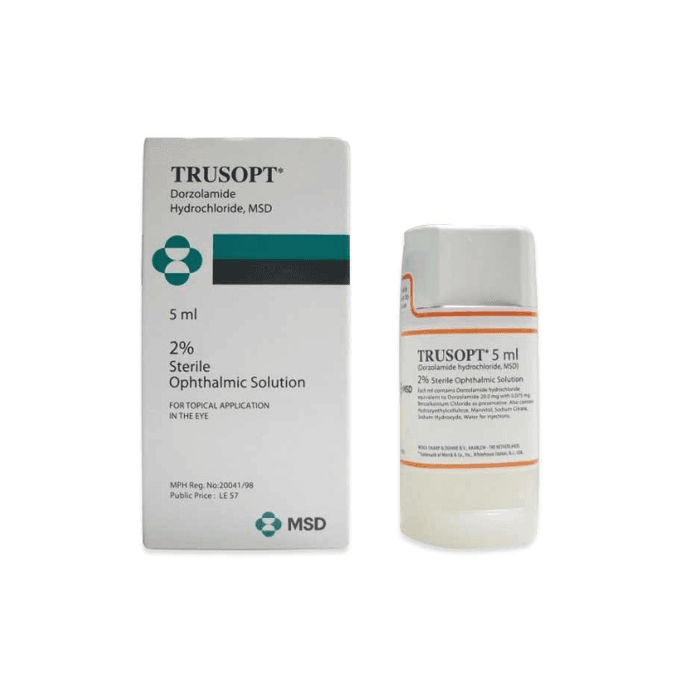
Trusopt
Trusopt Eye Drops: Uses, Dosage Basics, and Safety
Price:
$51.99
You save


Trusopt is a prescription eye drop that contains dorzolamide to help lower intraocular pressure (eye pressure). This page explains how trusopt eye drops are typically used, along with key safety, interaction, and storage considerations. It is designed to support informed discussions with an eye-care professional.
What Trusopt Is and How It Works
Trusopt is a topical carbonic anhydrase inhibitor (enzyme blocker) used to reduce intraocular pressure by decreasing aqueous humor production (the fluid made inside the eye). Lowering eye pressure is a common goal in conditions such as glaucoma and ocular hypertension. For broader context on eye medicines and related options, browsing the Ophthalmology Products hub can help you see how different drop classes are grouped.
In terms of process boundaries, CanadianInsulin can facilitate a prescription referral and may verify prescription details with the prescriber when required. Some patients explore Ships from Canada to US as part of cross-border fulfilment considerations, depending on eligibility and jurisdiction. Eye-pressure conditions are often long-term, so routine follow-up matters; the Glaucoma Overview and Ocular Hypertension Guide hubs are useful starting points for understanding how these diagnoses are described and monitored.
Dorzolamide works locally in the eye, but small amounts can still be absorbed into the bloodstream. That is one reason labels include cautions for certain medical conditions and for use with related medicines. For practical reading, the Ophthalmology Articles hub can also help you compare terminology across common eye-drop regimens.
Who It’s For
Clinicians commonly prescribe trusopt eye drops for people with elevated intraocular pressure related to open-angle glaucoma or ocular hypertension. Treatment choice depends on the pressure target, optic nerve findings, symptoms, and how a person tolerates drops over time. This medicine may be used alone or combined with other pressure-lowering drops when additional effect is needed.
It is not appropriate for everyone. Do not use dorzolamide products if there is a known hypersensitivity to dorzolamide or other ingredients in the formulation. Because dorzolamide is a sulfonamide derivative, people with a history of severe sulfonamide reactions should discuss risk carefully with their clinician. The labeling for dorzolamide also includes cautions for people with significant kidney problems, because the medicine and its metabolites are cleared through the kidneys.
Veterinary ophthalmologists sometimes use dorzolamide off-label for glaucoma in dogs, but pets should only receive eye drops under veterinary direction. If you are comparing human and animal therapies, the Pet Medications hub can help you browse other veterinarian-prescribed options without assuming interchangeability.
Dosage and Usage
Typical dosing for dorzolamide 2% eye drops is set by the prescriber and depends on whether it is used by itself or alongside other glaucoma therapies. Many regimens use one drop in the affected eye(s) three times daily, and some combination plans use twice-daily dosing when paired with a topical beta-blocker. The exact schedule should follow the prescription label and the clinician’s plan for monitoring pressure response.
To use trusopt eye drops correctly, general technique matters as much as timing. Wash hands, tilt the head back, and place one drop into the lower eyelid pocket without letting the bottle tip touch the eye, eyelids, or fingers. After instilling a drop, gently closing the eye can reduce waste. If more than one eye drop is prescribed, spacing products apart (often several minutes) can help avoid “washout” and reduce overflow.
- Contact lenses: Remove before dosing if advised.
- Multiple drops: Separate by a short interval.
- Contamination risk: Avoid touching the tip.
- Missed dose: Follow label instructions.
Quick tip: Keep a simple checklist so doses are not doubled.
Strengths and Forms
Trusopt is commonly supplied as a dorzolamide ophthalmic solution at 2% strength (often expressed as 20 mg/mL). It is typically packaged in a small multi-dose dropper bottle (for example, 5 mL), although packaging size and labeling details can vary by market and supplier. Not every bottle looks identical, so it helps to confirm the name, concentration, and preservative information on the carton and bottle label.
Some people look for a generic equivalent. In many regions, generic dorzolamide ophthalmic solution 2% is considered the same active ingredient and strength as the brand product, but inactive ingredients (such as preservatives) and bottle design can differ. Those differences may affect comfort or ease of administration for some users, especially if they have dry eye, allergies, or arthritis that makes squeezing bottles harder.
If a clinician switches a patient between brand and generic, routine pressure checks are still important. Glaucoma care often focuses on consistency: correct dose, consistent technique, and scheduled monitoring to reduce the risk of silent progression.
Storage and Travel Basics
Most dorzolamide eye drops are stored at controlled room temperature and kept tightly closed when not in use. Protect the bottle from contamination and avoid sharing it with others. Do not use a bottle that looks cracked, leaks, or has a missing safety seal. If the solution changes color, becomes cloudy, or develops particles, follow the label guidance and consult a pharmacist or clinician.
When traveling with trusopt eye drops, keep the bottle in its original box if possible so the drug name and strength are available if questions arise. Avoid leaving it in a hot car, near heaters, or in freezing conditions. If you use several eye products, carrying them together in a small pouch can reduce mix-ups, but keep caps secured to prevent leakage.
Some people also track drop counts to anticipate refills. That approach can be especially helpful when the regimen includes more than one pressure-lowering medication and follow-up visits are spaced out.
Side Effects and Safety
Like many ophthalmic medications, trusopt eye drops can cause local irritation. Commonly reported effects include burning or stinging after the drop, eye redness, watery eyes, blurred vision for a short period, or a bitter taste in the mouth. Eyelid inflammation and superficial punctate keratitis (small corneal surface irritation) can also occur. If irritation is persistent rather than brief, a clinician may reassess technique, timing with other drops, or whether another formulation is needed.
Serious reactions are less common but require prompt medical evaluation. Because dorzolamide is a sulfonamide derivative, rare systemic hypersensitivity reactions can occur, including severe skin reactions. Eye pain, significant swelling, marked discharge, sudden vision changes, or signs of an allergic reaction should be treated as urgent. People with a history of kidney stones or severe kidney disease should discuss risks and monitoring with their clinician, since carbonic anhydrase inhibition can affect acid-base balance in the body.
Why it matters: Glaucoma can progress without symptoms, so safety and monitoring should be planned.
Regular eye exams remain a key part of care. If you want a reminder of why routine ophthalmology appointments matter even when symptoms are absent, see Semaglutide Vision Reminder for a broader monitoring perspective.
Drug Interactions and Cautions
Dorzolamide is a carbonic anhydrase inhibitor, so clinicians use caution when it is combined with other medicines in the same class. Using topical dorzolamide with an oral carbonic anhydrase inhibitor (such as acetazolamide) may increase the chance of systemic side effects, because the enzyme inhibition becomes additive. In practice, combination decisions are individualized and depend on eye-pressure goals and tolerability.
Tell the prescriber and pharmacist about all prescription medicines, over-the-counter products, and supplements. While topical eye drops have lower systemic exposure than pills, interactions and additive side effects are still possible. High-dose salicylates have been discussed as a potential concern with carbonic anhydrase inhibitors, so it is important for clinicians to know if a patient uses large doses regularly.
Other cautions include contact lens use and other eye conditions. If there is an active eye infection, recent eye surgery, significant dry eye, or corneal disease, the care plan may need adjustments. A clinician can also advise on punctal occlusion (gentle pressure at the tear duct) when appropriate to limit systemic absorption.
Compare With Alternatives
Clinicians choose glaucoma medicines based on pressure-lowering needs, side effect profile, and dosing schedule. If trusopt eye drops are not a good fit, or if additional therapy is needed, common alternatives include prostaglandin analogs (often once daily), beta-blocker drops (often once or twice daily), and alpha-2 agonists. Laser procedures or surgery may also be considered for some patients, depending on the type of glaucoma and response to medicines.
Two related options that may come up in discussions include generic single-agent dorzolamide and a combination product. A single-agent alternative is Dorzolamide Ophthalmic Solution, which contains the same active ingredient as the brand product in many markets. Another option is Cosopt, which combines dorzolamide with timolol in one bottle; combination drops can reduce the number of bottles used, but they also add beta-blocker precautions that may matter for some people.
Switching therapies should not be done without clinician guidance. When regimens change, it is normal for eye pressure to be rechecked to confirm the new plan meets the intended target.
Pricing and Access
Access to trusopt eye drops depends on the prescription, local regulatory rules, and pharmacy availability. Coverage varies widely across private insurance plans and public programs, and out-of-pocket costs may differ based on whether a brand or generic is used. For people managing glaucoma long term, it can help to ask the clinic and pharmacist which documentation they need to process refills smoothly and keep monitoring visits aligned.
CanadianInsulin’s role is to support the prescription referral process and, when required, confirm prescription details with the prescriber before routing the request onward. Dispensing is handled by licensed third-party pharmacies where permitted, and cross-border fulfilment may be considered depending on eligibility and jurisdiction. In that context, some patients also account for US shipping from Canada when planning continuity of therapy and follow-up checks.
If you are comparing options without insurance, ask the dispensing pharmacy whether a generic is suitable and whether bottle size differs. Some people review additional administrative information on Program Information, but any program terms should be read alongside the prescription requirements and the clinician’s monitoring plan.
Authoritative Sources
For prescribing details and adverse reactions, a neutral reference is DailyMed dorzolamide ophthalmic solution listings.
For clinical background on glaucoma care, see American Academy of Ophthalmology glaucoma overview.
If medication is transported by mail, prompt, express, cold-chain shipping may be used when temperature control is required.
This content is for informational purposes only and is not a substitute for professional medical advice.
Express Shipping - from $25.00
Shipping with this method takes 3-5 days
Prices:
- Dry-Packed Products $25.00
- Cold-Packed Products $35.00
Standard Shipping - $15.00
Shipping with this method takes 5-10 days
Prices:
- Dry-Packed Products $15.00
- Not available for Cold-Packed products
What is Trusopt used for?
Trusopt is a prescription eye drop that contains dorzolamide, a carbonic anhydrase inhibitor. It is commonly used to lower intraocular pressure (eye pressure) in conditions such as open-angle glaucoma and ocular hypertension. Lowering eye pressure is a standard part of preventing damage to the optic nerve over time. Your ophthalmologist determines whether dorzolamide is appropriate based on exam findings, other health conditions, and how you tolerate eye drops. Follow the prescribed plan and attend scheduled pressure checks.
How often are dorzolamide eye drops typically used?
Dorzolamide dosing depends on the regimen your clinician prescribes. Many treatment plans use one drop in the affected eye(s) three times daily when dorzolamide is used alone. In some cases, dosing may be twice daily when it is used with certain other glaucoma drops, such as a topical beta-blocker. The exact schedule should match your prescription label. If you miss a dose, follow the label directions rather than doubling up, and ask your clinic how they prefer you handle missed doses.
Can I use Trusopt with other eye drops?
Trusopt is often used alongside other glaucoma medications, but spacing and technique are important. When multiple drops are prescribed, clinicians commonly recommend separating them by several minutes to reduce overflow and help each medication stay on the eye’s surface long enough to work. Avoid letting bottle tips touch the eye or lashes, since contamination can lead to infection. If you use ointments, ask the pharmacist about the correct order, because ointments can form a barrier that affects other drops.
What side effects should I watch for with Trusopt?
Many people notice brief burning or stinging after instillation, temporary blurred vision, or a bitter taste. Redness, watering, or eyelid irritation can also occur. Seek urgent medical attention for severe eye pain, sudden vision changes, marked swelling, rash, or signs of a serious allergic reaction. Dorzolamide is a sulfonamide derivative, so rare systemic hypersensitivity reactions are possible even though it is used in the eye. Tell your clinician about kidney problems or prior severe drug reactions.
Is Trusopt considered a sulfa drug?
Dorzolamide (the active ingredient in Trusopt) is a sulfonamide derivative. That does not mean everyone with a “sulfa allergy” will react, but it does mean clinicians take a careful history. If you have had a severe sulfonamide reaction in the past (for example, serious skin reactions), discuss this before using dorzolamide. Also review any prior reactions to eye drops, preservatives, or contact lens solutions. Your clinician can help weigh the risks and consider alternatives if needed.
What should I ask my ophthalmologist or veterinarian before starting dorzolamide?
Ask what diagnosis is being treated (glaucoma type or ocular hypertension), what the target eye pressure is, and how often pressure and optic nerve checks should occur. Review your full medication list, especially any oral carbonic anhydrase inhibitors, since combined use may increase side effects. If you wear contact lenses, ask about timing around dosing. For pets, ask whether dorzolamide is being used off-label, how dosing differs by species, and what signs (pain, redness, cloudiness) should prompt urgent recheck.
Rewards Program
Earn points on birthdays, product orders, reviews, friend referrals, and more! Enjoy your medication at unparalleled discounts while reaping rewards for every step you take with us.
You can read more about rewards here.
POINT VALUE
How to earn points
- 1Create an account and start earning.
- 2Earn points every time you shop or perform certain actions.
- 3Redeem points for exclusive discounts.
You Might Also Like
Select options
This product has multiple variants. The options may be chosen on the product page
Select options
This product has multiple variants. The options may be chosen on the product page
Select options
This product has multiple variants. The options may be chosen on the product page
Timolol Maleate Ophthalmic Solution
Price range: $38.99 through $42.99
You save
- In Stock
- Express Shipping
Select options
This product has multiple variants. The options may be chosen on the product page
Related Articles
Weight Management
Generic Zepbound: Availability, Status, and Options
Key Takeaways Patients and caregivers often search for generic zepbound when they need a clear answer about availability, labeling, and lower-cost access. The term is common online, but it does…
Type 2 Diabetes,
Oral Wegovy Explained: Facts, Risks, and Access Options
The phrase oral wegovy is best understood as a search term, not a settled product name. Most people use it to mean a pill version of semaglutide for weight management,…
Diabetes, General Health,
Glp-1 Drugs Over The Counter: What’s Real And What’s Not
Key Takeaways Prescription GLP-1 medicines are not sold as true OTC drugs. Many “GLP-1” supplements aim to support fullness, not mimic prescriptions. Online “no prescription” offers raise counterfeit and quality…
Diabetes, Type 2
GLP-1 Cost Without Insurance: Compare Cash-Pay Options
Key Takeaways Many people searching for glp-1 cost without insurance are trying to plan for a long-term expense. The total can change based on the drug, the pharmacy, and how…