
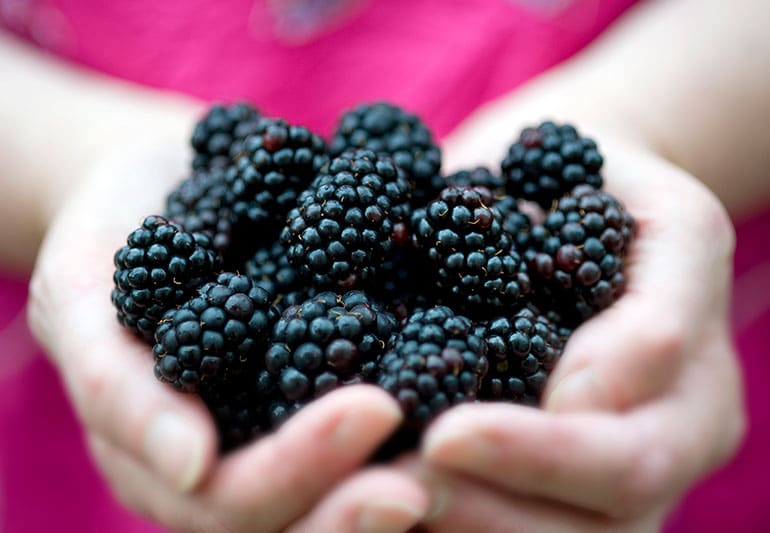
Yes. Many people with diabetes can eat blackberries as part of a balanced meal plan. Blackberries and diabetes often fit together well because whole berries are high in fibre, relatively low in sugar for a fruit, and usually considered low glycemic. Portion still matters. Blackberries contain carbohydrate, so they can raise blood sugar, especially in large servings or when eaten with other carbohydrate-rich foods.
Key Takeaways
- Blackberries contain carbs, but also provide fibre and water.
- A common serving is about 1 cup raw, though targets vary.
- Whole fresh or unsweetened frozen berries usually fit better than juice or jam.
- Your glucose response depends on the portion, meal, activity, and medications.
- Ask a clinician or dietitian about repeated highs, lows, or strict carb goals.
Why Blackberries Can Fit a Diabetes Meal Plan
Blackberries can be a practical fruit choice because they combine natural sugar with fibre, water, and plant compounds called polyphenols. Fibre slows digestion and may soften the rise in blood glucose after eating. Polyphenols are being studied for possible metabolic effects, but berries should not be treated as a diabetes treatment.
The glycemic index (GI) ranks how quickly carbohydrate-containing foods raise blood glucose when eaten alone. Blackberries are usually described as a low-GI fruit. That does not make them carbohydrate-free. It means their effect is often more gradual than sweetened drinks, fruit juice, candy, or many refined snacks.
The practical link between blackberries and diabetes is balance. A measured bowl may fit easily into a meal plan. A large smoothie with several cups of fruit, juice, honey, and sweetened yogurt may act very differently. The same fruit can have a different effect based on form and meal context.
Why it matters: A low-glycemic food can still affect blood sugar when the portion grows.
For a wider view of berries, fibre, and nutrition patterns, see Berries Are Superfoods For Diabetes. If you are comparing fruit choices, Low GI Fruits explains how glycemic index fits into meal planning.
Carbs, Fibre, and Blood Sugar Response
Blackberries contain carbohydrate from natural sugars and fibre. A typical cup of raw blackberries provides about 14 grams of total carbohydrate, with much of that coming from fibre. Exact numbers can vary by database, berry size, ripeness, and product label.
Fibre is one reason blackberries tend to be gentler on blood sugar than many fruit juices. Whole berries keep their structure and take longer to chew and digest. Juice removes much of the fibre and makes it easier to drink more carbohydrate quickly. Jam, syrup-packed fruit, and desserts can add extra sugar beyond the berries themselves.
Do blackberries raise blood sugar? They can, because they contain carbohydrate. The rise is often smaller and slower than with higher-sugar, lower-fibre foods, but individual responses vary. Some people see little change after a measured portion. Others notice a clearer rise when berries are eaten alone, late at night, or alongside cereal, granola, toast, or dessert.
If you monitor at home, your meter or continuous glucose monitor (CGM) can show your own pattern. Testing routines should follow your care plan. Avoid changing medication doses or carbohydrate targets based only on one meal result unless your healthcare professional has told you how to do that safely.
People who use home meters can review device options through the Diabetes Product Category when glucose tracking is part of their care plan. Product pages are for navigation and device information, not a substitute for medical guidance.
How Much Blackberry Makes Sense?
There is no single blackberry serving size for every person with diabetes. Many diabetes meal plans use about 15 grams of carbohydrate as one fruit serving, but your own plan may use a different target. Around 1 cup of raw blackberries is often close to that range.
For blackberries and diabetes, portion size should match the rest of the meal. A half cup may fit better when you are also eating oatmeal, toast, rice, or another starch. A larger serving may fit when the meal is lower in carbohydrate elsewhere and your care plan allows it.
The carb serving calculator can help estimate how many carb servings are in a measured amount. It divides total carbohydrate by your chosen serving target. It supports label reading and meal planning, but it does not provide personalised medical advice.
Carb Serving Calculator
Convert total carbohydrate grams into carb choices for meal planning and diabetes education.
These calculations are for education only and do not replace clinical advice, diagnosis, or treatment. Always confirm medical decisions with a qualified healthcare professional.
Use the nutrition label when you eat frozen, packaged, or prepared blackberries. Unsweetened frozen berries are often similar to fresh berries, but sweetened versions can contain added sugar. If a product lists syrup, cane sugar, fruit juice concentrate, or sweetened sauce, count those carbohydrates too.
Fresh, Frozen, Canned, Dried, or Blended?
The form of the fruit changes how quickly and how much carbohydrate you may consume. Whole berries usually give you the most fibre and volume for the carbohydrate amount. Concentrated forms can make portions harder to judge.
| Form | What to Check | Practical Note |
|---|---|---|
| Fresh blackberries | Portion size and total meal carbs | Easy to measure by cup or weight. |
| Unsweetened frozen blackberries | Ingredient list and serving size | Useful when fresh berries are unavailable. |
| Canned blackberries | Syrup, juice, or added sugar | Choose no-added-sugar products when possible. |
| Dried blackberries | Concentrated carbs and portion weight | Small portions can contain more sugar than expected. |
| Juice, jam, or desserts | Added sugar and fibre loss | These can raise glucose faster than whole berries. |
Frozen blackberries and diabetes can work well when the package contains only fruit. They are convenient for yogurt, oatmeal, chia pudding, or smoothies. For smoothies, measure the fruit first and avoid adding juice unless it fits your carbohydrate plan.
Blending changes how easy it is to consume a large amount. A smoothie may include blackberries, banana, juice, sweetened yogurt, and honey in one drink. That may contain much more carbohydrate than a bowl of whole berries. If you enjoy smoothies, keep the recipe consistent and compare glucose patterns across similar portions.
Practical Pairings and Meal Ideas
Blackberries work best when they are part of a meal pattern, not treated as a free food. Pairing them with protein, fat, or other high-fibre foods may make the meal more filling. Examples include plain Greek yogurt, cottage cheese, nuts, seeds, oats, or a balanced breakfast plate.
- Measure first: use a cup, scale, or label serving.
- Choose whole fruit: limit juice, jam, and sweetened sauces.
- Check labels: look for added sugar in packaged products.
- Pair thoughtfully: add protein or fibre-rich foods when appropriate.
- Track patterns: compare similar meals rather than one reading.
Keep the whole plate in view. Blackberries on sweet cereal, with syrup, or in a large dessert may produce a different glucose pattern than the same berries with a balanced meal. This is why many people find food logs more useful than food lists alone.
For more fruit comparisons, Best Fruits For Diabetics covers portion-aware choices across common fruits. If you are comparing berries specifically, Blueberries And Diabetes offers a related look at another popular berry.
When Fruit Choices Need Extra Individual Guidance
Some situations call for more individual guidance. If you use insulin or medicines that can cause hypoglycemia (low blood sugar), carbohydrate timing and consistency may matter. Do not skip planned carbohydrates or change medicine timing without professional guidance.
Extra support is also sensible during pregnancy, kidney disease, gastroparesis (slowed stomach emptying), eating disorder recovery, or repeated unexplained highs or lows. A registered dietitian or diabetes educator can help adapt fruit portions to your glucose targets, medications, appetite, and lab results.
Seek urgent medical help for severe low blood sugar, confusion, fainting, persistent vomiting, dehydration, or symptoms your care team has identified as emergency warning signs. If blackberries seem to raise your glucose more than expected, look at the full meal first. The cause may be cereal, granola, sweetened yogurt, juice, dessert, stress, illness, poor sleep, or a larger portion than planned.
For broader diabetes education and navigation, visit the Diabetes Articles collection. The Diabetes Medical Condition page is a browseable product-related listing for diabetes supplies and therapies.
How Blackberries Compare With Other Fruits
No fruit is the single best fruit for every person with diabetes. Blackberries, raspberries, strawberries, and blueberries are often useful because they provide fibre, colour, and moderate carbohydrate amounts. That does not make bananas, grapes, mangoes, or apples off-limits. Those fruits may simply need different portions.
Low glycemic fruits for diabetics are usually whole, unsweetened, and eaten in measured servings. Dried fruit, fruit juice, fruit snacks, and sweetened fruit cups are more concentrated. They can fit some plans, but they require closer label reading and portion control.
Blackberries for type 2 diabetes may be appealing when insulin resistance is part of the picture, because high-fibre foods can support a more filling meal pattern. Still, berries do not treat diabetes on their own. If you want a deeper look at berry compounds, Polyphenols And Diabetes explains this topic in more detail.
The safest way to approach blackberries and diabetes is to compare forms and portions, not to rank fruits as good or bad. A measured serving of whole fruit often fits better than a smaller-looking serving of dried fruit or a drink with added sugar.
Reading Labels and Watching Your Pattern
Labels can make fruit choices clearer. Check serving size first, then total carbohydrate, fibre, and added sugars. For frozen or canned fruit, the ingredient list matters. A short list with only blackberries is different from a fruit product packed in syrup.
Some people count total carbohydrate. Others use a method that accounts for fibre, only if their care team recommends it. Do not assume net carbohydrate rules apply to your plan. Labels, apps, and food databases can also disagree, so use consistent sources when tracking.
A simple pattern check can help if monitoring is part of your care. Compare a measured serving of blackberries eaten with a meal to the same serving eaten alone. Watch for trends across several similar meals, rather than reacting to one reading. Illness, stress, sleep, exercise, and medication timing can all affect glucose.
Quick tip: If a reading surprises you, record the portion, meal, timing, and activity.
If readings remain outside your target range, ask your healthcare professional for personalised guidance. Bring food records, glucose readings, medication timing, and questions about portions. That information helps your care team separate a food effect from other common glucose triggers.
Authoritative Sources
- American Diabetes Association fruit guidance outlines fruit choices for diabetes meal planning.
- USDA FoodData Central nutrient database provides nutrient data for raw and packaged foods.
- CDC healthy eating guidance explains general nutrition principles for diabetes management.
Blackberries can be a reasonable fruit choice when you measure portions, choose unsweetened forms, and consider the rest of the meal. Your own glucose pattern matters more than a generic food ranking. If you have strict carbohydrate targets or repeated out-of-range readings, review your plan with a qualified healthcare professional.
This content is for informational purposes only and is not a substitute for professional medical advice.


