
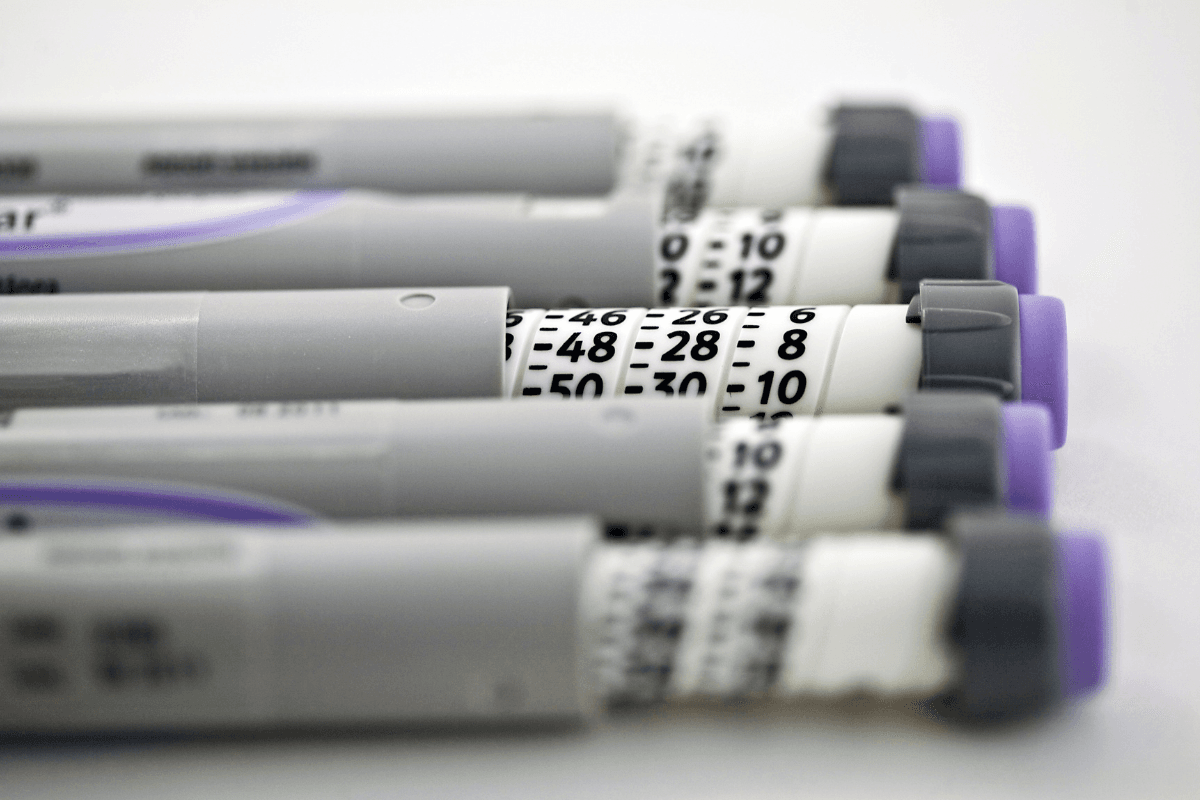
The Lantus insulin pen is a prefilled device used to inject insulin glargine, a long-acting basal insulin, under the skin. It is designed for steady background insulin coverage, not for correcting sudden blood sugar spikes. This matters because correct setup, priming, injection technique, storage, and needle disposal all affect dose delivery and day-to-day safety.
This guide explains how the pen works, what to check before each injection, how many units it contains, which accessories are usually needed, and when to ask your healthcare team for help. Use it alongside training from your prescriber, pharmacist, or diabetes educator.
Key Takeaways
- Basal insulin role: insulin glargine provides long-acting background coverage.
- Pen setup matters: inspect, attach a new needle, prime, then dose.
- Capacity is finite: each SoloStar pen commonly contains 300 units.
- Needles are separate: compatible pen needles are usually supplied apart.
- Safety comes first: never share pens, and seek help for severe lows.
How the Lantus Insulin Pen Works
The Lantus insulin pen delivers insulin glargine U-100 in one-unit increments. Insulin glargine is a basal insulin, meaning it helps cover the body’s background insulin needs between meals and overnight. After subcutaneous injection, which means injection into the fatty tissue under the skin, it releases gradually.
The pen mechanism is built to deliver the number of units shown in the dose window. You attach a sterile pen needle, perform a safety test or prime, dial the prescribed dose, inject, and hold the button long enough for the medicine to enter the tissue. For device-specific handling details, the Lantus SoloStar Insulin Pen resource covers additional practical points.
Lantus is not a mealtime insulin. It is also not used to treat diabetic ketoacidosis, a serious condition that needs urgent medical care. If you have repeated high readings, ketones, vomiting, confusion, or symptoms that feel severe, contact a clinician or seek emergency care.
Why it matters: Basal insulin works best when technique, timing, and storage stay consistent.
What Type of Insulin It Is and Who May Use It
Lantus is insulin glargine, a long-acting insulin analogue. It may be prescribed for people with type 1 diabetes or type 2 diabetes when a clinician decides basal insulin is appropriate. In type 1 diabetes, basal insulin is usually one part of a broader insulin plan. In type 2 diabetes, it may be added when other therapies do not provide enough glucose control.
Your prescriber decides whether this medicine fits your plan. They consider glucose patterns, A1C goals, hypoglycemia risk, other medications, meal timing, kidney or liver issues, pregnancy status, and your ability to use the device safely. People with visual impairment, reduced hand strength, or injection anxiety may need extra training or a different device approach.
Some readers ask why Lantus is often taken at night. Many people use basal insulin in the evening because it fits their routine or because their clinician has matched timing to glucose patterns. Others may use it at a different consistent time. Do not change timing or dose based on general information; ask your care team how your schedule should work.
If you are comparing ways to deliver insulin, see Ways of Administering Insulin for a broader look at pens, syringes, and pumps. For condition-level browsing, the Diabetes Articles category groups related educational content.
How to Use the Pen Step by Step
Safe use starts before the needle touches the skin. Wash your hands, check the label, inspect the solution, and make sure it is clear and colorless. Do not use insulin that looks cloudy, discolored, frozen, or contains particles. Confirm the pen has not expired and that it is within the labeled in-use period.
- Remove the cap and inspect the pen window.
- Attach a new compatible pen needle.
- Prime with the instructed safety test until a drop appears.
- Dial the dose prescribed by your clinician.
- Choose an approved injection area, such as abdomen, thigh, or upper arm.
- Insert the needle into subcutaneous tissue as trained.
- Press the button fully and hold it in place briefly.
- Remove the needle and place it in a sharps container.
If you are learning how to give insulin injection with pen devices, ask for a live demonstration when possible. Written steps help, but technique is easier to confirm when a clinician watches your first attempt. They can check needle angle, site choice, priming, and how long you hold the button after injecting.
Rotate injection sites within the same general region to reduce lipohypertrophy, which is fatty thickening under the skin. Thickened areas can make insulin absorption less predictable. The Lantus Injection Sites page explains common areas and spacing ideas that you can discuss with your diabetes educator.
Quick tip: Use a fresh needle every time to reduce pain, clogging, and leakage.
Pen Capacity, Units, and Refills
Each Lantus SoloStar pen commonly contains 3 mL of insulin glargine U-100, which equals 300 units. The dose selector usually dials in one-unit increments, and the pen can deliver up to a labeled maximum per injection. If a prescribed dose is higher than the device limit, your clinician will tell you how to handle it.
People often ask how many times they can use a Lantus insulin pen. The answer depends on the prescribed daily dose and the amount remaining. For example, a pen containing 300 units will last fewer days at a higher daily dose than at a lower daily dose. Do not stretch doses or inject less than prescribed to make a pen last longer.
The pen is disposable and is not refilled by the user. When it is empty, expired, damaged, or past its in-use period, follow disposal instructions. Used needles go into an FDA-cleared sharps container or another container allowed by local rules. Never throw loose needles into household trash.
For readers who need format-specific context, Lantus SoloStar Pens 100 Units/mL provides product-format details. If your clinician discusses non-pen formats, Lantus Vial 100 Units/mL and Lantus Cartridges 100 Units/mL show related presentations for navigation.
Needles, Accessories, and Pharmacy Questions
The Lantus insulin pen usually does not come with pen needles. Needles are typically prescribed, recommended, or purchased separately. Common pen needle lengths include short options such as 4 mm, though the right needle depends on body type, injection training, comfort, and clinician preference.
Needle gauge describes thickness. Higher gauge numbers usually mean thinner needles. Short, thin needles can still reach subcutaneous tissue when used correctly, but technique matters. Ask your pharmacist which needles are compatible with your pen before opening a box or changing brands.
Many people search for retail needle options because they need a practical supply plan. Rules for syringes and pen needles can vary by jurisdiction, pharmacy policy, and prescription status. If you ask at a pharmacy, use clear language: state that you use an insulin pen, need compatible pen needles, and want the length and gauge recommended by your healthcare team.
For a deeper review of lengths, gauges, and compatibility, see Insulin Pen Needles. A specific example of an accessory product is BD Nano Pro Pen Needles, which may help you recognize how needle products are described.
Storage, Travel, and Handling
Storage protects insulin potency. Unopened pens are usually refrigerated according to the label. In-use pens are commonly kept at room temperature within the allowed temperature range and discarded after the labeled in-use period. Avoid freezing, direct sunlight, hot cars, and contact with ice packs.
Before travel, pack extra needles, alcohol swabs if used, backup supplies, a sharps plan, and documentation requested by your carrier or destination. Keep insulin with you rather than in checked luggage when possible, because luggage areas may face temperature extremes. Use insulated storage that prevents heat exposure without freezing the pen.
Do not store pens with needles attached. Leaving a needle on can allow air entry, leakage, contamination, or blocked flow. After each injection, remove the needle safely and replace the pen cap. If a pen is dropped, cracked, or seems to dose incorrectly, ask a pharmacist whether it should be replaced.
Cost, Access, and Alternatives
Lantus insulin price varies by location, pharmacy, supply length, insurance design, and whether a person is paying cash. A 30-day supply also depends on the prescribed daily dose, because higher doses use pens faster. For this reason, a simple monthly cost estimate is not the same for every patient.
When comparing the Lantus SoloStar pen price without insurance, separate the medicine cost from accessories such as pen needles, sharps containers, and glucose monitoring supplies. Also ask whether the estimate reflects one pen, one carton, or a defined day supply. These details can prevent confusion at pickup.
Some patients explore cash-pay options and cross-border fulfilment depending on eligibility and jurisdiction. CanadianInsulin.com functions as a prescription referral platform, and dispensing is handled by licensed third-party pharmacies where permitted. This access context can help readers understand why prescription details and fulfilment rules may differ by situation.
Alternatives may include other insulin glargine products, insulin degludec, insulin detemir where available, cartridge systems, or vials with syringes. These choices are clinical decisions, not simple price swaps. Ask your prescriber how a different basal insulin could affect timing, dose conversion, monitoring, and hypoglycemia risk.
For timing and action-profile context, read Insulin Glargine Duration. If you want to browse diabetes-related products by category, the Diabetes Product Category is a navigation option rather than a treatment recommendation.
Safety Cautions and Troubleshooting
The most important safety issue with insulin is hypoglycemia, or low blood sugar. Symptoms can include shakiness, sweating, hunger, fast heartbeat, headache, blurred vision, confusion, or weakness. Severe hypoglycemia can cause seizures, loss of consciousness, or injury and needs urgent treatment.
Carry a fast-acting carbohydrate if your care team recommends it. People at risk of severe lows may also be prescribed glucagon, a rescue medicine used when someone cannot safely take sugar by mouth. Family members, coworkers, or caregivers may need to know where it is stored and how to use it.
Common pen problems include no drop during priming, leakage after injection, unexpected resistance, or a dose window that does not return properly. If no drop appears, replace the needle and repeat the safety test as instructed. If insulin leaks, review whether you held the button long enough, used a fresh needle, and injected into appropriate tissue.
Never share an insulin pen, even if the needle is changed. Blood can enter the device during use, creating an infection risk. Do not use someone else’s pen, and do not allow anyone else to use yours. If a pen is shared by accident, contact a healthcare professional for guidance.
Call your care team promptly if you have repeated low readings, frequent unexplained highs, injection-site lumps, allergic symptoms, or difficulty operating the device. Seek emergency care for severe low blood sugar, trouble breathing, swelling of the face or throat, loss of consciousness, or symptoms of diabetic ketoacidosis.
Authoritative Sources
Official labeling gives the most specific product instructions for dosing limits, storage, warnings, and device cautions. Review the FDA prescribing information for Lantus for regulator-posted details.
For broad diabetes treatment standards, the American Diabetes Association Standards of Care provide clinician-focused guidance on diabetes management. For safe sharps disposal, the FDA sharps disposal guidance explains container selection and disposal basics.
Recap
The Lantus insulin pen can make basal insulin delivery more convenient, but safe use depends on training and consistent technique. Check the pen, use a compatible new needle, prime as instructed, inject into appropriate tissue, rotate sites, and store the device within label limits.
Keep cost questions separate from clinical decisions. Monthly cost depends on dose, supply length, coverage, and accessory needs. If cost or device handling becomes a barrier, bring it to your prescriber or pharmacist before changing how you use insulin.
This content is for informational purposes only and is not a substitute for professional medical advice.


