
Please note: a valid prescription is required for all prescription medication.
Humalog KwikPen
Buy Humalog KwikPen Online
Also available for your pet.


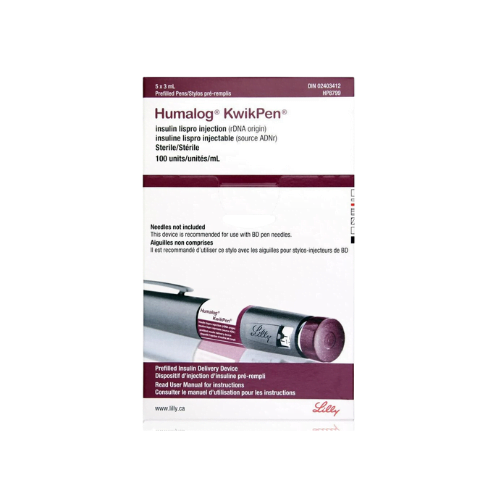
Humalog KwikPen is a prefilled insulin lispro pen used as rapid-acting mealtime insulin for diabetes. It can be bought online by choosing the strength and quantity that match your clinician’s directions, including U-100 or U-200 when those versions are shown. Match the pen concentration, device wording, and supply needs carefully because rapid-acting insulin products are not interchangeable by name alone.
Humalog KwikPen starts working faster than longer-acting basal insulins and is commonly used around meals or for correction dosing as directed. If you are arranging US delivery from Canada, plan for temperature-sensitive handling and make sure someone can place the insulin into proper storage soon after arrival.
Humalog KwikPen Price and Strength Selection
The Humalog KwikPen price depends on the strength, quantity, and pack configuration chosen during ordering. Review the current amount beside the exact insulin lispro pen your treatment plan calls for, then make sure the carton wording and concentration match your directions before completing checkout.
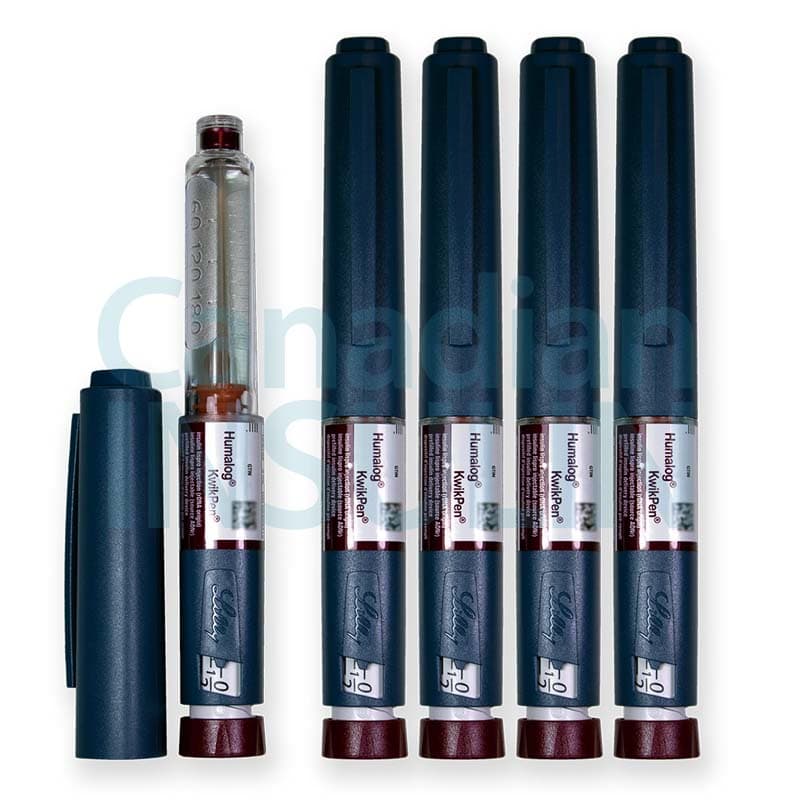
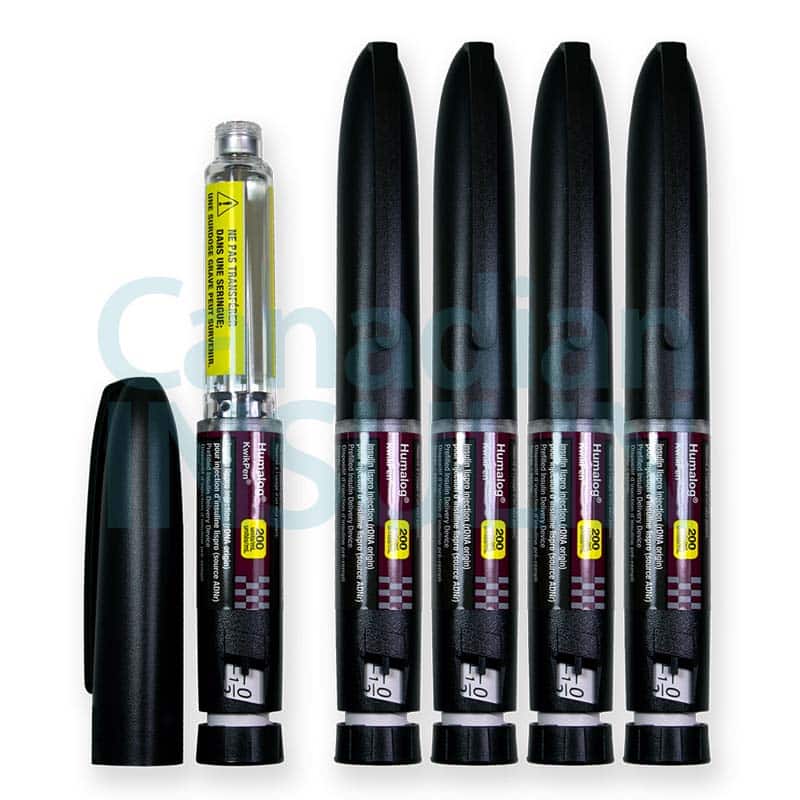
Humalog KwikPen U-100 contains insulin lispro 100 units/mL. When Humalog KwikPen 200 units/mL is offered, that U-200 pen is a more concentrated version of the same active ingredient. The two strengths may look similar as prefilled pens, but they contain different total insulin amounts and should not be substituted without clinical instructions.
| Detail | What to verify |
|---|---|
| Concentration | U-100 is 100 units/mL; U-200 is 200 units/mL when that strength is available. |
| Device form | KwikPen refers to a prefilled pen, not a vial or cartridge. |
| Pen volume | Many KwikPen versions are 3 mL, but total insulin units differ by concentration. |
| Quantity | The number of pens affects total supply and the final order amount. |
| Storage plan | Unused insulin usually requires refrigeration until first use. |
Some people compare Humalog KwikPen cost without insurance or cash-pay totals. Keep price review separate from medical decisions about insulin type, strength, timing, and dose. A lower order total is not a reason to change from U-100 to U-200, switch devices, or stretch doses.
Quick tip: Match the strength, device name, and total quantity to your current diabetes plan before placing the order.
How to Order the Insulin Lispro Pen Online
To order Humalog KwikPen online, choose the pen strength and quantity that correspond to your current directions. Review the active ingredient, concentration, pen format, and storage requirements together because each detail affects how the medicine is used after it arrives.
The checkout process may require accurate health and order information so the medication can be matched to the requested insulin pen. If anything about your dose, timing, or device has changed, resolve that with your care team before buying a different version.
Humalog KwikPen from Canada is often considered by people comparing insulin costs and supply formats. When arranging US shipping from Canada, consider the season, delivery address, and prompt, express, cold-chain shipping needs for temperature-sensitive insulin. No shipping method replaces proper inspection and storage once the package reaches you.
Rapid-acting insulin is high-alert medication, so the safest purchase is the one that matches the prescribed device and concentration. Do not use online availability, pack size, or price to decide whether to change your insulin schedule.
What Humalog KwikPen Is Used For
Humalog is insulin lispro, a rapid-acting insulin analog used to improve blood glucose control in adults and children with diabetes mellitus. It is used for people with type 1 diabetes and may also be used in type 2 diabetes when a rapid mealtime insulin is part of the treatment plan.
Insulin lispro is typically taken shortly before meals or soon after starting a meal, depending on the clinician’s instructions and the person’s glucose plan. It helps manage the rise in blood sugar that occurs after food intake. It may be used with a longer-acting insulin or other diabetes medicines when appropriate.
The pen is intended for subcutaneous injection, meaning injection under the skin. It is not a treatment for low blood sugar. If blood glucose is already low, using rapid-acting insulin can make hypoglycemia worse and may create an emergency.
People browsing the broader rapid-acting insulin category should focus on active ingredient, concentration, device type, and timing instructions. Different mealtime insulins can have similar roles but are not automatic substitutes.
U-100, U-200, and Pen Device Details
Humalog KwikPen U-100 is labeled 100 units/mL. A 3 mL U-100 pen contains 300 units of insulin lispro. Humalog KwikPen 200 units/mL is labeled U-200 and contains 600 units in the same 3 mL volume because the insulin is twice as concentrated.
The dose window on the KwikPen displays insulin units. Use the dose shown in units as directed; do not convert between millilitres and units unless a clinician gives explicit instructions. With the U-200 pen, official labeling warns against transferring insulin from the pen into a syringe because severe overdose and hypoglycemia can occur.
Humalog prefilled pens are single-patient devices. They should never be shared, even if the needle is changed, because sharing injection devices can transmit blood-borne infections. Use a new compatible needle for each injection if needles are supplied separately, and remove the needle after use.
The insulin solution should appear clear and colorless. Do not use a pen if the solution looks cloudy, colored, thickened, frozen, or contains particles. If the carton, label, concentration, or appearance does not match what you expected, pause and ask a pharmacist or clinician before injecting.
The broader insulin medications section can help distinguish pens from cartridges, vials, basal insulin, and premixed products. Device differences matter because injection technique, dose increments, and compatibility are not the same across formats.
Storage, Handling, and Travel
Insulin is sensitive to heat, freezing, and direct sunlight. Unused Humalog KwikPen devices are generally stored in a refrigerator at 2°C to 8°C. Do not freeze insulin, and do not use a pen that has been frozen even if it later thaws.
After first use, Humalog pens are usually kept at room temperature below 30°C and discarded after 28 days, according to labeling. Keep the pen cap on when not in use. Do not store the pen with a needle attached because this can allow leakage, air entry, blocked needles, or contamination.
When receiving insulin, inspect the package and move the pens into proper storage promptly. Temperature-sensitive products should not be left in mailboxes, hot cars, freezing entryways, or direct sun. If the package appears damaged or the insulin has been exposed to extreme temperatures, ask a pharmacist or clinician before using it.
For travel, keep Humalog KwikPen with you rather than in checked baggage. Airplane cargo areas, vehicle trunks, and exposed bags can reach temperatures outside insulin storage limits. Carry labeled packaging when possible, bring extra needles and glucose supplies, and protect the pen from direct contact with ice packs.
People managing diabetes often need a practical plan for work, meals, exercise, sick days, and travel. Storage planning is part of safe insulin use, not a separate convenience step.
Side Effects, Warnings, and Monitoring
The most important risk with Humalog KwikPen is hypoglycemia, or low blood sugar. It can happen when insulin, food intake, exercise, alcohol, illness, or other medicines are out of balance. Symptoms may include sweating, shakiness, hunger, dizziness, fast heartbeat, headache, blurred vision, irritability, or confusion.
Severe hypoglycemia can cause seizure, loss of consciousness, injury, or death. Ask your care team how to treat low glucose, when to use fast-acting carbohydrates, and whether glucagon should be available. Repeated lows, severe lows, or unexpected glucose swings should be discussed promptly.
- Injection-site reactions: Redness, itching, swelling, bruising, or irritation can occur.
- Skin changes: Lumps, thickening, or pitting may occur when injection sites are not rotated.
- Allergic reactions: Rash, swelling, wheezing, or breathing trouble needs urgent medical attention.
- Low potassium: Insulin can lower potassium, which may be serious in at-risk patients.
- Weight changes: Weight gain can occur with insulin therapy as glucose control changes.
Do not use insulin lispro during an episode of low blood sugar or after a serious hypersensitivity reaction to insulin lispro or any ingredient in the product. Rotate injection sites within the recommended area and avoid injecting into skin that is thickened, pitted, tender, bruised, scaly, hard, or scarred.
Many medicines can affect blood glucose or insulin needs. Corticosteroids, some diuretics, thyroid medicines, oral diabetes medicines, other insulins, and certain psychiatric medicines may change glucose patterns. Alcohol can increase the risk of low blood sugar, especially when food intake is reduced.
Beta-blockers may mask warning symptoms of hypoglycemia, such as a fast heartbeat. Thiazolidinediones, including pioglitazone and rosiglitazone, can cause fluid retention and may worsen heart failure when used with insulin. Contact a clinician if you notice new swelling, shortness of breath, repeated low glucose, or persistent high readings.
Why it matters: Safe insulin use depends on matching the pen, dose timing, meals, activity, and monitoring plan.
Monitoring and Everyday Use Questions
Humalog KwikPen should be used within a broader glucose-monitoring plan. Follow instructions for fingerstick testing, continuous glucose monitor alerts, ketone testing when advised, and sick-day rules. Appetite changes, vomiting, infection, pregnancy, kidney or liver problems, and major activity changes can alter insulin needs.
Mealtime insulin timing is a common question because rapid-acting insulin must align with food intake. If a meal is delayed, smaller than expected, or skipped, the risk of low glucose may increase. Ask your care team what to do for missed meals, late meals, travel days, restaurant meals, and exercise.
Do not share the pen, reuse needles, inject through clothing, or use a damaged device. Prime the pen as instructed by the manufacturer, confirm the dose in the window, and hold the needle in place for the recommended time after injection. These technique steps help reduce underdosing, leakage, and injection errors.
General education in the diabetes articles section may help prepare questions for appointments. Use educational reading to support conversations, not to replace individualized dosing or insulin-training instructions.
Compare Related Diabetes Medication Choices
Humalog KwikPen is not the same as Humalog vials, cartridges, Junior KwikPen devices, premixed insulin, or long-acting basal insulin. The right product depends on the delivery system, concentration, dose increments, injection timing, and how the insulin fits meals and glucose monitoring.
People who use reusable pen systems may need cartridges rather than a prefilled KwikPen. People who draw insulin with syringes may need vials. Premixed insulin combines different insulin actions and is used differently from rapid-acting mealtime insulin. Basal insulin covers background insulin needs and is not a direct replacement for mealtime lispro.
Browsing diabetes medications can help separate insulin products from non-insulin therapies. The main comparison points are active ingredient, form, concentration, onset and duration, storage requirements, and the role each medicine plays in your plan.
If your clinician changes your insulin type or delivery system, ask for updated instructions before ordering supplies. Needle compatibility, dose increments, and injection training can change when switching between pen formats, cartridges, and vials.
Authoritative Sources
Official labeling and manufacturer instructions are the best sources for serious warnings, contraindications, device handling, and storage limits. Use them with guidance from your healthcare professional.
- DailyMed Humalog labeling describes approved uses, warnings, contraindications, interactions, and storage.
- Official U-200 KwikPen instructions explain device-specific contents, dosing-window use, and single-patient handling.
- U-100 KwikPen patient leaflet reviews storage, appearance, use reminders, and patient safety points.
This content is for informational purposes only and is not a substitute for professional medical advice.
Blood Glucose Unit Converter
Convert glucose readings between mg/dL and mmol/L without changing the clinical value.
mg/dL
-
US reporting unit
mmol/L
-
International reporting unit
These calculations are for education only and do not replace clinical advice, diagnosis, or treatment. Always confirm medical decisions with a qualified healthcare professional.
HbA1c & eAG Calculator
Convert between HbA1c percentage and estimated average glucose using the ADAG relationship.
HbA1c
-
percentage
eAG mg/dL
-
estimated average glucose
eAG mmol/L
-
estimated average glucose
These calculations are for education only and do not replace clinical advice, diagnosis, or treatment. Always confirm medical decisions with a qualified healthcare professional.
Carb Serving Calculator
Convert total carbohydrate grams into carb choices for meal planning and diabetes education.
Carb choices
-
total carbs divided by choice size
Rounded choices
-
nearest half choice
Carb calories
-
4 kcal per gram
These calculations are for education only and do not replace clinical advice, diagnosis, or treatment. Always confirm medical decisions with a qualified healthcare professional.
Glycaemic Load Calculator
Calculate glycaemic load from glycaemic index and available carbohydrate in a serving.
Glycaemic load
-
GI x carbs / 100
Range
-
single serving estimate
Total carbs used
-
serving carbs x servings
These calculations are for education only and do not replace clinical advice, diagnosis, or treatment. Always confirm medical decisions with a qualified healthcare professional.
CGM Time-in-Range Summary
Summarise CGM percentages across very low, low, in-range, high, and very high glucose bands.
Entered total
-
should equal 100%
Below range
-
very low plus low
Above range
-
high plus very high
Summary
-
common adult CGM targets vary by patient
These calculations are for education only and do not replace clinical advice, diagnosis, or treatment. Always confirm medical decisions with a qualified healthcare professional.
Customer Reviews
4.7 Based on 19 Reviews
Write a Review Ask a Question - Reviews
- Questions
Filter Reviews:
ML
12/29/2025
Mark L.  US
USGreat prices.
It's very easy to order from Canadian Insulin, and the prices are great.
12/29/2025
CanadianInsulin.com
Hi Mark,Thank you for sharing your feedback! We’re thrilled to hear that you find ordering from Canadian Insulin easy and that our prices are meeting your expectations. Our team is committed to making your experience smooth and reliable every time.We truly appreciate your trust in us. Thank you for choosing Canadian Insulin!
ML
06/05/2025
Mark L. USGreat prices
Love ordering from these guys. Easy to get ahold of and great to work with. I've been ordering from them for years now.
LK
06/02/2025
Linda K. USHumalog
Everything is as expected on this product
ME
03/21/2025
Mark E. USHumalog Quickpen
Been using it for years. Easy to use. I use your site because of the good price and easy delivery. Also all your staff are wonderful.
03/24/2025
CanadianInsulin.com
Hi Mark,We're thrilled to hear that you've been enjoying the convenience of the Humalog KwikPen and that our pricing, delivery, and staff have made your experience even better! Your support means the world to us.If you ever have any questions or need further assistance, please let us know, we're here to help.Thank you for choosing Canadian Insulin. Have a great day!
TT
04/23/2024
Thadd T. USInsulin order
Superior service with Canadian insulin.
04/24/2024
CanadianInsulin.com
Hi Thadd,Thank you for your continued trust in Canadian Insulin! We're delighted to hear that your recent insulin order met your expectations.Providing exceptional service is our constant goal, and we're grateful for the opportunity to serve you. If you ever need assistance or have any questions, please feel free to reach out to us.Thank you for choosing Canadian Insulin.
Express Shipping - from $29.99
Shipping with this method takes 3-5 days
Prices:
- Dry-Packed Products $29.99
- Cold-Packed Products $39.99
Standard Shipping - $19.99
Shipping with this method takes 5-10 days
Prices:
- Dry-Packed Products $19.99
- Not available for Cold-Packed products
What is Humalog KwikPen used for?
Humalog KwikPen contains insulin lispro, a rapid-acting insulin used to help control blood glucose in people with diabetes. It is commonly used around meals or for correction dosing as directed by a clinician.
What is the difference between Humalog KwikPen U-100 and U-200?
U-100 contains 100 units/mL, while U-200 contains 200 units/mL when that strength is available. A 3 mL U-100 pen contains 300 units, and a 3 mL U-200 pen contains 600 units. They should not be interchanged without clinical instructions.
How should Humalog KwikPen be stored?
Unused pens are generally refrigerated at 2°C to 8°C and should not be frozen. After first use, Humalog pens are usually kept below 30°C and discarded after 28 days. Do not store an in-use pen with a needle attached.
What are common Humalog KwikPen side effects?
Low blood sugar is the most important risk. Other possible effects include injection-site redness or irritation, skin thickening or pitting if sites are not rotated, allergic reactions, low potassium, and weight gain. Severe symptoms need medical attention.
Can Humalog KwikPen be used in a syringe?
Humalog KwikPen is designed as a prefilled pen. Official instructions warn not to transfer U-200 insulin from the pen into a syringe because overdose and severe low blood sugar can occur.
Rewards Program
Earn points on birthdays, product orders, reviews, friend referrals, and more! Enjoy your medication at unparalleled discounts while reaping rewards for every step you take with us.
You can read more about rewards here.
POINT VALUE
How to earn points
- 1Create an account and start earning.
- 2Earn points every time you shop or perform certain actions.
- 3Redeem points for exclusive discounts.
You Might Also Like
Select options
This product has multiple variants. The options may be chosen on the product page
Select options
This product has multiple variants. The options may be chosen on the product page
Select options
This product has multiple variants. The options may be chosen on the product page
Select options
This product has multiple variants. The options may be chosen on the product page