
Please note: a valid prescription is required for all prescription medication.
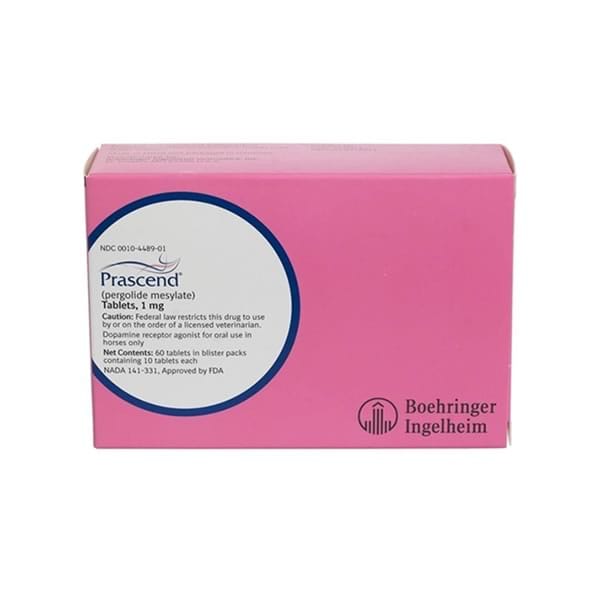
Prascend
Buy Prascend for Horses Online


Prascend is a pergolide medicine for horses treated for pituitary pars intermedia dysfunction, often called PPID or equine Cushing’s disease. Prascend can be ordered online, and the strength, quantity, and directions chosen during ordering should match the instructions from your horse’s veterinarian. Use the current Prascend price and tablet information together so the order supports the treatment plan already written for the horse.
Prascend for horses is used to control clinical signs associated with PPID. The medicine is part of ongoing equine care, not a cure, so follow-up, monitoring, hoof care, nutrition, and stable routines still matter. If US delivery from Canada is shown during checkout, use those handling details for planning without changing the veterinarian’s directions.
Prascend Price, Tablet Count, and Order Planning
The Prascend price should be read alongside the tablet strength, quantity, and total count chosen during ordering. A lower Prascend cost is not helpful if the medicine strength or total tablet supply does not line up with the veterinary directions. Horse owners often compare cash-pay costs, but the practical comparison is the total order amount for the exact tablet supply needed.
When reviewing Prascend tablets, focus on the medicine name, active ingredient, strength shown during ordering, and the amount needed for the treatment period. Prascend 1 mg tablets are a common presentation referenced in veterinary use, when shown for the medicine. If your veterinarian’s instructions refer to pergolide tablets for horses, make sure the brand name and strength are consistent with those directions before completing the order.
| Order detail | Why it matters |
|---|---|
| Medicine name | Helps distinguish Prascend from other equine medications |
| Active ingredient | Pergolide is the active ingredient used for PPID management |
| Tablet strength | Must match the veterinarian’s written directions |
| Quantity | Affects the order total and refill planning |
| Horse-specific instructions | Helps avoid using another horse’s dose or schedule |
Quick tip: Keep a barn medication record so tablet counts and refill timing are easier to track.
How to Order Prascend Online
To order Prascend online, choose the Prascend tablet strength and quantity that match the veterinarian’s instructions for the named horse. Enter the requested order information carefully, including the veterinarian’s contact details if they are needed to clarify the written directions. We may review order details when clarification is required.
Before checkout, confirm that the medication name, strength, tablet count, and horse information are correct. Small differences can matter with long-term PPID therapy, especially when more than one horse or more than one barn medication is being managed. Do not change the dose or split-tablet routine unless the veterinarian has instructed that specific approach.
For planning, checkout may show US shipping from Canada and handling information for the order. Use that service context to schedule refills before the current supply runs low, especially for horses on continuous treatment. Do not wait until the last tablet is used, because monitoring schedules, barn staffing, travel, and weather can all affect practical medicine access.
What Prascend Treats in Horses
Prascend is used for the control of clinical signs associated with PPID in horses. PPID is an endocrine disorder involving the pituitary gland, which can lead to abnormal hormone signaling. Horse owners may notice signs such as a long or curly coat, delayed shedding, muscle loss, lethargy, sweating, increased drinking or urination, recurrent infections, or laminitis risk.
PPID is also commonly called equine Cushing’s disease, although veterinarians may use the more specific term PPID. Prascend helps manage signs of the condition by acting on dopamine receptors through its active ingredient, pergolide. The medicine does not replace diagnostic work, blood testing, hoof care, dental care, parasite control, or nutrition management.
If you are browsing by condition, the Equine Cushing’s Disease category can help organize related equine Cushing’s medication choices. Use condition browsing only as a navigation aid; the medicine selected for a horse should still reflect the veterinarian’s treatment plan.
Active Ingredient and How Pergolide Fits PPID Care
Prascend contains pergolide, a dopamine agonist. In PPID, dopamine signaling in the pituitary gland is reduced, and pergolide helps replace that dopaminergic effect. This is why Prascend pergolide tablets are used as a PPID medication for horses under veterinary supervision.
Prascend dosage for horses is individualized. Veterinarians may consider clinical signs, ACTH testing, age, body condition, appetite, hoof health, and the horse’s response over time. Do not estimate a dose from body weight alone, from another horse’s regimen, or from coat changes without veterinary guidance.
Some horses show improvement in certain clinical signs over time, while others need repeated evaluation or adjustments to the broader care plan. Seasonal hormone variation can also affect monitoring decisions. The goal is responsible long-term management, not a one-time purchase decision.
Storage, Handling, and Stable Routine
Store Prascend tablets as directed on the product label. Keep tablets away from children, pets, feed tubs, tack-room moisture, and unmarked containers. A labeled storage location helps prevent mix-ups in barns where dewormers, anti-inflammatory medicines, supplements, and other equine products may be kept together.
Handle tablets with clean, dry hands. Do not crush, dissolve, or alter tablets unless the veterinarian has specifically directed that method. If partial tablets are part of the written instructions, follow the label and veterinary handling guidance, and keep any split-tablet routine clearly documented for everyone involved in feeding or medication administration.
Stable routines affect consistency. Assign responsibility for dosing, record when each dose is given, and note appetite or behavior changes. If a dose is missed, follow the veterinarian’s written plan or contact the clinic rather than doubling the next dose on your own.
Why it matters: Consistent administration helps the veterinarian interpret response and monitoring results more accurately.
Side Effects, Warnings, and When to Call the Veterinarian
Common adverse reactions reported with pergolide treatment can include reduced appetite, lethargy, diarrhea, colic-like signs, weight loss, and behavior changes. Appetite changes deserve prompt attention because many PPID horses are older and may already have dental, metabolic, or body-condition concerns.
Contact the veterinarian if the horse stops eating, develops severe gastrointestinal signs, appears suddenly worse, or shows signs of laminitis. Laminitis warning signs can include heat in the hooves, a strong digital pulse, reluctance to move, shifting weight, or a rocked-back stance. These signs require timely veterinary assessment because hoof complications can become serious quickly.
Prascend is intended for the horse named in the veterinary directions. It is not for human use. Horses intended for human consumption should not receive pergolide unless official labeling and veterinary direction support that use. Keep the medicine out of household areas and away from anyone who might mistake it for a human medication.
Do not start, stop, or change Prascend based only on coat length, energy level, or online dosage examples. PPID signs can overlap with dental disease, chronic pain, parasite burden, poor nutrition, infection, and other endocrine or metabolic disorders. A veterinarian can decide whether signs reflect PPID control, another health problem, or a need for further testing.
Interactions, Monitoring, and Follow-Up Care
Tell the veterinarian about all medicines, supplements, and recent health changes before and during treatment. This includes anti-inflammatory drugs, sedatives, metabolic medications, herbal products, appetite changes, colic episodes, dehydration, infections, or recent laminitis. A full medication history helps the veterinarian assess safety and response.
Monitoring may include physical examination, body-condition scoring, hoof evaluation, appetite tracking, coat changes, and blood testing such as ACTH when the veterinarian considers it appropriate. Follow-up helps determine whether the current plan is working as expected or whether another evaluation is needed.
PPID care is broader than Prascend alone. Farrier schedules, dental care, parasite control, nutrition, exercise, and infection management can influence how a horse responds. Stable teams should share changes in behavior, feed intake, drinking, urination, sweating, or hoof comfort with the veterinarian.
Prascend, Pergolide, and Related Equine Medication Choices
Prascend is a brand-name pergolide medicine used in horses with PPID. Search results may also mention pergolide tablets for horses, equine Cushing’s medication, or PPID medication for horses. These terms are related, but the medicine chosen for an individual horse should match the veterinarian’s instructions for brand, strength, quantity, and use.
Country-specific brand and generic naming can differ. A generic-status discussion in one market should not be used as a substitute for reading the medicine name, active ingredient, tablet strength, and veterinary directions for the order being placed. If the veterinarian wrote for Prascend specifically, do not substitute another pergolide product without clinical approval.
For broader animal medicine browsing, the Pet Medications category keeps veterinary products separate from human medicines. This can help horse owners avoid mixing equine products with unrelated diabetes, insulin, or weight-management items while planning barn supplies.
Practical Questions Before Completing an Order
Ask the veterinarian how the horse’s response should be monitored, what side effects should be reported urgently, and when follow-up testing may be needed. Also ask what to do if appetite decreases, a dose is missed, or the horse develops signs of laminitis. Written instructions are especially useful when multiple caretakers share feeding duties.
Before completing an online order, match the medicine name, strength, tablet amount, and horse-specific directions. Review the current Prascend cost in relation to the total supply needed, not only a single tablet or unit figure. If the horse is managed at a boarding barn, coordinate refill timing with the person responsible for daily dosing.
Keep Prascend in its labeled packaging and document the start date, dose schedule, observed changes, and any clinic follow-up dates. These records help the veterinarian interpret whether treatment, hoof care, nutrition, or another health factor needs attention.
Authoritative Sources
- Official manufacturer horse-owner information describes Prascend use and safety information for horses with PPID.
- FDA animal-drug update summarizes pergolide approval context for controlling clinical signs of equine Cushing’s disease.
This content is for informational purposes only and is not a substitute for professional medical advice.
Express Shipping - from $29.99
Shipping with this method takes 3-5 days
Prices:
- Dry-Packed Products $29.99
- Cold-Packed Products $39.99
Standard Shipping - $19.99
Shipping with this method takes 5-10 days
Prices:
- Dry-Packed Products $19.99
- Not available for Cold-Packed products
What is Prascend used for in horses?
Prascend is used to control clinical signs associated with pituitary pars intermedia dysfunction, or PPID, in horses. PPID is also commonly called equine Cushing’s disease.
Is Prascend the same as pergolide?
Prascend is a brand-name medicine that contains pergolide. Pergolide is the active ingredient used in horses with PPID, but the exact medicine, strength, and quantity should match the veterinarian’s directions.
What side effects can Prascend cause?
Reported adverse reactions with pergolide can include reduced appetite, lethargy, diarrhea, colic-like signs, weight loss, and behavior changes. Contact a veterinarian if the horse stops eating, worsens suddenly, or shows signs of laminitis.
How should Prascend tablets be stored?
Store Prascend tablets as directed on the label, away from children, pets, moisture, feed areas, and unmarked containers. Keep a clear barn record of dosing and refill timing.
Can I change my horse’s Prascend dose based on symptoms?
No. Do not start, stop, or change Prascend based only on coat changes, energy level, or another horse’s regimen. PPID treatment decisions should be made with a veterinarian using clinical signs and monitoring.
Rewards Program
Earn points on birthdays, product orders, reviews, friend referrals, and more! Enjoy your medication at unparalleled discounts while reaping rewards for every step you take with us.
You can read more about rewards here.
POINT VALUE
How to earn points
- 1Create an account and start earning.
- 2Earn points every time you shop or perform certain actions.
- 3Redeem points for exclusive discounts.
You Might Also Like
Select options
This product has multiple variants. The options may be chosen on the product page
Select options
This product has multiple variants. The options may be chosen on the product page
Select options
This product has multiple variants. The options may be chosen on the product page
Select options
This product has multiple variants. The options may be chosen on the product page