
Please note: a valid prescription is required for all prescription medication.
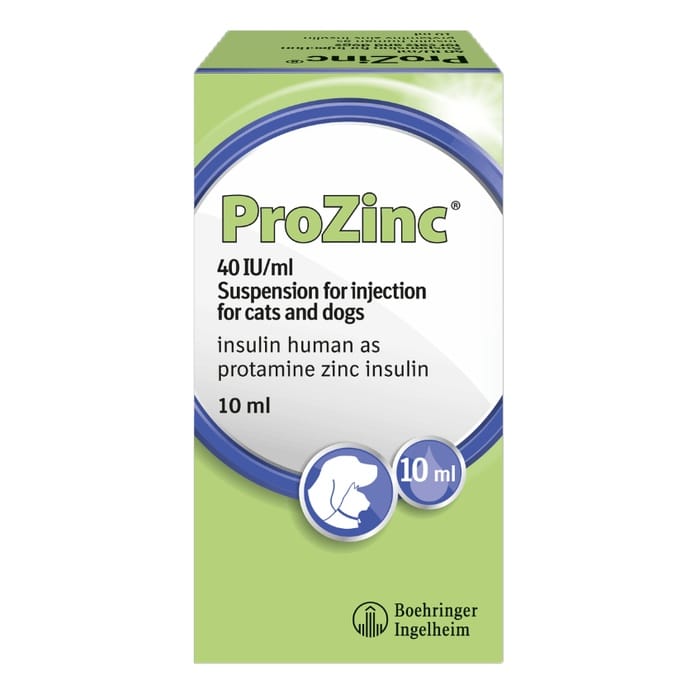
Prozinc Vial
Buy ProZinc Vial Online


ProZinc Vial is a protamine zinc recombinant human insulin suspension used for diabetic cats and dogs under veterinary direction. You can buy ProZinc Vial online, view the current listed price, and choose the vial strength and quantity shown during ordering to match the clinic’s written directions. The vial format is measured with insulin syringes, so the U-40 concentration, vial size, storage, and handling steps all matter.
ProZinc insulin for cats and dogs is a long-acting insulin product for diabetes mellitus in pets. It is supplied as a sterile injectable suspension in multi-dose vials, including 10 mL and 20 mL vial presentations described in official labeling. Each mL contains 40 IU, also written as 40 units, of recombinant human insulin.
Before checkout, match the product name, concentration, vial size, and quantity to the veterinary plan. ProZinc U-40 insulin is not the same concentration as U-100 insulin products, and a syringe-scale mix-up can cause a dangerous dosing error.
ProZinc Vial Price, Strength, and Quantity
The ProZinc vial price reflects the vial presentation and quantity chosen during ordering. A larger vial can contain more total insulin while keeping the same U-40 concentration, so look at both the mL amount and the units per mL when judging value. The ProZinc vial cost may also change when separate diabetes supplies are added to the cart.
ProZinc U-40 insulin contains 40 units per mL. A ProZinc 10 mL vial contains 400 total units, because 10 mL multiplied by 40 units per mL equals 400 units. That number does not tell you how many days the vial will last; the animal’s dose, frequency, appetite, monitoring results, and discard date all affect use.
Cash-pay shoppers often focus on the visible product amount, but the safest purchase decision starts with the vial label. Match ProZinc, the U-40 strength, the vial size, and the pet’s directions before comparing totals. For broader diabetes browsing, the insulin medications category can help separate insulin products from other diabetes supplies.
Quick tip: Keep the clinic’s directions beside the cart while checking the vial strength and quantity.
How to Order the Right Vial Online
Start with the exact medicine name. ProZinc Vial should be chosen as ProZinc insulin, not as a similar-looking human insulin or a different diabetes medicine. The concentration should read U-40 or 40 units/mL, and the vial count should match the treatment plan.
Next, make sure the pet details are consistent with the clinic record. Species matters because cats and dogs may receive different monitoring schedules even when the insulin concentration is the same. If the treatment plan changed recently, pause before checkout and make sure the current vial, syringe type, and routine still align.
- Product name: ProZinc insulin vial.
- Concentration: U-40, equal to 40 units per mL.
- Common vial size: 10 mL vials contain 400 total units.
- Syringe scale: Use U-40 syringes unless the veterinary team gives different written instructions.
- Pet information: Match the animal’s name, species, and current care plan.
Some customers also consider US delivery from Canada for pet diabetes products. When temperature-sensitive handling is needed, prompt, express, cold-chain shipping supports transit logistics without replacing proper storage after arrival.
What ProZinc Treats in Cats and Dogs
ProZinc is used to reduce high blood glucose and related clinical signs in cats and dogs with diabetes mellitus, when a veterinarian has selected insulin therapy. Diabetes signs may include increased thirst, more frequent urination, weight loss, increased appetite, reduced energy, or changes in coat condition. Insulin is only one part of care; diet planning, routine feeding, monitoring, and follow-up all influence safety.
ProZinc insulin for cats and ProZinc insulin for dogs may be supplied in the same U-40 vial concentration, but the daily routine can differ by animal. Cats often require different glucose monitoring conversations than dogs, and individual response can change with appetite, infection, weight change, stress, or other medicines. Do not change the amount or schedule based only on another pet’s experience.
The feline diabetes collection and canine diabetes collection can help you browse pet-specific diabetes items. Use those categories for navigation, then return to the exact insulin named in the animal’s care plan.
Vial Concentration, Syringes, and Measurement Checks
The ProZinc insulin vial is a suspension, meaning the insulin particles are dispersed in liquid and must be mixed gently as directed. Official labeling describes the product as a sterile injectable suspension containing 40 IU of recombinant human insulin per mL. The suspension may appear white and cloudy after gentle mixing.
Insulin units depend on concentration. U-40 syringes are scaled for 40 units/mL insulin, while U-100 syringes are scaled for 100 units/mL insulin. Drawing U-40 insulin with the wrong syringe scale can change the delivered amount even if the unit mark looks familiar.
| Vial detail | What it means for ordering and use |
|---|---|
| Active ingredient | Protamine zinc recombinant human insulin. |
| Concentration | U-40, or 40 units per mL. |
| 10 mL total | 400 total units in the vial. |
| Form | Sterile injectable suspension for multi-dose vial use. |
| Syringe match | Use the syringe scale specified by the veterinary team. |
Roll the vial gently before withdrawing a dose if the directions call for mixing. Do not shake it aggressively. If the vial has clumps, particles, discoloration, cracking, broken seals, or an unusual appearance after mixing, contact the clinic before giving a dose.
How Long a Vial May Last
A vial can last different amounts of time in different pets. The mathematical total tells you how many units are in the bottle, but the animal’s daily amount determines how quickly those units are used. A ProZinc 10 mL vial contains 400 units; a pet receiving a smaller amount will use the vial more slowly than a pet receiving a larger amount.
Discard timing is separate from the number of units left. ProZinc labeling has included a 60-day in-use period for 10 mL vials after first puncture and an 80-day in-use period for 20 mL vials after first puncture. Mark the first-use date on the carton or vial so the discard date is not guessed later.
Do not stretch a vial beyond the labeled in-use period because insulin potency and sterility matter. If your pet uses only a small amount, there may be insulin left when the vial reaches its discard date. That does not mean the remaining liquid should be used without veterinary guidance.
Storage, Handling, and Travel
Store ProZinc according to the package directions, typically refrigerated and upright. Protect the vial from heat, freezing, direct light, and rough handling. A vial left in a hot car, frozen in an ice pack, dropped on a hard floor, or exposed to direct sun may not be safe to use.
Keep the vial in its carton when practical, and avoid placing it directly against loose ice or heating elements during travel. If you need to carry insulin away from home, pack syringes, sharps supplies, feeding instructions, and clinic contact information together. This reduces rushed decisions if a dose is delayed or a meal changes.
Because ProZinc is a cloudy insulin suspension after mixing, appearance should be judged against the label directions. The cloudy insulin article explains why some insulin products are not clear solutions. Appearance checks support safe handling, but they do not replace product labeling or veterinary instructions.
Safety, Side Effects, and Monitoring
The most important safety concern with any insulin is hypoglycemia, or low blood glucose. Possible signs include weakness, trembling, wobbliness, unusual hunger, sleepiness, disorientation, seizures, or collapse. Ask the veterinary team in advance what steps to take if these signs appear.
Other problems can include injection-site irritation, appetite changes, vomiting, diarrhea, behavior changes, or signs that diabetes is not well controlled. Increased thirst, frequent urination, weight loss, lethargy, or sudden weakness should be reported, especially when they appear with changes in food intake or glucose readings.
Several factors can change insulin needs. Infection, dental disease, stress, weight change, reduced appetite, vomiting, and changes in activity can affect glucose control. Medicines such as corticosteroids, progestogens, thyroid products, some antibiotics, and heart medicines may also influence monitoring decisions. Share a complete medicine and supplement list with the veterinary team.
Monitoring may include home observations, blood glucose curves, fructosamine testing, urine checks, body weight, and appetite records. Do not adjust the insulin amount based on a single reading unless the clinic has given clear instructions. If a dose is missed, spilled, or only partly given, contact the veterinary team rather than repeating it on your own.
Why it matters: Insulin errors can cause serious low or high blood glucose.
Sharps and Household Safety
Insulin routines include safe needle handling. Used syringes should go into an appropriate sharps container, not household trash unless local rules specifically allow a safe method. Children, visitors, and other pets should not have access to syringes, needles, or the insulin vial.
Keep one consistent routine for the household. The person giving the injection should know the feeding schedule, the insulin time, the syringe type, and what to do if the pet refuses food. Written instructions can help avoid double dosing when more than one person cares for the animal.
If a caregiver is unfamiliar with injections, ask the clinic to demonstrate vial mixing, dose withdrawal, skin tenting, injection placement, and sharps disposal. Video demonstrations can be useful, but the animal’s own care plan should guide technique.
Related Pet Diabetes Products and Categories
ProZinc is an animal insulin, so related browsing should stay focused on pet diabetes and insulin-support routines. The pet medications category is useful when you need animal-focused items rather than human-only diabetes products. The broader diabetes category can help you separate medications, supplies, and condition-related products.
If the veterinary team changes therapy, match the new medicine by brand, form, concentration, and directions. The diabetes medications category can help with general browsing, but insulin products are not automatically interchangeable. A different insulin may have a different concentration, timing profile, appearance, device, or syringe requirement.
Pet owners often use supporting supplies such as syringes, sharps containers, glucose monitoring tools, and protective storage accessories. Those items do not replace veterinary monitoring, but they can make the daily routine more consistent. General education in the diabetes articles section may also help with storage, glucose terms, and day-to-day questions.
Authoritative Sources
Final product decisions should follow the label and the veterinary plan. These sources support the concentration, vial presentations, indication, mixing, storage, and safety points summarized above.
- Official DailyMed labeling describes ProZinc as protamine zinc recombinant human insulin injection and lists vial strengths, total contents, and storage details.
- Manufacturer product information summarizes veterinary use, gentle rolling before dosing, and the expected cloudy appearance after mixing.
Use official sources to verify label facts, then follow the veterinary team’s individualized instructions for dose timing, monitoring, and follow-up.
This content is for informational purposes only and is not a substitute for professional medical advice.
Blood Glucose Unit Converter
Convert glucose readings between mg/dL and mmol/L without changing the clinical value.
mg/dL
-
US reporting unit
mmol/L
-
International reporting unit
These calculations are for education only and do not replace clinical advice, diagnosis, or treatment. Always confirm medical decisions with a qualified healthcare professional.
HbA1c & eAG Calculator
Convert between HbA1c percentage and estimated average glucose using the ADAG relationship.
HbA1c
-
percentage
eAG mg/dL
-
estimated average glucose
eAG mmol/L
-
estimated average glucose
These calculations are for education only and do not replace clinical advice, diagnosis, or treatment. Always confirm medical decisions with a qualified healthcare professional.
Carb Serving Calculator
Convert total carbohydrate grams into carb choices for meal planning and diabetes education.
Carb choices
-
total carbs divided by choice size
Rounded choices
-
nearest half choice
Carb calories
-
4 kcal per gram
These calculations are for education only and do not replace clinical advice, diagnosis, or treatment. Always confirm medical decisions with a qualified healthcare professional.
Glycaemic Load Calculator
Calculate glycaemic load from glycaemic index and available carbohydrate in a serving.
Glycaemic load
-
GI x carbs / 100
Range
-
single serving estimate
Total carbs used
-
serving carbs x servings
These calculations are for education only and do not replace clinical advice, diagnosis, or treatment. Always confirm medical decisions with a qualified healthcare professional.
CGM Time-in-Range Summary
Summarise CGM percentages across very low, low, in-range, high, and very high glucose bands.
Entered total
-
should equal 100%
Below range
-
very low plus low
Above range
-
high plus very high
Summary
-
common adult CGM targets vary by patient
These calculations are for education only and do not replace clinical advice, diagnosis, or treatment. Always confirm medical decisions with a qualified healthcare professional.
Express Shipping - from $29.99
Shipping with this method takes 3-5 days
Prices:
- Dry-Packed Products $29.99
- Cold-Packed Products $39.99
Standard Shipping - $19.99
Shipping with this method takes 5-10 days
Prices:
- Dry-Packed Products $19.99
- Not available for Cold-Packed products
What kind of insulin is ProZinc?
ProZinc is a protamine zinc recombinant human insulin. It is a long-acting U-40 insulin suspension used in cats and dogs with diabetes mellitus under veterinary direction.
How many units are in a ProZinc 10 mL vial?
A ProZinc 10 mL vial contains 400 total units because each mL contains 40 units of insulin. The pet’s dose and discard date determine how long that vial may be usable.
How long does a vial of ProZinc last?
The number of days depends on the animal’s dose and dosing schedule. Labeling has included a 60-day in-use period for 10 mL vials after first puncture and an 80-day period for 20 mL vials.
What is ProZinc used to treat?
ProZinc is used to help reduce high blood glucose and related clinical signs in cats and dogs with diabetes mellitus when a veterinarian has chosen insulin treatment.
What syringes are used with ProZinc U-40 insulin?
U-40 insulin is normally measured with U-40 insulin syringes. Using a U-100 syringe or another scale can change the delivered amount, so follow the veterinary team’s syringe instructions.
What are possible side effects of ProZinc insulin?
The most serious concern is low blood glucose, which may cause weakness, shaking, wobbliness, confusion, seizures, or collapse. Injection-site irritation, appetite changes, vomiting, diarrhea, or behavior changes should also be reported.
How should ProZinc Vial be stored?
Store ProZinc according to the package directions, typically refrigerated and upright. Protect the vial from freezing, heat, direct light, rough shaking, and breakage.
Rewards Program
Earn points on birthdays, product orders, reviews, friend referrals, and more! Enjoy your medication at unparalleled discounts while reaping rewards for every step you take with us.
You can read more about rewards here.
POINT VALUE
How to earn points
- 1Create an account and start earning.
- 2Earn points every time you shop or perform certain actions.
- 3Redeem points for exclusive discounts.
You Might Also Like
Select options
This product has multiple variants. The options may be chosen on the product page
Select options
This product has multiple variants. The options may be chosen on the product page
Select options
This product has multiple variants. The options may be chosen on the product page
Select options
This product has multiple variants. The options may be chosen on the product page