
Please note: a valid prescription is required for all prescription medication.
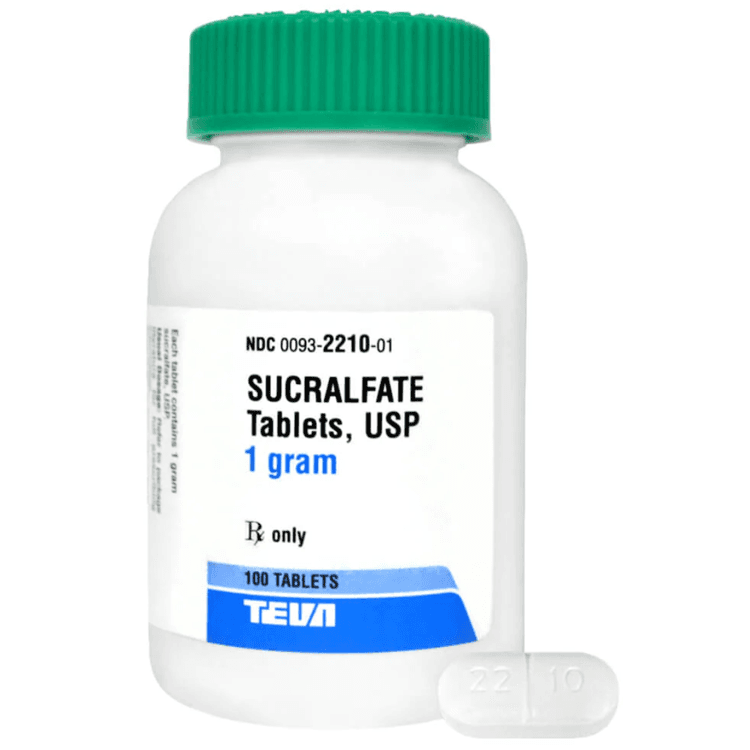
Sucralfate
Buy Sucralfate Online


Sucralfate is an oral ulcer medicine that can be bought online in the forms and quantities shown during ordering. Choose the dose or strength available for Sucralfate and match the active ingredient, form, and directions to the instructions from your clinician. It is commonly associated with Carafate, a brand name for sucralfate, and may appear as tablets or oral suspension depending on the product supplied.
This medicine works mainly in the stomach and upper intestine, where it forms a protective coating over ulcer tissue. That local barrier helps shield the area from acid, pepsin, and bile while healing occurs. Because tablets and liquid suspension are not selected the same way, the form, strength, bottle volume, concentration, and quantity all matter when reviewing Sucralfate price and order details.
Sucralfate Price, Cost, and Form Selection
Sucralfate price should be read together with the exact form, strength, and quantity being ordered. A tablet count is not the same comparison as a liquid bottle size, and a brand-name Carafate product may be priced differently from a generic sucralfate product. If you are paying without insurance, the displayed cash price should be checked against the total amount supplied, not only the product name.
Tablets are generally compared by strength and total count. Oral suspension is compared by bottle volume, concentration, and the measuring directions on the label. Some people call the liquid form sucralfate syrup, but the medicine may be labeled as an oral suspension, which means it must be measured as directed and may need shaking before use.
Quick tip: Match the form first, then compare strength, concentration, quantity, and total cost.
- Tablets: Review the tablet strength, total count, and brand or generic name.
- Oral suspension: Look at bottle size, concentration, and measuring instructions.
- Carafate: Confirm whether the brand name or generic active ingredient is intended.
- Quantity: Make sure the amount supplied aligns with the expected course.
- Cash-pay orders: Read the final total before submitting order information.
Sucralfate 1 gram tablets and a liquid suspension both contain the same active ingredient when labeled as sucralfate, but they are not chosen only by ingredient name. The route, form, measured amount, and timing instructions affect safe use. Do not switch between tablet and liquid forms unless a clinician or pharmacist has confirmed the change.
How to Buy Sucralfate Online
To buy Sucralfate online, start with the medicine form that matches your clinician’s directions. Enter the name, strength or concentration, form, and quantity carefully. We may review order information for consistency when clarification is needed, and the final supplied product should match the medicine label and directions you receive.
For U.S. customers, US delivery from Canada may be part of the service context for this medication. Shipping wording should not replace product checks: inspect the package on arrival, read the label, and store the medicine according to the instructions printed on the container. Sucralfate is not usually handled like refrigerated biologic medicines, but all medicines should be kept within their recommended storage conditions.
- Choose the form: Select tablets, oral suspension, or the named brand product when applicable.
- Match the strength: Use the strength or concentration stated in the directions.
- Check the amount: Compare tablet count, bottle volume, and total supply.
- Read safety notes: Pay attention to kidney cautions, interactions, and swallowing concerns.
- Confirm the label: Make sure the active ingredient and form are correct before use.
Order Sucralfate online only for the person it was intended for. Do not divide directions across different products, change the timing schedule, or substitute Carafate tablets for Carafate suspension without professional guidance. If the written directions are unclear, ask a pharmacist or clinician before starting the medicine.
What Sucralfate Treats and How It Works
Sucralfate is used for active duodenal ulcers and may be used in other gastrointestinal situations when a clinician decides it is appropriate. A duodenal ulcer is an open sore in the first part of the small intestine. Sucralfate helps by adhering to ulcer tissue and creating a protective barrier rather than mainly reducing stomach acid production.
This difference matters when comparing it with proton pump inhibitors, H2 blockers, and antacids. Omeprazole and similar medicines reduce acid production, while sucralfate acts more like a coating agent. One is not automatically better than the other; the right choice depends on the diagnosis, symptoms, other medicines, kidney function, and treatment plan.
Condition-based browsing can help keep ulcer medicines separate from reflux-focused choices. The Duodenal Ulcer and Gastric Ulcer sections organize products by ulcer-related use context, while Gastroesophageal Reflux Disease focuses on reflux-related therapies.
Carafate is a recognized brand name for sucralfate. If a label, bottle, or instructions use the brand name while the active ingredient is listed generically, confirm that the form and strength still match the intended medicine. Brand and generic wording can appear differently, especially across markets and pharmacy labels.
Tablets, Suspension, and Dose Details to Match
Product form is one of the most important details when selecting sucralfate. Tablets are usually matched by strength and total count. Liquid forms are matched by concentration, bottle volume, and the measuring device or instructions supplied with the medicine. The total bottle size is not the same as one dose.
Use the directions provided by your clinician and the official medicine label for timing. Sucralfate is often discussed in relation to meals and other medicines because food and drug binding can affect how it is used. If directions mention an empty stomach, bedtime, antacids, or tube administration, ask a pharmacist to explain the schedule in plain terms.
| Product attribute | What to verify | Why it matters |
|---|---|---|
| Tablet form | Strength, count, and brand or generic name | The total amount supplied depends on tablet strength and quantity. |
| Oral suspension | Bottle volume, concentration, and measuring method | Liquid doses must be measured accurately. |
| Brand wording | Carafate tablets or Carafate suspension | Brand and generic labels may not look identical. |
| Timing directions | Meal spacing, bedtime instructions, and other medicine timing | Food and interactions may affect use. |
| Quantity | Days supplied and total product amount | Quantity affects both supply length and displayed cost. |
Why it matters: The wrong form can delay treatment or require clarification before the medicine can be used correctly.
Do not crush, split, dissolve, or mix tablets unless a pharmacist or clinician has confirmed that the specific product may be handled that way. For suspension, shake the bottle if the label instructs you to do so, and use an appropriate measuring device rather than a household spoon.
Storage, Handling, and Delivery Basics
Most oral sucralfate products are stored at room temperature, away from excess heat, moisture, and direct light. Follow the storage directions printed on the container because tablets and suspension can have different handling instructions. Keep the cap tightly closed and store the medicine out of reach of children and pets.
If a liquid product changes appearance, is past its expiration date, leaks, or does not match the label description, contact a pharmacist before using it. Do not use damaged packaging if there is concern that the medicine was contaminated. For tablets, keep them dry and in the original packaging unless a pharmacist advises otherwise.
After delivery, compare the label with the intended active ingredient, form, strength or concentration, and quantity. If any detail looks different, pause before taking the medicine and request clarification. Gastrointestinal medicines can look similar by name, but coating agents, acid reducers, and antacids do not work the same way.
Side Effects, Warnings, and Monitoring
Constipation is one of the more common side effects reported with sucralfate. Other possible effects include nausea, dry mouth, gas, indigestion, stomach discomfort, dizziness, or headache. Mild symptoms should still be discussed if they persist, worsen, or interfere with eating, hydration, or regular bowel movements.
Seek prompt medical attention for signs of an allergic reaction, severe abdominal pain, persistent vomiting, black or bloody stools, vomiting blood, or symptoms that could suggest gastrointestinal bleeding. Sucralfate oral suspension and tablets are for oral use only. Very serious harm can occur if an oral product is injected.
Kidney function matters because sucralfate contains aluminum. People with reduced kidney function or those on dialysis may have a higher risk of aluminum accumulation. Anyone with kidney disease, swallowing difficulty, a feeding tube, diabetes, or multiple daily medicines should ask a clinician or pharmacist whether the form and schedule are suitable.
Liquid products may contain inactive ingredients that matter for some people, including sweeteners or preservatives. People managing diabetes should read the ingredient information and ask about alternatives if needed. Those with swallowing problems should not assume a tablet can be altered; a liquid form may be more appropriate, but the change must be confirmed.
Interactions and What to Avoid
Sucralfate can bind to other medicines in the digestive tract and reduce how much of them is absorbed. Interaction concerns may include certain antibiotics, thyroid medicine, digoxin, phenytoin, warfarin, quinidine, and some antacids. Minerals and supplements containing calcium, magnesium, aluminum, or iron can also complicate timing.
What to avoid depends on the full medication schedule. Do not take other medicines, antacids, vitamins, or mineral supplements at the same time as sucralfate unless the timing has been reviewed. A pharmacist can help separate doses when spacing is needed, especially if several medicines are taken each day.
Eating soon after a dose may matter if the directions specify use on an empty stomach. If you eat earlier than instructed, do not double the next dose or change the schedule on your own. Follow the label directions, and ask for guidance if meals, nausea, work schedules, or other medicines make the timing difficult.
Monitoring usually focuses on ulcer symptoms, bowel changes, bleeding symptoms, tolerance, kidney-related risk, and whether the medicine is being taken as directed. If symptoms do not improve, return, or become severe, contact a clinician rather than extending therapy without review.
Related Gastrointestinal Choices
Sucralfate is one gastrointestinal medicine among several ulcer and reflux therapies. Coating agents, antacids, H2 blockers, and proton pump inhibitors have different roles. If your directions specify sucralfate or Carafate, do not replace it with an acid reducer unless the change has been discussed with a clinician.
The Gastrointestinal category can help with browsing related stomach and intestinal medicines. For general reading about digestive health topics, the gastrointestinal articles section may help you prepare questions for a pharmacist or clinician. Pet owners should keep human ulcer medicines separate from the Pet Medications category unless a veterinarian has specifically directed animal use.
When comparing sucralfate with omeprazole, famotidine, or antacids, focus on the reason the medicine was chosen. Sucralfate coats ulcer tissue; proton pump inhibitors reduce acid production; H2 blockers reduce acid through a different pathway; antacids neutralize existing acid for shorter-term relief. The best choice depends on the condition being treated and other health factors.
Authoritative Sources
Safety and use information should be checked against current official labeling and patient-facing medical references. The medicine you receive should also include product-specific instructions that take priority over general information.
- Official prescribing information for Carafate: labeled indication, contraindication, administration, and safety details.
- MedlinePlus drug information on sucralfate: patient-facing information on use, precautions, side effects, and storage.
This content is for informational purposes only and is not a substitute for professional medical advice.
eGFR Calculator
Estimate kidney filtration using the 2021 CKD-EPI creatinine equation.
eGFR
-
mL/min/1.73 m2
G category
-
requires clinical context
These calculations are for education only and do not replace clinical advice, diagnosis, or treatment. Always confirm medical decisions with a qualified healthcare professional.
Creatinine Clearance Calculator
Estimate creatinine clearance using the Cockcroft-Gault equation.
CrCl
-
mL/min estimate
These calculations are for education only and do not replace clinical advice, diagnosis, or treatment. Always confirm medical decisions with a qualified healthcare professional.
Express Shipping - from $29.99
Shipping with this method takes 3-5 days
Prices:
- Dry-Packed Products $29.99
- Cold-Packed Products $39.99
Standard Shipping - $19.99
Shipping with this method takes 5-10 days
Prices:
- Dry-Packed Products $19.99
- Not available for Cold-Packed products
What is the purpose of taking sucralfate?
Sucralfate is used for active duodenal ulcers and may be used in other gastrointestinal situations when a clinician considers it appropriate. It forms a protective coating over ulcer tissue rather than mainly lowering stomach acid.
What should you avoid when taking sucralfate?
Avoid taking other medicines, antacids, vitamins, or mineral supplements at the same time unless a pharmacist or clinician has reviewed the timing. Sucralfate can bind with certain drugs and reduce absorption.
What happens if I eat 30 minutes after taking sucralfate?
Food timing can matter if your directions say to take sucralfate on an empty stomach. If you eat earlier than instructed, do not double the next dose; ask a pharmacist or clinician how to handle the schedule.
Which is better, omeprazole or sucralfate?
Neither is automatically better. Omeprazole reduces acid production, while sucralfate coats ulcer tissue. The right choice depends on the condition being treated, other medicines, kidney function, and clinician directions.
Can sucralfate tablets and suspension be substituted?
Do not substitute tablets and suspension without professional guidance. They may contain the same active ingredient, but strength, concentration, measuring method, and directions can differ.
What are common sucralfate side effects?
Constipation is commonly reported. Nausea, dry mouth, gas, indigestion, stomach discomfort, dizziness, or headache may also occur. Seek help for allergic symptoms, severe pain, vomiting blood, or black or bloody stools.
Rewards Program
Earn points on birthdays, product orders, reviews, friend referrals, and more! Enjoy your medication at unparalleled discounts while reaping rewards for every step you take with us.
You can read more about rewards here.
POINT VALUE
How to earn points
- 1Create an account and start earning.
- 2Earn points every time you shop or perform certain actions.
- 3Redeem points for exclusive discounts.
You Might Also Like
Select options
This product has multiple variants. The options may be chosen on the product page
Select options
This product has multiple variants. The options may be chosen on the product page
Select options
This product has multiple variants. The options may be chosen on the product page
Select options
This product has multiple variants. The options may be chosen on the product page