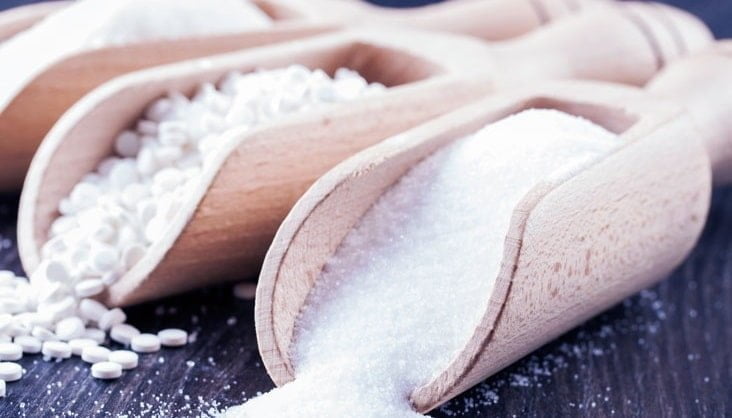
Aspartame usually does not directly raise blood sugar because it contains no meaningful carbohydrate at typical serving sizes. For many people managing diabetes, the bigger question is not whether aspartame and diabetes can coexist, but how sweeteners fit into meals, medications, appetite, and long-term habits. Evidence suggests aspartame can reduce added sugar intake when it replaces sugary drinks or desserts, but it should not replace a balanced eating pattern or personal glucose monitoring.
Why this matters: a diet drink may look simple on a label, yet the meal, snack, activity, and medication timing around it can change your glucose pattern. This article explains what aspartame does in the body, whether it affects insulin, how it compares with sugar, and how to choose sweeteners more safely.
Key Takeaways
- Low glycemic impact: Aspartame does not provide enough carbohydrate to spike glucose by itself.
- Insulin findings vary: Human studies show mixed, usually small insulin effects.
- Sugar still matters: Sugary drinks raise glucose more predictably than diet versions.
- Labels need context: Sugar-free foods may still contain starches or sugar alcohols.
- Personal testing helps: CGM or fingerstick checks can show your own response.
How Aspartame Works in the Body
Aspartame is a low-calorie sweetener made from two amino acids, phenylalanine and aspartic acid, plus a small amount of methanol formed during digestion. These components also occur in many common foods, although the amounts and food context differ. Because aspartame is intensely sweet, manufacturers use very small amounts.
Unlike table sugar, aspartame does not break down into glucose. It therefore has little direct glycemic load, which means it contributes very little to blood glucose. That is the main reason diet drinks and some sugar-free products use it instead of sugar.
One important exception is phenylketonuria, often called PKU. People with this rare inherited condition must limit phenylalanine. Products containing aspartame carry a phenylalanine warning for that reason. If you have PKU, pregnancy-related nutrition concerns, kidney disease, gastroparesis, an eating disorder, or frequent medication-related lows, review sweetener use with your clinician or a registered dietitian.
Does Aspartame Spike Blood Sugar?
Aspartame does not usually spike blood sugar when consumed alone. It has no meaningful carbohydrate load, so it is different from sugar, honey, regular soda, juice, or sweetened coffee drinks. In controlled settings, aspartame tends to produce lower glucose responses than sugar-containing drinks.
Still, real life is less controlled than a study visit. A person may drink diet soda with fries, snack foods, alcohol, or a high-carbohydrate meal. Glucose changes after that combination may come from the food, timing, stress, illness, or insulin dosing rather than the sweetener itself.
If you use continuous glucose monitoring, test one change at a time. Try the beverage without food on a stable day, then compare it with water under similar conditions. If you track values in different units, this calculator can help convert glucose readings between mg/dL and mmol/L for easier comparison.
Blood Glucose Unit Converter
Convert glucose readings between mg/dL and mmol/L without changing the clinical value.
These calculations are for education only and do not replace clinical advice, diagnosis, or treatment. Always confirm medical decisions with a qualified healthcare professional.
Quick tip: Check the full nutrition label, not just the words “diet” or “sugar-free.”
For a broader look at sweetener categories and glucose response, see Artificial Sweeteners and Diabetes. Readers who specifically use diet beverages may also find Diet Soda and Diabetes useful for comparing drinks, labels, and habits.
Insulin Response and Insulin Resistance
Aspartame does not appear to raise insulin in the same predictable way that carbohydrate does. Some studies have explored whether sweet taste can trigger a small early insulin signal, sometimes called a cephalic-phase response. Results are mixed, and any effect seen in humans is usually much smaller than the insulin response after sugar or starch.
The harder question is long-term insulin resistance. Observational studies sometimes link high intake of diet drinks or non-sugar sweeteners with type 2 diabetes risk. These studies cannot always separate cause from context. People at higher metabolic risk may switch to diet products after weight gain, prediabetes, or medical advice, which can make the sweetener look responsible when it may be a marker of risk.
Randomized trials are more useful for short-term glucose effects, but they vary in design, dose, background diet, and sweetener type. The practical conclusion is cautious: aspartame and diabetes management can fit together for some people, especially when it replaces added sugar, but it should not be treated as a metabolic shortcut.
For more detail on the insulin question across sweetener types, read Insulin Levels and Sweeteners. It explains why study results differ and why meal context matters.
Sugar, Diet Sweeteners, and Health Trade-Offs
Sugar is usually worse for immediate blood glucose because it supplies digestible carbohydrate. A regular soda, sweet tea, or sugar-sweetened coffee drink can raise glucose quickly and add calories without much fullness. Replacing those drinks with a non-sugar option may reduce a clear glucose burden.
That does not mean unlimited artificial sweeteners are automatically the healthiest choice. Sweet taste may keep cravings strong for some people. Diet drinks can also crowd out water, unsweetened tea, or nutrient-rich foods. Some sugar-free packaged foods still contain refined starches, saturated fat, or sugar alcohols that affect digestion.
Think of sweeteners as a tool, not a foundation. A useful pattern starts with water, unsweetened drinks, high-fiber foods, adequate protein, and consistent carbohydrate planning. Low-calorie sweeteners may then help reduce added sugar in specific situations.
Common drink swaps
- Regular soda: Often high in rapidly absorbed sugar.
- Fruit juice: Natural, but still concentrated carbohydrate.
- Sweet coffee drinks: Sugar can be hidden in syrups.
- Diet soda: Lower glucose load, but still a habit cue.
- Water or tea: Usually the simplest baseline choice.
For general diabetes nutrition topics, the Diabetes Articles collection can help you browse related education. People focused on insulin resistance and type 2 diabetes can also use the Type 2 Diabetes Articles collection for broader lifestyle context.
Comparing Sweetener Options Without Ranking One as Best
There is no single safest sweetener for every person with diabetes. The better choice depends on your glucose response, digestive tolerance, taste preference, cooking use, medical history, and how often you use it. The safest pattern is usually moderate use, label awareness, and a diet that does not rely heavily on sweetened products.
Aspartame
Aspartame is common in diet sodas, powdered drink mixes, tabletop packets, and some reduced-sugar foods. It is very low in calories at usual intakes and has little direct effect on glucose. It is not ideal for high-heat baking because sweetness can decrease with heat.
Stevia and monk fruit
Stevia and monk fruit are plant-derived non-sugar sweeteners. They usually have minimal direct glucose impact, but products often contain blends. Some packets include dextrose, maltodextrin, erythritol, or other bulking agents. Those added ingredients can change the nutrition profile. For a focused comparison, see Stevia and Diabetes.
Allulose and sugar alcohols
Allulose is a low-calorie sugar that is absorbed differently from regular sugar. It may have a smaller glucose effect for many people, but tolerance varies. Sugar alcohols such as erythritol, xylitol, sorbitol, and maltitol can reduce sugar content, yet some cause gas, bloating, or diarrhea. Maltitol may raise glucose more than some people expect.
If a product claims “no added sugar,” look at total carbohydrate, fiber, sugar alcohols, and serving size. A cookie sweetened with a low-calorie sweetener can still contain flour or other starches. Portion size remains relevant.
When to Limit or Avoid Certain Sweeteners
Most people with diabetes do not need a blanket list of artificial sweeteners to avoid. A more useful approach is to identify situations where caution makes sense. Avoiding or limiting a product may be reasonable if it causes repeated digestive symptoms, encourages frequent snacking, replaces more nourishing foods, or produces consistent glucose changes on your own meter or CGM.
People with PKU should avoid aspartame because of phenylalanine. During pregnancy, childhood, kidney disease, gastrointestinal disorders, and complex medication regimens, sweetener choices should be discussed with a clinician or dietitian. This is especially important if you have repeated hypoglycemia, unexplained highs, or major appetite changes.
Some readers ask whether aspartame can cause diabetes. Current evidence does not support a simple direct-cause statement. The relationship between sweetener intake, body weight, appetite, gut microbiome changes, and type 2 diabetes risk is still being studied. For now, it is safest to view aspartame as one possible sugar-reduction tool, not a protective treatment.
Practical Label and Testing Steps
Small habits make sweetener choices safer and clearer. Start by reading labels closely. A product may contain aspartame plus acesulfame potassium, sucralose, sugar alcohols, or starch-based fillers. Each ingredient can affect taste, digestion, and your overall eating pattern.
- Check serving size: Many packages contain multiple servings.
- Review total carbohydrate: Sugar-free does not mean carb-free.
- Note sugar alcohols: Large amounts may upset digestion.
- Compare with water: Test sweetened drinks against a baseline.
- Track the setting: Meals, stress, sleep, and exercise matter.
- Watch patterns: One reading is less useful than repeated results.
If you see repeated highs or lows after changing drinks or sweeteners, do not adjust diabetes medicines on your own. Bring your logs, CGM reports, or food records to your care team. Medication timing, insulin sensitivity, illness, and carbohydrate counting often explain patterns better than one ingredient.
Food quality still matters. Fiber-rich vegetables, legumes, whole grains in appropriate portions, protein foods, and unsweetened beverages can support steadier intake patterns. For a non-sweet food example, Broccoli and Diabetes reviews how low-starch vegetables can fit into meals.
Authoritative Sources
Regulators and major health organizations review sweeteners differently from individual glucose experiments. Regulatory reviews focus on safety limits, exposure, and toxicology. Diabetes education groups often focus on practical substitution, carbohydrate reduction, and overall eating patterns.
- The FDA explains aspartame and other sweeteners in food, including safety review context.
- The EFSA scientific opinion reviews aspartame safety and acceptable intake assessment.
- The American Diabetes Association explains carbohydrate basics for blood glucose planning.
Recap
Aspartame and diabetes can be compatible for many people because aspartame does not directly add glucose. It may help reduce sugar intake when it replaces sugary drinks or foods. The trade-off is that long-term health depends on the whole diet, not one sweetener.
Use labels, portion awareness, and personal glucose testing to judge your own response. Choose water and unsweetened drinks often, use sweeteners moderately when they help, and involve your care team when glucose patterns are unclear or medication-related lows occur.
This content is for informational purposes only and is not a substitute for professional medical advice.