
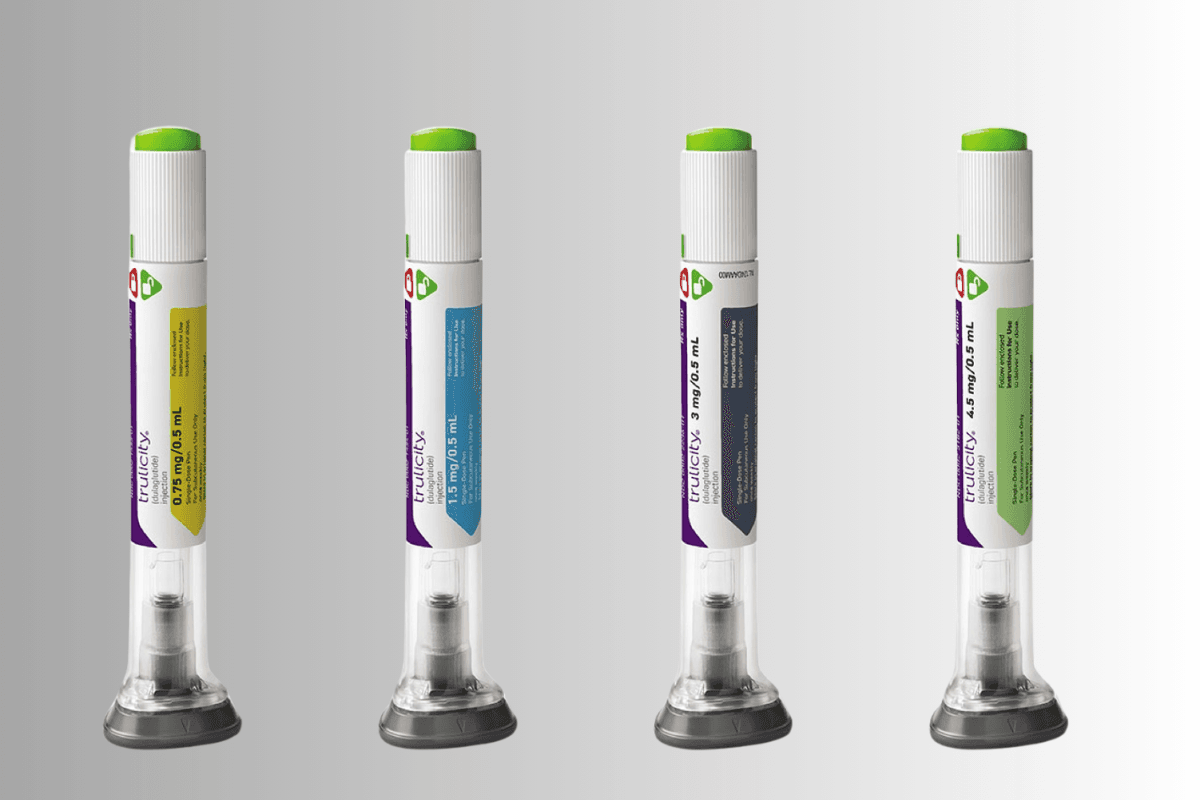
A Trulicity dosage chart helps compare the once-weekly dulaglutide strengths used for type 2 diabetes: 0.75 mg, 1.5 mg, 3 mg, and 4.5 mg. Most adults start at the lowest dose, then increase only when additional blood sugar control is needed and side effects remain manageable. This matters because higher doses may improve glucose measures for some people, but they can also bring more nausea, reflux, or appetite changes.
Trulicity is a GLP-1 receptor agonist, a medicine that helps the body respond to glucose after meals and slows stomach emptying. Dose decisions should always come from your prescriber, based on A1C, home glucose patterns, other diabetes medicines, kidney status, and tolerability.
Key Takeaways
- Weekly schedule: Trulicity is injected once per week.
- Starting strength: Many adults begin with 0.75 mg weekly.
- Stepwise increases: Dose changes usually happen gradually.
- Highest strength: The labeled maximum is 4.5 mg weekly.
- Side effects matter: Stomach symptoms often guide escalation.
How the Weekly Dose Levels Fit Together
Trulicity dosage levels are designed for gradual escalation, not sudden jumps. The usual goal is to find the lowest effective weekly dose that supports glucose targets without causing side effects that interfere with daily life. The starting dose is mainly about tolerability. Later doses are considered when more glycemic control is needed.
The medication comes in single-dose pens. Each pen contains one weekly dose, so people do not measure liquid or dial a partial amount. That design reduces dose-measuring errors, but it also means each change requires the correct pen strength. For a broader dosing walkthrough, see Trulicity Dosing.
| Weekly strength | Common role in care | Typical decision point |
|---|---|---|
| 0.75 mg | Starting dose | Used to begin therapy and assess tolerance |
| 1.5 mg | Early maintenance or first increase | Considered when more glucose control is needed |
| 3 mg | Further escalation | Used for selected adults who tolerate lower doses |
| 4.5 mg | Maximum labeled dose | Reserved for selected adults needing additional control |
Why it matters: A higher pen strength is not automatically better if tolerability or hydration suffers.
Starting Dose Versus Maintenance Dose
The Trulicity starting dose is usually 0.75 mg injected under the skin once weekly. This lower dose allows the body to adjust before a prescriber considers a dose increase. Some people remain at this level if glucose goals are met or side effects limit escalation.
A maintenance dose is the strength continued over time after the initial adjustment period. For some adults, that may be 1.5 mg weekly. Others may be considered for 3 mg or 4.5 mg if A1C or day-to-day glucose remains above target and the lower dose is tolerated. The Trulicity dosage chart should be read as a sequence of options, not a ladder everyone must climb.
Clinicians usually look at several factors before changing a dose. These include A1C, fasting glucose, post-meal readings, appetite changes, gastrointestinal symptoms, hypoglycemia risk with other medicines, and the person’s treatment priorities. If insulin or a sulfonylurea is also used, the care team may monitor low blood sugar risk more closely.
The A1C result reflects average glucose over roughly the past few months. Estimated average glucose can help make that number easier to interpret, but it does not replace clinical review.
HbA1c & eAG Calculator
Convert between HbA1c percentage and estimated average glucose using the ADAG relationship.
These calculations are for education only and do not replace clinical advice, diagnosis, or treatment. Always confirm medical decisions with a qualified healthcare professional.
This calculator can convert A1C and estimated average glucose for general discussion. It does not decide whether a Trulicity dose should change.
When a Dose Increase May Be Considered
A dose increase may be considered when glucose targets are not being met and the current strength is tolerated. This is a clinical decision, not a self-adjustment. The prescriber may review logs, lab trends, meal patterns, and other medications before changing the weekly pen strength.
Common reasons to reassess the dose include persistently high fasting glucose, post-meal spikes, or an A1C that remains above the agreed target. The care team may also check whether injections are being taken consistently, whether the correct pen strength is being used, and whether missed doses are affecting results.
Side effects can change the plan. Nausea, vomiting, diarrhea, constipation, reflux, and reduced appetite can occur with GLP-1 medicines. These symptoms are often more noticeable early in treatment or after a dose increase. If they are severe, persistent, or causing dehydration, contact a healthcare professional before the next injection.
Questions to ask before moving up
- Glucose pattern: Are highs fasting, post-meal, or both?
- Side-effect burden: Are symptoms mild or disruptive?
- Medication mix: Are insulin or sulfonylureas involved?
- Meal tolerance: Is appetite too low to eat safely?
- Hydration status: Have vomiting or diarrhea occurred?
These questions help frame the appointment. They should not be used to change the dose without medical direction.
Side Effects Across Dose Strengths
Trulicity dose side effects are often gastrointestinal because GLP-1 receptor agonists affect appetite and stomach emptying. Nausea is commonly discussed, but reflux, bloating, constipation, diarrhea, and early fullness can also occur. Some people notice these effects more after moving from 1.5 mg to 3 mg, or from 3 mg to 4.5 mg.
Practical habits may help with mild symptoms. Smaller meals, slower eating, lower-fat choices, and steady fluid intake can reduce discomfort for some people. If certain meals worsen nausea or reflux, food pattern review may be useful. For meal-related context, see Foods To Avoid With Trulicity.
Some symptoms need prompt medical attention. Seek urgent care for severe abdominal pain that does not improve, especially if it spreads to the back or comes with vomiting. Also seek care for signs of a serious allergic reaction, such as swelling of the face or throat, trouble breathing, or widespread rash. People with ongoing vomiting or diarrhea should also contact a clinician because dehydration can affect kidney function.
Quick tip: Bring a symptom log to visits, including timing, meals, dose date, and severity.
Missed Doses and Weekly Scheduling
The Trulicity dosing schedule works best when the injection day stays consistent. Choose a day that fits your routine, then use reminders, calendars, or medication apps to reduce missed doses. The injection can be given at any time of day, with or without food, unless your prescriber gives different instructions.
If a dose is missed, the labeled instructions depend on the timing of the next scheduled dose. In general, take the missed dose as soon as possible if there are at least 3 days until the next planned dose. If fewer than 3 days remain, skip the missed dose and take the next dose on the usual day. Do not take two doses close together to catch up.
You may change the weekly injection day if needed, but there should be at least 3 days between doses. This timing rule helps prevent doses from being stacked too closely. If your schedule has been inconsistent for several weeks, ask your care team how to restart safely rather than guessing.
Injection Sites and Pen Practicalities
Trulicity is injected under the skin, usually in the abdomen, thigh, or upper arm. Rotate injection sites each week to reduce tenderness, bruising, or irritation. Avoid injecting into skin that is red, hard, bruised, scarred, or painful.
The single-dose pen is meant to be used once and then discarded in an appropriate sharps container. Read the device instructions before use, even if you have used other injectable medicines. Pens can differ in cap removal, placement, activation, and visible indicators.
Some readers also compare formats across GLP-1 medicines. Trulicity, Ozempic, Victoza, Mounjaro, and Rybelsus use different active ingredients, dosing steps, and administration rules. Dose sizes do not convert one-to-one between products. If you are comparing options, Trulicity vs Ozempic offers a broader class comparison, while Trulicity Drug Class explains where dulaglutide fits.
Comparing 3 mg and 4.5 mg Strengths
The highest dose of Trulicity is 4.5 mg once weekly. It may be considered for selected adults who need additional glycemic control after tolerating lower strengths. The 3 mg strength is an intermediate step and may be used before the maximum dose, depending on the treatment plan.
Comparing 3 mg and 4.5 mg is not only about blood sugar. It also involves appetite, weight change, stomach symptoms, hydration, and whether the person can maintain regular meals. A person who tolerates 3 mg well may still have more side effects at 4.5 mg. Another person may never need the highest strength if lower-dose control is adequate.
Clinical trial data have evaluated higher dulaglutide doses in adults with type 2 diabetes, but trial averages do not predict an individual response. Your prescriber may focus on your own A1C trend, glucose readings, symptoms, and medication history. This is where a Trulicity dosage chart is useful: it organizes the available strengths, while the clinical decision remains individualized.
How Other Diabetes Medicines Affect Dose Decisions
Other diabetes medicines can influence whether a Trulicity dose increase makes sense. Metformin, SGLT2 inhibitors, insulin, and sulfonylureas may all appear in type 2 diabetes treatment plans. Each has different effects on glucose, side effects, and monitoring needs.
Low blood sugar is not usually the main issue with GLP-1 medicines used alone, but the risk can increase when they are combined with insulin or sulfonylureas. For that reason, clinicians may review home readings and symptoms carefully when multiple glucose-lowering medicines are used. Symptoms of low blood sugar can include shakiness, sweating, confusion, hunger, or a fast heartbeat.
Kidney disease, dehydration risk, gastroparesis symptoms, pregnancy planning, and a history of pancreatitis or certain thyroid tumors may also affect medication choice. These are not details to manage alone. They belong in a prescriber-led review before dose escalation or medication switching.
For broader condition context, the Type 2 Diabetes article collection covers related education topics. The Type 2 Diabetes Products page is a browseable collection, not a substitute for medical advice.
Weight, Appetite, and Expectations
Weight changes can occur with GLP-1 therapy, but Trulicity is prescribed for type 2 diabetes rather than as a stand-alone weight-loss drug. Some people notice reduced appetite or smaller portions. Others see little weight change, especially if nausea limits food intake inconsistently or other medicines affect weight.
Higher doses may be associated with stronger appetite effects for some adults, but tolerability remains central. A dose that causes persistent nausea, dehydration, or poor nutrition may not be sustainable. If appetite suppression is strong, ask about hydration, protein intake, and safe meal timing, especially if you also use medicines that can cause low blood sugar.
For a focused discussion of this topic, see Trulicity and Weight Loss. Keep expectations realistic and avoid comparing your response directly with another person’s response, even at the same dose.
Where Access and Product Pages Fit
Educational dosing information should be separate from prescribing and dispensing decisions. A product page can help identify a medication format, but it should not be used to decide which dose you need. Prescription details should match the prescriber’s instructions and the dispensed product label.
CanadianInsulin.com functions as a prescription referral platform. Where required, prescription details may be confirmed with the prescriber, and licensed third-party pharmacies handle dispensing where permitted. If you need product-format context, the Trulicity Pens page may help you recognize the medication listing, while the Diabetes Products category is a browseable collection.
Authoritative Sources
The official FDA label provides current prescribing details, including dose strengths, escalation language, missed-dose instructions, contraindications, and important warnings. See the FDA Trulicity prescribing information.
The American Diabetes Association publishes annual standards that discuss GLP-1 receptor agonists within type 2 diabetes care, individualized targets, and medication selection. Review the ADA Standards of Care in Diabetes.
Clinical evidence has also examined higher dulaglutide doses in adults with type 2 diabetes. One peer-reviewed trial report is available through the National Institutes of Health archive.
Recap
A Trulicity dosage chart can clarify how weekly dulaglutide strengths progress from 0.75 mg to 4.5 mg. The usual approach is to start low, reassess glucose response and side effects, then increase only when the benefits are expected to outweigh tolerability concerns. Missed-dose timing, injection technique, other diabetes medicines, and health history all shape the safest plan.
Use this information to prepare better questions for your clinician. Do not adjust your dose, skip doses repeatedly, or switch products without professional guidance.
This content is for informational purposes only and is not a substitute for professional medical advice.


