
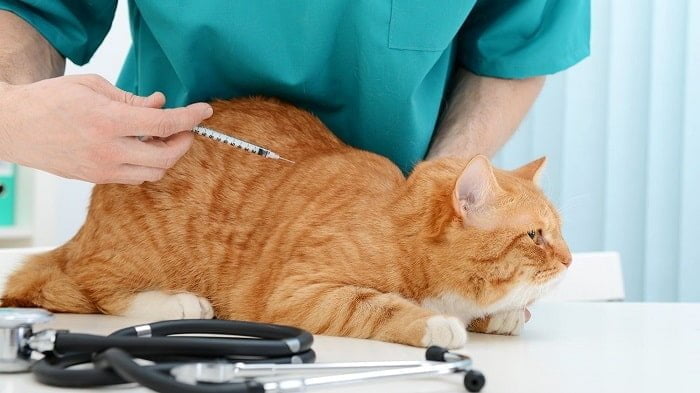
Learning how to give a cat an insulin shot means giving a small subcutaneous injection, just under the skin, at the dose and schedule your veterinarian prescribed. The safest routine is simple: prepare the insulin, confirm the dose, tent loose skin, inject smoothly, rotate sites, and record what happened. This matters because consistent technique helps reduce discomfort, dosing errors, and glucose swings.
Most cats tolerate insulin better than owners expect. The needle is small, and the injection takes only a few seconds. Still, your first few attempts can feel stressful. Ask your veterinary team to demonstrate the exact syringe, pen, insulin product, and dose before you give injections alone.
Key Takeaways
- Use the exact insulin, syringe, pen needle, and dose prescribed.
- Inject into loose skin over the side body, shoulder area, or flank.
- Rotate sites to reduce soreness, lumps, and variable absorption.
- Give insulin around meals unless your veterinarian gives different instructions.
- Never double a missed or uncertain dose without veterinary direction.
How to Give a Cat an Insulin Shot Step by Step
The basic process is to prepare calmly, make a skin tent, place the needle under the skin, and deliver the dose steadily. Set up the same way each time. A repeatable routine lowers the chance of rushing or second-guessing the dose.
1. Prepare the supplies
Work in a clean, well-lit area. Gather the insulin, a new syringe or pen needle, a sharps container, your dosing log, and a small treat if your cat can have one. Wash and dry your hands. Check the insulin name, expiration date, and appearance before each dose.
Some insulin products are clear. Others are cloudy suspensions and may need gentle rolling before use. Do not shake insulin unless the label or your veterinarian specifically instructs you to do so. Shaking can create bubbles or affect the product.
Confirm that the syringe matches the insulin concentration. For example, U-40 and U-100 syringes are not interchangeable unless your veterinarian gives a specific conversion plan. Using the wrong syringe can create a serious dosing error. For a broader explanation of feline insulin options, see Insulin for Cats.
2. Draw up or dial the dose
If you use a syringe, insert the needle into the vial and draw the prescribed amount. Hold the syringe upright and check for large air bubbles. If needed, tap gently and recheck the mark. Do not estimate between marks unless your veterinary team has taught you how to measure that exact dose.
If you use a cat insulin pen, attach a new pen needle and follow the pen instructions your clinic provided. Many pens require priming before injection. Dial the dose carefully, then keep the needle in place briefly after pressing the button so the full dose can enter the tissue.
Quick tip: Prepare the injection while your cat is eating or settled in a familiar spot.
3. Make a skin tent
Use your non-dominant hand to lift a fold of loose skin. This creates a small tent. The goal is to inject into the subcutaneous tissue, which is the layer of fat and connective tissue below the skin. Avoid pulling so hard that the skin becomes tight.
Place the needle into the base of the tent at a shallow angle. Keep the needle bevel facing up if you can see it. Push the plunger or pen button steadily. Pause for a moment, then withdraw the needle in the same direction it entered.
4. Finish and record
Do not rub the injection site. Gentle fingertip pressure is enough if you see a tiny drop of blood. Offer praise or a treat, then place the needle directly into a sharps container. Write down the time, dose, site, appetite, and any unusual reaction.
If the fur feels wet or smells like insulin, some insulin may have leaked. Do not repeat the shot unless your veterinarian tells you to. Record the event and monitor your cat. Repeating an uncertain dose can cause hypoglycemia, which means blood glucose becomes too low.
Where to Inject Insulin in Cats
The best cat insulin injection sites are areas with enough loose skin to lift comfortably, often along the side of the chest, shoulder region, or flank. Many veterinarians recommend avoiding repeated injections into the exact same spot because skin irritation and absorption changes can develop over time.
Think of the injection zone as a rotating map, not one fixed target. You might move from the left shoulder area to the left flank, then to the right flank and right shoulder area. Keep the pattern simple enough to follow when you are tired or busy.
Do not inject into skin that is red, hot, painful, thickened, scabbed, or lumpy. Skip that area and mention it to your clinic. A small temporary bump can happen after injections, but a growing, painful, or warm swelling needs veterinary assessment.
Owners often ask whether the scruff is acceptable. The loose skin at the back of the neck can be easy to lift, but daily use of the same scruff area may not be ideal for every cat. Ask your veterinarian where they want you to inject based on your cat’s body condition, coat, and insulin type.
Why it matters: Rotating sites can help protect the skin and support more predictable absorption.
Meals, Timing, and Schedule Changes
Insulin is usually paired with food because eating helps reduce the risk of low blood sugar after a dose. Your veterinarian may tell you to feed first, confirm your cat ate enough, and then give insulin. Some cats receive insulin while eating because they stay still and relaxed.
Keep dosing times as consistent as possible. Many cats are treated on a twice-daily schedule, but the exact plan depends on the insulin, your cat’s glucose pattern, other illnesses, and your veterinarian’s instructions. Do not change the dose or interval based only on a single appetite change or home reading unless your clinic has given a written plan.
Questions such as “can I give my cat insulin 2 hours early” or “can I give my cat insulin 3 hours early” need case-specific advice. A one-time timing shift may be handled differently depending on the insulin duration and the previous dose time. Call your clinic before making a large shift, especially if your cat has eaten poorly, vomited, or acted weak.
If your household schedule changes, plan ahead. Ask your veterinarian what timing window is acceptable, what to do if a dose is late, and when to skip rather than give. Write those instructions down. This is safer than relying on memory during a stressful morning.
Missed, Late, or Uncertain Doses
If you miss a dose, do not automatically give extra insulin later. The safest next step is to follow the missed-dose plan your veterinarian gave you or call for guidance. Insulin timing depends on the product and your cat’s current control, so a generic skipping cat insulin dose chart cannot replace veterinary instructions.
Use this conservative home framework while you wait for clinic guidance:
- Missed dose: Do not double the next dose.
- Late dose: Ask whether to give, delay, or skip.
- Poor appetite: Call before dosing if intake is much lower than usual.
- Vomiting or weakness: Seek veterinary advice promptly.
- Wet fur after injection: Record it, monitor, and avoid re-injecting.
How long a cat can skip a dose of insulin depends on the individual cat. Some may remain stable for a short period, while others can worsen quickly. Cats with diabetes can develop serious complications if insulin is withheld too long, especially if they stop eating or become dehydrated.
Watch for signs of hypoglycemia after any dose concern. These can include sudden hunger, restlessness, weakness, wobbliness, tremors, seizures, or collapse. Keep your veterinarian’s emergency instructions visible. For deeper symptom context, see Hypoglycemia in Cats.
Using a Cat Insulin Pen or Syringe
Both syringes and insulin pens can work well when used correctly. Syringes allow direct measurement from a vial. Pens may feel more convenient for some caregivers, but they still require careful priming, a fresh needle, and enough time for the dose to deliver.
If you want to know how to give insulin injection with pen to a cat, start with a hands-on demonstration. Your clinic should show you how to attach the needle, prime the pen, dial the dose, insert the needle, press the button, and count before removal. Technique varies by device, so do not rely on human pen habits alone.
Never reuse needles. A used needle can become dull, bend slightly, and increase discomfort. Reuse can also affect sterility. Store unused needles safely and keep them away from children and pets.
Syringe users should focus on concentration matching and accurate measurement. Pen users should focus on priming and full-dose delivery. In both cases, the most important safety step is to use the exact method your veterinarian taught for your cat’s prescription.
For related injection safety concepts across pets, Pet Insulin Dosage Mistakes explains common overdose and underdose risks in plain language.
How to Give a Difficult Cat Insulin
A difficult injection routine usually improves when restraint becomes calmer, shorter, and more predictable. Avoid chasing your cat with the syringe. Instead, choose a low-stress location, prepare supplies first, and keep the injection session brief.
Some cats do best on a non-slip mat, windowsill, or feeding station. Others need a towel wrap that covers the legs while leaving the injection area exposed. If a second person helps, they should steady the cat gently rather than hold tightly. Firm restraint can make a frightened cat struggle harder.
Use a stepwise training approach when there is time. Touch the injection area, reward, and stop. Later, lift the skin tent, reward, and stop. Then practice with the capped syringe nearby. This can reduce fear before the real injection.
If your cat bites, hides for hours, or becomes dangerous to handle, contact your veterinary team. They can check your technique, evaluate pain or skin problems, and suggest a handling plan. Do not risk injury to yourself or your cat by forcing repeated attempts.
Storage, Supplies, and Sharps Disposal
Insulin must be stored according to the product label and veterinary instructions. Many unopened products are refrigerated and protected from light. Some in-use products have specific room-temperature rules, but these vary. Do not freeze insulin or leave it in a hot car, sunny window, or near a heater.
Check the insulin before each use. Do not use it if the appearance has changed in a way your veterinarian did not describe. Clumps, strings, crystals, unexpected cloudiness, or color change can suggest the product should be replaced. Mark the date you opened a vial or pen so you can follow the in-use discard period.
Needles and pen tips need safe disposal. Place them directly into a sharps container after use. If you do not have a container yet, ask your clinic or pharmacy what local rules allow. A thick plastic bottle may be accepted temporarily in some areas, but disposal rules differ by city, state, and province.
For broader home-care reading and condition support, browse the Pet Health Articles collection. If you are coordinating supplies and diabetes care, Pet Diabetes Support covers practical planning topics for caregivers.
Monitoring After the Injection
After you learn how to give a cat an insulin shot, the next skill is noticing patterns. Track dose time, appetite, water intake, urination, body weight, injection site, and behavior. These notes help your veterinarian decide whether the current plan is working.
Some cats also have home glucose checks or continuous glucose monitoring. Your clinic can tell you whether this is appropriate and how to interpret results. Do not change insulin doses based on a single number unless you have a written protocol from your veterinarian.
High blood sugar can cause increased thirst, increased urination, weight loss, and hunger. Low blood sugar can cause weakness, wobbliness, tremors, seizures, or collapse. Both patterns deserve attention, but sudden low-sugar signs are urgent. For related warning signs, see Hyperglycemia in Cats and Seizures in Cats with Diabetes.
If you are still learning how to give a cat an insulin shot, bring your supplies to a recheck appointment. A technician or veterinarian can watch your technique and correct small issues before they become habits. This is often the fastest way to improve confidence.
Authoritative Sources
For caregiver-focused injection instructions, see this AAHA insulin administration handout.
For clinical background on feline diabetes management, review the AAHA diabetes management guidelines.
For product-specific administration context, consult the Vetsulin feline administration guide.
Recap
How to give a cat an insulin shot comes down to consistent preparation, correct site choice, smooth technique, and careful follow-up. Use the prescribed insulin and device, rotate injection areas, pair doses with meals as directed, and keep a written record.
Call your veterinarian if your cat will not eat, vomits, seems weak, has a possible missed or double dose, or shows signs of low blood sugar. Written instructions from your clinic are the safest reference for timing changes and skipped doses.
This content is for informational purposes only and is not a substitute for professional medical advice.


