
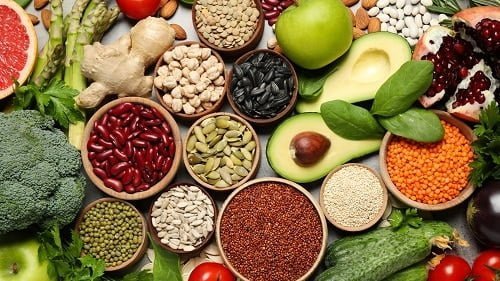
High Fiber Foods for Diabetics include beans, lentils, vegetables, berries, whole grains, nuts, seeds, and other plant foods that add bulk without relying on added sugar. Fiber matters because it can slow digestion, support steadier post-meal glucose patterns, and help meals feel more filling. It is still part of real food choices, not a shortcut. High-fiber foods can contain carbohydrates, so portions, labels, medications, and personal glucose response still matter.
This practical eating guide focuses on everyday choices for people planning meals around diabetes. It does not replace a personal carbohydrate target, medication plan, or advice from a registered dietitian. That is especially important if you use insulin, take medicines that can cause low blood sugar, are pregnant, have kidney disease, or have digestive conditions such as gastroparesis.
Key Takeaways
- Fiber-rich staples include legumes, vegetables, fruit, oats, barley, nuts, and seeds.
- Fiber itself usually has less glucose impact than starch or sugar, but many high-fiber foods still contain digestible carbohydrates.
- Soluble fiber from foods like oats, beans, and some fruits may help blunt post-meal glucose rises.
- Increase fiber gradually and drink enough fluids to reduce gas, bloating, or constipation.
- Use glucose readings, food labels, and dietitian guidance to refine portions.
High Fiber Foods for Diabetics: What Counts as Fiber?
Dietary fiber is the part of plant foods your body does not fully digest. It appears on food labels under total carbohydrate, but it behaves differently from sugars and starches. That difference is why a meal with beans, vegetables, or intact grains can affect fullness and glucose response differently than a meal built around refined grains or sweetened drinks.
There are two broad types. Soluble fiber dissolves in water and forms a gel-like texture in the gut. You find it in oats, barley, beans, lentils, apples, citrus fruit, chia seeds, and psyllium. Insoluble fiber does not dissolve in the same way. It adds bulk and supports bowel regularity. You find it in wheat bran, vegetable skins, nuts, seeds, and many whole grains.
No single fiber reliably lowers A1C for everyone. A1C reflects average glucose over roughly two to three months and depends on many factors, including meal patterns, activity, sleep, illness, and medications. Still, higher-fiber eating patterns may support diabetes management when they replace lower-fiber, more refined choices. The practical goal is not to chase one magic ingredient. It is to build meals that combine fiber, protein, healthy fats, and appropriate portions.
Why it matters: A high-fiber label does not automatically mean a low-carbohydrate food.
A Practical Food List for Meals and Snacks
The best high fiber foods for diabetics tend to be minimally processed plant foods. That does not mean every meal must be vegetarian, low carb, or complicated. It means you start with foods that bring fiber naturally, then adjust the portion and pairing to fit your glucose response.
Fruit can fit into a diabetes meal plan, but serving size and form matter. Whole fruit usually brings more fiber than juice, and many people do better with fruit paired with protein or fat. For more detail, see Fruits for Diabetes and Low-GI Fruits. Vegetables are also useful because many are filling and lower in digestible carbohydrate; examples include options discussed in Carrots and Diabetes and Broccoli and Diabetes.
| Food group | Examples | How to use it |
|---|---|---|
| Beans and lentils | Black beans, chickpeas, kidney beans, split peas, lentils | Add to soups, salads, bowls, or tacos in measured portions. |
| Nonstarchy vegetables | Broccoli, peppers, greens, cauliflower, zucchini, carrots | Fill part of the plate to add volume and texture. |
| Whole fruit | Berries, apples, pears, oranges, kiwi | Choose whole fruit more often than juice or sweetened fruit cups. |
| Whole grains | Oats, barley, quinoa, brown rice, whole-grain bread | Compare portions because these foods still contain carbohydrates. |
| Nuts and seeds | Almonds, walnuts, chia, flax, pumpkin seeds | Use small portions to add fiber, fat, and crunch. |
| Packaged choices | High-fiber crackers, cereal, wraps, bars | Check total carbohydrate, fiber, added sugars, and serving size. |
High-fiber carbs for diabetes can be useful when they replace lower-fiber choices. For example, lentils may be more filling than a similar amount of refined pasta. Oats may keep you satisfied longer than a sweetened breakfast pastry. These comparisons are not rules. They are starting points for testing what works with your glucose readings and routine.
How Fiber Helps Blood Sugar Without Cancelling Carbs
Fiber can slow the movement of food through the digestive tract. This may soften the rise in glucose after some meals, especially when fiber comes with protein and healthy fats. Soluble, viscous fibers from foods like oats, barley, beans, lentils, and some seeds are often discussed for this effect.
Fiber does not make a high-carbohydrate meal disappear. A large bowl of brown rice, a large smoothie, or several slices of whole-grain bread can still raise blood sugar. The difference is that high-fiber foods often bring more texture, chewing, nutrients, and fullness than refined foods. That can make portions easier to manage for some people.
If you use a continuous glucose monitor or meter, your own patterns matter more than a generic food ranking. Some people see a higher rise from oats than from beans. Others tolerate fruit well when eaten with yogurt, nuts, or a meal. For background on checking patterns, see Monitor Blood Sugar and Blood Sugar Range Chart.
High fiber foods for diabetics work best as part of a complete plate. A practical plate might include nonstarchy vegetables, a protein food, a high-fiber carbohydrate, and a small amount of unsaturated fat. The exact portions depend on your goals, medications, appetite, culture, kidney health, and activity level.
Building a Higher-Fiber Day Without Guessing
A higher-fiber day starts with one change at a time. Sudden large increases can cause bloating, cramps, or loose stools. Gradual changes are easier to maintain and easier to interpret when you review glucose readings.
Breakfast ideas
A high-fiber breakfast for someone with diabetes might include plain oats with chia and berries, whole-grain toast with avocado and eggs, or a vegetable omelet with beans on the side. The better choice depends on your morning glucose pattern, hunger, and medications. Sweetened cereal, juice, and large flavored coffee drinks can add fast carbohydrates with little fiber.
Lunch and dinner ideas
Lunch can be built around a bean soup, a salad with chickpeas, or a whole-grain wrap with vegetables and protein. Dinner might include fish or poultry with roasted vegetables and a measured portion of barley, quinoa, lentils, or sweet potato. If you prefer a lower-carbohydrate pattern, nonstarchy vegetables, nuts, seeds, and small portions of berries can still add fiber.
Use labels for carb context
Food labels help you compare snacks and packaged meals. Start with serving size, then review total carbohydrate, dietary fiber, added sugars, and sodium. A product labeled sugar-free can still contain carbohydrates, and some sugar alcohols may cause gas or diarrhea. For more background, see Sugar Alcohols.
Some readers find it easier to convert label carbohydrates into carb servings before comparing snacks. The calculator below can help with general carb-serving math; it does not set personal targets or replace clinical guidance.
Carb Serving Calculator
Convert total carbohydrate grams into carb choices for meal planning and diabetes education.
These calculations are for education only and do not replace clinical advice, diagnosis, or treatment. Always confirm medical decisions with a qualified healthcare professional.
Quick tip: Compare similar foods by serving size before comparing fiber grams.
Snack Choices: High-Fiber, Packaged, and Late-Night
High-fiber snacks can help bridge meals when you are hungry, but they should still fit your overall plan. Common options include berries with plain Greek yogurt, vegetables with hummus, a small apple with nut butter, roasted chickpeas, chia pudding without added sugar, or popcorn in a measured portion. Nuts and seeds add fiber and fat, but portions can be calorie-dense.
Packaged snacks need closer label reading. Look for a reasonable serving size, meaningful fiber, limited added sugar, and ingredients you recognize. A bar with chicory root fiber or sugar alcohol may look attractive on the label but still cause digestive discomfort for some people. A simpler snack, such as nuts with fruit or vegetables with hummus, may be easier to understand.
Late-night snacks for people with diabetes are not automatically needed. Some people snack at night because of hunger, exercise, medication timing, or a clinician-directed plan. Others snack out of habit. If you have repeated nighttime lows, morning highs, or symptoms such as sweating, shaking, confusion, or headaches, do not manage it with snacks alone. Review readings with your clinician. You can also read more about symptoms in Hypoglycemia Headaches.
High fiber foods for diabetics can be useful at snack time when they are paired thoughtfully. Fiber plus protein often feels more satisfying than fiber alone. Examples include lentil salad, hummus with vegetables, or a small portion of nuts with fruit. Keep the goal practical: a snack should solve a specific need, not add extra grazing without awareness.
Foods to Limit or Compare More Carefully
Diabetes eating plans do not need a universal forbidden-food list. Still, some foods are worth limiting or comparing carefully because they add fast carbohydrates, saturated fat, sodium, or large portions with little fiber. Examples include sugary drinks, fruit juice, candy, sweetened cereal, pastries, refined white bread, large servings of fries, and desserts eaten frequently.
The phrase diabetic diet food list can make eating sound rigid. A more useful approach is to ask what the food contributes. Does it bring fiber, protein, vitamins, minerals, or satisfaction? Does the serving size match your plan? Does it fit with your medication timing and glucose response? This approach keeps nutrition flexible without ignoring blood sugar.
Sugar-free snacks are also not automatically better. Some contain refined starches, high amounts of fat, or sweeteners that affect digestion. Others may be useful in small portions. Read the label and consider how the food fits the whole day rather than judging it by one claim on the front of the package.
When Fiber Needs Extra Caution
Fiber is generally encouraged in healthy eating patterns, but some situations need extra care. If you take insulin or a sulfonylurea, changing carbohydrate type and meal timing may affect low-blood-sugar risk. Do not adjust medication on your own. Bring glucose records and food notes to your healthcare team if patterns change.
People with gastroparesis, inflammatory bowel disease flares, swallowing problems, recent gastrointestinal surgery, or severe constipation may need individualized fiber advice. Some high-fiber foods can worsen symptoms during certain periods. A registered dietitian can help adjust texture, fiber type, and portion size without making the diet unnecessarily restrictive.
Kidney disease can also change food choices. Beans, lentils, nuts, seeds, whole grains, and some fruits contain potassium or phosphorus, which may matter for some people with advanced kidney disease. This does not mean these foods are always off limits. It means your lab results and clinician guidance should shape the plan.
Fiber supplements are different from fiber-rich foods. Psyllium and other supplements may help some people increase intake, but they do not provide the same mix of nutrients as vegetables, legumes, fruit, and whole grains. Supplements can also affect how some medicines are absorbed. Ask a clinician or pharmacist before starting one, especially if you take several medicines or have digestive symptoms.
Putting the Food List Into a Weekly Pattern
A 7-day diet plan for diabetic patients is most useful when it is flexible. Instead of copying a rigid menu, choose repeatable meal templates. For breakfast, rotate oats, eggs with vegetables, plain yogurt with berries, or whole-grain toast with protein. For lunch, rotate bean soup, salad bowls, leftovers, or wraps. For dinner, rotate lean protein, nonstarchy vegetables, and a measured high-fiber carbohydrate.
Batch cooking can make fiber easier to include. Cook lentils, beans, barley, or quinoa ahead of time. Wash vegetables and fruit. Keep nuts, seeds, canned beans, and frozen vegetables available. If canned foods are part of your routine, compare sodium and rinse beans when appropriate.
Tracking does not need to be obsessive. A short note about the meal, portion, time, and glucose response can teach you more than a generic list. If readings are repeatedly high or low after changing fiber intake, bring those patterns to your care team. For broader diabetes education topics, the Diabetes Articles hub can help you browse related guides.
Authoritative Sources
- CDC fiber and diabetes guidance explains how fiber can support diabetes meal planning.
- American Diabetes Association food guidance outlines nutrient-dense foods often used in diabetes eating patterns.
- MedlinePlus dietary fiber overview reviews fiber types, sources, and general digestive effects.
Use this information as a flexible starting point. Your glucose readings, food preferences, medication plan, and clinician’s advice can help you adjust portions and timing over time.
This content is for informational purposes only and is not a substitute for professional medical advice.