
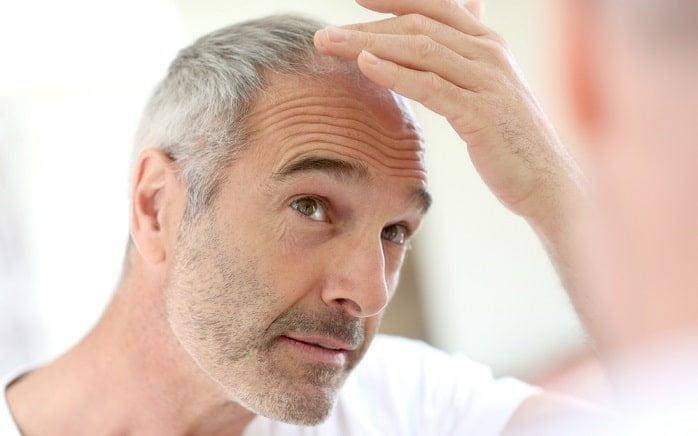
Diabetes and hair loss can be connected, but diabetes is rarely the only possible cause. Blood glucose changes, inflammation, circulation issues, autoimmune disease, thyroid problems, nutritional gaps, medications, and scalp conditions can all affect the hair cycle. The key is to identify the pattern, check for reversible triggers, and involve a clinician when loss is rapid, patchy, painful, or scarring.
Hair follicles are sensitive to changes inside the body. A stressful illness, a major weight change, or a period of high glucose may not cause shedding right away. Hair often sheds weeks to months after the trigger, which can make the cause hard to spot.
Key Takeaways
- Several pathways may contribute, including glucose variability, inflammation, hormones, and circulation.
- Common patterns include diffuse shedding, a wider part, slow regrowth, or reduced leg hair.
- Regrowth is more likely when hair loss is non-scarring and triggers are corrected.
- Metformin is not a proven common cause, but timing and other factors matter.
- Seek medical review for sudden, patchy, painful, or scarring hair loss.
How Diabetes Can Affect the Hair Cycle
Diabetes can affect hair growth by disrupting the normal cycle of growth, rest, and shedding. Hair follicles move through anagen (growth phase), catagen (transition phase), and telogen (resting phase). When the body is under metabolic stress, more hairs may shift into the resting phase. This is called telogen effluvium, a diffuse shedding pattern that often appears after a delay.
High or unstable glucose may also affect small blood vessels. These vessels help deliver oxygen and nutrients to the scalp and skin. Over time, microvascular changes can make recovery slower, especially when other issues are present. This does not mean every person with diabetes will lose hair. It means diabetes can add stress to a system that is already affected by age, genetics, hormones, nutrition, and scalp health.
Inflammation may be another contributor. People with insulin resistance or diabetes can have higher levels of systemic inflammation. Hair follicles respond to inflammatory signals, which may shorten the growth phase or increase shedding. For a broader condition-level discussion, see Can Diabetes Cause Hair Loss.
Why it matters: Hair shedding often reflects several overlapping triggers, not one isolated cause.
What Diabetes-Related Hair Loss Can Look Like
Diabetes-related shedding usually looks diffuse rather than sharply defined. Many people notice more hair in the shower, a wider part, thinner density at the crown, or slower regrowth after normal shedding. Others describe brittle strands, scalp flaking, or increased breakage. These features can overlap with common conditions that are not caused by diabetes.
Some people ask what diabetes hair loss looks like because they expect one specific pattern. In practice, the appearance depends on the main driver. Telogen effluvium tends to cause all-over shedding. Female-pattern or male-pattern hair loss causes gradual thinning in predictable areas. Alopecia areata, an autoimmune condition, can cause round patches. Scalp psoriasis, seborrheic dermatitis, fungal infection, or folliculitis may add itching, scaling, tenderness, or pustules.
Hair loss on the legs can have a different meaning. Reduced hair on the shins or calves may occur with circulation problems, especially when it appears with cold feet, color changes, slow-healing sores, pain while walking, or numbness. Those symptoms need medical review. For related skin and circulation issues, Diabetes Skin Problems explains common changes that can affect the skin barrier.
Prediabetes, Insulin Resistance, and Early Clues
Prediabetes can be linked with hair changes, but it is not usually the sole explanation. Insulin resistance may affect hormones, inflammation, and skin biology before diabetes is diagnosed. People may notice shedding during weight change, illness, stress, or dietary restriction. These events can overlap with early metabolic changes.
Insulin resistance is also associated with conditions that affect hair. Polycystic ovary syndrome, often called PCOS, can involve higher androgen activity. Androgens are hormones that can shrink susceptible follicles over time. This may cause thinning along the part line or crown in women, sometimes with acne, irregular periods, or increased facial hair. In men, genetic pattern hair loss may progress independently of blood glucose, but metabolic health can still influence scalp and vascular health.
Prediabetes often has no obvious symptoms. If hair shedding appears with increased thirst, frequent urination, fatigue, blurry vision, recurrent infections, or unexplained weight change, it is reasonable to discuss screening with a clinician. The NIDDK overview of insulin resistance explains how prediabetes and insulin resistance develop over time.
Metformin, Diabetes Medicines, and Shedding Concerns
Metformin is not clearly established as a common direct cause of hair loss. Reports of metformin hair loss are usually difficult to interpret because several changes can happen at once. A person may start treatment after a period of high glucose, change diet, lose weight, experience stress, or have PCOS-related hormonal shifts. Any of these can influence shedding.
Women often ask, does metformin cause hair loss in women, because metformin is commonly used in type 2 diabetes and sometimes in PCOS care. Current evidence does not show a consistent pattern where metformin reliably causes shedding. In some cases, improved insulin sensitivity may support better metabolic stability. In others, shedding may continue because the main driver is thyroid disease, iron deficiency, androgen-related thinning, or telogen effluvium from recent stress.
Do not stop or change diabetes medication because of shedding without medical guidance. Instead, note when the hair loss began, when medications changed, and whether weight, diet, illness, or stress changed around the same time. This timeline helps the prescriber decide whether the medicine, the underlying condition, or another trigger is more likely.
For a wider endocrine context, Diabetes and Endocrine System reviews how hormonal systems interact with glucose regulation. If you live with type 1 diabetes, autoimmune overlap can also matter; Type 1 Diabetes Autoimmune Disease explains that background.
Will Hair Loss From Diabetes Grow Back?
Hair loss from diabetes may grow back when the follicles are not scarred and the main triggers are corrected. Non-scarring shedding, such as telogen effluvium, often has better recovery potential than scarring alopecia. The challenge is that hair grows slowly, and improvement depends on the underlying cause.
Regrowth is more likely when glucose levels become more stable, scalp inflammation is treated, nutrition is adequate, and related problems are identified. Iron deficiency, thyroid disease, low protein intake, postpartum changes, recent surgery, rapid weight loss, severe stress, and infection can all cause shedding. Treating only glucose may not be enough if another issue is driving the hair loss.
Scarring alopecia is different. It can permanently damage follicles if treatment is delayed. Warning signs include shiny smooth areas, loss of follicle openings, burning pain, tenderness, pustules, or progressive patching. A dermatologist may examine the scalp closely and, in some cases, recommend a biopsy to confirm the diagnosis.
The question of whether insulin resistance hair loss is reversible also depends on the pattern. Shedding related to metabolic stress may improve when triggers settle. Androgen-related thinning may need separate evaluation because it involves follicle miniaturization, not only shedding.
Practical Steps to Discuss With Your Care Team
The best treatment for diabetic hair loss depends on the cause. There is no single shampoo, supplement, or glucose target that fixes every case. A practical plan starts with pattern recognition and basic checks, then addresses diabetes management, nutrition, scalp inflammation, and other medical causes.
- Track the timeline: note shedding start date, illnesses, stress, weight change, and new medicines.
- Photograph the pattern: use consistent lighting to compare part width and density.
- Ask about labs: clinicians may consider A1C, thyroid tests, ferritin, complete blood count, vitamin D, or other tests based on symptoms.
- Review nutrition: low protein intake or iron deficiency can worsen shedding.
- Check the scalp: itching, scale, pain, or pustules suggest inflammation or infection.
- Avoid traction: tight hairstyles and harsh processing can add breakage.
- Discuss supplements: biotin is not always needed and can interfere with some lab tests.
People often ask how to stop hair loss from diabetes, but the safer question is what is causing the shedding. If a clinician identifies telogen effluvium, the focus is usually trigger control and patience. If pattern hair loss is present, dermatology may discuss evidence-based options. If scalp inflammation is visible, targeted treatment may reduce irritation and breakage.
Quick tip: Bring your medication list and recent lab results to a hair-loss appointment.
For broader diabetes context, the Diabetes Articles collection can help you explore related topics. The Dermatology Articles collection may also be useful when scalp, skin, or nail changes occur together.
When to Seek Prompt Medical Review
Some hair changes should not wait for routine follow-up. Seek clinical review if hair loss is sudden, severe, patchy, painful, or associated with redness, scaling, pustules, or scarring. Also seek care if eyebrow loss, widespread body hair loss, or new neurologic symptoms appear.
Leg hair loss deserves attention when it comes with circulation symptoms. Cold feet, color changes, sores that do not heal, calf pain with walking, or numbness may signal vascular or nerve problems. These symptoms are not cosmetic and should be assessed.
People with diabetes also have a higher need to protect skin integrity. Small wounds can become more serious when sensation, circulation, or immune response is impaired. For a wider look at longer-term health effects, Type 2 Diabetes Complications covers several body systems that can be affected.
Authoritative Sources
For general background on hair loss types, the MedlinePlus hair loss overview describes common causes and patterns. For diabetes and skin-related complications, the CDC diabetes and skin page explains warning signs and prevention basics. For insulin resistance and prediabetes, the NIDDK insulin resistance resource provides patient-focused medical context.
Diabetes and hair loss is best approached as a clue, not a diagnosis. Track the pattern, look for reversible triggers, and ask for evaluation when symptoms are unusual or persistent. Early review matters most when hair loss is scarring, painful, patchy, or linked with circulation changes.
This content is for informational purposes only and is not a substitute for professional medical advice.


