
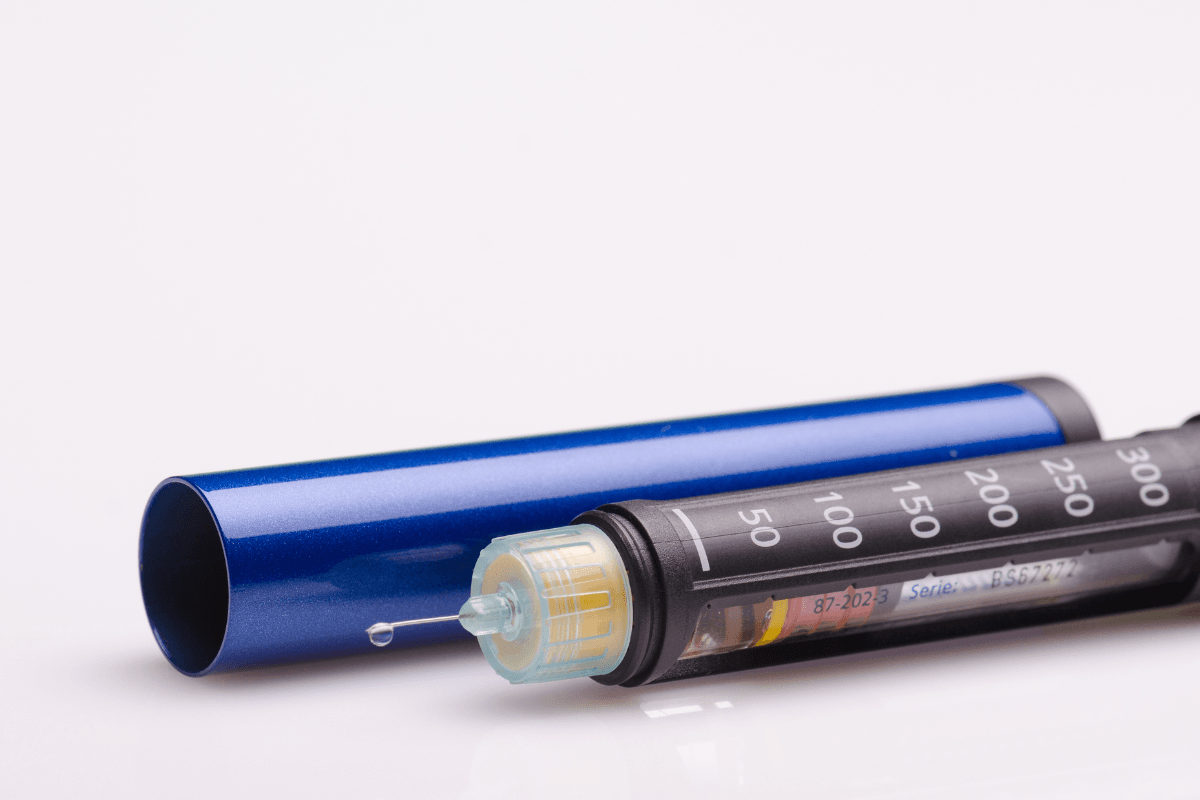
NovoPen 4 for diabetes is a reusable insulin pen designed to help deliver prescribed insulin from compatible 3 mL Penfill cartridges. It can support accurate dosing when you load the cartridge correctly, attach a new needle, prime before use, dial the intended dose, and follow safe injection technique. This matters because small handling errors can affect comfort, insulin flow, and confidence during daily injections.
Key Takeaways
- Reusable design: the pen body is kept, while cartridges and needles are replaced.
- Accuracy depends on technique: priming, correct dialing, and a steady injection matter.
- Cartridge fit matters: use only compatible 3 mL Penfill insulin cartridges.
- Needles are single-use: change the pen needle for every injection.
- Troubleshooting starts simple: check the needle, cartridge seating, and insulin flow first.
How the NovoPen 4 Insulin Pen Fits Daily Care
The NovoPen 4 insulin pen is a mechanical, reusable device for subcutaneous insulin injection. Subcutaneous means under the skin, usually into fatty tissue in areas such as the abdomen, thigh, or upper arm. It is not a pump and does not calculate doses, record injections, or connect to an app.
People may prefer this type of pen when they want a durable device with tactile clicks and a visible dose window. It can be useful for adults or adolescents who already have an insulin plan and need a consistent way to deliver it. The pen does not replace glucose monitoring, meal planning, or clinician-directed dose decisions.
In practical terms, the pen has three jobs. It holds the insulin cartridge, lets you dial the dose, and pushes insulin through a disposable pen needle. The user still needs to confirm the insulin type, inspect the cartridge, prime the pen, inject correctly, and dispose of the needle safely.
Why it matters: A reliable device still depends on a reliable routine.
If you are comparing insulin delivery options, a broader overview of Diabetes Tech Pens, Pumps, and CGMs can help place reusable pens in context.
Setup Steps Before the First Dose
NovoPen 4 setup starts with confirming that the pen, cartridge, needle, and prescription all match your care plan. Do not load a cartridge because it looks familiar. Read the label each time, especially if you use more than one insulin type.
Before handling the pen, wash and dry your hands. Inspect the cartridge for cracks, cloudiness when the insulin should be clear, particles, discoloration, or expiry concerns. Some insulin products require gentle mixing, while others should remain clear. Follow the insulin leaflet and your clinician’s instructions.
Load the Cartridge Carefully
Remove the pen cap and open the cartridge holder as directed in the device instructions. Insert the compatible 3 mL Penfill cartridge in the correct orientation, then reattach the holder without forcing it. If the holder resists, stop and check alignment rather than tightening harder.
The NovoPen 4 insulin cartridge should sit securely before a needle is attached. A loose cartridge can interfere with insulin flow or make the pen feel uneven during injection. If a cartridge breaks, leaks, or does not fit, do not use it.
For a device-specific product reference, see the NovoPen 4 Novo Nordisk page. If you are reviewing cartridge-based insulin options, examples include NovoRapid Cartridge and Levemir Penfill Cartridges, where relevant to a prescribed plan.
Attach a New Needle
A NovoPen 4 needle change should happen before every injection. Remove the protective seal from a new compatible pen needle, screw or attach it straight, and avoid bending the needle. Remove the outer and inner needle caps as directed.
Needle size can affect comfort, but it does not remove the need for good technique. Short, fine needles are common, yet body type, injection site, and clinician instructions still matter. For a deeper review of gauge and length, see Insulin Pen Needles Types. A product example is BD Nano Pro Pen Needles.
Priming, Dosing, and Injection Technique
How to use NovoPen 4 safely begins with an air shot, also called priming. This step removes air from the needle and cartridge pathway and confirms that insulin can flow from the needle tip. Skipping it may lead to a missed or partial first amount from that needle setup.
To prime, dial the small priming amount described in the official instructions, point the needle upward, and press the button until a drop appears. If no drop appears, change the needle and try again as directed. Do not keep pressing forcefully if the pen feels blocked.
Once flow is confirmed, dial the prescribed dose. NovoPen 4 dosing should follow the insulin plan set by your healthcare professional. The pen helps deliver the amount you dial, but it does not decide whether a dose is appropriate for your current glucose level, meal, illness, or activity.
Insert the needle into the recommended injection site using the angle taught by your care team. Press the dose button steadily until the dose window returns to zero. Keep the needle in place for several seconds before removing it, because withdrawing too quickly may allow insulin to leak from the skin.
After the injection, remove the needle using safe handling technique and place it in an approved sharps container. Do not store the pen with the needle attached. This can allow leakage, introduce air, or increase contamination risk.
For a broader step-by-step refresher, the How to Use Insulin Pen resource covers general pen technique that may help reinforce your routine.
What Dose Accuracy Depends On
NovoPen 4 dose accuracy depends on both the device and the person using it. Mechanical pens are designed to deliver measured doses, but inaccurate handling can still create problems. Common issues include not priming, using a bent needle, injecting through thickened tissue, or removing the needle too soon.
The dose window and audible clicks can make dialing easier for many people. Still, you should visually confirm the number when possible. If eyesight, hand strength, dexterity, or tremor makes pen use difficult, ask your clinician or pharmacist to observe your technique and suggest adaptations.
Injection-site rotation is another important part of accuracy. Repeated injections into the same small area can cause lipohypertrophy, which is thickened or lumpy fatty tissue. Insulin may absorb less predictably from those areas. A simple rotation map can help you avoid overusing one spot.
Do not change insulin doses based only on this article. Dose adjustments may depend on glucose patterns, meal timing, carbohydrate intake, kidney function, illness, physical activity, and hypoglycemia risk. If you need background on dosing concepts, review Insulin Dosage Chart and discuss any changes with your prescriber.
Quick tip: Write down unexplained highs, lows, leakage, or pain patterns.
Cartridge Compatibility, Storage, and Safety
NovoPen 4 for diabetes uses specific 3 mL Penfill cartridges, not loose insulin from a vial. Compatibility is not only about size. The insulin formulation, brand, cartridge design, and your prescription all need to match.
Never combine different insulin types in one cartridge or pen. If you use more than one insulin, consider a clear labeling routine so each pen is easy to identify. Some people use separate storage spots, color cues, or written labels, but any system should be simple and consistent.
Storage rules come from the insulin product label, not just the pen. In general, insulin should be protected from freezing, direct heat, and strong sunlight. In-use temperature limits vary by insulin, so check the leaflet that came with your cartridge. If insulin has been exposed to extreme temperatures, ask a pharmacist before using it.
Needles and pens should never be shared. Changing the needle does not make sharing safe, because blood or biological material can remain inside the device. Store the pen where children and others cannot access it, and keep the cap on when it is not in use.
People who want to browse diabetes-related items can use the Diabetes Product Category as a navigation starting point. The Diabetes Condition collection can also help organize related options without replacing professional guidance.
Troubleshooting Flow Problems and Pen Concerns
NovoPen 4 troubleshooting usually starts with the needle and cartridge. If the button is hard to press, the priming drop does not appear, or the dose does not seem to deliver, stop and check the setup before trying again.
- Blocked flow: attach a new needle and repeat the air shot.
- No insulin drop: confirm the cartridge is not empty or damaged.
- Hard button press: check for a bent needle or misaligned cartridge.
- Leaking insulin: confirm the needle was attached straight and removed after use.
- Unclear dose window: do not inject if you cannot confirm the dialed amount.
If a problem continues after a needle change and proper priming, do not force the device. Use the backup plan agreed with your healthcare team. Contact your pharmacist, diabetes educator, or device support for assessment.
Seek urgent medical help if you have severe hypoglycemia symptoms, confusion, fainting, seizure, persistent vomiting, or signs of diabetic ketoacidosis such as deep breathing, abdominal pain, or fruity-smelling breath. Device troubleshooting should not delay emergency care.
Benefits and Limits Compared With Other Pens
The main NovoPen 4 benefits are durability, reusable design, tactile dialing, and compatibility with prescribed Penfill cartridges. These features can make it easier to maintain a repeatable injection routine. It may also appeal to people who do not want connected features or battery-dependent logging.
Newer pens may offer memory functions, half-unit dosing, or digital dose tracking, depending on the model. For example, a comparison such as NovoPen 4 vs NovoPen Echo often centers on dose increments, age group needs, and memory features. The better choice depends on the prescribed insulin plan, dose size, dexterity, vision, and the amount of dose history support needed.
There is no single best insulin pen for every person with type 2 diabetes or type 1 diabetes. A reusable insulin pen for diabetes may be appropriate for one person, while a disposable pen, vial and syringe, pump, or smart pen may fit another. The decision should consider accuracy needs, comfort, cost, coverage, device availability, and training.
Some patients explore cash-pay options and cross-border fulfilment depending on eligibility and jurisdiction. When a prescription is required, prescription details may need confirmation with the prescriber, and dispensing is handled by licensed third-party pharmacies where permitted.
Cleaning, Maintenance, and When to Replace It
Basic maintenance helps the pen stay usable and easy to inspect. Wipe the outside with a slightly damp, lint-free cloth if needed. Do not immerse the pen, use harsh cleaning products, or let liquid enter the mechanism.
Keep the pen away from dust, direct heat, and freezing temperatures. Recap it after use, and store it without a needle attached. Carry it in a protective case if it may be dropped, crushed, or exposed to temperature swings.
Replace or stop using the device if it is cracked, visibly damaged, difficult to dial, inconsistent during priming, or unreliable after basic troubleshooting. Also ask for help if the numbers become hard to read or the button becomes difficult to press. Accurate insulin delivery depends on both a functioning device and a user who can operate it confidently.
Authoritative Sources
For device-specific instructions and safety wording, review the FDA NovoPen 4 labeling.
For research context on new and used pen performance, see this PubMed dose accuracy study.
For broader insulin storage principles during emergencies, review the FDA insulin storage recommendations.
Recap
NovoPen 4 for diabetes can be a practical reusable insulin pen when it matches the prescribed cartridge and the user follows a consistent injection routine. The most important habits are checking the insulin label, using a new needle, priming before injection, dialing carefully, rotating sites, and responding early to flow problems.
For ongoing education, browse the Diabetes Articles collection or review practical topics such as Insulin Conversions with your care team when measurement questions come up.
This content is for informational purposes only and is not a substitute for professional medical advice.


