
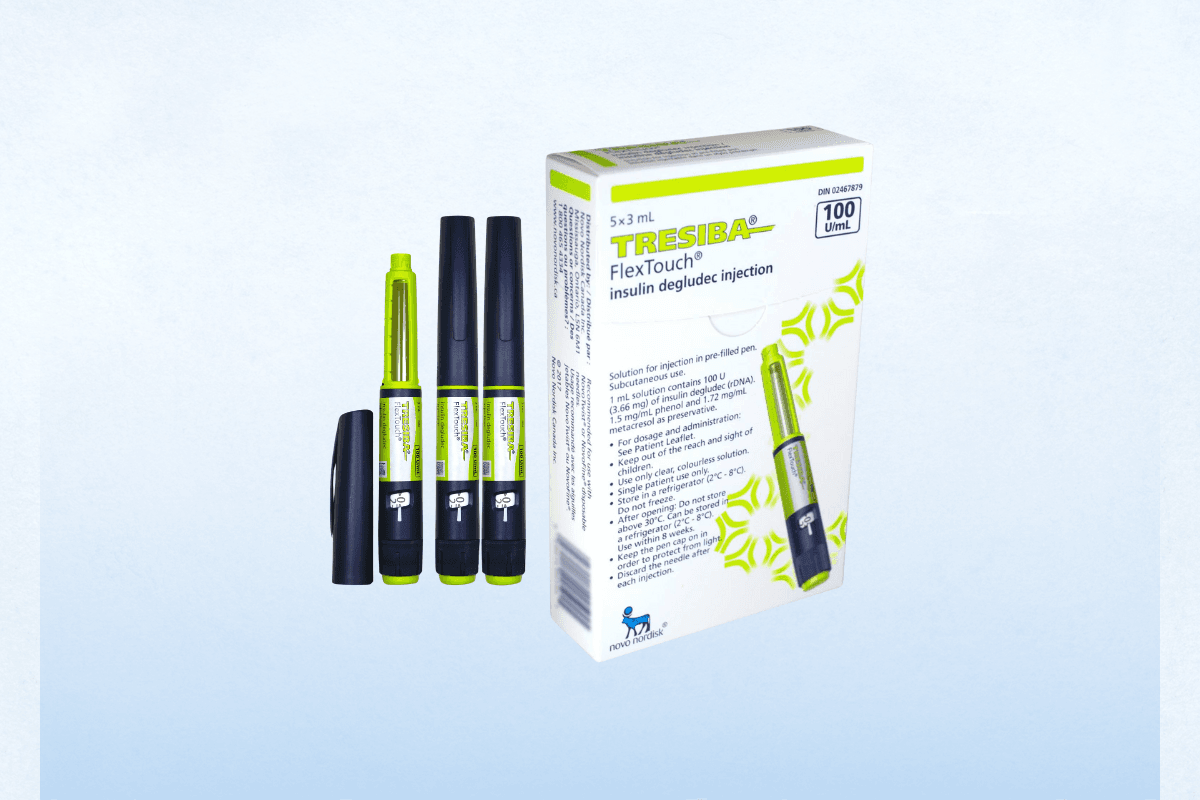
The Tresiba FlexTouch pen is a prefilled insulin degludec device used for basal insulin therapy. Basal insulin helps manage blood sugar between meals and overnight, when food is not the main driver. It is not the same as rapid-acting mealtime insulin, and it is not a tool for self-adjusting doses without medical guidance. Understanding the pen, concentration, needles, and monitoring checks can reduce common mistakes.
Key Takeaways
- Tresiba is a long-acting basal insulin.
- FlexTouch describes the prefilled pen device.
- U-100 and U-200 are concentrations, not separate drugs.
- Needle choice and technique should be confirmed with training.
- Do not switch concentrations or doses without prescriber guidance.
How the Tresiba FlexTouch Pen Fits Basal Insulin Care
The Tresiba FlexTouch pen delivers insulin degludec, a long-acting insulin analog. An analog is a modified form of insulin designed to act in a predictable way. In diabetes care, basal insulin provides background insulin coverage. It helps limit glucose release from the liver and supports steadier blood sugar when you are not eating.
This matters because basal insulin has a different role from mealtime insulin. Rapid-acting insulin is often matched to meals or correction plans when prescribed. Basal insulin is usually intended to create a background effect across the day. Your clinician decides whether basal insulin is appropriate, how it fits with other medicines, and what monitoring plan should be used.
For a wider overview of this drug class, see Basal Insulin Types. You can also compare general timing concepts across products in Long-Acting Insulin Names.
Why it matters: A pen device can feel simple, but the insulin plan behind it still needs clinical oversight.
Tresiba is used in people with diabetes when prescribed for glycemic control. It is not a treatment for diabetic ketoacidosis, a serious emergency linked with very high ketones and insulin deficiency. Symptoms such as vomiting, deep or laboured breathing, confusion, severe dehydration, or very high glucose with ketones need urgent medical assessment.
U-100, U-200, and What the Pen Display Means
The Tresiba FlexTouch pen may be available as U-100 or U-200, depending on the market and prescription. These labels refer to concentration. U-100 contains 100 units of insulin per mL. U-200 contains 200 units per mL. The active insulin is insulin degludec in both versions.
U-200 is more concentrated per mL, but that does not mean it is stronger in the way many people use the word. A prescribed insulin unit is still a unit. The pen display is designed to show insulin units, not mL. This helps reduce manual conversion mistakes, but it does not remove the need to confirm the exact product and dose with the prescriber or pharmacist.
| Topic | What to Know |
|---|---|
| Concentration | U-100 has 100 units/mL; U-200 has 200 units/mL. |
| Total units in a 3 mL pen | U-100 contains 300 units; U-200 contains 600 units. |
| Pen display | The dose window shows units, not volume in mL. |
| How long a pen lasts | This depends on prescribed units, priming, and any discarded insulin. |
| Pack count | Carton size can vary by country, supplier, and product listing. |
The question of how many days a pen lasts has no single answer. A person using fewer prescribed units per day will use a pen more slowly than someone prescribed more units. Priming or flow checks also use insulin. Your pharmacy label, carton, and product leaflet are safer references than a general online estimate.
Switching from U-100 to U-200, or from U-200 to U-100, should be treated as a prescription change. Do not make a concentration switch just because a pen seems more convenient. The prescriber should confirm the product, dose, and monitoring plan. For broader safety principles around insulin unit changes, see Insulin Conversions.
Using the Pen: Technique Checks to Confirm With Training
Safe use starts with device training, not with guessing from the dose window. The Tresiba FlexTouch pen comes with manufacturer instructions, and those instructions should be followed with clinician or pharmacist teaching. A small technique error can affect insulin delivery or increase skin irritation.
Common technique points include checking the label before each use, inspecting the insulin, attaching a new compatible needle, performing any required flow check, dialing the prescribed units, injecting as taught, and disposing of the needle safely. Do not share insulin pens, even if the needle is changed. Sharing can spread infections.
The pen should not be used as a vial. Do not withdraw insulin from the pen with a syringe unless official instructions and clinical guidance specifically support a situation, because concentration and dosing errors can occur. Insulin should not be mixed or diluted unless a clinician gives product-specific instructions.
Injection site rotation also matters. Repeated injections into the same small area can lead to lipodystrophy, which means changes in the fat tissue under the skin. These changes may affect how insulin is absorbed. Your care team can show how to rotate within approved injection areas without making the routine confusing.
Needles and Compatibility
Pen needles are usually separate from the insulin pen. The Tresiba FlexTouch pen is designed for compatible single-use pen needles, and many universal-fit needles may work. Needle length and gauge should be chosen with a clinician or pharmacist, especially for children, people with low body fat, pregnancy, dexterity concerns, or prior injection pain.
Needles should generally be changed for each injection. Reusing needles can make injections more painful and may affect needle sterility. Used needles belong in an approved sharps container, not loose in household trash. For a broader device overview, see Insulin Pens.
Timing, Monitoring, and Everyday Blood Sugar Patterns
There is no universally better time for everyone to take basal insulin. Morning versus evening depends on the prescription, daily routine, glucose patterns, and risk of low blood sugar. The safest approach is to follow the timing plan written by the prescriber and ask before changing it.
People often ask about timing because their blood sugar changes overnight, before breakfast, during exercise, or after missed meals. Those patterns can have several causes. Basal insulin may be one factor, but food intake, illness, alcohol, activity, kidney function, steroid medicines, and missed doses can also shift glucose readings.
Home glucose records help clinicians see patterns. A single high or low reading matters, but a trend is usually more useful for treatment review. Keep notes on time of day, meals, activity, illness, and symptoms when your care team has asked you to track them. You can review general targets and number interpretation in the Blood Sugar Range Chart.
This converter helps compare blood glucose values reported in mg/dL and mmol/L. It does not set targets or replace a clinician’s review.
Blood Glucose Unit Converter
Convert glucose readings between mg/dL and mmol/L without changing the clinical value.
These calculations are for education only and do not replace clinical advice, diagnosis, or treatment. Always confirm medical decisions with a qualified healthcare professional.
If you are unsure how often to test, the answer depends on treatment type, hypoglycemia risk, and clinical goals. The article on Blood Sugar Monitoring explains common monitoring factors without replacing an individualized plan.
Low blood sugar, or hypoglycemia, is one of the key risks with insulin. Symptoms can include shakiness, sweating, fast heartbeat, hunger, confusion, headache, or weakness. Severe hypoglycemia can cause seizures, loss of consciousness, or injury. If lows happen repeatedly, or if symptoms are hard to recognize, contact a healthcare professional for plan review. For practical safety context, read Low Blood Sugar.
Safety Questions That Should Not Be Left to Guesswork
The main safety concern with any insulin is hypoglycemia. Risk can rise when meals are missed, alcohol intake changes, activity increases, kidney function changes, or other glucose-lowering medicines are added. Do not reduce, skip, or increase insulin because of one reading unless your care plan already gives clear instructions.
People also ask whether Tresiba is hard on the kidneys. Insulin degludec is not usually described as directly damaging kidney tissue. However, kidney disease can change insulin needs and can increase the risk of hypoglycemia. Anyone with chronic kidney disease, changing kidney function, dialysis, or repeated unexplained lows should have their insulin plan reviewed by a clinician.
Other safety issues include allergy, injection-site reactions, fluid retention with certain medicines, and low potassium in susceptible situations. Seek urgent care for severe allergic symptoms such as swelling of the face or throat, trouble breathing, widespread rash, or collapse. Severe low blood sugar symptoms also need immediate help.
Medication interactions matter. Beta blockers may make some low blood sugar symptoms harder to notice. Steroids can raise glucose. Other diabetes medicines may increase the chance of lows when combined with insulin. A current medicine list, including supplements and over-the-counter products, helps the prescriber assess these risks.
Pregnancy, breastfeeding, major illness, surgery, eating disorders, gastroparesis, and major weight changes can all affect insulin planning. These situations need individualized medical review. For a deeper look at tolerability and warning symptoms, see Tresiba Side Effects.
How It Compares With Other Basal Insulin Options
The Tresiba FlexTouch pen is one basal insulin option, not the only one. Other basal insulins include products based on insulin glargine, insulin detemir, and other formulations. These products can differ in concentration, device type, dosing instructions, labelled age groups, storage rules, and insurance or access pathways.
Comparison should not focus only on whether one product sounds longer acting or more convenient. A clinician may consider glucose patterns, prior hypoglycemia, kidney function, injection burden, other diabetes medicines, pregnancy plans, and the person’s ability to use a device correctly. A pen that looks convenient is not the right choice if the dose, concentration, or instructions are misunderstood.
PenFill and FlexTouch are also different device concepts. FlexTouch is a prefilled disposable pen. PenFill refers to cartridges used with compatible reusable pen systems in markets where they are available. Availability and compatibility can vary, so the product name on the prescription and carton should be checked carefully.
Combination injectable products, GLP-1 receptor agonists, and oral diabetes medicines are not interchangeable with basal insulin. They may appear in the same treatment plan for some people, but they work differently. Your clinician decides whether a medicine is being used instead of basal insulin, alongside it, or not at all.
Prescription, Access, and Product Navigation
The Tresiba FlexTouch pen is a prescription insulin product. Access questions should start with the exact product, concentration, quantity, and prescriber directions. If any of those details are unclear, do not assume the pen type from a picture or a prior refill. Ask the prescriber or pharmacist to clarify before using it.
For product-specific navigation, the Tresiba FlexTouch Pens listing can help identify the item being discussed. Product pages should not replace the prescription label, official instructions, or clinician training.
CanadianInsulin.com operates as a prescription referral service, and prescription details may be checked with the prescriber when required. Dispensing and fulfilment, where permitted, are handled by licensed third-party pharmacies. Some patients also compare cash-pay access depending on eligibility and jurisdiction.
Quick tip: Keep the carton, pen label, and prescription label together until you know the device well.
Authoritative Sources
These references support the labelled use, device warnings, insulin safety points, and patient education concepts discussed above.
- Review the Tresiba prescribing information for label-backed product details.
- Use MedlinePlus insulin degludec information for patient-focused drug safety context.
- See CDC diabetes treatment information for general diabetes care education.
The main point is simple: the device can make insulin delivery more practical, but it does not make insulin self-directed. Confirm the exact concentration, use compatible needles, monitor patterns as instructed, and ask for help when readings or symptoms do not fit the plan.
This content is for informational purposes only and is not a substitute for professional medical advice.


