
Please note: a valid prescription is required for all prescription medication.
Hyzaar
Buy Hyzaar Online


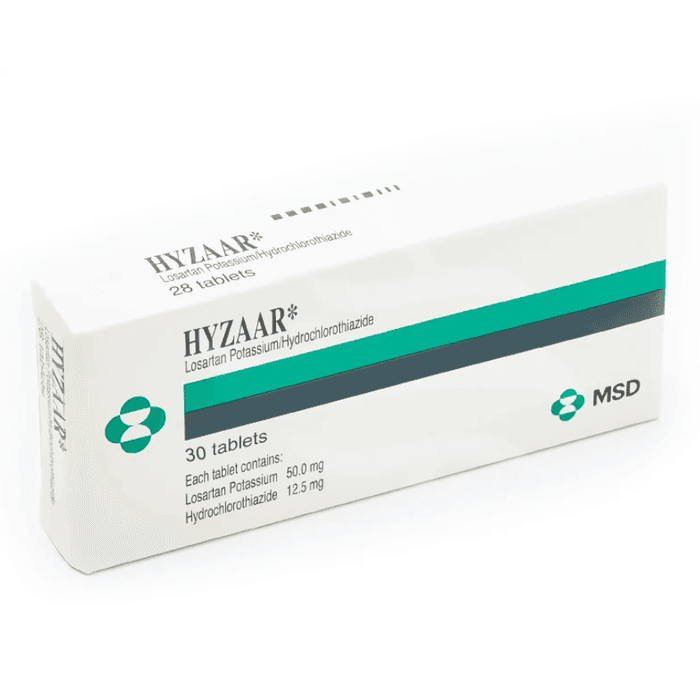
Hyzaar is a brand-name blood pressure tablet that combines losartan potassium with hydrochlorothiazide. Hyzaar can be bought online by choosing the available strength that matches clinician directions, then reviewing the quantity and current price before checkout. Each strength uses two numbers because the tablet contains two active ingredients in fixed amounts.
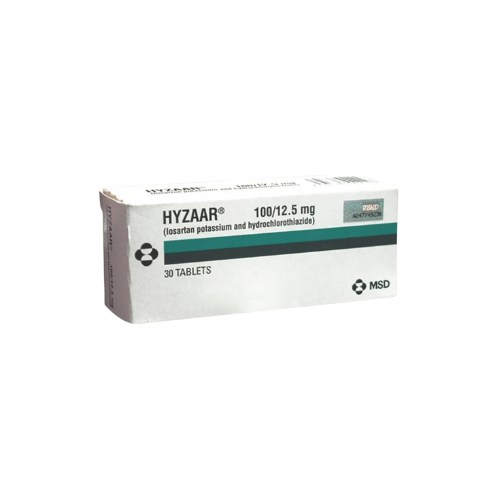
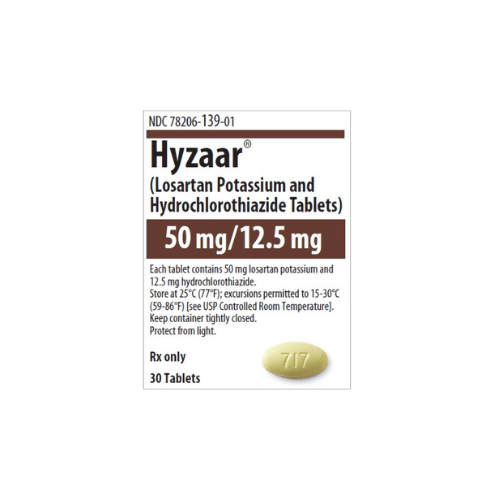
The first number on Hyzaar tablets refers to losartan potassium, and the second number refers to hydrochlorothiazide. For example, Hyzaar 100/25 mg is different from Hyzaar 100/12.5 mg because the hydrochlorothiazide amount is higher. Matching both numbers is the most important ordering step when choosing between Hyzaar 50/12.5, Hyzaar 100/12.5, and Hyzaar 100/25 when those strengths are displayed.
Hyzaar Price and Strength Selection
The Hyzaar price shown during ordering depends on the strength, tablet quantity, and whether a brand or generic version is being viewed. A larger tablet count can change the total amount due, while a different strength may appear under a separate entry. Use the exact strength written in your treatment plan when evaluating Hyzaar cost or the cash price without insurance.
Hyzaar contains losartan potassium hydrochlorothiazide in a fixed-dose combination. The generic name is losartan potassium and hydrochlorothiazide, and some pharmacies or references shorten it to losartan hydrochlorothiazide. If a generic losartan hydrochlorothiazide tablet is being considered, compare the active ingredients and strength numbers carefully rather than relying on the medicine name alone.
Quick tip: Match both strength numbers before comparing totals.
| Common Hyzaar strength | What each tablet contains |
|---|---|
| Hyzaar 50/12.5 mg | 50 mg losartan potassium and 12.5 mg hydrochlorothiazide. |
| Hyzaar 100/12.5 mg | 100 mg losartan potassium and 12.5 mg hydrochlorothiazide. |
| Hyzaar 100/25 mg | 100 mg losartan potassium and 25 mg hydrochlorothiazide. |
| Quantity or pack count | The number of tablets affects supply length and total cost. |
This table is a strength-matching aid, not dosing advice. Clinician directions determine the appropriate Hyzaar dosage and tablet schedule. Do not switch from one strength to another because a different quantity or price appears more convenient.
How to Order Hyzaar Online
To order Hyzaar online, choose the strength that matches the medicine instructions, review the tablet quantity, and enter patient and order information accurately. Hyzaar tablets use a two-number label, so the strength field deserves more attention than the brand name alone. If US delivery from Canada is part of the service route, use an address where the package can be brought indoors soon after arrival.
Before payment, make sure the name Hyzaar, the strength, and the quantity all align with the intended treatment. If a clinician wrote the generic name, losartan potassium and hydrochlorothiazide, confirm that the strength ratio is the same. Do not split, double, or combine tablets to recreate another strength unless a clinician specifically gives that instruction.
- Choose the Hyzaar strength that matches the treatment directions.
- Review the tablet quantity and current total.
- Enter patient and delivery information carefully.
- Read the safety points before completing checkout.
Hyzaar Ships from Canada to US may appear in service wording for cross-border orders. Delivery planning is still practical for a room-temperature tablet because medicines should not sit in extreme heat, freezing temperatures, or moisture. Bring the package indoors promptly and compare the contents with the order confirmation.
What Hyzaar Is Used For
Hyzaar uses include treatment of high blood pressure, also called hypertension. It combines an angiotensin II receptor blocker, losartan, with a thiazide diuretic, hydrochlorothiazide. This combination may be used when a clinician decides that both mechanisms are appropriate for blood pressure control.
Losartan helps relax blood vessels by blocking angiotensin II, a substance that can narrow blood vessels. Hydrochlorothiazide helps the body remove extra salt and water through urine. Together, the two ingredients can lower blood pressure more effectively for some people than one ingredient alone, depending on medical history and response.
High blood pressure often has no symptoms, so treatment decisions usually depend on blood pressure readings, lab results, and overall cardiovascular risk. Browse hypertension treatments for related condition-based navigation, or use the cardiovascular products category to see other prescribed blood pressure medicines. Product choices should still follow clinician-directed therapy.
Hyzaar Generic Name, Brand Status, and Product Matching
Hyzaar is the brand name for the fixed-dose combination of losartan potassium and hydrochlorothiazide. The generic name identifies the two active ingredients rather than a different therapeutic idea. When comparing Hyzaar generic entries, focus on the active ingredient pair, strength ratio, tablet quantity, and any instructions tied to the medicine.
Brand and generic naming can vary by market and pharmacy supply channel. A generic losartan hydrochlorothiazide tablet may be listed separately from Hyzaar, even when it contains the same active ingredient combination. Strength matching remains essential because 100/12.5 mg and 100/25 mg are not interchangeable amounts.
Product matching is especially important after treatment changes. A clinician may adjust the losartan amount, the hydrochlorothiazide amount, or both. Keep the latest medicine instructions available when ordering and avoid using an older bottle label if the treatment plan has changed.
Storage, Handling, and Travel Basics
Hyzaar tablets are oral tablets and are not refrigerated biologics or injections. Follow the package label for storage, and keep the tablets in a dry place away from excess heat, moisture, and direct light. A bathroom cabinet may not be ideal if humidity is high.
Keep the container closed and out of reach of children and pets. Do not use tablets that look damaged, discolored, or moisture-exposed until a pharmacist or clinician has reviewed them. Medicines should not be used past the labeled expiration date.
When travelling, keep Hyzaar in its labeled container and protect it from heat, freezing temperatures, and water exposure. Carry enough supply for the trip according to clinician directions. If crossing borders, keep medicine information accessible in case questions arise during travel.
Side Effects, Warnings, and Monitoring
Hyzaar side effects can include dizziness, lightheadedness, tiredness, low blood pressure, increased urination, nasal congestion, back pain, and stomach upset. These effects do not occur in everyone. New, severe, or persistent symptoms should be discussed with a healthcare professional, especially if they affect standing, driving, hydration, or daily activities.
Hyzaar has an important pregnancy warning. Medicines that act on the renin-angiotensin system can injure or cause death to a developing fetus when used during pregnancy. Contact a healthcare professional promptly if pregnancy occurs or is planned while taking this medicine.
Important safety issues to discuss before or during treatment include kidney function, potassium, sodium, dehydration risk, gout history, and allergy history. Hydrochlorothiazide is a sulfonamide-derived medicine and can raise uric acid in some people. Losartan may affect potassium levels, while hydrochlorothiazide can also change electrolyte balance.
- Kidney function may need lab monitoring during treatment.
- Potassium-containing salt substitutes may not be appropriate for everyone.
- Vomiting, diarrhea, heavy sweating, or poor fluid intake can increase low blood pressure risk.
- Gout symptoms or high uric acid may need medical attention.
- Eye pain or sudden vision changes need urgent evaluation.
Seek urgent medical care for swelling of the face or throat, trouble breathing, fainting, severe weakness, very little urination, severe eye pain, sudden vision changes, or signs of a severe skin reaction. This is not a complete list of risks. The official medicine label and patient information provide fuller safety details.
Interactions and Practical Use Questions
Tell a healthcare professional about all prescription medicines, over-the-counter products, vitamins, minerals, and herbal supplements used with Hyzaar. Interaction questions often involve potassium supplements, salt substitutes, lithium, nonsteroidal anti-inflammatory drugs such as ibuprofen or naproxen, other blood pressure medicines, diabetes medicines, and other diuretics.
Alcohol may increase dizziness or lightheadedness in some people taking blood pressure medicine. Hot weather, heavy exercise, vomiting, or diarrhea can also raise the chance of dehydration and low blood pressure. Ask what to do if illness or fluid loss occurs, rather than changing the dose on your own.
Some people wonder whether Hyzaar affects weight. Hydrochlorothiazide can reduce fluid volume, but Hyzaar is not a weight-loss medicine. Weight changes, swelling, unusual thirst, weakness, or changes in urination should be discussed with a healthcare professional because they may relate to fluid balance, kidney function, or other health issues.
Blood pressure monitoring may be recommended at home, in clinic, or both. If home readings are part of the plan, record them consistently and bring unusual patterns to the care team. Do not self-adjust Hyzaar doses based on a single reading unless a clinician has provided specific instructions.
Compare With Related Blood Pressure Options
Hyzaar belongs to a group of combination blood pressure medicines that pair an angiotensin receptor blocker with a diuretic. Related products can look similar because their names or strength labels include two numbers. They are not automatically interchangeable because the active ingredients, dose ratio, contraindications, and treatment history all matter.
If a higher-strength Hyzaar-related medicine has been discussed, Hyzaar DS may be relevant for name and strength comparison. If a different angiotensin receptor blocker combination has been directed, Telmisartan HCT is another product to review by active ingredient and strength. Use these comparisons to understand medicine names, not to switch therapy independently.
The cardiovascular articles section can help prepare questions about blood pressure treatment, monitoring, and heart health. Keep those questions separate from ordering details so the medicine name, strength, and quantity remain aligned with the current treatment plan.
Authoritative Sources
Official labeling: DailyMed prescribing information details approved uses, strengths, warnings, adverse reactions, interactions, and storage information.
FDA label archive: FDA label document supports pregnancy warning, contraindication, dosing-strength, and safety details.
This content is for informational purposes only and is not a substitute for professional medical advice.
Blood Pressure Average Calculator
Average home blood pressure readings and show a simple screening range.
Average BP
-
entered readings only
Range
-
screening category
These calculations are for education only and do not replace clinical advice, diagnosis, or treatment. Always confirm medical decisions with a qualified healthcare professional.
Mean Arterial Pressure Calculator
Calculate estimated mean arterial pressure from systolic and diastolic blood pressure.
MAP
-
DBP + one-third pulse pressure
These calculations are for education only and do not replace clinical advice, diagnosis, or treatment. Always confirm medical decisions with a qualified healthcare professional.
Pulse Pressure Calculator
Calculate pulse pressure from systolic and diastolic blood pressure.
Pulse pressure
-
SBP - DBP
These calculations are for education only and do not replace clinical advice, diagnosis, or treatment. Always confirm medical decisions with a qualified healthcare professional.
eGFR Calculator
Estimate kidney filtration using the 2021 CKD-EPI creatinine equation.
eGFR
-
mL/min/1.73 m2
G category
-
requires clinical context
These calculations are for education only and do not replace clinical advice, diagnosis, or treatment. Always confirm medical decisions with a qualified healthcare professional.
Corrected Sodium Calculator
Estimate sodium corrected for hyperglycemia using common 1.6 and 2.4 correction factors.
Corrected sodium
-
1.6 factor
Corrected sodium
-
2.4 factor
These calculations are for education only and do not replace clinical advice, diagnosis, or treatment. Always confirm medical decisions with a qualified healthcare professional.
Express Shipping - from $29.99
Shipping with this method takes 3-5 days
Prices:
- Dry-Packed Products $29.99
- Cold-Packed Products $39.99
Standard Shipping - $19.99
Shipping with this method takes 5-10 days
Prices:
- Dry-Packed Products $19.99
- Not available for Cold-Packed products
What is Hyzaar used for?
Hyzaar is used to treat high blood pressure, also called hypertension. It combines losartan potassium, an angiotensin II receptor blocker, with hydrochlorothiazide, a thiazide diuretic.
What is the generic name for Hyzaar?
The generic name is losartan potassium and hydrochlorothiazide. Some references shorten this to losartan hydrochlorothiazide, but the strength numbers still need to match the intended tablet.
What do Hyzaar 100/25 and 100/12.5 mean?
The first number is losartan potassium, and the second is hydrochlorothiazide. Hyzaar 100/25 mg contains more hydrochlorothiazide than Hyzaar 100/12.5 mg.
What are common Hyzaar side effects?
Common side effects can include dizziness, lightheadedness, tiredness, low blood pressure, increased urination, nasal congestion, back pain, or stomach upset. Severe symptoms need medical attention.
Can Hyzaar be used during pregnancy?
Hyzaar should not be used during pregnancy because medicines that act on the renin-angiotensin system can harm or cause death to a developing fetus. Contact a clinician promptly if pregnancy occurs or is planned.
How should Hyzaar tablets be stored?
Store Hyzaar as directed on the package label, away from excess heat, moisture, and direct light. Keep the container closed and out of reach of children and pets.
Rewards Program
Earn points on birthdays, product orders, reviews, friend referrals, and more! Enjoy your medication at unparalleled discounts while reaping rewards for every step you take with us.
You can read more about rewards here.
POINT VALUE
How to earn points
- 1Create an account and start earning.
- 2Earn points every time you shop or perform certain actions.
- 3Redeem points for exclusive discounts.
You Might Also Like
Select options
This product has multiple variants. The options may be chosen on the product page
Select options
This product has multiple variants. The options may be chosen on the product page
Select options
This product has multiple variants. The options may be chosen on the product page
Select options
This product has multiple variants. The options may be chosen on the product page